With inauguration day nearing, Chile’s northern border region watches new migrant routes form as President-elect Jose Antonio Kast vows the toughest immigration policy in Chilean history. Residents in Arica y Parinacota weigh crime fears against discrimination, and migrants weigh escape against a legal trap.
On the highland roads of Parinacota, the Andes sit on the horizon like a fixed judgment, snowy peaks bright against the dry air. At night, the cold can drop to minus fifteen degrees Celsius, and the wind has a way of making silence feel louder. In that thin air, people notice movement. They notice when it changes.
Andrea Chellew, a sixty-two-year-old resident of the highlands and a former Senate candidate for the left-leaning Partido Humanista, says the change is not subtle. ‘We have a big crisis in the area. The immigration situation is now much worse,’ she told Al Jazeera. Many migrants find themselves caught in legal traps, facing uncertain futures and limited protections, which complicates efforts to address migration humanely.
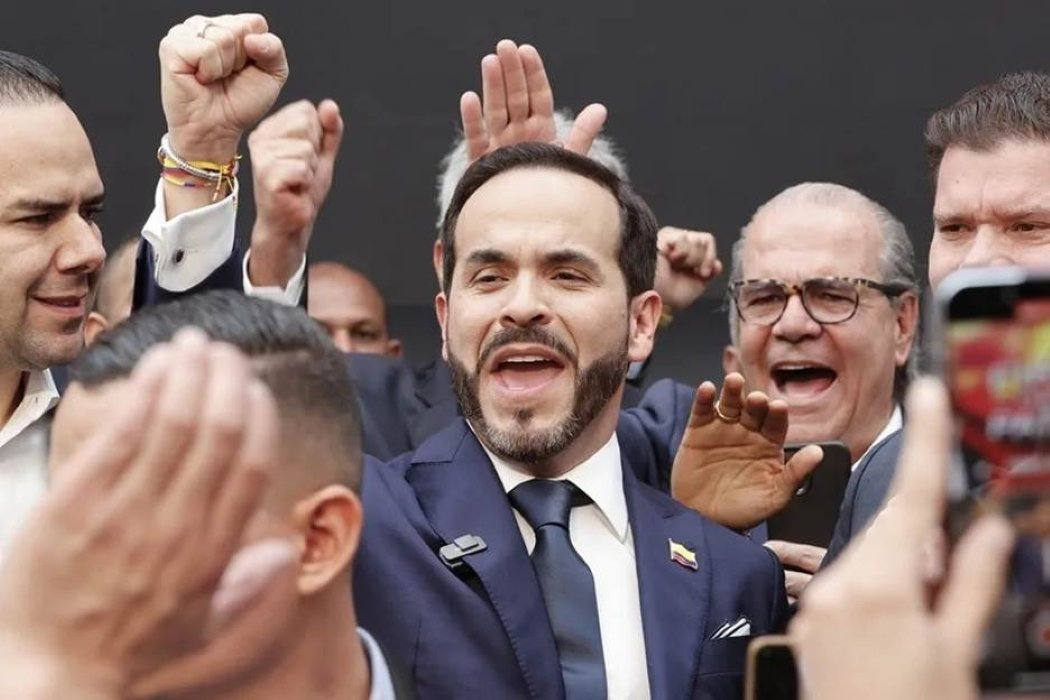
Weeks earlier, on November twenty eight, with a runoff election approaching, far-right candidate Jose Antonio Kast issued an ultimatum aimed at irregular immigrants, setting a countdown for voluntary departure. Kast ultimately won and is expected to be sworn in on March eleven. Yet in Arica y Parinacota, residents like Chellew express concern about the rising influx, and migrants face uncertain futures, making the situation feel personal and urgent.
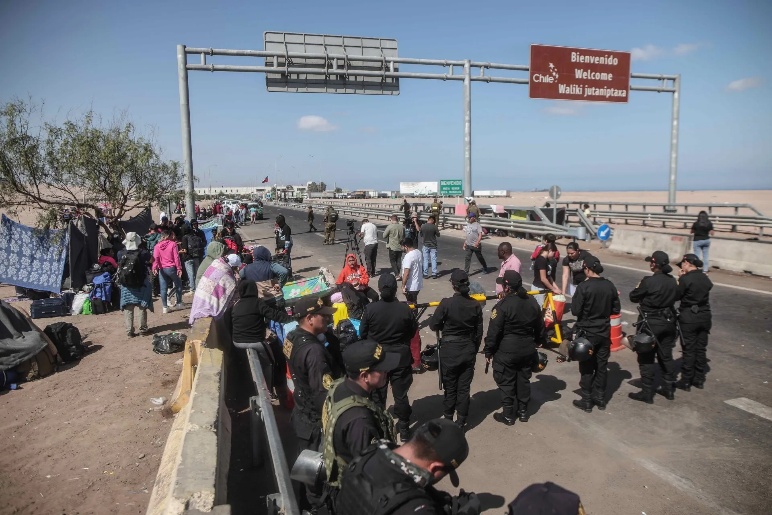
Arica y Parinacota has long been a focal point for Chile’s immigration concerns, a tip of land wedged between Peru, Bolivia, and the Pacific Ocean. Migrants and asylum seekers often enter Chile irregularly from the north through this region, impacting local economies and social dynamics. The area has also seen an uptick in organized crime, a central issue in Kast’s election, and candidates repeatedly visited during the campaign. Now the region is left to live inside the promise.
The trouble is that promises about borders do not land evenly. They land in towns. They land on buses. They land on the main road down to Arica, where, as Chellew describes it, people are not really hitchhiking. They are paying.

Routes Shift as Peru Militarizes and Bolivia Becomes a Detour
Kast is popular in the cities and highland deserts of Arica and Parinacota. He won the region by a wide margin, receiving more than 62% of the vote. Supporters say that the margin reflects exhaustion and a desire for control.
But the border does not behave like a campaign map.
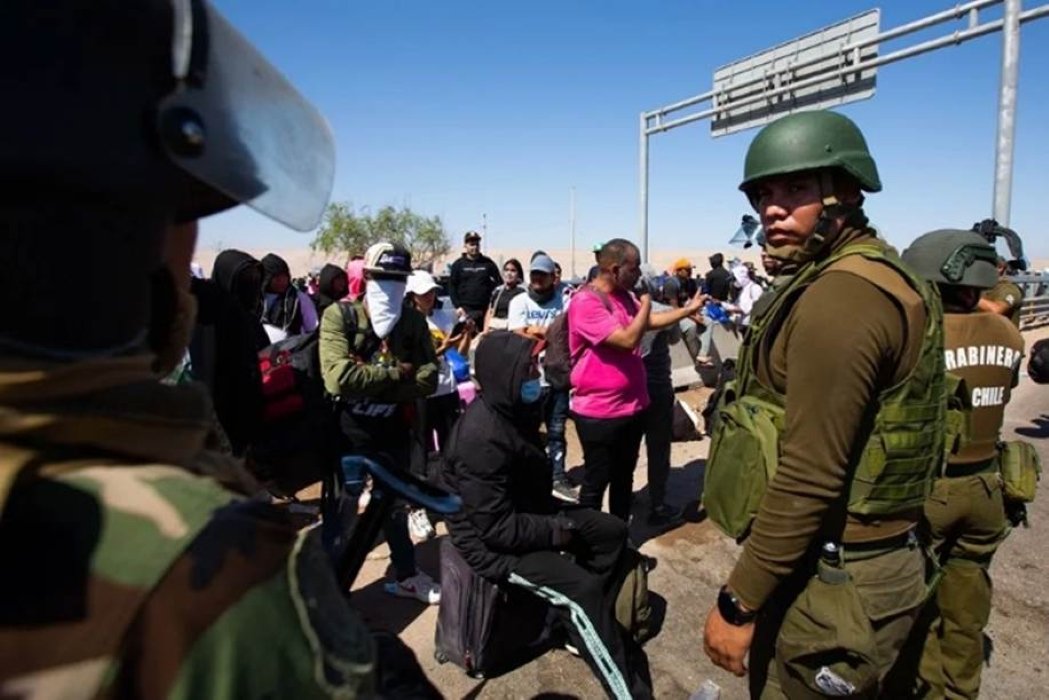
Ahead of Kast’s victory, Peru approved a state of emergency in late November to militarize its southern border with Chile, based on the expectation that undocumented immigrants would flee north. Chellew says that did not happen. Instead, she has observed migrants and asylum seekers shifting to alternate routes, largely through Bolivia.
“Bolivians are bringing the immigrants across the frontier in cars illegally,” she told Al Jazeera. “They give them a lift into the highlands, and then they have to walk to the main road. There, they hitchhike. Well, not really, because they have to pay the driver who takes them down to Arica.”
It is an everyday detail that carries the policy dispute within it. When enforcement rises, routes bend. When routes bend, the people with vehicles and local knowledge gain leverage. Not everyone can afford a car. To avoid detection, some migrants and asylum seekers trudge across the highlands at night, risking freezing temperatures and the effects of altitude that often exceed five thousand meters. Low oxygen levels can leave travelers sick.
This is the part of the border debate that rarely fits cleanly into speeches. A fortified line does not end movement. It shifts who profits from it and how dangerous it becomes, highlighting the nuanced reality behind border policies.
Crime Fears Collide With Stereotypes and a Paper Trap
For immigrants fleeing violence and crises elsewhere in South America, Chile represents relative prosperity. The country is considered among the safest in Latin America, and its gross domestic product ranks among the region’s top five. Yet Kast’s campaign harnessed public fears about spikes in violent crime in recent years, and supporters often connect that insecurity to irregular migration.
Kidnappings, while rare, rose by one hundred thirty-five percent between two thousand fifteen and two thousand twenty-five, according to an OSAC security report. Homicides reached a peak in two thousand twenty two after the COVID-19 pandemic, with 1,330 victims reported out of a population of nearly twenty million, and have since declined. An estimated 336,984 foreigners live in Chile without legal paperwork, according to the government, with the majority from Venezuela. The influx has coincided with the expansion of transnational criminal networks, such as Venezuela’s Tren de Aragua, which has gained a foothold in Arica y Parinacota. At the same time, studies have repeatedly shown that overall, foreigners in Chile are typically less likely than native born citizens to be arrested or indicted.
Kast has proposed what he calls the toughest immigration policy in Chilean history. His ‘Border Shield’ agenda promises a force of three thousand strong to take absolute control of the northern border starting on inauguration day. It outlines walls, watchtowers, autonomous drones, and deeper trenches than those already exist, raising questions about the impact on human rights and the environment, and whether such measures will effectively address migration issues.
Carolina Victoria Henry, a fifty-five-year-old Kast supporter who has lived in Arica for more than twenty years, says immigration has made life in the city untenable and pushed her to move south to Santiago. “When the elections almost ended, after the first and then the second round, a lot of Venezuelans left,” she told Al Jazeera. “They didn’t do anything. They came to make a weight on the economy, and Chileans have to pay for that.”
Even among immigrants, the conversation is not one note. Yolanda, a permanent resident from Venezuela who asked to remain anonymous to protect herself and her family, blames rising criminal activity for reshaping how locals view Venezuelan migrants and refugees. “As well as a migration of professional people who have come to look for a new future and work, there is also this wave of crime that came to the region,” she told Al Jazeera. “So that has hit the people who live here in Arica a little, because it’s like we’re stealing their peace.”
Yolanda moved to Chile fifteen years ago and later married a Chilean man. She says discrimination persists regardless of any link to crime. “Many times, immigrants have been discriminated against for being immigrants,” she told Al Jazeera.
Carlos Arturo Torres, a thirty-five-year-old Venezuelan immigrant and visa holder, calls Kast’s position regrettable. He arrived at the beginning of the pandemic after a journey that took more than two years, now lives in Arica with his Chilean wife, and works as a computer repairman. “I have noticed on social networks, on television channels, people who really say that we are all the same,” he told Al Jazeera. “It is not like that. Not all people are the same, because we have good people and bad people.”
In Arica y Parinacota, some 36,925 immigrants live in the region, and 5,831 are considered undocumented. Melissa Figueroa, a forty-six-year-old human rights lawyer based in Arica, says Kast’s countdown message produced fear among migrants who contacted institutions working in migration and human rights. “When Kast gave this speech about ‘one hundred three days to leave Chile’, a large migrant population got in touch with the institutions that work in migration and human rights, with a lot of fear of being expelled from the country,” she told Al Jazeera.
Figueroa argues the message does not land most heavily on criminals, who are less likely to heed government warnings, but on undocumented families. “It was not a speech that caused fear for the people who commit crimes,” she told Al Jazeera. “It was a speech that caused fear for the women who reunited with their children in Chile, or who had to leave their country again to find a place to go.”
Leaving, she warns, can become a trap in itself. Undocumented migrants must declare their status to police before departing, request a special permit from the National Migration Service, and then face a prohibition on returning for three to five years. “It is a political message that actually hides a trap,” she told Al Jazeera.
The wager here is that Chile can restore control without turning the border into a machine that punishes the wrong people. In the highlands, where routes shift and breath comes harder, policy is not an argument on television. It is a path taken at night. It is a car ride paid for in cash. It is a decision made in fear, and lived with for years.
This article was adapted from Al Jazeera’s original report titled ‘A Big Crisis’ Kast’s Immigration Agenda Brings Uncertainty to Chile’s North by Daniel Harper.
Also Read:
Chilean Boric’s Patagonia Exit Tour Tests Promises on Roads, Hospitals, and Power