Chile’s new border barrier is more than just a trench in the Atacama. It signals a tougher mood in the region, where migration, crime, sovereignty, and Trump-style politics are changing power, language, and alliances across Latin America.
A Trench Becomes a Message
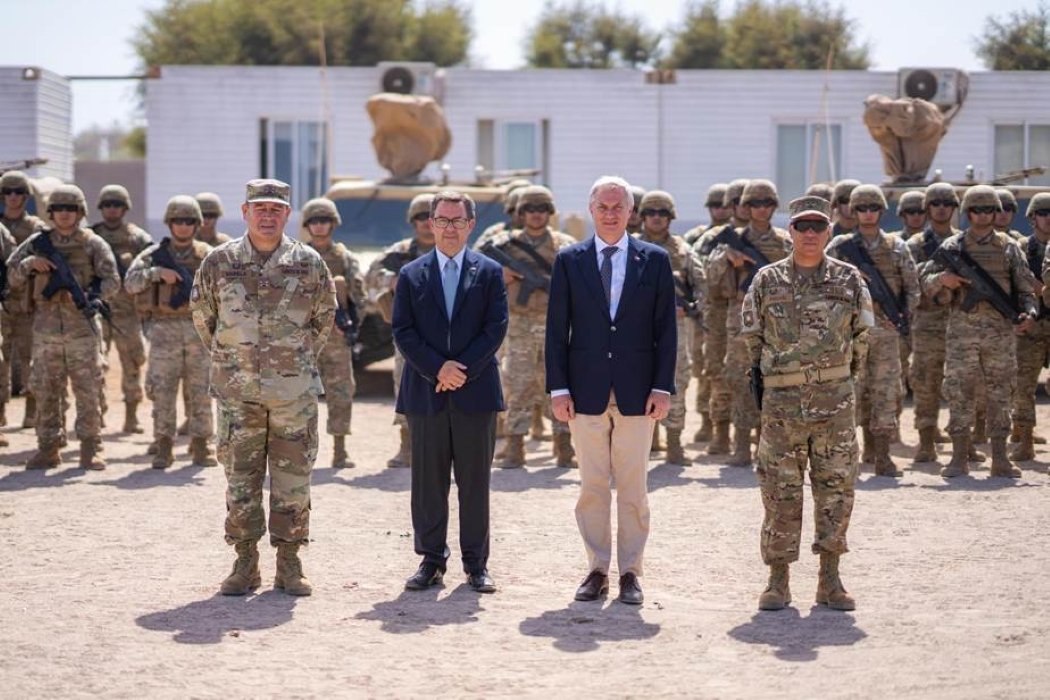
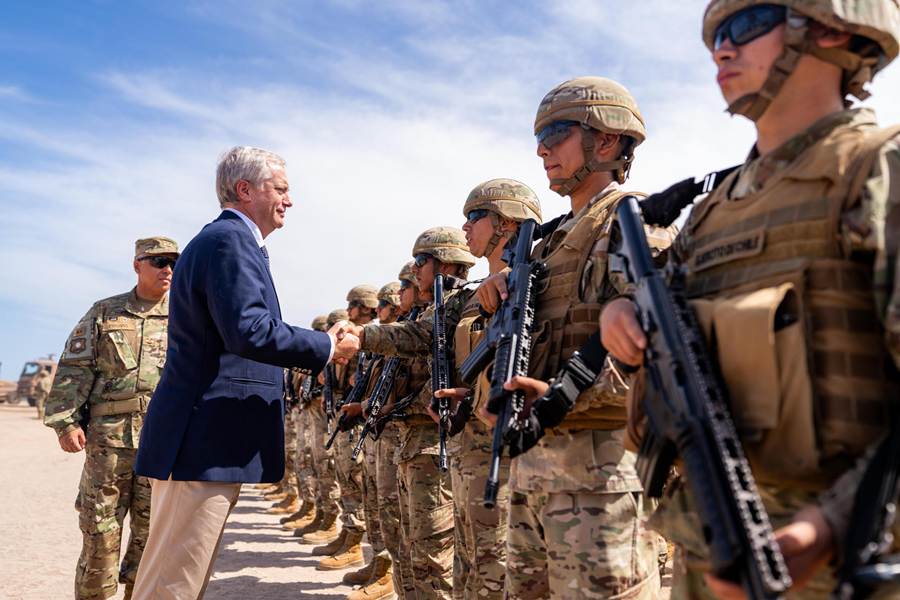
Just five days after taking office, José Antonio Kast traveled north to a dusty construction site along Chile’s border with Peru. He checked out the first section of a new barrier in the Atacama Desert, spoke with workers, and described the trench as the first step in a larger plan to stop illegal immigration. Physically, it’s just a small ditch so far, but politically, it means much more.
This project is more than just infrastructure. It’s a performance, a warning, and a statement all at once. Kast didn’t present it as a simple border fix or a bureaucratic reaction to migration. Instead, he called it a milestone for Chile—a defense against illegal immigration, drug trafficking, and organized crime—and part of building what he called a sovereign Chile. In his words, the trench is symbolic before it’s practical.
This matters for the region because Latin American politics has long used public works as political statements. A wall, a road, a port, a military checkpoint, or a trench in the desert can show how a state views threats and who it thinks the nation should fear. Kast’s barrier fits this tradition. It marks territory, yes, but more importantly, it signals a shift in the political mood.
Chile has long been seen in South America as an orderly republic and a stable state—a country that stayed steady while neighbors faced turmoil. Reports say Chile is still one of the safest and most stable countries in the region. But they also explain why this border policy gained support. Concerns have grown among Chileans as immigration and organized crime have become hot topics. The foreign population jumped from under 600,000 in 2015 to over 1.5 million in 2024, according to World Bank data. The government estimates that about 336,000 of these migrants are undocumented, many from Venezuela.
These numbers aren’t just statistics. In politics, they turn into stories. And the politician who shapes the story often shapes how the public feels.
The Trump Echo in the Atacama
The international reference is clear. Kast’s trench strongly resembles Donald Trump’s language and political style. Several of Kast’s policies echo Trump’s promises, especially on immigration. This isn’t a surface-level comparison. Trump made the wall at the Mexican border a repeated slogan and a symbol of national restoration. Kast is trying something similar in Chile, bringing that same tough territorial politics to South America.
Even the symbols of loyalty have crossed borders. Some of Kast’s supporters wear red “Make Chile Great Again” caps, a clear nod to Trump’s movement. This phrase matters because it does more than copy branding—it brings a whole worldview. It suggests that Chile, like the U.S. in Trump’s rhetoric, has been weakened, overwhelmed, or thrown into disorder and now needs to be saved through strength, closure, and symbolic confrontation.
This is why Kast’s election is geopolitically important. It’s described as Chile’s sharpest move to the right since the military dictatorship ended in 1990. That’s a big deal, especially since Kast has openly praised Augusto Pinochet. Chile isn’t just switching between center-left and center-right governments anymore. It’s moving into a more extreme ideological space where public order, national identity, and border control come together in a single governing narrative.
This shift also brings Chile closer to a wider right-wing trend across the hemisphere. This view sees migration not mainly as a humanitarian or labor issue, but as a matter of sovereignty, crime, and civilization. In this way, borders aren’t just administrative lines anymore. They become political battlegrounds where governments show their strength.
As a result, Chile might become a southern example of how Trump-style politics can be adapted in Latin America without just copying it. The desert trench isn’t the U.S. border wall, and Chile has its own history, fears, and conditions. But the emotional message is very similar. Chaos is called out. Insecurity is made personal. Physical barriers become moral lines. The state is seen as a defender under attack.
What Chile Now Tells Latin America
That’s why Kast’s words matter as much as the ditch itself. When he says Chile has been violated by illegal immigration, drug trafficking, and organized crime, he’s combining different fears into one national problem. Migration becomes linked with crime. Crime becomes linked with sovereignty. Sovereignty becomes linked with strong government action. It’s a powerful political message that can spread easily across borders.
That is why Kast’s rhetoric matters as much as the ditch itself. When he says Chile has been violated by illegal immigration, drug trafficking, and organized crime, he is merging different anxieties into one national wound. Migration becomes inseparable from criminality. Crime becomes inseparable from sovereignty. Sovereignty becomes inseparable from executive force. It is an efficient political formula that can travel easily across borders.
There’s also a deeper irony here. Latin America has long been a region of emigration, exile, and displacement. Its history is full of departures, crossings, and forced moves. Yet in tough times, countries can start talking like fortresses instead of societies shaped by migration. Chile’s new barrier shows this shift. It’s not just a policy choice but a new self-image for the public: the nation as a border, the state as a shield.
And the shield is meant to be visible. The government says the barrier will include trenches and fences, patrolled by the military, along with surveillance and other obstacles. It won’t cover all of Chile’s long northern border, only about half, according to the interior ministry. But in politics, full coverage isn’t always the goal. Sometimes just being seen is enough. A government doesn’t have to block every crossing to show that the era of permissiveness is over.
That message will reach beyond Arica and the Atacama. It tells neighboring countries that Chile’s new government plans to rule with toughness. It shows the Latin American right that border displays can still stir public emotions. And it warns the region’s left that it faces a new kind of conservative confidence—one that openly admires Trump, references dictatorship without shame, and sees migration as a test of national will.
In that sense, the first trench in Chile’s desert is also a trench in the continent’s politics. It marks the end of one era of Latin American discourse and the start of a harsher one.
Also Read:
El Salvador Emergency Rule Meets a Growing Human Rights Reckoning