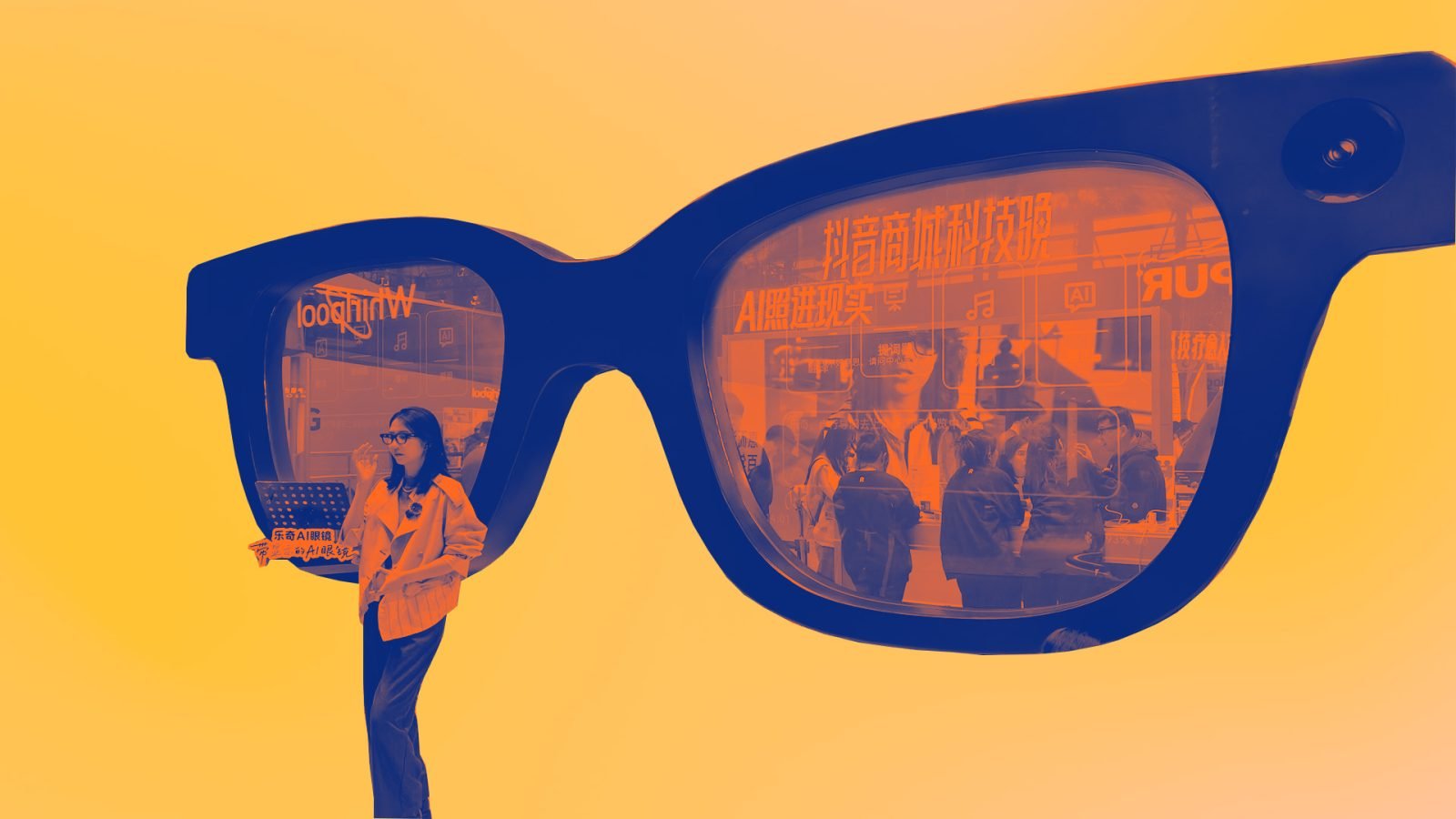
Vivian, a university student in Hebei province, loves her Rokid AI glasses. When she heads out on a scooter, she puts them on for navigation. When she shops for clothes, she quietly takes photos of the price tags with the glasses — so she can check if they are cheaper online.
Sometimes, she cheats in exams. The glasses scan the questions and display answers on the lens. “Any subject that I may fail at,” she said, requesting the use of a pseudonym so she could speak freely. Some schoolmates have rented her glasses to use in exams.
AI-powered smart glasses have become a multibillion-dollar industry. The glasses, priced from $270 to more than $1,000, are generally equipped with cameras and audio features, powered by large language models. Those with screens can display text or images with augmented reality effects.
Meta’s glasses, made with EssilorLuxottica’s Ray-Ban and Oakley, allow users to take photos and listen to music. They are available in India, Mexico, and a number of Western markets. Meta’s latest Ray-Ban Display model, with built-in screens, is only available in the U.S.
China makes up a small portion of the global smart glasses market. In 2025, 2.5 million pairs of smart glasses were shipped to the Chinese market, accounting for 16.7% of the global shipment of 14.8 million, according to consultancy IDC.
Domestic brands are competing to break into the mainstream market by integrating AI glasses into everyday life. Since 2025, companies including XiaomiXiaomiXiaomi is a Chinese consumer electronics company that leads the country in smartphone manufacturing and sales.READ MORE, AlibabaAlibabaAlibaba, founded in 1999 by Chinese entrepreneur Jack Ma, is one of the most prominent global e-commerce companies that operates platforms like AliExpress, Taobao, and Tmall.READ MORE, and electric-vehicle maker Li Auto have launched smart glasses models. They have touted features ranging from real-time calorie tracking for meals to creating theater-like movie viewing experiences using virtual reality.
The Chinese government this year also included smart glasses in a national subsidy program aimed at spurring consumption and is offering 15% of the sale price in discounts, with a cap of 500 yuan ($73).
Some consumers have purchased or rented smart glasses out of curiosity. On secondhand marketplace Xianyu, dozens of merchants offer AI glasses rentals. Ke Changsi, a Shenzhen-based businessman, told Rest of World he has rented out Rokid and Quark glasses to more than 1,000 people over the past four months. The prices range from 40 yuan to 80 yuan ($6 to $12) a day, depending on the model.
Customers have used the glasses to translate road signs while traveling abroad, interpret business meetings with foreign clients, and as teleprompters during public speeches, Ke said.
Demand also comes from students who need the glasses for exams. On his page on the social platform Xiaohongshu, Ke advertised how the glasses could answer English and math questions. Users can control the device with a small remote that looks like a ring.
Major exams in China, such as the national college entrance exam and civil service exams, have explicitly banned smart glasses. But students say most teachers don’t recognize these glasses during regular school exams.
Researchers at the Hong Kong University of Science and Technology recently connected Rokid glasses with ChatGPT 5.2. A tester wearing the glasses scored in the top five in a class of over 100 students. The research group is also developing systems that help teachers detect AI glasses, Zili Meng, an assistant professor at the university, told Rest of World.
Meng said that to broaden the use cases of AI glasses, the industry needs a shared architecture for developers to build more innovative applications — just as how people can build apps for Android and iOS smartphones. For example, he and his colleagues have built an application that provides the wearer with cues about subtle or implied messages from the other person during a conversation.
For now, early adopters say the glasses have many shortcomings: Smart glasses can weigh up to 50 grams, twice as much as regular glasses. Charging is another hassle. Batteries often run out within a few hours and have to be put back into the charging cases in the middle of the day.
Liu Zhigang, a university student in Zhejiang province, bought a pair of Rokid glasses for about 3,300 yuan ($465) in July. Liu never used it in exams, but he tried taking photos while riding a bike and making digital payments — he had to say “Rokid, make a payment” out loud in a shop.
Liu said he rarely wears the glasses now because they are too uncomfortable. In the summer, the device heats up and makes him sweat. The functions can be easily done by a smartphone, he said.
An influencer in Hangzhou, who requested anonymity because he had worked with AI glasses companies, said he tried Rokid glasses for a week after the company paid him for a sponsored post on Xiaohongshu. “They didn’t have any real use for me,” he told Rest of World. He tried navigating with the glasses while driving a car, and found it dangerous to keep switching his focus between the road and the display.
Internet users have also expressed concerns that AI glasses would be increasingly used for covert filming. Most glasses have a blinking LED light that turns on when the camera is active, but online merchants are selling stickers used to cover up the light.