Abelardo de la Espriella’s razor-thin victory promises to reset Colombia’s alliance with Washington, revive militarized drug policy, and test whether a country exhausted by violence has chosen security, spectacle, or simply the most forceful answer available at the ballot box.
A Mandate Barely Wider Than a Whisper
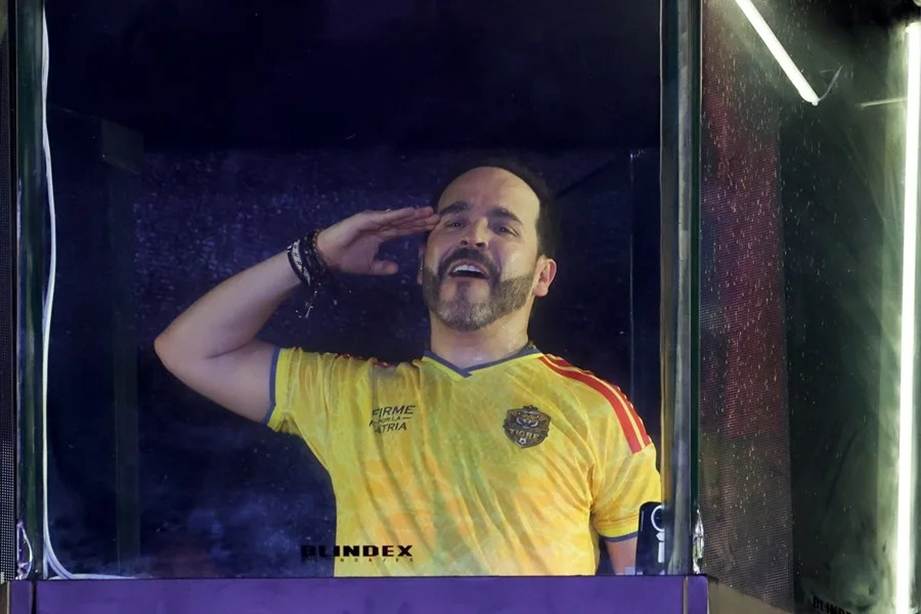
In Barranquilla, De la Espriella delivered his victory speech behind bulletproof glass, a fitting image for a campaign built on danger and protection. The 47-year-old lawyer, businessman, father of four, and occasional vallenato singer had never held public office. Yet El Tigre stood poised to inherit a state he says has grown soft and unsafe. The theatrics matter. So does the fear beneath them: extortion, armed groups, coca economies, and the old Colombian dread that violence is moving closer to home.
The preliminary count gave De la Espriella 49.66 percent against Iván Cepeda’s 48.7 percent. That is a 0.96-point gap, roughly 251,000 votes. Donald Trump said his favored candidate had won easily. The arithmetic says otherwise. Nearly half the electorate chose a leftist who defended negotiation over a military turn, while Cepeda challenged the results from thousands of polling stations. This was a victory, not a blank check. It was a mandate written in pencil.
That distinction matters because De la Espriella campaigned as if urgency could replace consensus. He proposed 10 mega-prisons, ending peace talks, and cutting the state by 40 percent. A contradiction sits inside that platform. Prisons, intelligence, prosecutors, rural roads, land registries, and crop-substitution programs require a capable government. If the civilian state shrinks while its coercive arm grows, Colombia may get fiercer raids and sharper television images, not durable authority where armed groups recruit, tax, and rule.
Washington Finds Its Familiar Partner
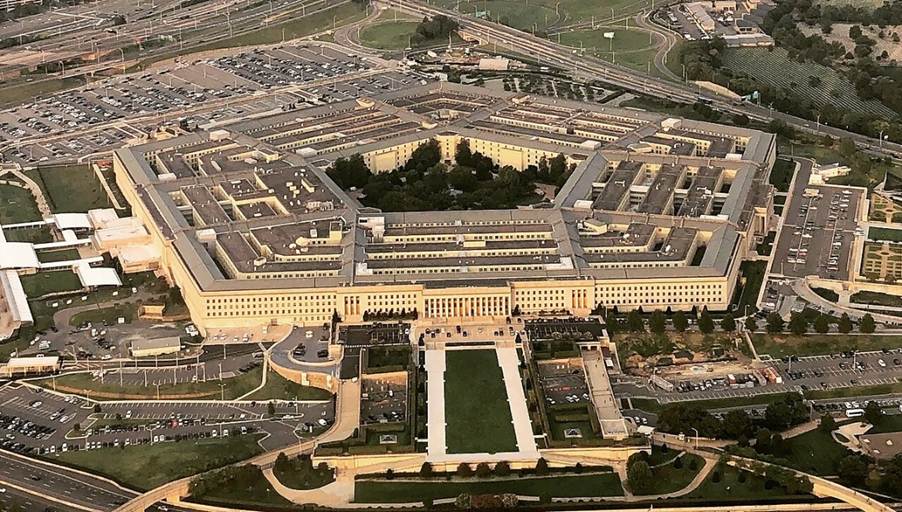
Pete Hegseth’s congratulations arrived with an invitation. The U.S. Secretary of War asked the incoming administration to work with the Department of War and the Americas Counter Cartel Coalition, promising to “revitalize” the military alliance and target narcotics production and what Washington calls narco-terrorists. Trump had already phoned De la Espriella, praised him as a “great president,” and said relations would be “much better” than under Gustavo Petro. This was not routine diplomatic courtesy. It sounded like recognition between political brands.
The coalition Hegseth is building places border control, burden-sharing, and cartel warfare inside a revived hemispheric doctrine. At its March conference, representatives from 17 countries signed a security declaration, while Hegseth invoked the Monroe Doctrine and said Washington was prepared to act alone. Colombia would not be a decorative member. It brings experienced armed forces, intelligence networks, two-ocean access, a long Venezuelan border, and the world’s largest cocaine supply chain. Its entry could turn a political club into an operational system. It could also fold Colombia’s unfinished conflict into Washington’s homeland-security strategy.
Colombians have seen this movie before, though the ending remains disputed. Plan Colombia strengthened state forces and produced dramatic security gains. A U.S. Government Accountability Office review found that homicides fell 53 percent and kidnappings 94 percent between 2000 and 2016. Yet another GAO assessment concluded that the original goal of cutting illegal drug cultivation, processing, and distribution by half was not fully achieved. The lesson is uncomfortable: military pressure can change the balance of war, but cocaine is an economy, not merely an enemy formation.
The new embrace also reflects how badly the relationship broke. Washington sanctioned Petro in October 2025 under counternarcotics authorities, accusing him of allowing cocaine production to surge, allegations he rejected. De la Espriella offers the opposite posture: warmth toward Trump, ideological alignment, and total cooperation on crime and migration. That may reopen channels quickly. Still, alliances built around mutual admiration can be brittle. Trump’s explanation was revealingly simple: people who like him, he likes. Colombia’s national interest is more complicated.
The Coca Fields Outlast the Slogans
The data explains why a hard-line message found an audience. The United Nations reported that coca cultivation reached 253,000 hectares in 2023, up 10 percent in one year, while potential cocaine production jumped 53 percent to 2,664 metric tons. It was the tenth consecutive annual increase in estimated output. Those figures are a political indictment of the status quo. They are not, by themselves, proof that bombing camps, spraying fields, or expanding prisons will solve the market that sustains them.
The same survey contains the more revealing numbers. Thirty-nine percent of potential coca-leaf production came from highly productive enclaves occupying only 14 percent of coca territory. Meanwhile, roughly 209,000 hectares lay within 12 kilometers of a populated center, compared with 37,000 hectares in 2013. Coca is no longer only a crop hidden beyond the road. In many places, it is braided into local credit, transport, food sales, and family survival. A farmer plants what a buyer will collect. A legal harvest means little when it spoils before reaching the market. Force can clear a field. Only functioning institutions can change that calculation.
De la Espriella will take office on August 7 with Washington cheering, a divided Congress waiting, and almost half the electorate unconvinced. His opportunity is real. So is the danger of mistaking applause from the Oval Office for consent in Cauca, Nariño, or Bogotá. The Tiger can roar beside Trump. Governing Colombia will require a quieter skill: making the state arrive before the armed men do.
Also Read:
Brazil Counts Its Indigenous Nations and Finds a Larger Country