Newly declassified U.S. Justice Department emails and files in the Jeffrey Epstein case are rippling into Colombia again, reviving questions about former president Andrés Pastrana and his links to Epstein and Ghislaine Maxwell, and sharpening demands for transparency now publicly.
A Letter Lands and the Timeline Reopens
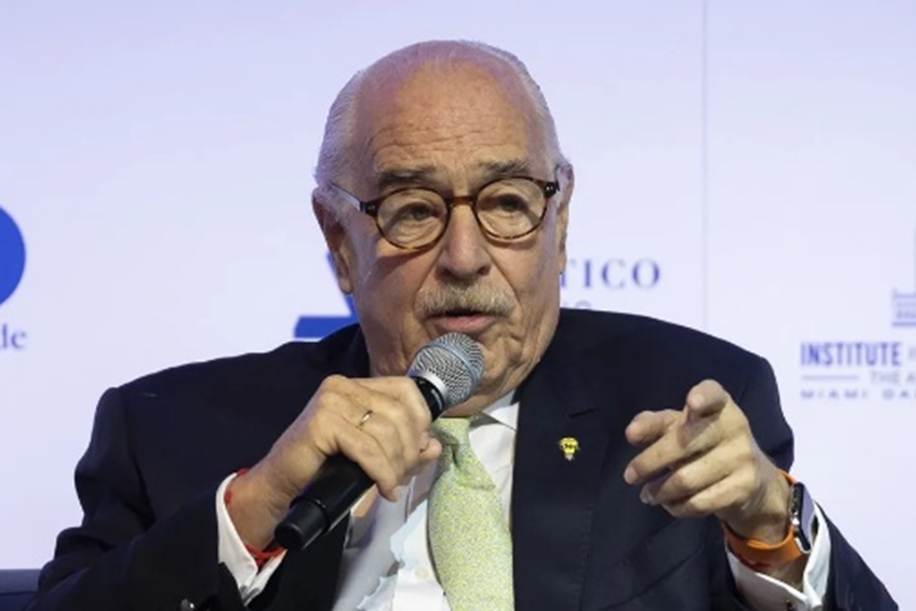
It starts the way so many Colombian political storms start now, not with a press conference or a courtroom door swinging open, but with a screen. A public letter, signed by thirty-five women from journalism, law, and public service, circulates and then hardens into a headline. Andrés Pastrana answers on X. He calls the letter an attack on his dignity and principles. He denies any link to Jeffrey Epstein. And then, crucially, he stops there.
The blue light of a phone is not evidence, but it is an atmosphere. The everyday detail is the speed, the way a controversy can reassemble itself from old pieces as soon as a fresh document dump gives people something new to point at, something to quote, something to repost. One day, the story is international. The next day, it is personal. Then it becomes political again.
The letter’s central demand is simple and sharp. The signatories urge Pastrana to “break the pact of silence” about his alleged relationship with Epstein and with Ghislaine Maxwell, who was convicted for participating in a network of sexual abuse and trafficking of minors. The words are heavy. The accusation is not framed as gossip. It is framed as an ethical and political obligation, pushed forward by women who argue that silence itself can function like a cover in cases involving extreme crimes.
Pastrana’s response, at least as captured in this moment, does not meet that demand with detail. He rejects the letter and denies any connection to Epstein, but he offers no further information. That gap is where the argument lives. Not just whether the former president is mentioned in files, but what a public figure owes the public when those files return, larger, darker, and more difficult to ignore.
Because the context has changed, this was not born yesterday in Colombia.
Pastrana’s name, the text reminds us, has been in this orbit since two thousand nineteen, when he was linked to the passenger records of the private jet known as the Lolita Express, the aircraft used to transport Epstein’s victims. Back then, Pastrana addressed the issue briefly. He said he met Epstein and Maxwell in Dublin. He said he did not know about Epstein’s crimes, even though by two thousand eight Epstein had been registered as a sexual abuser for soliciting prostitution from a minor.
That earlier explanation is now being asked to do more work than it did then. Not because time has passed, but because the documents have multiplied, and the public sense of what the Epstein network represents has sharpened.
What the Files Say and What They Do Not
The new jolt comes from Washington. The U.S. Department of Justice has declassified emails and files connected to the Epstein case, and the release has shaken international politics again, the kind of ripple that moves across borders because the network it describes spans them.
In the third release of documents referenced here, Pastrana’s name appears around thirty times in the files, including in message exchanges with others identified within the criminal network. The sheer scale matters. The package includes more than three million files. A number like that does not automatically clarify anything. It can do the opposite. It can bury accountability under volume, bury meaning under mass.
Still, the repeated mentions of a former Colombian president are not the sort of detail that fades quietly. Not in Colombia. Not now.
The reverberations are not confined to Bogotá, either. The text describes international repercussions that reached the United Kingdom, where, according to the information available, the new documents led to the arrests of the former Prince of England, Andrew Mountbatten-Windsor, and the former British ambassador, Peter Mandelson, triggering a political crisis there.
That claim functions in this story the way overseas scandals often function in Colombia. It raises the stakes. It tells Colombian readers, in effect, that this is not a provincial obsession. It is part of a wider reckoning in elite circles, political and social, where proximity can look like complicity even when it is not, and where denials can sound like strategy even when they are true.
The trouble is that documentary mention is a strange fact. A name in an archive can mean something or nothing, depending on what surrounds it. A photograph can be a record of a moment or a record of a relationship. And Colombia, like many places, has learned the hard way that elite networks often hide in plain sight, behind invitations, introductions, and the softness of social familiarity.
That is why the text takes care to draw a boundary that matters. The appearance of someone in photographs or in documentary references is not, by itself, proof of participation in criminal activity. That point is essential, not as a disclaimer, but as a guardrail. Yet the text also insists that volume changes the moral pressure. Repetition changes the demand. Persistent social links, even in the absence of criminal allegations, can raise a legitimate public question when the crimes are this grave.
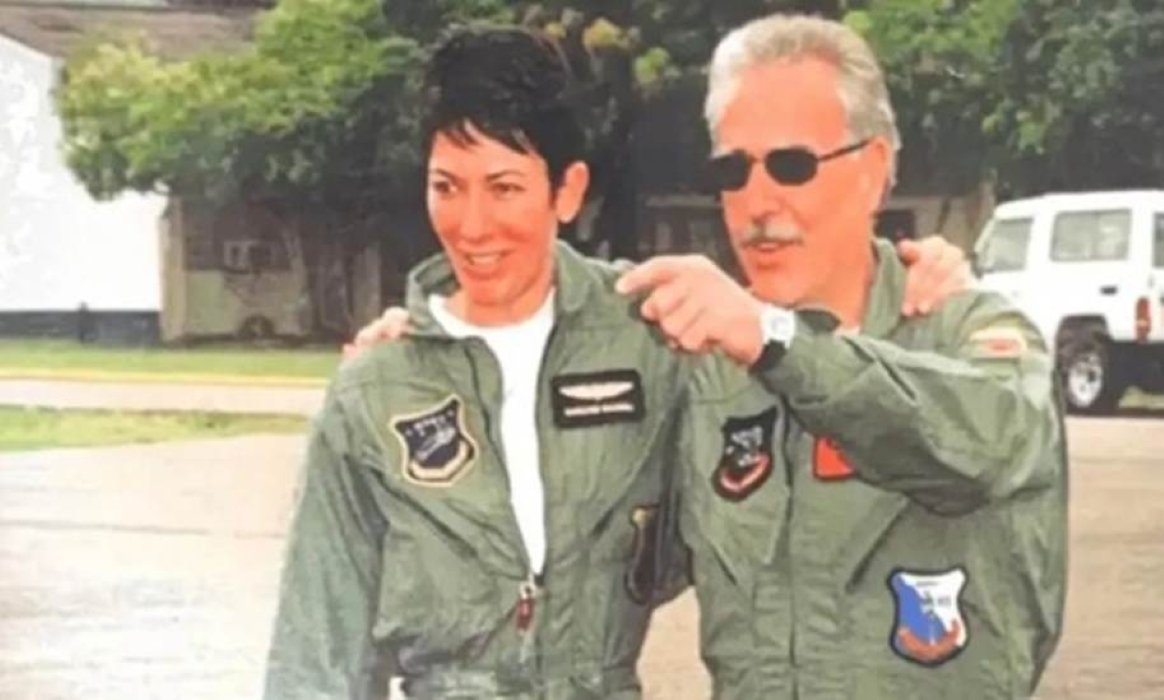
The release also connects Colombia’s debate to images, the kind that land with a different force than spreadsheets or passenger logs. In two thousand twenty five, The New York Times published dozens of previously unseen photographs taken inside Epstein’s residence. Among the many framed photographs displayed in that house, a picture of Pastrana appeared.
That same year, additional photographs were published showing Maxwell with Pastrana in Colombia, dated between 2002 and 2003. A statement attributed to Maxwell also became part of the public record described here, in which she said the two men were friends.
None of that is a verdict. But it is nothing, either. Colombia is being asked to sit with the unsettling normality of elite proximity in a case built on predation. It is being asked to decide whether denial without explanation is enough.
And whether silence, in a story like this, should still be treated as neutral.

Colombia’s Own Reckoning with Abuse and Impunity
The letter signed by the thirty-five women does not treat this as a celebrity scandal. It treats it as a civic test. The signatories argue that silence contributes to opacity in a case involving crimes of extreme gravity. They press for exposure, rigorous investigation, and sanctions when appropriate, not just for Epstein and Maxwell, but for a wider web of social, political, financial, and intellectual elites linked to the network.
Their argument deliberately widens, and for a reason. They say phenomena like child sexual abuse and human trafficking persist because of social indifference, the lack of public scrutiny, and state inefficiency, conditions that help impunity survive. This is not abstract language in Colombia. It is structural language. It is the language of a country where the distance between what people know and what institutions prove can feel permanent.
The letter also loops back to a smaller, more intimate demand. It draws on a prior column by the lawyer and journalist Ana Bejarano Ricaurte, who had already called for greater clarity and received requests for retraction from Pastrana. The point, for the signatories, is not to perform outrage. It is to insist that transparency is a necessary condition for confronting impunity in sexual violence crimes, especially those committed against minors.
That is where the policy dispute arises from a personal controversy. It is about what kind of public standard Colombia applies to its former presidents when they appear in global archives tied to sexual exploitation. It is about whether the default posture is to wait for prosecutors elsewhere to speak, or to demand clarity at home simply because the questions are now part of Colombia’s public life.
The wager here is about trust, and Colombia does not have much trust to waste.
In their framing, Colombia’s context is not a side note but the core. They describe a country where sexual abuse against girls, boys, and adolescents remains a structural problem, and where sexual exploitation and trafficking are a regional phenomenon of deep concern. Under that reality, they argue, clarifying any possible connection between a former head of state and an international trafficking network is not a minor matter. It is an ethical and political obligation.
Pastrana has denied any link to Epstein. That denial is now on the record again, louder than before, because the files are louder than before. But the central tension remains unresolved in the text as presented. A denial can close a door, but it does not answer the questions that led people to knock in the first place.
So Colombia sits in the familiar space between documents and accountability, between a name that appears and an explanation that does not.
Silence, and then more silence.
The public expectation, as the text puts it, is whether Pastrana will offer a broad explanation that can clear doubts and close, or at least clarify, a chapter that has taken on an international scale. In Colombia, that is the uncomfortable truth about scandals like this. The story rarely ends when a document drops. It ends, if it ends at all, when someone finally decides to speak like the public is owed something.
Also Read:
Colombia Minimum Wage Fight Turns Courtrooms into Campaign Stages Again