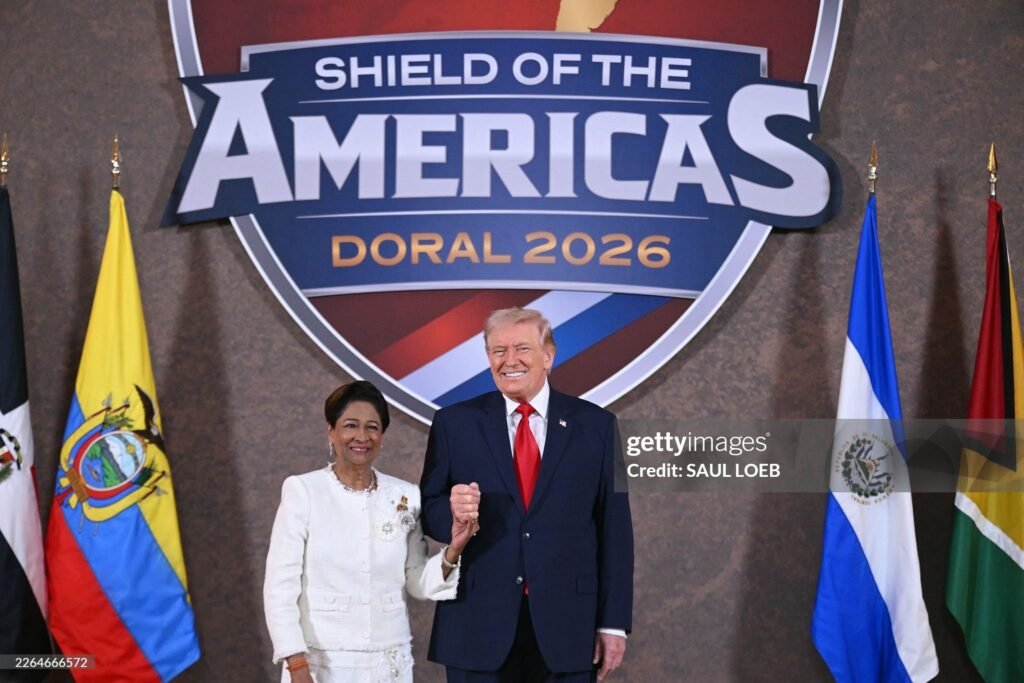
Ecuador is gearing up for a wider military campaign against criminal networks. This effort combines curfews, troop deployments, and support from the United States with a tougher political stance from President Daniel Noboa’s government, aiming to target profits, routes, and territory directly.
A War That Moves Into Daily Life
The language coming out of Ecuador is no longer just the language of raids. It is the language of siege.
Starting this weekend, the government says it is ready to launch a sweeping military offensive against criminal networks with support from the United States. In an interview with Radio Centro, Interior Minister John Reimberg described the upcoming operation as a strategic shift for the administration of President Daniel Noboa. Last year, he said, the focus was on capturing the heads of criminal structures, a tactic that pushed rival factions to fight among themselves over the same criminal economy. This year, he told Radio Centro, the target will be the criminal economy itself.
This change is important. It shows the government thinks Ecuador’s crisis can’t be solved by just taking out individual criminals while leaving the money, transport, and extraction systems untouched. Reimberg pointed to illegal mining and drug trafficking as key targets. The government now sees the problem not just as gangs with guns, but as an underground market with roads, routes, supply chains, and territorial control.
That’s why the curfews announced for El Oro, Guayas, Santo Domingo de los Tsachilas, and Los Ríos are so telling. Curfews do more than limit movement—they change everyday life. Roads turn into military zones. Nighttime becomes controlled by the state. Even simple trips now need paperwork and a good reason. Reimberg told Radio Centro these rules are needed to avoid collateral damage during upcoming attacks and to keep roads clear for troops and operations.
There is something stark in that phrasing. The state is not merely asking civilians for patience. It is asking them to step aside while the force passes through.
The Trump Bond Behind the Crackdown
This campaign is also closely tied to Ecuador’s growing political ties with Washington.
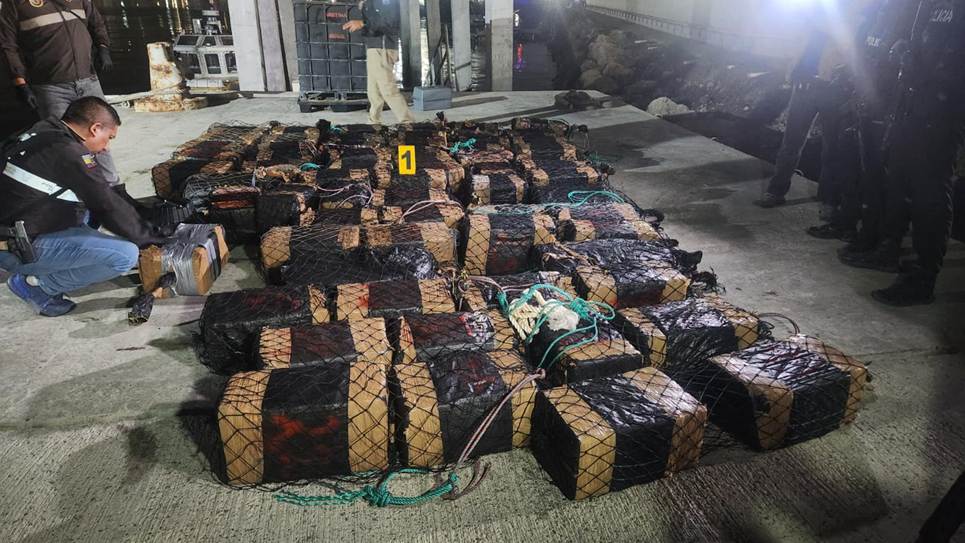
After Noboa told the national police that the next phase in the fight against organized crime had begun, the United States confirmed that it had begun joint military operations with Ecuador. For now, the support focuses on logistics and intelligence. Still, the symbolism is strong. Ecuador is not just stepping up its fight against criminal networks; it’s doing so alongside a U.S. administration urging Latin American governments to take tougher action and describe these networks in the harshest terms.
Noboa and Donald Trump appear increasingly aligned in tone and posture. The connection matters because it places Ecuador’s domestic security policy inside a broader hemispheric script, one in which pressure, punishment, and displays of strength are treated as proof of seriousness. Noboa has echoed hardline positions toward Cuba and Colombia. Top United States officials have visited him to discuss regional security. The Trump administration, for its part, has openly spoken of asserting preeminence throughout the Western Hemisphere.
That is not a neutral backdrop. In Latin America, security alliances with Washington are never just technical arrangements. They carry historical memory. They evoke earlier moments when the language of order and anti trafficking also brought deeper outside influence into the region’s internal affairs. Ecuador’s proposed path, therefore, carries two messages at once. One is immediate and domestic: the government wants to show it is acting with greater force. The other is geopolitical: Ecuador is presenting itself as a willing partner in a wider regional crackdown shaped in part by United States priorities.
This gives Noboa political advantages. It projects decisiveness. It appeals to voters exhausted by violence. It signals international backing. But it also raises an older regional question. When a government borrows the posture of war, who gets protected, who gets swept up, and how easily does an emergency become routine?
A Country Changed by Fear and Geography
The conditions behind this moment didn’t come from a single speech or alliance. They built up over time.
After coming to power for an abbreviated term and then winning reelection, Noboa built much of his appeal around confronting gang growth. That promise resonated because Ecuador had changed. Once seen as a country with relatively little violent crime, it experienced a sharp surge after the pandemic. The notes make clear that experts see multiple causes. The economy was weakened. Youth unemployment was high. Geography also did its work. Ecuador sits between Colombia and Peru, the two largest cocaine producers in the world, and its Pacific Coast position made it attractive for illicit exports.
This mix is dangerous because it turns the country’s weaknesses into opportunities for criminals. Domestic problems meet foreign demand. Ports and routes become more important, and criminal groups fight harder to control them. The territory itself turns into a market.
The homicide spike reported for last year gives the government its strongest argument for escalation. The public can see that the old equilibrium is gone. Fear has become part of ordinary life. That is why Noboa’s hardline tactics, often compared by critics to the mano dura approach, have found a hearing even after his effort to allow foreign military bases was defeated. The referendum failed, but the impulse behind it did not disappear. It simply changed form.
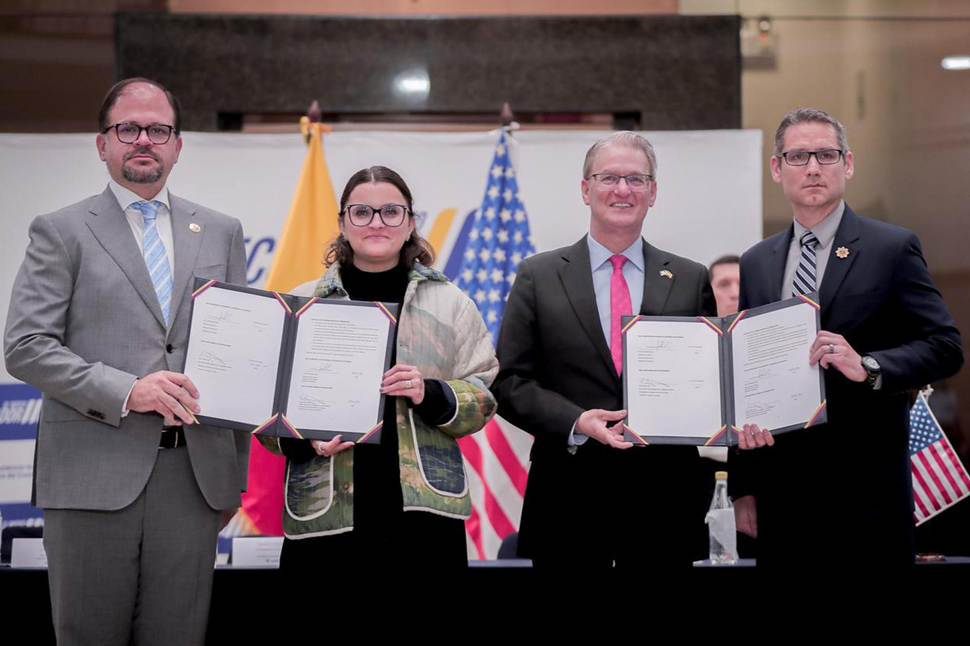
Now there will be no foreign bases, but there will be joint operations, an FBI field office, and a rhetoric that leaves little doubt about intent. Reimberg’s words to Radio Centro were blunt: the difference this time is the force with which the government will act. “Basically and in summary, we are going to destroy.”
That sentence is meant to reassure a frightened country. It is also the sentence that should make the region pay attention. Latin America knows this promise well. States under pressure often declare that destruction is the path back to order. Sometimes they weaken violent networks. Sometimes they deepen the cycle by militarising daily life without repairing the social and economic fractures that made criminal economies so powerful in the first place.
Ecuador is now betting that using more force, keeping roads clear, and working more closely with Washington can break this cycle. The problem is, once a country starts talking like it’s at war, it’s much harder to know where the fighting stops.
Also Read:
Latin America’s Uber Boom Runs on Debt and Fragile Safety Nets