A hidden semi-submersible in Ecuador’s mangroves offered more than a striking security image. It revealed how deeply the regional drug trade now depends on quiet logistics, border geography and militarized responses that may look decisive while leaving the business intact.
A Vessel Hidden in the Roots
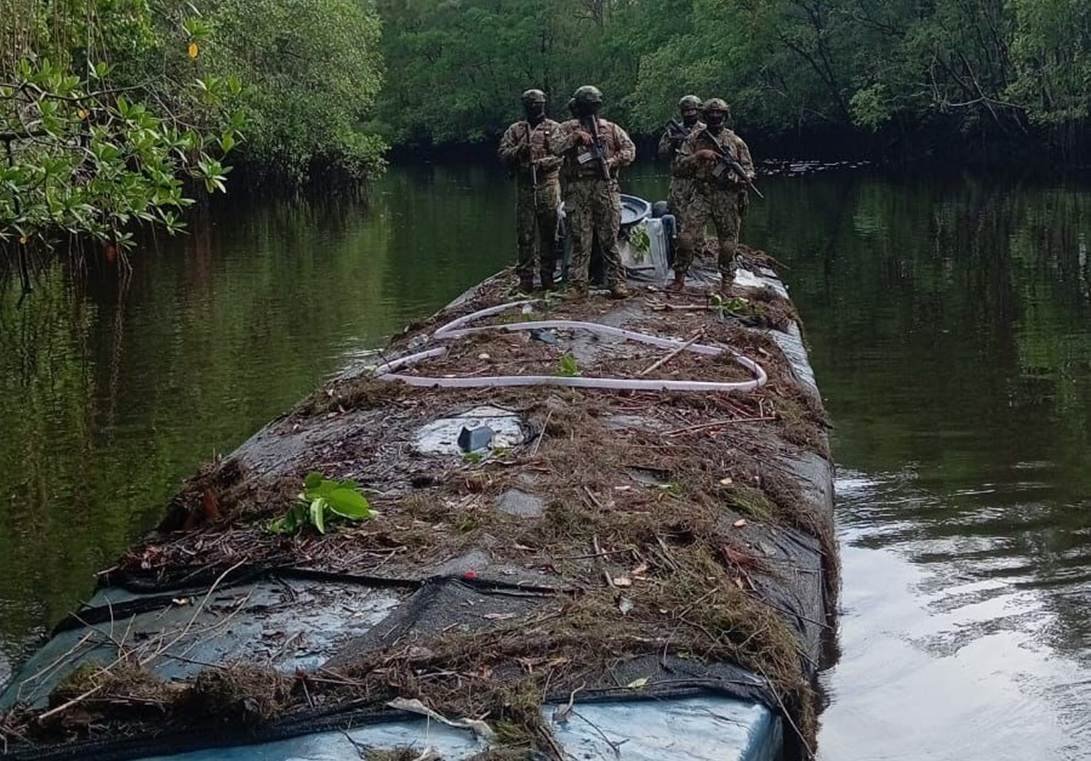
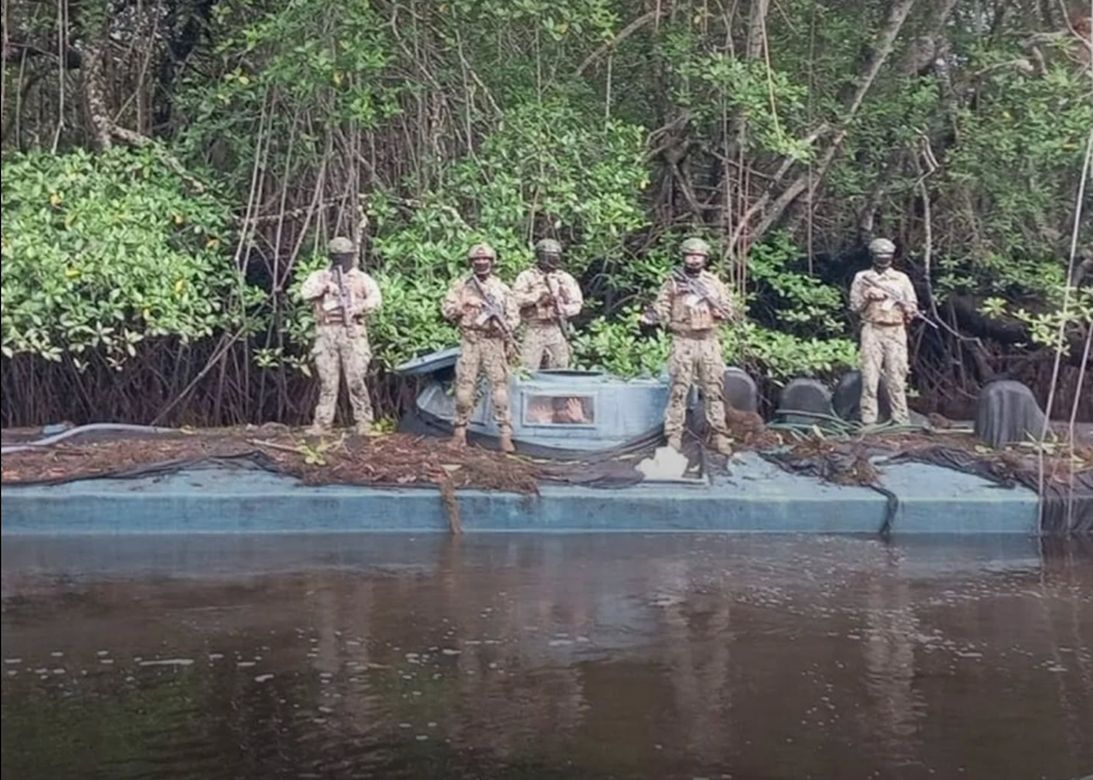
The image is almost too perfect, which is part of what makes it unsettling. In a mangrove swamp inside the Cayapas–Mataje nature reserve, near Ecuador’s border with Colombia, troops found a 35m-long “narco submarine” concealed in the wet green tangle. Nearby, they found a camp that the military said criminals were using as a logistics hub to prepare vessels for drug smuggling. There were six speedboats, seven outboard motors and dozens of barrels of fuel. The semi-submersible itself was carrying 6,000 gallons of fuel and, according to Ecuador’s ministry of defence, was ready for “a long drug-smuggling voyage.”
That scene tells its own story. Not a cinematic one, not really. A practical one. Fuel stacked in barrels. Motors waiting. Boats ready. Mud, roots, water, silence. This is what the drug trade often looks like before the headlines arrive. Not glamour. Supply chains.
The troops came under fire from what the defence ministry described as “armed individuals” during the operation. Yet the official statement mentioned no arrests and no drugs seized. That detail matters. It leaves behind a picture that is both dramatic and incomplete, a major seizure of transport capacity without the visible narcotics that usually anchor public understanding of the trade. What was found was infrastructure. And infrastructure is often the harder truth.
Ecuador’s President Daniel Noboa had only just announced a “new phase” in his government’s war on drug cartels. The timing makes the swamp discovery feel like proof of urgency. It also shows why Ecuador now sits so uneasily in the regional imagination. Sandwiched between Colombia and Peru, the world’s largest producers of cocaine, the country has become a key corridor through which illicit drugs move from South America to the US, Europe and as far as Australia. That is not just geography. It is pressure made visible.
The Geography Drug Routes Love
For Latin America, the Ecuador find says something uncomfortable about how the drug business adapts. It does not need spectacle to function. It needs routes, fuel, quiet launch points and enough territorial control to prepare a vessel in a protected natural reserve. That is what makes this more than a local security story. The submarine in the swamp is not just a hidden machine. It is evidence of a regional map at work.
Drugs move through weak seams, and Ecuador has become one of those seams. The country sits between major cocaine-producing neighbors and opens outward to multiple destinations. The notes make that plain. So does the seized vessel’s profile. A semi-submersible prepared for a long voyage is not built for improvisation. It suggests planning, money, patience and a trafficking economy that has learned to think like shipping.
That matters for Latin America because the region keeps being asked to confront the drug trade as if it were mainly a matter of raids, patrols and battlefield resolve. Those things are not irrelevant. The discovery in the Cayapas–Mataje reserve clearly shows the need for state presence in difficult terrain. But what the operation uncovered was a logistics chain in embryo. And logistics chains are stubborn. They reroute. They absorb loss. They move around pressure.
So the Ecuador case becomes a small regional parable. One vessel is found. Another route opens. One camp is exposed. Another staging point appears. The business thrives on that flexibility. It thrives on the fact that drugs are not only planted and processed. They are stored, fueled, shipped, protected and financed. In that sense, the mangrove swamp was not a remote corner. It was a working link in a transnational system.
A War That Keeps Getting Louder
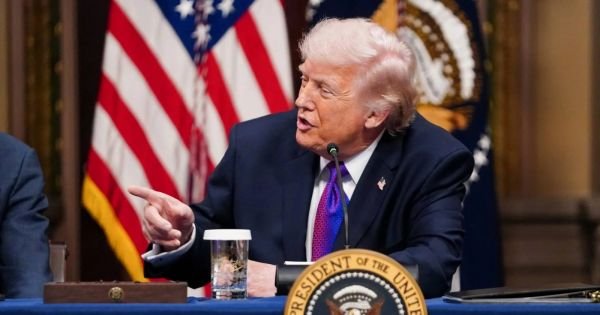
Noboa has been working closely with the Trump administration to curb the flow of drugs from Ecuador into the US. Earlier in the week, he discussed security cooperation in Quito with Gen Francis Donovan, the commander of US Southern Command. There was no immediate mention of US forces participating in the swamp operation itself. Still, the wider backdrop is impossible to miss.
Since September, the US has carried out dozens of strikes on boats suspected of carrying drugs in the Pacific Ocean and Caribbean under “Operation Southern Spear.” More than 150 people have been killed in those strikes. That number hangs over this Ecuador story, even if the operation inside the reserve was described as Ecuadorean. Because it points to the regional mood now taking shape around drugs, a mood in which force travels faster than explanation and military action increasingly defines what action is supposed to look like.
That may satisfy public demand for visible control. It may also deepen an old trap. The trouble is that drugs are both a security issue and a business system. The first is easier to dramatize. The second is harder to dismantle. A seized semi-submersible makes a powerful image for a government in a “new phase” of war. But the notes themselves show the limits of the image. No arrests. No drugs. A hidden vessel, yes. A meaningful disruption, perhaps. A solution, not yet visible.
For Latin America, that is the sharper meaning of Ecuador’s swamp discovery. It shows a region where the drug economy has become more sophisticated, more mobile and more entangled with geography than political speeches usually admit. And it shows governments reaching for harder tools in response, even as the business they are fighting keeps revealing its talent for survival.
The mangroves hid a submarine, but they also exposed something larger: in Latin America’s drug wars, the routes keep evolving faster than the rhetoric meant to stop them.
Also Read:
Ecuador’s Port War Meets U.S. Muscle in a New Phase