A strike portrayed as a decisive action against traffickers has become a test of Ecuador’s security policies, its alliance with Washington, and the consequences rural civilians face when governments transform counterdrug operations into demonstrations of domestic strength.
The Farm and the Performance
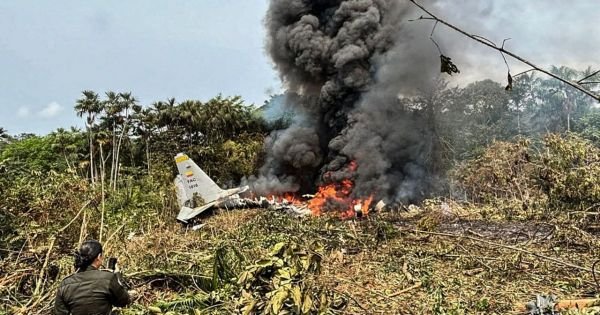
In early March, as President Trump prepared to host conservative Latin American leaders in Florida, U.S. officials released a dramatic video depicting a massive explosion in rural Ecuador. The message was clear. Defense Secretary Pete Hegseth stated that the United States was “now bombing Narco Terrorists on land.” The footage is intended to demonstrate a new phase in the alliance between Washington and Quito, characterized by force, speed, and visible action against drug trafficking.
However, as reported by The New York Times, which provided the original reporting and quotes referenced in this article, the strike depicted in the video appears to have destroyed a cattle and dairy farm rather than a traffickers’ training camp. This distinction is not merely technical; it fundamentally alters the political significance of the operation.
If the target was misidentified, Ecuador did not merely execute a flawed security operation. Instead, it may have transformed a civilian property into a stage for a hemispheric display of toughness. In Latin America, where governments have historically treated remote territories as spaces where official narratives are imposed more readily than verified, this possibility evokes a familiar concern.
San Martín, the village where the strike occurred, is located in the Amazon jungle along the San Miguel River, near the Colombian border. It is characterized by wooden homes, coffee cultivation, plantains, and canoes ferrying residents to school and work. According to residents interviewed by The New York Times, the village is also defined by fear. Inhabitants report living between armed groups they hesitate to name and military patrols that reportedly act with impunity. One resident, José Fernández, summarized the situation succinctly: “Here, we survive.”
This statement conveys the reality more effectively than the explosion video. In locations such as San Martín, survival requires balancing silence, caution, and routine within environments where state authority and illegal power coexist daily. When armed government forces arrive by helicopter, perceiving the area as hostile, farmers and workers are easily recast as accomplices. Consequently, the distinction between a military operation and an attack on civilians can vanish as rapidly as a wooden structure ignites.
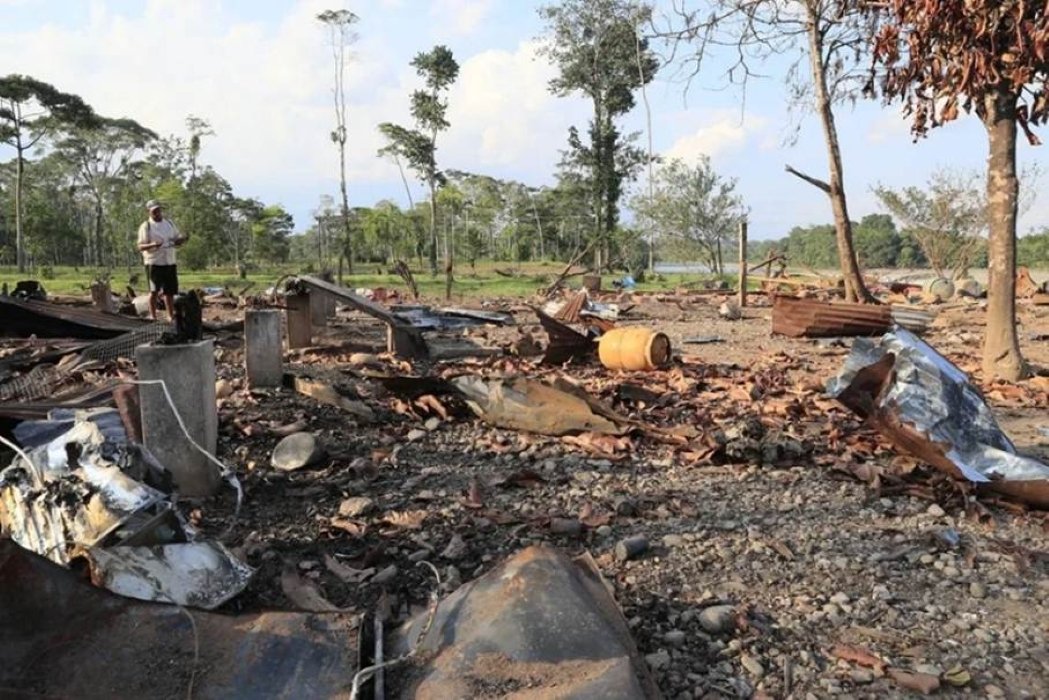
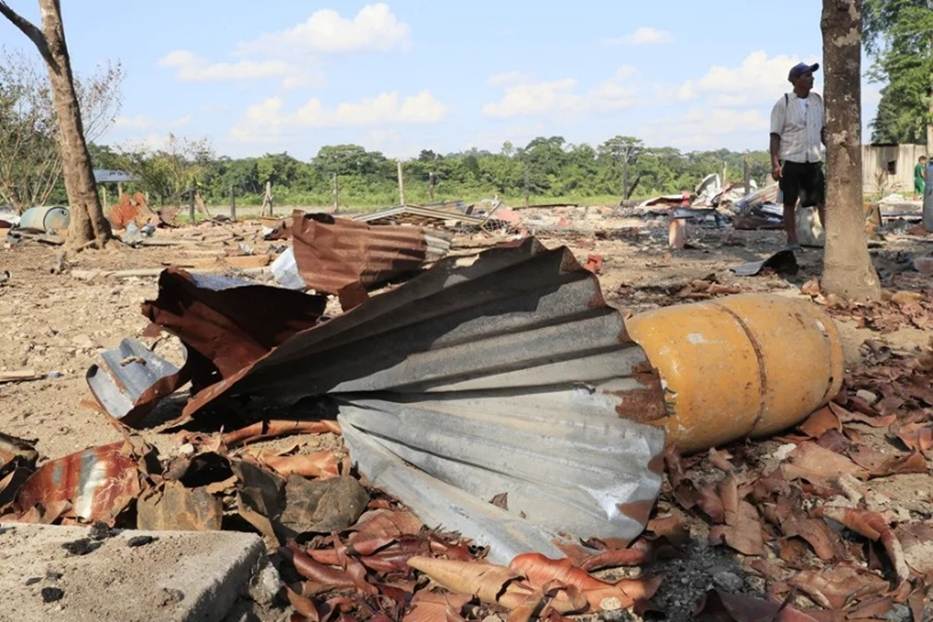
The workers on Miguel’s farm described such a breakdown in order. According to The New York Times, soldiers arrived on March 3, accused the Colombian workers of concealing drugs and weapons, assaulted younger men with gun butts, and demanded to inspect alleged hidden stashes. The workers reported that soldiers then poured gasoline on homes, sheds, and the cheese-making facility, burning most structures. Three men later stated they were taken to what they believed was a military base, where they were choked with their own shirts, subjected to stun gun shocks, and warned not to return. One worker told The New York Times, “They basically said that if I set foot in EcuadoThis testimony does not reflect the discourse of a successful counterdrug operation; rather, it conveys the language of terror at the margins of state authority. the edge of the state.
A Border Transformed into Evidence
The deeper political issue extends beyond the events on the farm to the way governments rapidly transformed the incident into strategic evidence. Ecuador claimed an armed group utilized the property to conceal weapons and serve as a site for traffickers to rest and train. The government asserted that the operation relied on U.S. “intelligence and support.” Pentagon officials described the March 6 strike as “jointly” conducted with Ecuador. However, according to several individuals familiar with the operation, cited by The New York Times, U.S. troops had no direct involvement in the bombing depicted in the video.
This ambiguity is significant. Both governments benefited from portraying the attack as evidence of a robust new alliance against narcotics networks. However, the sequence of events described by villagers appears considerably more complex. Residents reported that helicopters returned three days after the initial raid and dropped explosives on the farm’s smoldering remains. It was at that time, they stated, that soldiers recorded the footage subsequently promoted by Ecuador and the United States as the destruction of a traffickers’ compound.
If this account is accurate, the image circulated globally was not merely documentation of a strike but political theater constructed upon preexisting ruins. This would render the farm both a victim of military action and material for a security narrative.
The context renders this temptation understandable, though it remains perilous. Ecuador does not produce cocaine, but has become a major exporter of cocaine smuggled from Colombia and Peru. Drug gangs collaborating with foreign cartels have driven the country into one of Latin America’s most violent crises. Colombian armed groups operate near the border, where illegal mining and the cocaine trade thrive. The danger is real, which underscores the critical importance of truth. In moments of genuine fear, governments gain increased latitude to exaggerate, obscure, or reclassify public information.
The Ecuadorian military claimed to have recovered firearms and other evidence of illicit activity on the property; however, it did not provide proof despite frequently publicizing photographs of drugs, weapons, and contraband seized during operations. This lack of evidence invites suspicion. Similarly, a complaint filed by the Alliance for Human Rights characterized the military’s actions as attacks on a civilian population. Human rights lawyer María Espinosa stated to The New York Times, “There isn’t a single public official who has come to verify. This absence is politically revealing, suggesting a state more invested in the utility of the narrative than in the responsibility of verification.
The Lessons Ecuador Risks Imparting to Latin America
Some residents of San Martín questioned whether the government used the strike to garner support for its crackdown on violent drug gangs. This concern extends beyond a single village. Throughout Latin America, democratic governments confronting genuine criminal threats frequently resort to a politics of visible force. Measures such as curfews, military deployments, raids, aerially filmed explosions, and brief triumphant statements resonate in public discourse. These actions project an image of control, even when the underlying territory remains fragile and contested.
However, border communities are aware of the costs associated with such imagery. They recognize that the anti-narco state can resemble another armed actor when oversight is weak, and accusations precede evidence. In San Martín, residents reported living under suspicion because soldiers presumed farmers were complicit with armed groups. The presence of several Colombian workers exacerbated this vulnerability. In many Latin American borderlands, nationality itself often serves as a proxy for guilt.
This is why the strike holds political significance. It demonstrates how an alliance framed as hemispheric security can obscure local realities. Washington asserts that cartel networks threaten regional stability, which may be accurate. However, in San Martín, stability appears less as a strategic doctrine and more as a man standing amid rubble, indicating where he once produced cheese and raised livestock. Miguel, the farm’s owner, told The New York Times, “It’s an outrage.” He then posed the question that now overshadows the entire operation: “It’s a lie that 50 people were trained here. Where are they going to train? Out here in the open? There’s no logic.”
This is the perspective Latin America should heed—not because rural residents are invariably correct and militaries invariably incorrect, but because in this region, the initial casualties of militarized spectacle are often evidence, due process, and the dignity of individuals residing far from the capital. Once these are compromised, governments may label nearly any destruction a victory.
Vicente Garrido, vice president of the San Martín village board, provided a candid summary of the political stakes, stating, “All we want is for the truth to come out.” This demand should not be considered radical; however, in much of Latin America, it remains so.
Also Read:
Colombian Military Grief Exposes the Cost of Delay and Distance