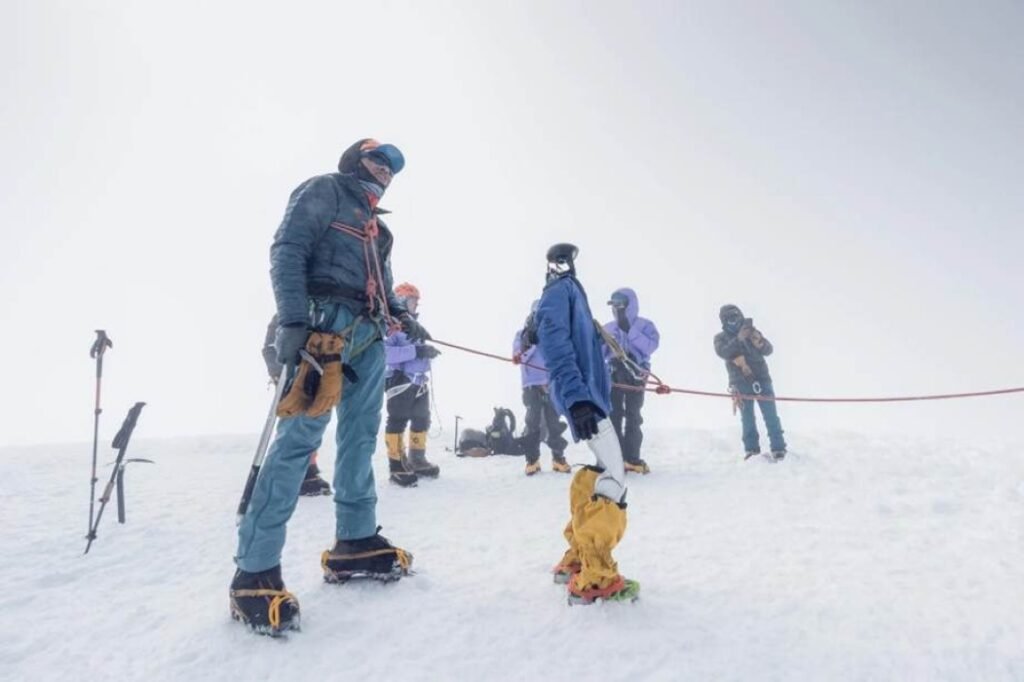
A humanoid robot named Pemba Jose has climbed above 6,000 meters on Ecuador’s Chimborazo, turning a surreal mountain test into a serious question about conservation, climate science, national pride, and how Latin America monitors its hardest-to-reach frontiers today under pressure.
A Little Machine Near the Sun
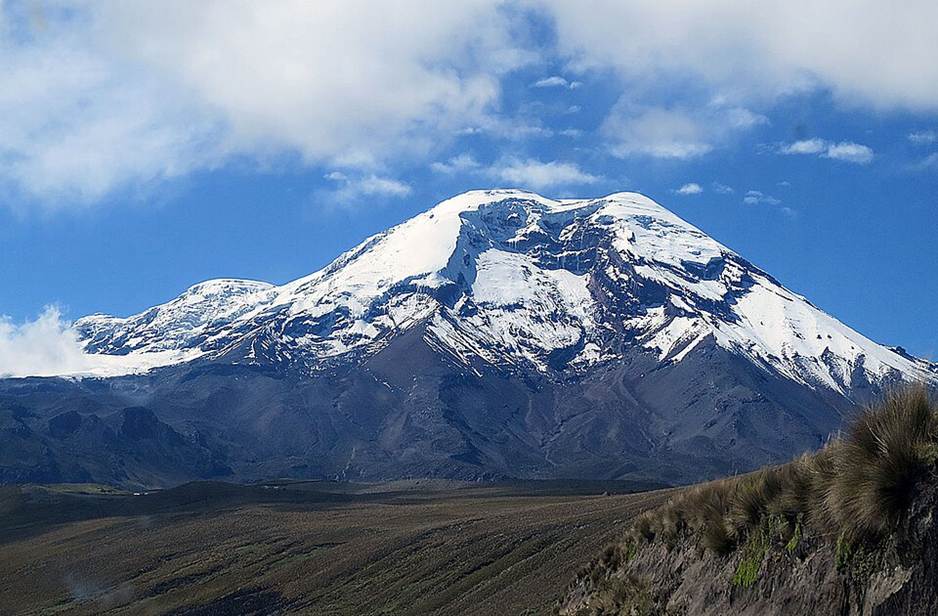
On Chimborazo, the cold does not arrive politely. It cuts through gloves, slows breath, steals words from the mouth. Above 19,685 feet, even experienced climbers begin to move like people negotiating with their own bodies. The volcano rises in central Ecuador with an old, quiet authority, its snowfields catching a light that feels almost extraterrestrial.
Into that thin air came a 132-centimeter humanoid robot named Pemba Jose, 77 pounds of aluminum, carbon fiber, cameras, software and ambition. It was not built for folklore, but it stumbled into it anyway. On the mountain that Ecuadorians know as their highest peak, and that geographers describe as the point on Earth’s surface farthest from the planet’s center because of the equatorial bulge, a small machine walked toward the closest place to the sun.
The expedition, led by the nonprofit conservation group Geologic Dome and supported by Ecuador’s Chimborazo Reserve, was designed to test whether humanoid robotics can function in extreme environments where conservation work is dangerous, costly and physically punishing. Researchers checked mobility, battery performance, communications and the performance of optical, infrared and LiDAR cameras in snow, altitude and violent weather.
But the image mattered too. A robot on Chimborazo is not just a technology story. It is an Ecuador story. It touches the country’s relationship with altitude, glaciers, water, scientific sovereignty and the hard fact that Latin America often contains the environments the world studies, while foreign labs, foreign companies and foreign budgets hold much of the power to study them.
“When we started this project, people called us crazy,” Pablo Berlanga, a 23-year-old Spanish engineer who co-founded Geologic Dome with Ecuadorian Titania Freire, told EFE.
That skepticism was not theater. Manufacturers were reluctant to lend a humanoid robot, Berlanga said, because a failure on Chimborazo could become an expensive public humiliation. A fall on ice, a dead battery, a cracked sensor, a machine staggering in the snow. The breakthrough came when Eastworlds donated a robot built by Chinese company Unitree.
The team named it Pemba Jose. “Pemba” means Saturday in Sherpa, the day it was activated. José gives the machine a local wink, one of Ecuador’s most common names attached to a robot testing the future of mountain science.
At one point, the mission nearly collapsed into comedy. Before the ascent, the robot appeared, in Berlanga’s words to EFE, to be “walking drunk.” Engineers eventually found the culprit: a small plastic transport piece that had not been removed. Once detached, Pemba Jose moved normally. Even the future, it seems, can be humbled by packaging.
Climate Data With Frost on It
The preliminary findings were more serious than the scene suggested. Researchers said the robot’s LiDAR system worked effectively despite snow, collecting information that could help improve monitoring of glaciers and rivers. The team also aims to create digital maps of mountain routes for future robotic expeditions.
That is where the Chimborazo test moves from novelty into consequence. Ecuador’s mountains are not decorative backdrops for postcards. They are water towers. Their glaciers feed rivers, shape agricultural cycles, support communities and help regulate ecosystems from páramo to valley. As tropical glaciers shrink across the Andes, the loss is not only scenic. It becomes a question of drinking water, irrigation, hydropower, disaster risk and rural survival.
In that sense, Pemba Jose’s cameras are not merely eyes. They are instruments in a regional race against environmental change. The robot told EFE after the climb that “the hardest part was the altitude and the extreme weather,” adding that it saw “spectacular landscapes, glaciers and the curvature of the Earth.” The phrasing sounded charming, almost childlike, but the work behind it was practical. Its systems gathered information on temperature, atmospheric pressure and environmental conditions that researchers say could help monitor glaciers, water reserves, deforestation and endangered wildlife.
That combination matters in Latin America because conservation is rarely only about nature. It is also about territory, inequality, state capacity and who gets to see change before it becomes catastrophe. In the Andes, a melting glacier is scientific data, but it is also a farmer worrying about a canal, a town planning for drought, a government facing infrastructure pressure, and an Indigenous community watching a sacred landscape transform.
For decades, environmental monitoring in the region has depended on field scientists, park guards, mountaineers, satellite imagery and often underfunded public agencies asked to do too much with too little. Robots will not replace that human knowledge. They may, however, extend it into places where a person’s body becomes the weak link.
Veteran mountaineer Oswaldo Freire, who has summited Chimborazo more than 100 times, joined the expedition to help test whether Pemba Jose’s imaging systems could endure the mountain and support future AI-assisted research. His presence gave the mission a necessary humility. A robot may carry sensors, but a mountain guide carries memory. Freire knows the moods of Chimborazo, the slants of its slopes, the difference between difficult and foolish.
He told EFE that the robot can walk unaided on slopes of up to 35 degrees, which meant it had to be carried for much of the ascent. That detail is important. Pemba Jose did not conquer Chimborazo like a human climber. It was helped, disassembled and reassembled, carried between camps, tested in stages. Its achievement is not mountaineering glory. It is proof of concept.
At the summit, though, the machine got its little myth. It performed a celebratory dance and livestreamed through Starlink. There is something deeply modern and deeply Latin American in that scene: a robot dancing on an Andean volcano, connected by satellite, watched through screens, standing on a landscape where old cosmologies and new technologies now share the same wind.
The Andes Test the Future
The machine itself, a version of the Unitree G1, is compact and agile by design. Around 1.32 meters tall and roughly 35 kilograms, it can fold for transport, move at about 2 meters per second and perform advanced motions such as jumps, backflips and martial arts-like poses. In a showroom, those abilities look futuristic. On Chimborazo, the relevant question is less glamorous: Can it keep working when oxygen thins, batteries suffer and snow confuses sensors?
That is why Ecuador was not just a picturesque testing ground. It was a scientific stress test with geopolitical undertones. The robot was built by a Chinese company, donated through Eastworlds Labs, deployed by a nonprofit co-founded by a European engineer and an Ecuadorian conservationist, and tested on Ecuadorian land with support from a national reserve. This is how technology now arrives in Latin America: through networks of ambition, capital, conservation, branding and genuine scientific need.
The challenge for Ecuador is to make sure such projects do not merely extract spectacular images and datasets from its landscapes. The better model is partnership that strengthens local capacity, trains local researchers, shares data openly and treats the mountain as more than a stage. The project has already begun making some data publicly available, a promising sign if openness remains part of the work.
The next ambitions are larger. The team hopes to deploy Pemba Jose on Cotopaxi, one of Ecuador’s most watched volcanoes, or Hawaii’s Mauna Kea, before eventually attempting Mount Everest if Nepal adopts regulations allowing such missions. Eastworlds Labs and Geologic Dome have described the Everest plan as part of a broader conservation push, with the robot eventually donated to the local Sherpa community.
That plan carries both promise and risk. Donating a robot sounds generous, but meaningful technological transfer requires maintenance, training, spare parts, control over data and long-term support. Mountain communities know better than anyone that equipment without autonomy can become another form of dependency.
Geologic Dome’s wider conservation vision is ambitious: autonomous infrastructure for protected areas, communication repeaters, AI-based ecological monitoring and energy-independent robotic platforms. The organization is testing methods across three major environments: the equatorial jungle in the Democratic Republic of Congo, mountain cloud forests in Ecuador and the full altitudinal gradient of the Himalayas in Nepal.
Seen that way, Chimborazo becomes a bridge. Not only between ground and sky, or Ecuador and Everest, but between old conservation and a new era of machines in wild places. The Andes have always tested human endurance. Now they are testing whether technology can become useful without becoming arrogant.
The most moving part of the story may be that Pemba Jose still needed people. Engineers fixed it. Climbers carried it. Guides interpreted the mountain. Researchers framed the questions. The robot did not replace human courage or local knowledge. It depended on them.
That is the best argument for this kind of science in Ecuador. Not a fantasy of machines conquering nature, but a partnership in which tools help humans listen more closely to landscapes changing faster than politics can respond.
On Chimborazo, near the sun, a small robot danced. The real story is what it saw before the dance, and whether Ecuador, the Andes and the wider world can use that vision before the ice retreats further into memory.
Also Read:
Panama Faces Digital Bullying Crisis as Schools Learn Silence Kills Too