Ecuador, a leading global rose exporter, is expanding beyond red bouquets with black blooms, rainbow petals, and velvet finishes targeting younger buyers and new markets. However, U.S. tariffs are reducing revenue despite rising volumes for Valentine’s season.
Buckets of Color in Cayambe
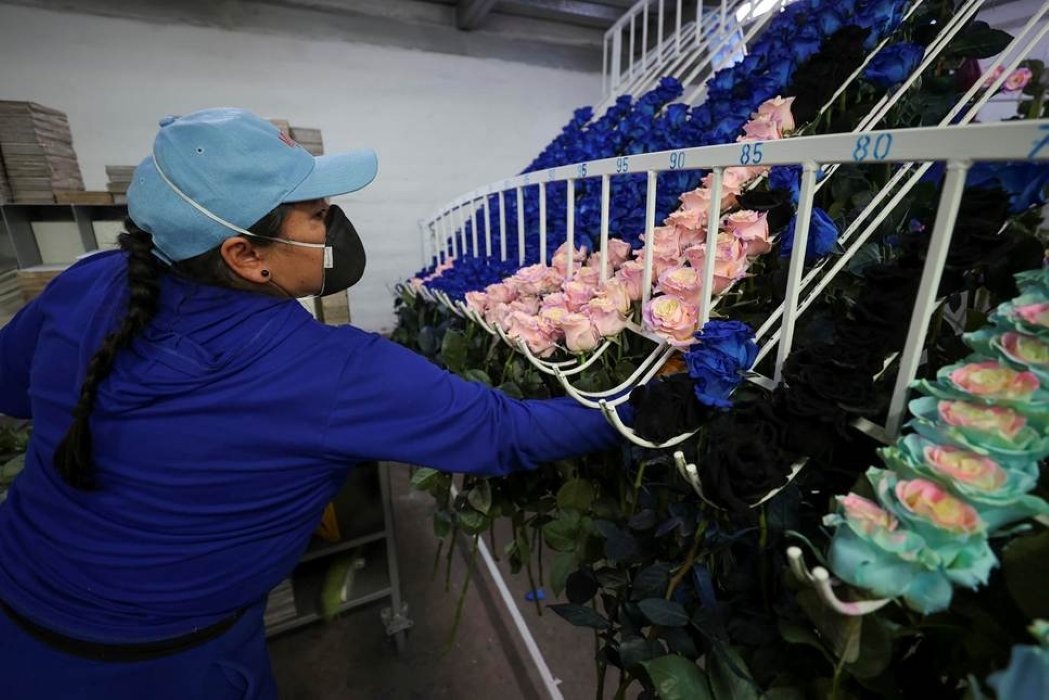
In the tinting area, the roses wait like actors in the wings.
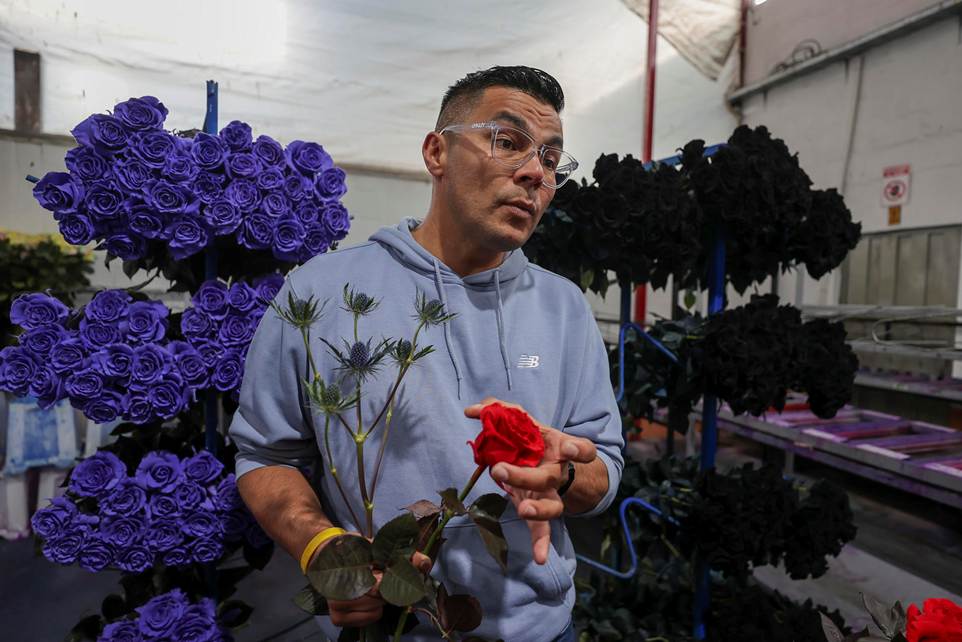
Stems await their turn beside containers of artificial color, arranged with the practical efficiency of a workshop that cannot romanticize its product. Fuchsia. Red. Shiny silver. The scene is brighter than typical flower fields, more lab than garden, reflecting Ecuador’s rose industry focus on surprising, not traditional, customers.
Ecuador is the world’s third biggest exporter of roses, and it is trying to stay that way by reinventing what a rose can look like. The palette now runs from white to black, with effects meant to pop on a phone screen as much as in a living room. Some roses are sold with petals that gleam. Others come as a single flower where each petal carries a different color, a rainbow compressed into something you can hold between two fingers. Those rainbow effects require a process that uses a non-toxic chemical that is still invasive to the flower. Even here, innovation has a cost.
At Mystic Flower, a rose farm and post-harvest operation in Cayambe near Quito, these changes extend the longstanding principle Ecuadorian growers follow: adapt as the market evolves. The challenge is that the market is shifting not only in taste but also in trade regulations.
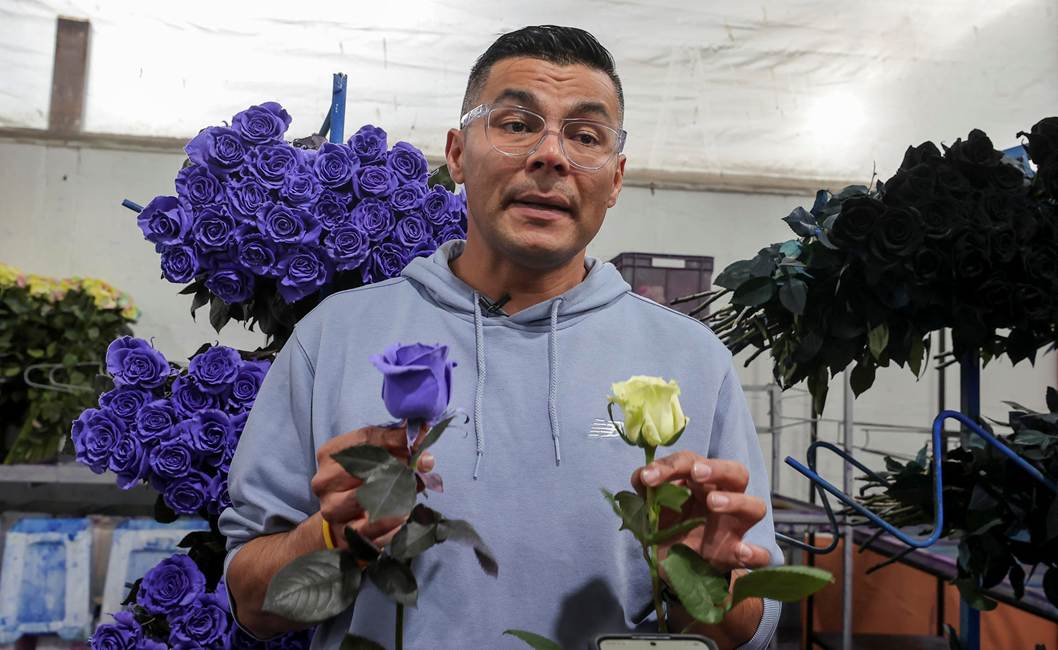
Jhon Jiménez, post-harvest operations manager, describes the shift toward non-traditional roses as driven by younger generations. “The new generations are more focused on this, on the non traditional,” he told EFE, referring to colors “that do not exist naturally in cultivation and could not, eventually, be produced.”
This statement reveals a key truth about modern consumption: with flowers, novelty is not just a feature; it is the entire appeal.
A Rose That Has to Be Ready to Become Something Else
The velvet rose starts, oddly enough, as a very specific white rose.
It has to be the Mondial variety, a natural white rose with genetic attributes that make the process possible. And it cannot be just any Mondial pulled at any moment. It must be at what Jiménez calls its optimal physiological maturity, because what happens next is not gentle. The rose is transformed through immersion or absorption, then finished with a gum that fixes a kind of powder from an agroecological product. The result is a suede-like surface, a rose that looks soft even when you only see it from a distance.
You can feel the industry’s discipline in the way those steps are described. There is artistry here, yes, but the artistry is engineered. It is designed to survive the trip.
After about twenty days of logistics, Jiménez said, the rose can last eight to twelve days in a vase, depending on how the consumer handles it. That small phrase, how the consumer handles it, is the kind of everyday reality the flower business quietly depends on. Once the rose leaves the farm, it enters kitchens and hallways, and office desks. It meets warm rooms, forgetful watering, and the ordinary chaos of daily life.
This is where economics become clear. Jiménez said producing a velvet rose costs about forty to fifty cents and can sell for up to two dollars, depending on the market and retailer. This margin represents both incentive and risk. Each new finish and color is a bet that someone will pay extra for uniqueness.
Innovation in Cayambe does not stop at roses. Jiménez points to tinted summer flowers, including eringium, which in its original form blends green, white, and bluish tones. In the tinted version, it becomes something louder, pushed into vivid colors like fuchsia, red, or even a shiny silver. Because it is a plant product, he estimates those tinted flowers can last one to two months in a vase. In a world where people want something that photographs well and lasts, that is not a small selling point.
Jiménez describes the process as a dialogue with buyers. “People ask for new trends. We present something, and they share what they want,” he told EFE. He repeats this point because repetition helps drive change. “The new generations are leading us to this,” he said. “We have grown with them and work for them because, ultimately, they represent society’s future.”
What this does is place Ecuador’s reinvention in a broader cultural pattern: younger consumers are not just buying flowers, they are buying a language of color, novelty, and personal style. The rose becomes a small form of identity.
Tariffs Turn a Trend Story Into a Trade Fight
The industry’s experiment with color is happening under a widening shadow.
Tinted flowers still represent only a slice of output at Mystic Flower. Jiménez said they make up about five to six percent of the farm’s total production, which runs between 1.3 and 1.5 million roses each week. That is a lot of roses, and it helps explain why Ecuador keeps looking for higher value niches. When you produce at that scale, small shifts in price and access ripple outward.
Jiménez distinguishes generations: buyers in their twenties and thirties prefer colorful, novel roses, while older customers favor traditional roses, especially red for occasions like Valentine’s Day. This split shows the industry is expanding its offerings, not abandoning classics.
Then comes the part that has nothing to do with petals.
Expoflores, Ecuador’s national association of flower producers and exporters, estimates Ecuador’s flower exports will rise from 37,000 tons for the Valentine season in 2025 to about 39,000 tons this season, shipped by air and by sea. But it also expects revenue to fall to between 274 and 276 million dollars, down from 282 million dollars in the 2025 season. The reason given is the fifteen percent tariff imposed by the United States, added on top of the 6.8 percent that the products were already paying.
It is unusual for volumes to rise while earnings fall. This situation can make innovation feel less like a choice and more like a necessity. The industry can tint, suede, and sparkle its way into new markets but must still navigate trade policy bottlenecks and tariff costs.
In Cayambe, both pressures are visible. The buckets of color show the industry chasing the future. The tariff figures reveal that the future comes at a cost. Between these realities, Ecuador’s rose growers continue their tradition: transforming a fragile product to survive the journey and hoping the world still desires it upon arrival.
Also Read:
Ecuador Roses Race Valentine’s Deadline as Tariffs Squeeze Growers’ Margins