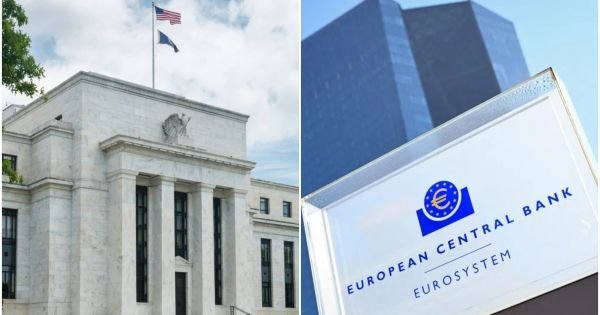
Fed and ECB face a pivotal week as the oil shock revives inflation risk
For the Fed, the dilemma is especially awkward because the latest official data, recorded before the full impact of the energy shock. In the euro zone, the starting point is somewhat calmer
The U.S. Federal Reserve and the European Central Bank head into this week’s policy meetings in a far more uncertain environment than they faced just two weeks ago. The Fed meets on March 17-18, and the ECB on March 18-19, just after the Middle East war pushed oil prices above US$100 a barrel and forced markets to rethink the expected path of interest rates. Even so, neither institution is expected to change borrowing costs at these meetings.
For the Fed, the dilemma is especially awkward because the latest official data, recorded before the full impact of the energy shock, were already sending mixed signals. February inflation held at 2.4% year-on-year, with core inflation at 2.5%, while the labor market showed a loss of 92,000 nonfarm jobs and an unemployment rate of 4.4%. That was compounded by a downward revision to fourth-quarter 2025 growth, to an annualized 0.7%, sharply below the previous quarter’s 4.4%.
That leaves Jerome Powell facing risks in opposite directions: higher energy costs that could push inflation back up, and an economy that was already losing momentum before the crisis erupted. Reuters reported that markets have already halved the number of Fed rate cuts expected this year, to just one, while futures now leave open the possibility that the policy rate stays unchanged through all of 2026.
In the euro zone, the starting point is somewhat calmer. February annual inflation was estimated at 1.9%, up from 1.7% in January, still close to the ECB’s target. The central bank’s deposit rate remains at 2.00%, and the economist consensus still points to no immediate move. But the oil surge has already sharply altered market pricing, which shifted within days from considering cuts to betting on a hike by July.
Inside the ECB, the public message has been one of caution, but also vigilance. Bundesbank chief and Governing Council member Joachim Nagel said the institution must remain “very vigilant” and would act “decisively in a timely manner” if higher energy costs feed persistently into broader consumer inflation. The warning reflects the legacy of 2022, when the ECB was criticised for reacting too slowly to an inflation shock it initially judged to be temporary.
In that setting, the base case for this week looks like a pause coupled with a firmer tone. The Bank for International Settlements warned on Monday that a potentially temporary supply shock should not trigger an automatic monetary-policy response. Its chief economist, Hyun Song Shin, framed it in textbook terms: if the shock is supply-driven and temporary, central banks should “look through” it rather than respond mechanically with rates. For the Fed and the ECB, the immediate challenge is to decide whether this crisis calls for patience or whether it is already beginning to require preparation for renewed tightening.