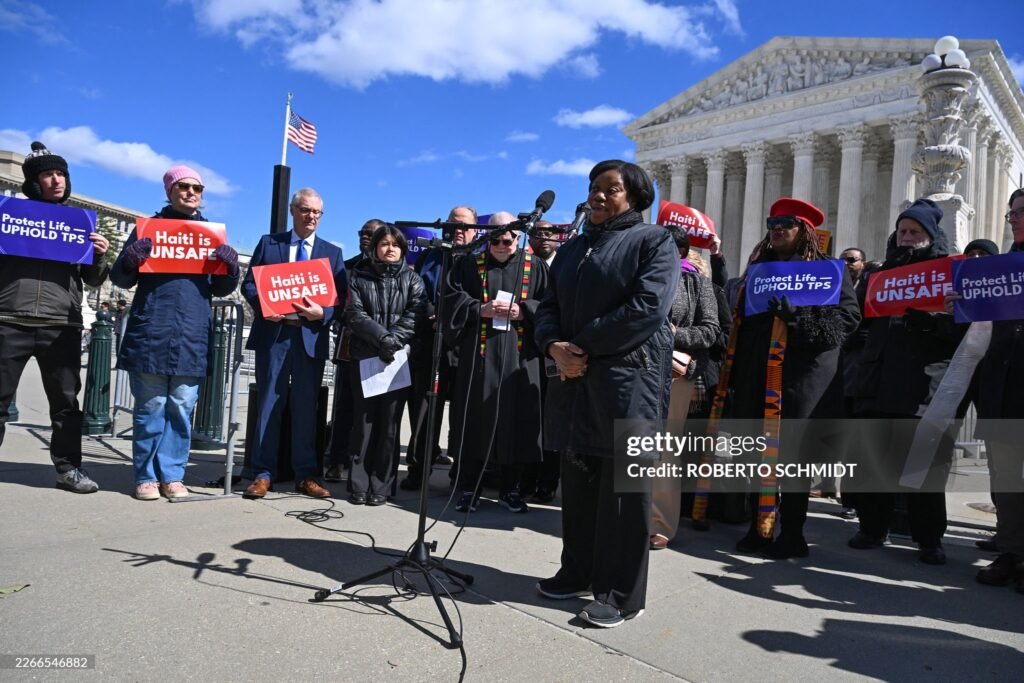
News Americas, NEW YORK, N.Y., March 27, 2026: If you are one of the approximately 350,000 Haitian nationals living and working legally in the United States under Temporary Protected Status, your protections are still in place – but a deadline is now on the clock for Haiti TPS.
In a critical update issued just two days ago, the U.S. Citizenship and Immigration Services confirmed that Haitian TPS holders’ Employment Authorization Documents have been extended through July 1, 2026, by federal court order. That date is not an accident – it aligns almost precisely with when the U.S. Supreme Court is expected to issue its landmark ruling on whether the Trump administration has the authority to permanently end TPS for Haitian and Syrian nationals. Oral arguments are scheduled for late April, with a decision expected by early July.
What happens after that ruling is the most consequential immigration question facing the Caribbean diaspora in a generation. The Supreme Court agreed on March 16 to hear the case – known as Trump v. Miot – after the Trump administration argued that lower courts had repeatedly blocked TPS terminations by substituting their own judgment for the government’s. If the court sides with the administration, hundreds of thousands of Haitian immigrants who have built lives, raised families, and paid taxes in the United States for years could face deportation to a country still gripped by gang violence and political instability. If it sides with TPS holders, it would represent a major check on the administration’s sweeping effort to dismantle immigrant protections across 13 countries.
What Haitian TPS Holders Must Do Before July 1
Renew any expiring documents now, write July 1, 2026 on any I-9 forms as the court-ordered expiration date.
Consult an immigration attorney immediately about backup options.
Do not travel outside the US without advance parole.
Start gathering proof of continuous US residence.
What Is TPS And Why It Matters For Caribbean Immigrants
TPS was created in 1990, it allows nationals of designated countries to temporarily live and work legally in the US when conditions in their home country make return unsafe, and as of March 2025 nearly 1.3 million people from 17 countries held TPS protections. Haiti has had TPS since the 2010 earthquake.
What The Supreme Court Will Decide – And What’s At Stake
The court will consider whether courts even have the power to review a DHS secretary’s decision to terminate TPS status. That’s the core question. Most federal courts that have considered the lawsuits have issued preliminary rulings in favor of TPS holders, with judges generally agreeing that the secretary’s approach violated federal administrative law. But the Supreme Court previously sided with the Trump administration in the Venezuela TPS case.
Where To Get Help Now
Haitian Bridge Alliance: Provides legal and social services.
Catholic Legal Immigration Network (CLINIC): Offers a directory of legal service organizations.
HAUP (Haitian Americans United for Progress): Focuses on legal and educational services.
Legal Aid Society: Provides free legal services for low-income immigrants.
Advocates for Basic Legal Equality (ABLE): Offers legal services, especially in areas like Ohio.
NewsAmericasNow will be covering every development in this case through the Supreme Court ruling in July.