Caracas, Venezuela — Relatives of Venezuela’s political prisoners claim that an amnesty law proposed by interim President Delcy Rodríguez, which will be debated again Thursday in the National Assembly, contains elements that could leave more than half of the detainees excluded from liberation.
According to the government, if passed, the law could free political prisoners who were detained as far back as 1999. The bill could help heal “the wounds left by political confrontation and violence,” President Rodriguez said at the time it was announced.
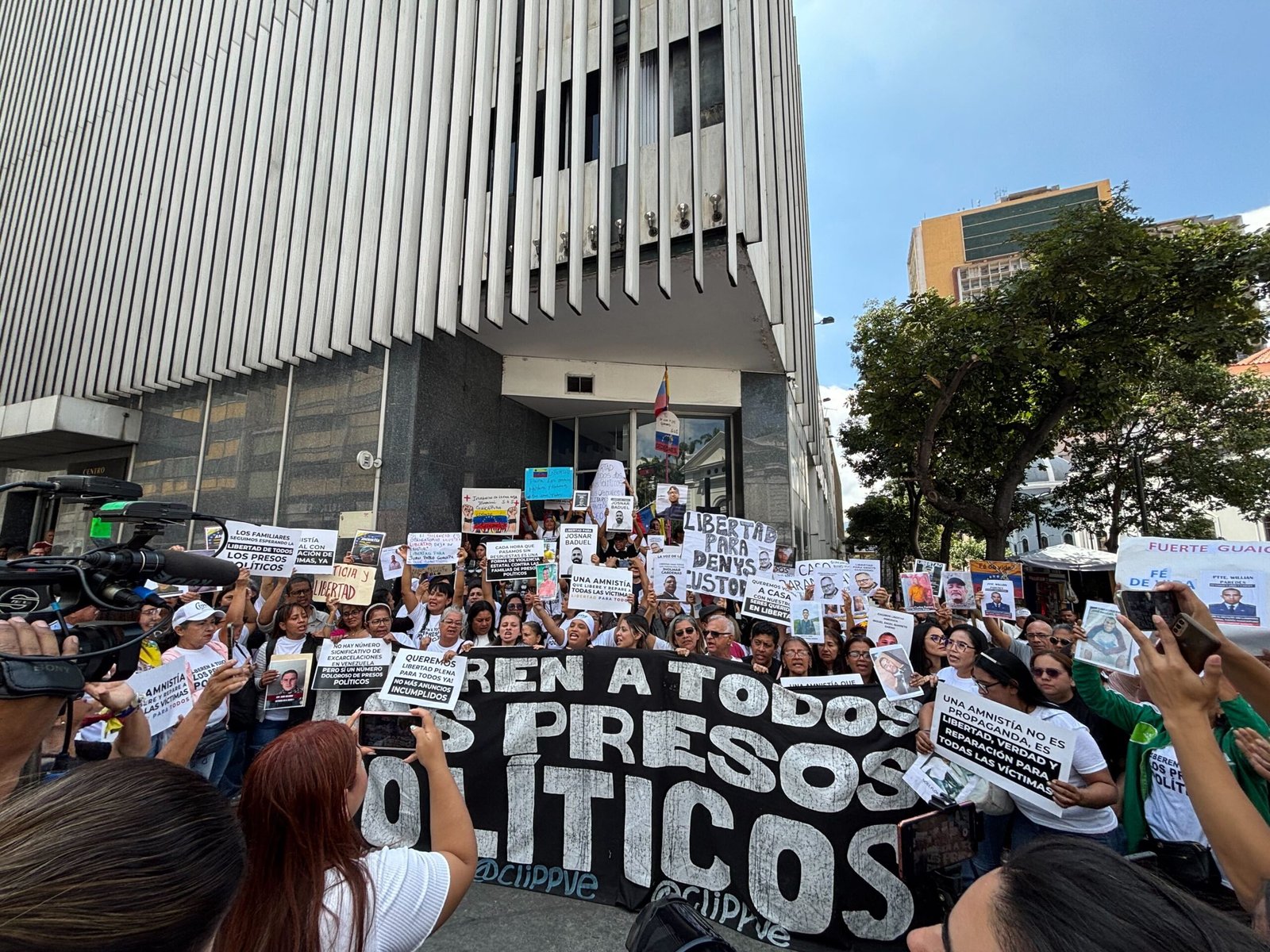
But prisoners’ rights groups say the law isn’t transparent enough, and dozens gathered outside of the National Assembly on Tuesday to demand clarity.
“Today we are here at the National Assembly, after an announcement was made on January 8 about mass releases from prison, an announcement that the Venezuelan State has not fully complied with,” said Andreína Baduel from the Committee for the Liberation of Political Prisoners (Clippve).
“In addition, we are here to denounce that an amnesty law, under the conditions they intend to approve it, would be an exclusionary amnesty law and would also prolong the pain for those who have endured so much cruelty for years.”
Read more: Venezuela amnesty law passes first vote, could free political prisoners
According to Baduel, more than half of the political prisoners could be excluded from the amnesty law if approved because Article 6 of the bill specifies certain time periods of political upheaval when people were detained, for example the 2013 presidential elections, mass protests that erupted in 2017, and the crackdown on protesters during the last disputed elections in 2024.
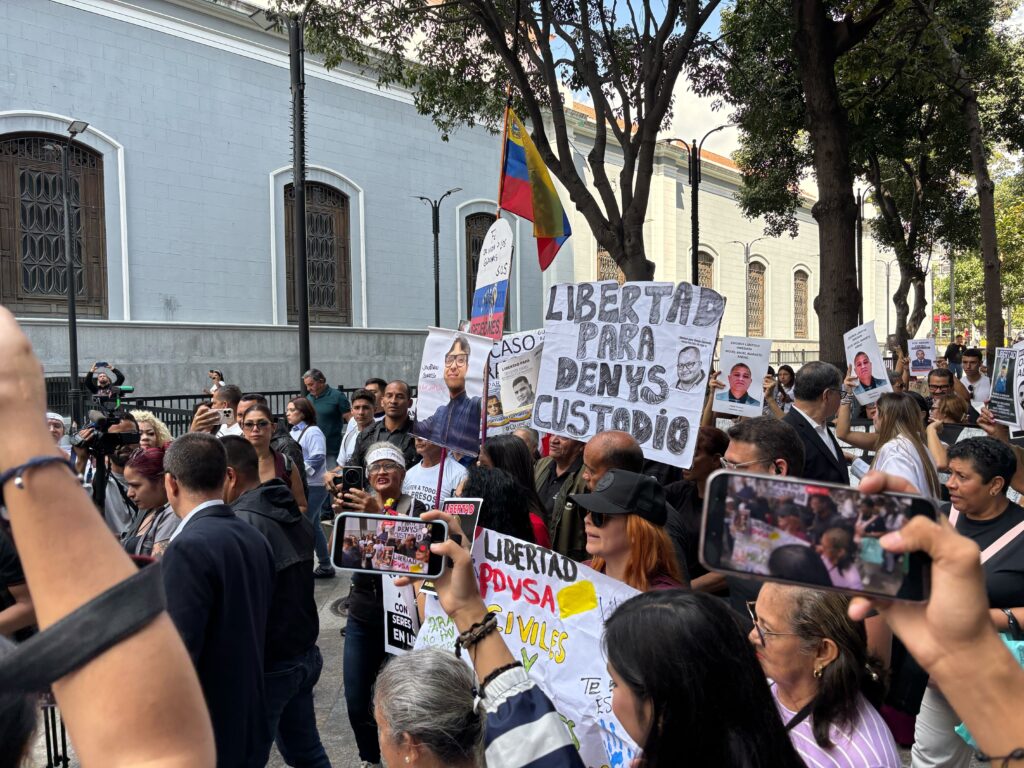
Prisoners’ rights groups argue that people detained outside of the time periods listed in the language of the bill may not qualify for amnesty.
Some notable figures which could fall into that group include Rocío San Miguel, the president of NGO Control Ciudadano who was arrested in February 2024; activist Javier Tarazona, arrested in 2021; and Eduardo Torres, a lawyer and member of human rights group PROVEA who was arrested in May 2025. Families of imprisoned military personnel also fear their relatives won’t be included if their detentions weren’t related to the time periods mentioned.
Another subset of prisoners excluded from amnesty, according to the bill, include those convicted of human rights violations, crimes against humanity, murder, drug trafficking, crimes against public property, and corruption.
Activists are also concerned that the law doesn’t specifically mention people who have fled Venezuela in exile but still face ongoing court cases in the country. It is not clear how these cases will be addressed.
Baduel said that they’ve been lobbying the government for years about prisoners’ rights, and “have gone to state institutions on various occasions to raise the need to set up a round table with international oversight, and they have chosen to continue violating human rights, and we will not allow it.”
Since the January 3 US attacks which removed President Nicolás Maduro from power, Venezuela’s government has released 431 political prisoners, and family members have been camping outside the headquarters of the Bolivarian National Police and El Rodeo prison for over a month to protest the release of their loved ones.
“I also want to denounce the fact that cruel treatment of political prisoners continues; El Rodeo I remains a torture center, as do other detention centres,” Baduel said, referring to the notorious prison in the state of Miranda.
“Today more than ever, we will continue to take to the streets to denounce the horror to which we are subjected and to denounce the fact that day after day they revictimize us and prolong our pain when they are supposedly talking about reconciliation,” she said.
Non-governmental organisations and politicians have called for the prisons to be opened and all remaining detainees to be released as part of the transition process the country is undergoing after January 3. However, the releases have been few and far between and in many cases subject to judicial restrictions.
The amnesty law passed the first round of debate on February 5 and is scheduled for the second round of debates on Thursday.
Featured image: Groups protesting in Caracas for the release of political prisoners.
Image credit: Julio Blanca