Category: Home

  • Low-cost HPV test gives results in less than an hour

    Low-cost HPV test gives results in less than an hour


    Researchers have developed a simple, affordable human papillomavirus test that delivers results in less than an hour with no specialized laboratory required.

    The breakthrough could provide an option for women in low-resource settings to be screened and treated for cervical cancer in a single clinic visit, a step that global health experts say could save countless lives.

    The research appears in Nature Communications.

    Cervical cancer is considered easily preventable, yet it remains one of the deadliest cancers for women worldwide. According to the World Health Organization (WHO), each year more than 350,000 women die from the disease, and nearly 90% of those deaths occur in low- and middle-income countries where access to regular cervical cancer screening is limited. Persistent infection with high-risk types of human papillomavirus (HPV) causes nearly all cases of cervical cancer.

    While vaccines are helping reduce HPV infections globally, most women at risk today are adults who did not get the vaccine in childhood. For them, regular and reliable screening is the only path to early detection and lifesaving treatment.

    “Cervical cancer is almost entirely preventable, yet it still claims hundreds of thousands of lives each year,” says first author Maria Barra, a bioengineering graduate student at Rice University.

    “Our goal was to build a test accurate enough to guide treatment, fast enough to use during a clinic visit, and inexpensive enough to scale. This assay meets all three goals.”

    The WHO recommends HPV DNA testing as the gold standard for cervical cancer screening, but existing HPV DNA tests often require expensive lab equipment and trained laboratory technicians—barriers that make widespread use in low-resource settings unattainable. As a result, many women are not screened for cervical cancer. Even where screening programs exist, results may take days or weeks to return. Patients leave to await results. However, where care facilities are remote, few in number and difficult to access, patients are often unable to return for treatment, leaving precancerous lesions to progress unchecked.

    A faster test without reliance on a lab could provide results and prompt treatment during the same patient visit.

    “This is the kind of pragmatic innovation we focus on when engineering for global health—fewer steps, lower cost, higher impact,” says Rebecca Richards-Kortum, a professor of bioengineering and codirector of the Rice360 Institute for Global Health Technologies at Rice.

    “Our data show you can bring lab-grade molecular screening to almost any setting without sacrificing reliability. Providing accurate results quickly enables clinicians to start treatment without delay.”

    The new test uses a method called loop-mediated isothermal amplification (LAMP), which simplifies DNA detection by running at a single temperature. Instead of requiring DNA extraction—a complicated step in many existing tests—this process is extraction-free. A swab sample is chemically lysed, added directly to the LAMP reagents and incubated for about 45 minutes in a portable heater then read by fluorescence.

    The test detects three of the most dangerous HPV types (HPV16, HPV18, and HPV45), which together cause about 75% of all cervical cancers. It also includes a built-in cellular control to ensure that the sample was collected properly.

    In clinical studies, the test showed 100% agreement with the reference standard in 38 samples from Houston and 93% agreement in 191 samples from Maputo, Mozambique. The cost of the test is projected to be less than $8 each, and the portable device it runs on is battery-operated, making it ideal for clinics without consistent electricity.

    “High mortality rates from cancer are closely associated with delays in diagnoses and limited access to early treatment,” says Cesaltina Lorenzoni, head of the National Cancer Control Program at the Mozambican Ministry of Health, director of science and teaching at Maputo Central Hospital, and professor of pathology at the Eduardo Mondlane University Faculty of Medicine.

    “Point-of-care technologies that can aid clinicians in identifying cancer and guide treatment options in a single patient visit could be lifesaving in clinical settings in Maputo. This assay performed very well in our clinical setting and holds promise of delivering the kind of rapid, specific, cost-effective cancer detection that would meaningfully improve outcomes for women in our country.”

    The WHO has set ambitious targets to screen 70% of women worldwide by 2030 as part of its public health campaign to eliminate cervical cancer. Meeting that goal will require screening millions of women in various global settings that lack advanced lab equipment or resources.

    By cutting out expensive instruments, minimizing sample handling and delivering rapid, accurate results, the LAMP assay represents a significant step toward realistically achieving the WHO goal. Critically, it opens the door to “screen-and-treat” strategies, where if a positive result is found, the patient can be treated on the same medical visit, reducing treatment delays and loss to follow-ups.

    The team is currently working to expand the test to cover additional high-risk HPV types and is also working on lyophilized (freeze-dried) reagents that don’t require refrigeration, further increasing the test’s usability in rural or resource-limited areas. The team also plans to conduct usability studies with frontline health workers to refine the design before larger clinical rollouts.

    “Our goal is a complete, field-ready kit that community clinics can use anywhere,” Richards-Kortum says. “If we can help health systems move to same-day screen-and-treat, we can move towards a future where cervical cancer can be eliminated globally.”

    This study was conducted by a multidisciplinary team in the US and Mozambique with IRB approvals from the University of Texas MD Anderson Cancer Center, Harris Health, Rice, and Mozambique’s National Bioethics Committee. All participants provided informed consent. The research was also supported by the National Institutes of Health.

    Source: Rice University


    Source link

  • As the Gaza war moves into its third year, peace talks offer some hope

    As the Gaza war moves into its third year, peace talks offer some hope


    Displaced people return to Rafah, Gaza Strip, Monday, Jan. 20, 2025, a day after the ceasefire deal between Israel and Hamas went into effect.
    Displaced people return to Rafah, Gaza Strip, Jan. 20, a day after the ceasefire deal between Israel and Hamas went into effect.
    Jehad Alshrafi | AP

    Israel is commemorating a grim anniversary: two full years since the Hamas-led attack on Oct. 7, 2023, that killed nearly 1,200 people and resulted in 251 people being taken hostage.

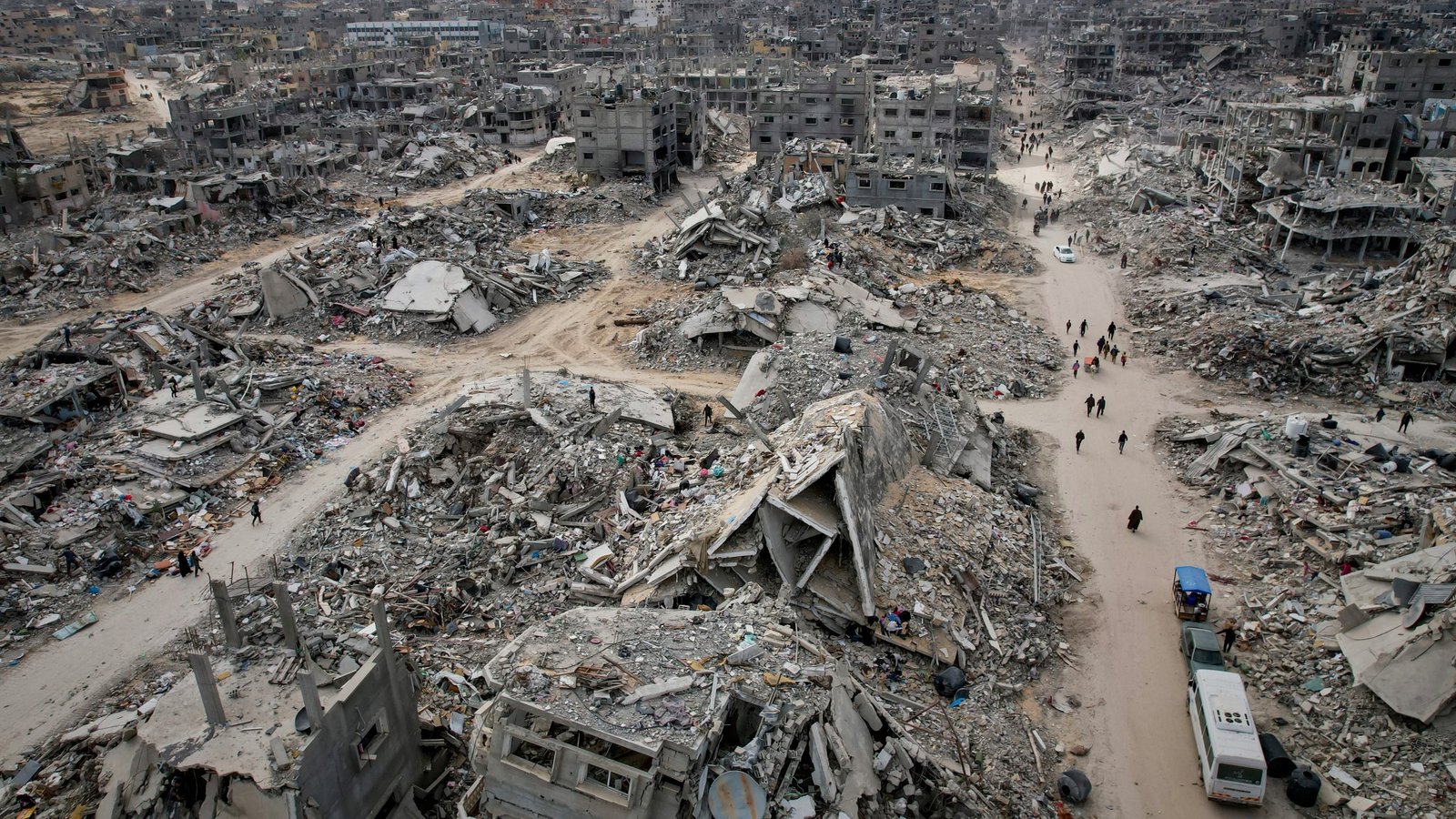
    The war that Israel unleashed in Gaza nearly immediately thereafter has plunged the Palestinians living there into staggering levels of destruction and death.

    More than 67,000 people have died in the war, nearly a third of them children, according to Gaza's ministry of health. Rescue workers say more bodies lie buried beneath rubble, and that the death toll is higher than reported because they cannot retrieve people while Israeli bombardment continues.

    "When the war ends and the search and accurate counting begin, the entire world will be shocked by the scale of the tragedy that has befallen Gaza," Mahmoud Basal, Gaza's civil defense spokesman, said.

    The Gaza Strip itself has been nearly leveled, with the United Nations estimating 78% of structures having been damaged or destroyed, leaving a monumental task of rebuilding for whoever will govern the enclave next.

    Its residents suffer from famine, as Israeli military border controls continue to limit the food and aid that enters.

    But two years on, the anniversary is also lit by hope, as the leaders of Israel and Hamas are pushed by Arab countries and the U.S. toward a potential end to the war.

    Less than a complete victory

    People walk with humanitarian aid packages that they received from a distribution centre run by the US and Israeli-backed Gaza Humanitarian Foundation (GHF), at the so-called "Netzarim corridor", in Nuseirat in the central Gaza Strip, on September 30, 2025.
    People walk with humanitarian aid packages that they received from a distribution center run by the U.S. and Israeli-backed Gaza Humanitarian Foundation, at the so-called "Netzarim corridor," in Nuseirat in the central Gaza Strip, on Sept. 30.
    Eyad Baba | AFP | Getty Images

    This is not where the leaders of either Hamas or Israel wanted to end up.

    An Islamist militant group in the Gaza Strip, Hamas has been designated as a terrorist organization by the U.S., EU and many other Western countries. Hamas' top leadership has been assassinated, its fighting capacity severely curbed in Gaza. The group has lost much support from Arab countries. The American ceasefire plan being negotiated this week could allow Israel's military to remain inside the Gaza Strip, and Israel has been calling for Hamas to be entirely demilitarized.

    Israel's Prime Minister Benjamin Netanyahu has cast the war in Gaza — despite initial intelligence failures leading up to the Oct. 7 attack — as part of a string of security victories against Israel's regional enemies, especially nuclear-armed Iran and the Lebanese proxy group it funds, Hezbollah.

    Israeli Prime Minister Benjamin Netanyahu speaks during the 80th session of the United Nations General Assembly, Friday, Sept. 26, 2025, at U.N. headquarters.
    Israeli Prime Minister Benjamin Netanyahu speaks during the 80th session of the United Nations General Assembly, Sept. 26, at U.N. headquarters.
    Stefan Jeremiah | FR171756 AP

    "Together we pushed back the plans of annihilation from our enemies. From Gaza to Rafah, from Beirut to Damascus, from Yemen to Tehran, together we achieved great gains," Netanyahu said in a televised speech last week.

    While the continuation of the war has slowed a corruption case against Netanyahu, the war has also taxed the economy, stretched its exhausted fighting forces, sharply divided Israeli society and left its global standing severely tarnished by accusations of genocide, which the Israeli government strenuously denies.

    "Our government doesn't give a damn and doesn't really do its job and has managed to put sticks into the wheels of every attempt to get an agreement," said Gabriela Goldschmidt, who has attended weekly demonstrations in Tel Aviv against Netanyahu's government for the last two years.

    And two years on, Israeli society is haunted by a counterfactual: Could it have saved the lives of more hostages?

    "If Netanyahu had accepted Lapid's proposal over a year ago, perhaps more than 40 hostages, who were murdered or killed in captivity, would be alive today," Vladimir Beliak, an Israeli parliament member, wrote this week, referring to a previous plan backed by Israel's opposition leader Yair Lapid and Arab countries.

    Gaza in ruins

    Palestinians from Gaza City move southwards with their belongings, on the coastal road near the Nuseirat refugee camp in the central Gaza Strip
    Palestinians from Gaza City move southwards with their belongings, on the coastal road near the Nuseirat refugee camp in the central Gaza Strip, on September 19.
    Eyad Baba | AFP | Getty Images

    In Gaza, where deadly Israeli shelling continued last weekend despite Hamas' acceptance of the first phase of the U.S. peace plan, Palestinians are marking the end of a second year of constant death and hunger.

    "We pray that all this destruction leads to something good. I swear to God," said Mohammad Naher Nassar, 31, who has remained in Gaza City despite Israeli orders to the city's population last week to leave immediately or be considered a militant or Hamas sympathizer.

    He and the nearly 2 million people in Gaza are holding out for long-term respite from forced displacement, frequent airstrikes that have sometimes annihilated entire families and armed sniper drones that have targeted civilians.

    "Daily life — it used to be about university, the gym, sports. Suddenly it became about finding a place to sit, water, displacement, your son, your nephew… looking for where your father went , where your brother, where he went," said Ahmed Abu Saif, 22. 

    Even after a potential ceasefire, the task of rebuilding will be daunting and could take decades.

    "I am waiting for the displaced to return as soon as possible — today before tomorrow so that life can return — celebrations, kids ululating and laughing in the streets — so that the old days come back, God willing, like before the war," says Nassar.

    Their hopes are tempered by the knowledge that significant daylight remains between how Israel and Hamas envision their future presence in Gaza, and that a previous ceasefire this year ended after just three months.

    "It is like we have been bottled up so tightly … and now we can take a breath," said Iman Abu Aklayn, 48, a mother of four children in Gaza City. But just a small breath, she says, "as we are still living a nightmare."

    Memories run deep

    Adel Rubin (L), who lost both her parents during the October 7, 2023 attacks, reacts as she visits a house
    Adel Rubin (L), who lost both her parents during the Oct. 7, 2023, attacks, reacts as she visits a house that was left heavily-damaged after the event in Kibbutz Nir Oz in southern Israel on October 6, a day before the second anniversary of the attacks.
    John Wessels | AFP | Getty Images

    At Kibbutz Nir Oz in the western Negev Desert, residents also say they have not moved on.

    The tiny agricultural community was one of the hardest hit during the Hamas-led attack two years ago. About one quarter of the tight-knit community was killed or abducted. Nine of their members remain captive in Gaza, and many surviving members have been too traumatized to return to their homes.

    Tzvika Tesler, the chairman of the kibbutz, says his community is now debating whether to tear down the charred and bullet-ridden husks of homes that were attacked or to preserve them like monuments.

    "The kibbutz has yet to make a decision," he said. Likely, they would pursue both options: "There will be a very organized process; the kibbutz is becoming both a living community and a remembering one."

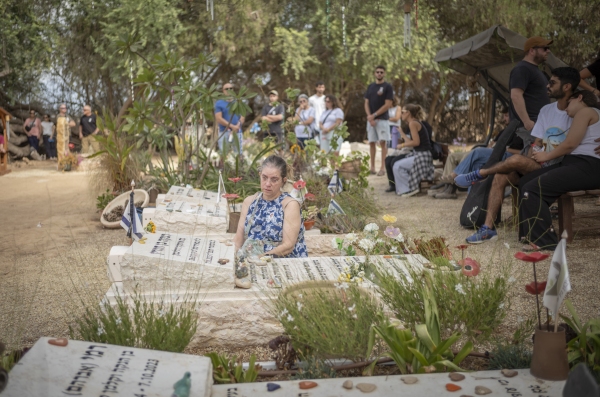
    A woman sits next to a grave at the Nir Oz Kibbutz cemetery during a ceremony commemorating the 2 year anniversary of the 7th of October Hamas led attack.
    A woman sits next to a grave at the Nir Oz Kibbutz cemetery during a ceremony commemorating the 2 year anniversary of the 7th of October Hamas led attack.
    Ilia Yefimovich | picture alliance | Getty Images

    In the kibbutz's cemetery, rows of new, gleaming headstones each bear the same date of death: Oct. 7, 2023. Standing among the graves during a commemoration event this week, Sagui Dekel-Chen described the struggle to understand living when many of his neighbors were killed. Hamas kidnapped him from Kibbutz Nir Oz and held him captive in Gaza for a year and four months before releasing him in February 2025.

    "Why doesn't the sorrow come only on special occasions? Why doesn't it stay here, in the cemetery? Why is it with me all the time, everywhere?" asked Dekel-Chen, his voice choked by tears. "I'm above all this, but not past all this."

    As he and others spoke, there came the occasional Israeli artillery boom from Gaza, less than two miles away: a reminder that the war continues, and so does the pain, for both Israelis and for Palestinians.

    Itay Stern contributed reporting from Nir Oz, Israel, and Anas Baba contributed reporting from Gaza City, Gaza Strip.

    Copyright 2025, NPR


    Source link

Translate »