Iran is systematically crippling Starlink, the satellite internet service said to be almost impossible to jam.
Military-grade GPS jammers deployed since January 8 have cut satellite internet performance by as much as 80% in parts of the country, according toAmir Rashidi, director of digital rights at the Miaan Group, a U.S.-based nonprofit focused on Iranian internet censorship and digital rights.
“The level of violence by the government is unlike anything I have ever witnessed,” Rashidi wrote on LinkedIn. “The Islamic Republic is killing to survive.”
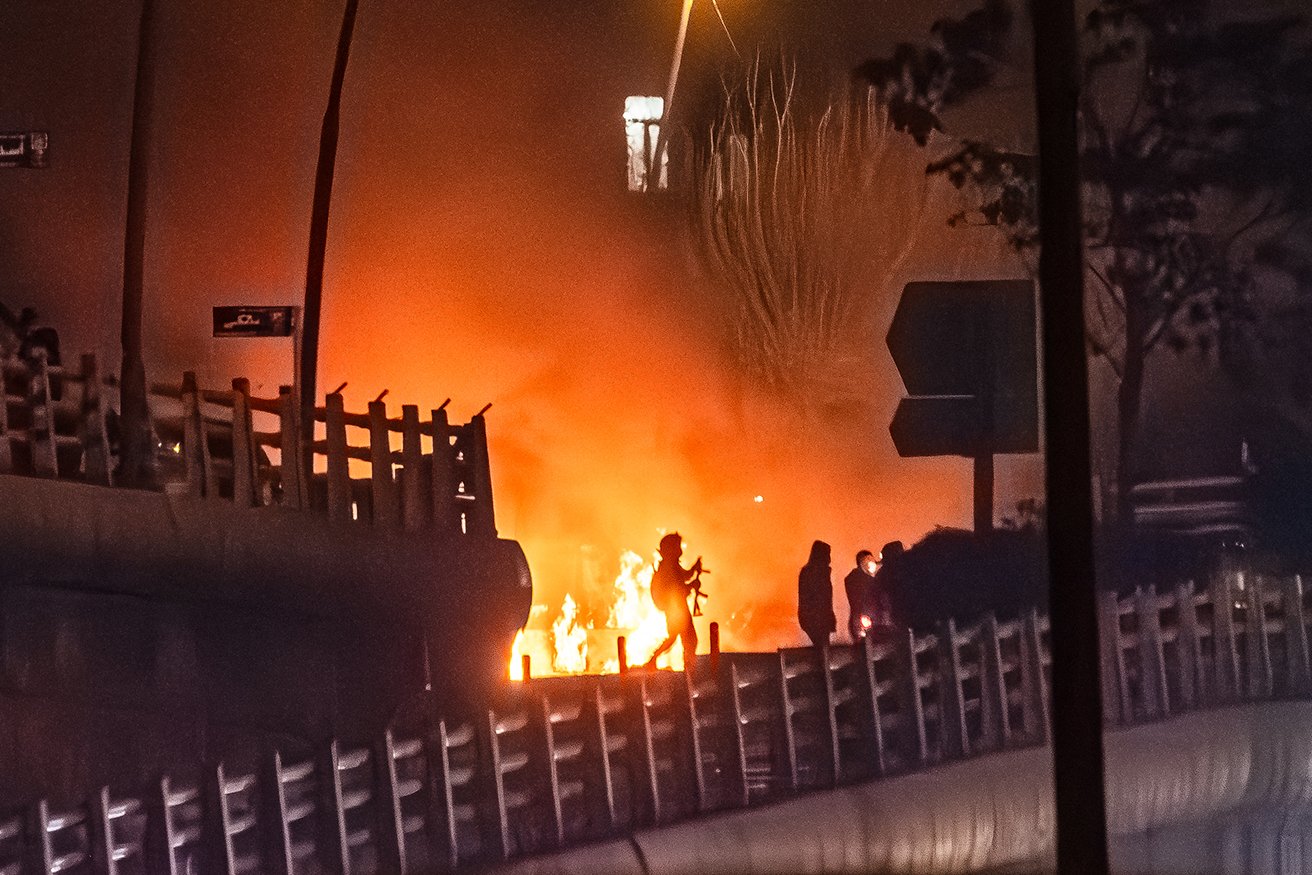
The U.S.-based Human Rights Activists News Agency reports at least 572 people have been killed and more than 10,600 arrested since protests erupted on December 28. Iran Human Rights, based in Norway, said the real toll could be far higher. Iranian Nobel laureate Shirin Ebadi warned of a potential “massacre under the cover of a sweeping communications blackout.”
The nationwide internet shutdown, which started on January 8, has disconnected 85 million Iranians from the outside world. Cloudflare, a major internet infrastructure company, recorded a 98.5% collapse in Iranian internet traffic within 30 minutes of the shutdown starting. NetBlocks, an internet monitoring group, confirmed non-satellite connectivity dropped below 2% of normal levels.
Iran has cut internet access 17 times since 2018, according to the Internet Society, a nonprofit that advocates for an open internet. Mohammed Soliman, a technology analyst at the Middle East Institute, a Washington-based think tank, said years of sanctions have left the government with near-total control over internet infrastructure.
The level of violence by the government is unlike anything I have ever witnessed.”
Tehran has introduced a “white list” system that allows government-aligned media selective access while ordinary citizens remain cut off. Ayatollah Ali Khamenei’s X account continued posting even as the rest of Iran went dark.
Starlink was designed to withstand exactly this kind of censorship. Its thousands of low-Earth orbit satellites, shifting frequencies, and independence from terrestrial infrastructure made it the ultimate fail-safe for activists, journalists and militaries operating under blackout conditions.
Russia tried jamming the satellite service in Ukraine starting in 2022, and SpaceX, which operates Starlink, pushed software updates that quickly countered the attacks. Tehran appears to have succeeded where Moscow failed.
SpaceX founder Elon Musk shipped terminals to Ukraine after Russia’s invasion and activated beams over Iran during the 2022 Mahsa Amini protests. The service became synonymous with censorship-proof connectivity.
Iran has just proved that assumption wrong.
The implications extend beyond Iran. In Myanmar, Sudan, and other conflict zones, Starlink has become critical infrastructure for rebels, aid workers, and journalists. If Iran’s jamming playbook spreads, that workaround becomes far less reliable.
Starlink has not been completely blocked in Iran. Yet. Reuters reported on January 12 that three users inside Iran confirmed the service still works in some areas, particularly border towns.
“It is still operational, but due to security risks, information is reaching outside the country more slowly,” Rashidi wrote on LinkedIn.
Starlink terminals rely on GPS signals to locate themselves and connect to satellites. By disrupting these signals, Iranian authorities can render the devices unreliable without touching the satellites themselves.
When Russia tried similar jamming in Ukraine, SpaceX responded within hours with software updates that restored service. So far, no such fix has arrived for Iran. SpaceX has not commented on the disruption.
White House press secretary Karoline Leavitt confirmed on Monday that President Donald Trump and Musk had discussed restoring access in Iran, but it remains unclear whether they reached any agreement.
If Iran’s jamming techniques spread, the last workaround for connecting during a blackout may no longer work.