An Uber driver taps accept and sees earnings show up quickly, while expenses quietly wait. A new study by the Inter-American Development Bank, conducted with Uber across eight countries, shows that most drivers have debt and no social security, exchanging quick pay for little stability.
A Pay Screen That Feels Like Progress Until Math Arrives
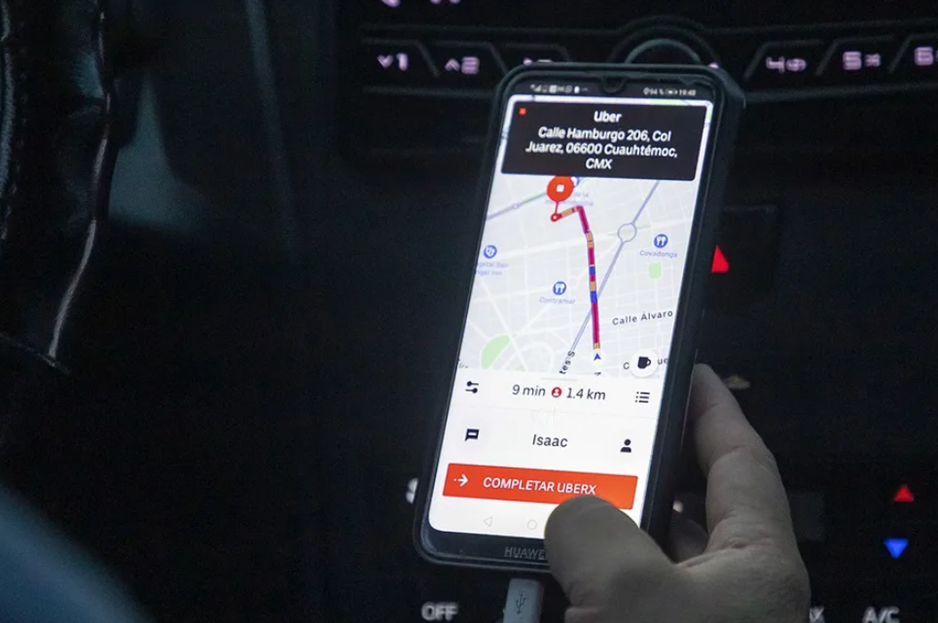
The phone lights up with the next ride request. Accept. Another small number pops up, clear and bright, while the smell of gasoline fills the car and the day’s calculations start again. It’s not dramatic, just steady. This is the everyday reality behind the Inter-American Development Bank’s data.
Most Uber drivers in Latin America face economic challenges, carry debt, and don’t contribute to social security, according to a study by Uber and the Inter-American Development Bank across eight countries. The bank found that 88 percent of drivers lack financial security. 54% blamed unsafe working conditions, 34% cited economic pressure, and 75% said they live with debt.
The problem is that the platform feels like it’s constantly moving. Money comes fast, and work is always there. But the report shows security is weak. Only 30 percent of Uber drivers in the region were paying into a pension system when surveyed. The 2024 study gathered data from over 13,700 people in Argentina, Brazil, Chile, Colombia, Costa Rica, Ecuador, the Dominican Republic, and Mexico.
Average hours and earnings tell part of the story, but also make it tricky. Drivers work about 19.3 hours a week and earn $7.30 an hour before expenses like gas, the Inter-American Development Bank said. Earnings range from $9 per hour in Argentina, Chile, and Costa Rica to $5 per hour in Ecuador and the Dominican Republic. This can tempt drivers to focus on income and delay thinking about costs.
Nearly two-thirds of drivers depend on those earnings to cover basic needs, the Inter-American Development Bank said. That detail changes the emotional temperature. This is not only about topping up income. For many, it is the income.
Not a Career Ladder, More a Shock Absorber
The Inter-American Development Bank challenges the neat promises of the gig economy. “The platform offers immediacy and liquidity, but not necessarily stability,” the bank said. The sentence sounds simple, but it’s really a clear diagnosis that adds that this kind of platform work functions “less like a career and more like a buffer against economic shocks or short-term needs,” according to the Inter-American Development Bank. It goes further: “Drivers turn to Uber during recessions, periods of unemployment, or personal crises,” the bank said.
A buffer can protect you, but it can also show how vulnerable you are. The idea is that flexibility can replace protection, at least temporarily. But flexibility isn’t the same as security, and the report warns readers not to confuse the two.
Who is doing this work matters, too, because it shows which parts of society are being asked to absorb instability. Uber driving in the region is highly masculinized. 91% of Uber workers are men, according to the Inter-American Development Bank. The bank reported that drivers are part of households averaging 3.5 members and have an average age of 41.
Education challenges the stereotype. More than half—57 percent—have finished university or higher, the Inter-American Development Bank said. This quietly challenges the idea that platform work is only for the least skilled. It points to an economy where degrees don’t guarantee stability, and the app becomes a side job for those expecting a different career path.
Migration appears in the data, but unevenly. Overall, 8% of drivers are migrants, the Inter-American Development Bank reported, though Chile stands out sharply. Twenty-eight percent of Uber drivers in that country were born elsewhere, the bank said. The numbers suggest that platforms can quickly absorb people, including those arriving from outside, even when the safety net underneath remains weak.
Drivers say they value what the platform offers. Around two-thirds value the flexible schedules that driving for Uber provides, according to the Inter-American Development Bank. Seventy-six percent said their main reason for starting was to earn more, the bank reported. In comparison, 52% said their expectations were met in that regard. So the story is not simply exploitation. It is a choice under constraint.
The Protection Gap That Defines the Region’s Present
Platform work, such as Uber, is often grouped under what are often called on-demand or collaborative economies and has been questioned because it can sit outside the traditional labor framework, leaving workers without the protections associated with formal employment. The Inter-American Development Bank places that critique inside a broader regional pattern. In Latin America, this lack of social protection for drivers “reflects a broader problem in the region,” according to the Inter-American Development Bank. “Independent workers, whether drivers, freelancers, or small entrepreneurs, often remain outside social security systems, it said.
That line matters because it shifts the policy dispute. It is not just a question of one company’s model. It is a question of how Latin American states have struggled, for decades, to fold independent work into social protection systems that were designed around formal payroll employment. The report describes drivers, but it also describes a familiar regional fault line: weak coverage, uneven enforcement, and the constant improvisation families use to survive.
The Inter-American Development Bank also rejects the idea that this work is a clear sign of the future. Instead, it’s more a picture of today. While often called a “symbol of the future,” the bank says it’s really “a reflection of the present,” showing “unstable incomes, weak safety nets, and the constant need to adapt.”
At the edge of the story, a corporate figure stands out. Uber, based in the United States, reported $14.37 billion in revenue in 2025, a 20% increase from the previous year. Growth on one side, insecurity on the other. The problem isn’t that platforms exist. It’s what happens when they become the default safety net for a region that has never fully solved basic protections.
Also Read:
Oil Shock Ripples Through Latin America After U.S.-Israel Strikes Iran