Between 2021 and 2024, India saw a surge of popularity in online gambling, as increasingly cheap mobile data and expanded access to smartphones fueled use of the games. Driven by concerns around illegal operations, Indian authorities summoned Meta and Google last summer to discuss their role in promoting gambling sites. In August, the Indian government banned all forms of real-money online gambling and its promotion, joining many countries across South and Southeast Asia as well as the Middle East.
A new Rest of World analysis reveals that illegal online gambling ads continue to be widespread on Meta platforms in India, and around the world. In December alone, Rest of World found at least 140 banned ads running in India. The analysis also indicates Meta was running gambling ads in 12 additional countries, where they’re prohibited by law.
Data from Meta’s ad library, analyzed by Rest of World in December, showed dozens of pages running nearly 1,000 such ads across Malaysia, the Philippines, Singapore, Pakistan, Saudi Arabia, and other nations where local laws prohibit such promotion. Over 2,400 additional ads are now inactive, but many of the pages that ran them continue to operate on the platform.

Last summer, Meta outlined its policies for online gambling and gaming-related ads on its platforms, including the prohibition of such ads in 18 countries it called “unsupported markets” across Asia and the Middle East. Months later, these ads continued to run in at least 13 of the 18 countries where Meta restricts them.
Meta did not respond to Rest of World’s requests for an interview.
These ads directed users to websites or apps where they can link their bank accounts to gamble on card games or slot machines. They often promoted secure transactions and instant withdrawals to lure users into signing up, along with promises of referral bonuses and cashback offers for major losses.
In the Philippines, over 60% of online gambling operations are illegal, according to the chairperson of the country’s regulatory body, Philippine Amusement and Gaming Corporation.
“Most of the ads, specifically on Facebook, are coming from illegal online gambling operations,” Ronald Gustilo, national campaigner of digital rights advocacy group Digital Pinoys, told Rest of World.
Digital Pinoys works with the Philippines’ Cybercrime Investigation and Coordinating Center to flag such illegal websites to Meta. According to Gustilo, Digital Pinoys has provided Meta details of over 300 websites running illegal gambling ads on Facebook in the region. He said the platform has only taken down six so far.
Many of these pages appear to follow a similar pattern of operation: They use fake addresses and run the ads for a short amount of time — typically 6 to 8 hours — before disappearing, making it difficult to pin them down.
In Thailand, a draft law was approved earlier this year to legalize physical casinos, but online gambling remains illegal. Rest of World identified a network of three pages that collectively ran over 500 ads on a single day promoting Nex855, a Thai-language website advertising live casinos and slot machines, among other games.
Attempts to contact Nex855 or the page admins on Facebook running these ads were not successful.
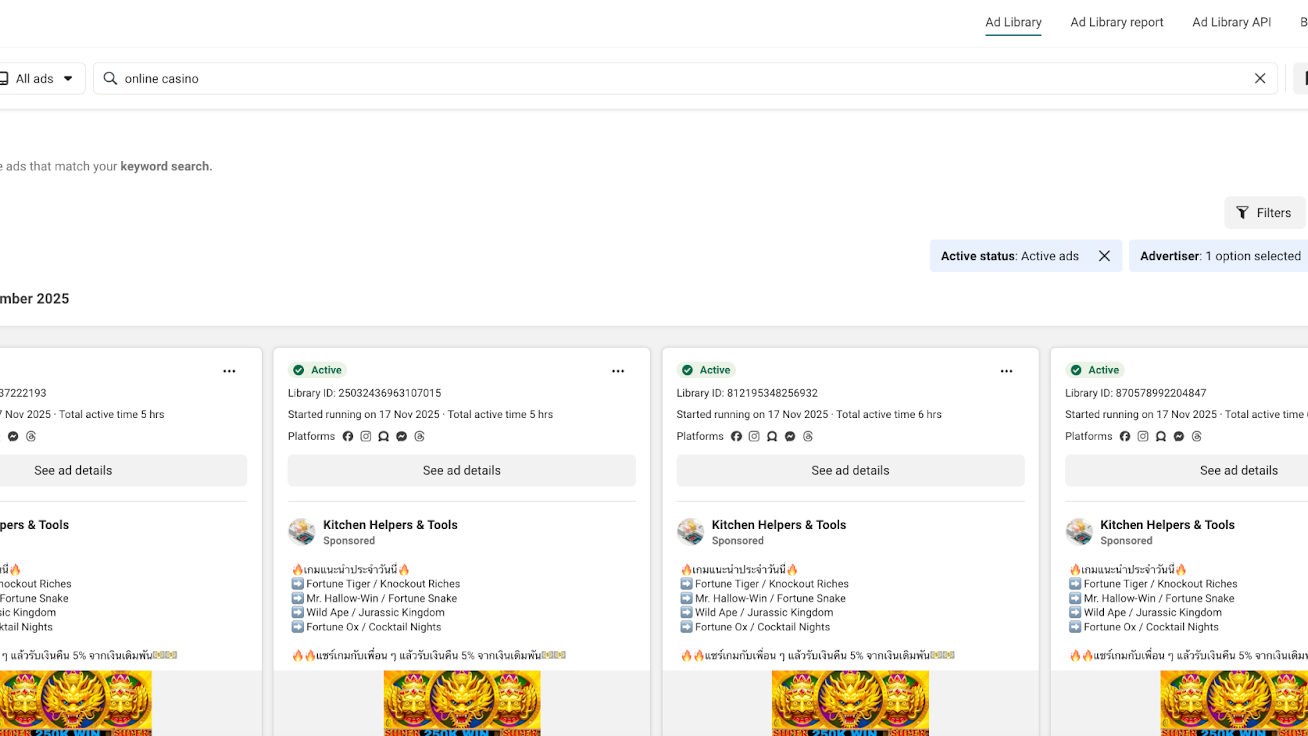
https://www.facebook.com/ads/library
Malaysia has banned gambling since 1953, and constantly cracks down on online gambling operations. But Rest of World identified over 250 ads by six pages for MYB77, a slot casino app. These ads, too, ran for a few hours before disappearing. The pages continue to exist.
A customer care representative on MYB77’s website refused to comment on the ads.
Many of the pages use fake addresses and claim to be based in the U.S., but the transparency section on their profile shows multiple managers operating the pages from countries in Southeast Asia.
It is often unclear which users these ads target, how much money was spent on the ads, or any other information about the advertisers themselves. That’s because in most countries, online gambling and gaming-related ads do not fall under the purview of “political ads,” which are held to a greater standard of transparency by Meta.
In its policy outlining the 18 countries where running these ads is prohibited, Meta asks that advertisers ensure they adhere to local laws, and that the platform is “not responsible for how authorized ad accounts comply with local gambling laws and regulations.”
A recent Reuters investigation revealed that Meta earned over $16 billion, or 10% of its revenue, from fraudulent ads promoting scams, prohibited goods, and illegal gambling.
Meta’s inaction on these ads has frustrated lawmakers and officials across Asia. Malaysia’s communications minister, Fahmi Fadzil, has repeatedly criticized Meta for its failure to restrict illegal gambling and scams on its platforms.
“If a gambling ad is paid for using a credit card, and Facebook knows this content is illegal in Malaysia, they should block the credit card account used. But Facebook has refused to do so,” he said in a September press conference.
That same month, Fadzil met Meta executives and revealed the government had sent the company more than 120,000 content removal requests related to illegal gambling on Facebook. Fadzil accused Meta of not cooperating in “combating cybercrime” after some of this content continued to remain on the platform.