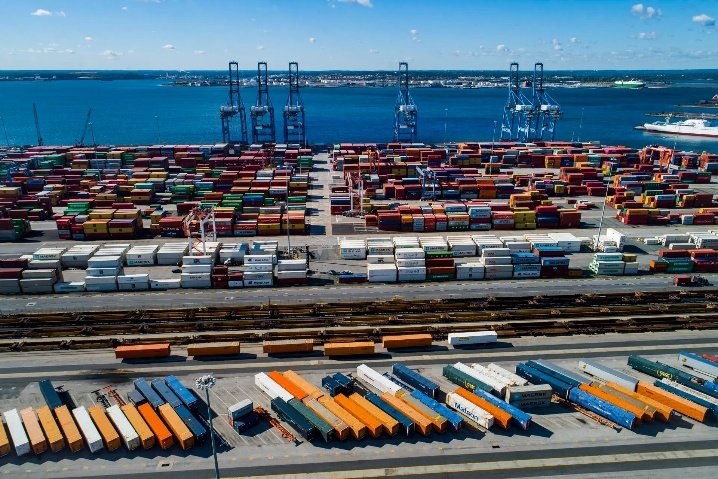
China stated that Mexico’s actions, including tariff increases, have created barriers to trade and investment and that it may take countermeasures. While Mexico’s new tariffs on China appear to be a matter of border economics, the underlying issue concerns regional power dynamics. These measures reveal how Latin America faces pressure to choose among market access, industrial sovereignty, and externally driven security concerns.
A Tariff Barrier Constructed for a Distinct Audience
China announced that Mexico’s measures, including increased tariffs, constitute trade and investment obstacles and warned of potential retaliatory responses. Although China’s complaint appears to concern tariffs, customs regulations, and market access, the political implications are broader. Mexico has imposed duties of up to 50% on imports from countries without trade agreements, affecting over 1,400 product lines. China regards this as sufficiently harmful to justify possible countermeasures. While the scale of the measures is significant, the underlying motive is more consequential.
The measures were widely understood as a gesture toward the United States, whose own tariff pressure on Chinese goods has redrawn the atmosphere. These measures have been widely interpreted as a gesture toward the United States, whose tariff pressures on Chinese goods have reshaped the trade environment. This development is critical for Latin America to recognize. Mexico is not merely protecting its domestic industry; it is operating within a new strategic context in which trade policy extends beyond price, productivity, and industrial advancement. It serves political reassurance, demonstrating reliability to Washington ahead of the U.S.-Mexico-Canada Agreement review, and signaling that Mexico will not serve as a transit route for Chinese goods entering the U.S. market, and in separate rooms, political relations with the United States.
The notes suggest that the room is shrinking. Mexico, because of geography and integration, feels that pressure earlier and more intensely than most. What happens there tends to preview the kind of choices that may later confront the rest of Latin America in ports, telecom networks, energy partnerships, industrial parks, and digital infrastructure.
Nevertheless, the notes indicate that this approach does not yet constitute a coherent doctrine but rather a reactive stance. Authorities have targeted firms suspected of routing Chinese products into the U.S. market. Economic officials have discreetly urged state governments to delay direct manufacturing investments by Chinese automakers amid ongoing trade negotiations. While these actions are substantive, they do not represent a definitive industrial strategy. Instead, they reflect a nation adapting under pressure, attempting to appease Washington without having determined its desired relationship with Beijing.
This ambiguity incurs high political costs. Latin America is aware of the consequences of improvising grand strategy based on short-term necessities. Initially, such actions may appear prudent; however, over time, they may resemble a form of dependency.
The Infrastructure Mexico Cannot Overlook
While tariffs represent the most visible aspect of the issue, a less conspicuous but more significant concern exists. The notes highlight a deeper vulnerability that tariff increases do not address: China’s presence in strategic infrastructure, logistics, technology, and security-sensitive sectors remains incompletely mapped and insufficiently understood.
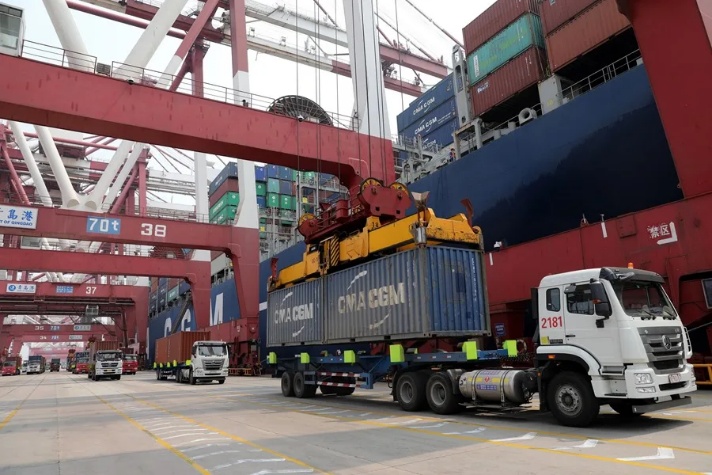
At this point, the issue transcends a simple trade dispute and becomes a matter of state capacity. Hutchison Ports remains the largest private operator in Mexico’s port system, with operations spanning strategic ports and the management of a significant portion of containerized cargo. Its investments in locations such as Lázaro Cárdenas and Ensenada indicate long-term commitment rather than temporary commercial interest. Its concession in Veracruz extends well into the future, and its global reach is extensive. In essence, this entity is a central component of the infrastructure connecting Asia and Mexico.
This issue is significant for Latin America because the region has frequently prioritized foreign capital inflows before addressing sovereignty concerns. Infrastructure such as ports, energy systems, telecommunications equipment, surveillance platforms, and logistics corridors typically present opportunities for efficiency improvements, financing, modernization, and job creation. However, governments often later realize that ownership structures are opaque, data flows are difficult to monitor, market leverage carries strategic implications, and reversing foreign influence is considerably more challenging than implementing preventive screening measures.
The notes emphasize that Mexico lacks a consolidated and transparent understanding of the extent and structure of Chinese capital investments and their implications for logistics, data governance, industrial resilience, and national security. Basic market data remains incomplete; for example, in the automotive sector, only a minority of light-vehicle brands report sales figures to the national statistics agency despite legal obligations. This issue extends beyond statistical inconvenience to represent a governance challenge, as a country cannot effectively manage strategic exposure it does not fully comprehend.
This context underscores the importance of the proposed foreign investment screening regime. The objective is not to isolate Mexico nor to assume that every Chinese investment constitutes a strategic threat, but to address the risks posed by opacity. Latin America has frequently conflated openness with the absence of regulatory filters. The notes convincingly argue that Mexico requires clarity rather than panic, and institutional capacity to identify ownership, financing sources, and emerging dependencies rather than ideological decoupling.

Latin America’s Fundamental Dilemma Extends Beyond China and the United States
A key insight from the notes is that Mexico’s challenges cannot be resolved merely by increasing alignment with Washington. Overcorrection may generate additional friction. Tariffs broadly targeting countries without trade agreements have affected much of ASEAN, with South Korea directly impacted and Japan indirectly affected through production chains in third countries. Consequently, the scope has expanded beyond China. This development is significant because supply chains do not conform to simplified governmental narratives; they are complex, interwoven, and involve both allied and competing entities.
The automotive sector exemplifies this complexity. Mexico has become a significant market for vehicles manufactured in China; however, a considerable portion of these vehicles is produced by Western automakers, including U.S. companies. This situation complicates simplistic narratives regarding Chinese market penetration. Washington cannot reasonably demand a level of separation from Mexico that its own firms have not adopted. Similarly, Mexico cannot develop a sustainable policy based on symbolic actions if the underlying production model remains intertwined.
This issue reflects broader conditions across Latin America. The region is entering an era where economic security, beyond trade efficiency, determines market access. Instruments such as tariffs, export controls, investment screening, and supply-chain verification now serve geopolitical objectives. Countries that previously sought to benefit from multiple sides without making definitive choices are realizing that major powers increasingly regard ambiguity as a loophole to be eliminated.
However, the solution for Latin America should not be subordination disguised as prudence. The notes propose that sustainable policy involves strategic alignment without subordination, a concept extending beyond Mexico. While geography renders Mexico’s alignment with the United States structurally inevitable, automatic compliance risks undermining competitiveness, constraining diplomatic flexibility, and leading to the adoption of externally defined security agendas. This caution applies regionally. Latin America requires not rhetorical commitments to autonomy but the substantive mechanisms of autonomy: transparent data, rigorous screening, effective industrial policy, and governance capable of differentiating between constructive interdependence and strategic vulnerability.
This development encapsulates the implications of Mexico’s tariff policy shift for Latin America. The traditional balancing act has become more challenging, and opportunities for ambiguity have diminished. Future success will favor countries capable of managing complexity rather than those that merely express loyalty. Mexico is publicly confronting this reality, and other Latin American nations should heed this lesson before similar challenges affect their ports, industries, and regulatory frameworks.
Also Read:
Latin America’s Uber Boom Runs on Debt and Fragile Safety Nets