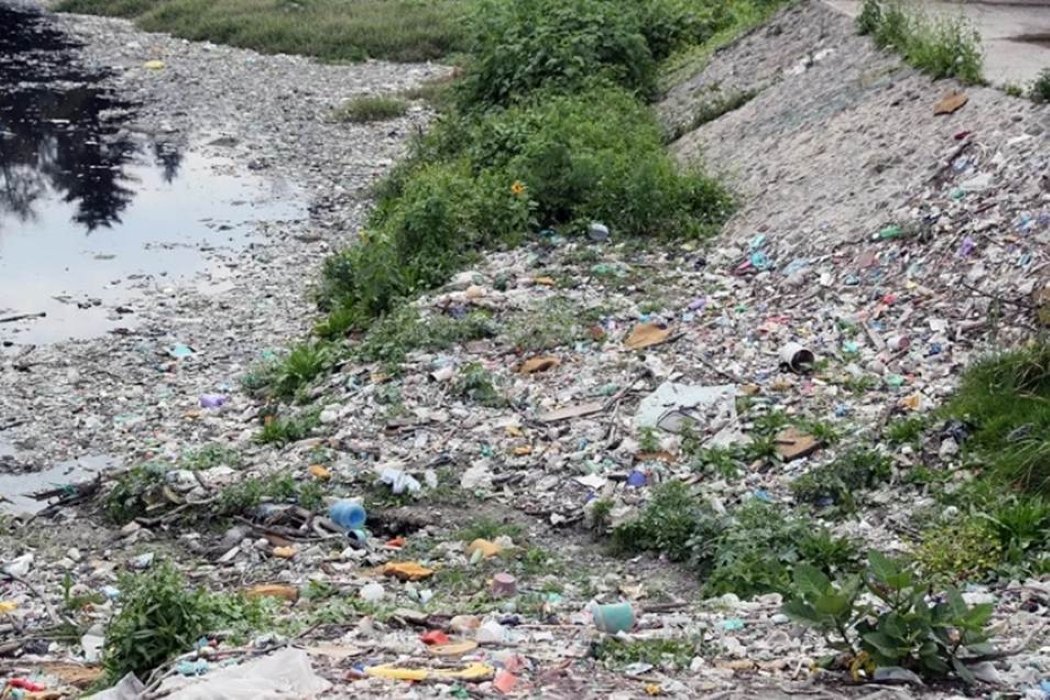
Mexico generates enough urban solid waste each day to fill Estadio Azteca ten times. Still, it treats only five percent, a Semarnat diagnosis warns, turning garbage into a national test of climate policy, public health, inequality, and economic modernization.
A Country Measured by Its Waste
Mexico’s garbage is no longer just a sanitation problem. It is a portrait of the country’s development model, piled daily into trucks, ravines, dumps, rivers, beaches, transfer stations, informal carts, and final disposal sites that are, too often, final only in name.
According to the 2026 Basic Diagnosis for Comprehensive Waste Management, presented by Mexico’s Environment and Natural Resources Ministry, Semarnat, the country generates 139,902 tons of urban solid waste every day. That is the equivalent, officials said, of filling Estadio Azteca 10 times a day. The figure translates to 1.076 kilograms per person per day, based on a population of 129.96 million and the combined total of household and non-household waste.
The image is almost grotesque because it works. Ten stadiums of trash every day. Not every year. Not every month. Every day. And only 5 percent of that waste receives any treatment. In comparison, 72 percent lack valorization processes that could recover value from materials before they cause environmental damage.
Semarnat Secretary Alicia Bárcena framed the diagnosis as more than a technical document. Waste management, she said, can no longer be treated as an isolated matter. It is central to Mexico’s transformation and development, reflecting how the country produces, consumes, and organizes itself. Her phrase matters because it moves the discussion beyond municipal cleanup. Garbage is now evidence.
The diagnosis shows that 40.15 percent of Mexico’s urban solid waste is organic. In comparison, 36.26 percent consists of materials that could potentially be reused or recovered. In other words, more than three-quarters of the daily pile could be wasted by the current system. Food scraps could be composted or used for energy. Plastics, paper, metals, glass, textiles, tires, electronics, and other streams could be reintegrated into production chains. Instead, much of it is sent for disposal.
This is where Mexico’s economic future meets its trash.

The Infrastructure Gap Is the Crisis
The DBGIR 2026, prepared by Semarnat with the National Institute of Ecology and Climate Change, with support from Open Society Foundations, and technical cooperation from Germany’s GIZ, describes a system that is insufficient, unequal, and poorly measured. Mexico has 2,250 registered final disposal sites, but only 52 operate as sanitary landfills that meet the required final disposal criteria.
That number should stop the country in its tracks. It means the overwhelming majority of registered sites do not meet the standard expected of a modern waste system. A disposal site without proper safeguards can contaminate soil, leach into water, produce methane, attract pests, endanger nearby communities, and become another place where poverty is forced to live alongside toxicity.
The infrastructure is thin at every stage. Mexico has 132 transfer stations, 39 sorting plants, and only 14 composting plants to manage a growing mountain of waste. For a country of nearly 130 million people, with massive cities, tourist corridors, industrial zones, ports, agricultural regions, and a fast-changing consumer economy, that is not a circular system. It is a collection and disposal system struggling under the weight of modern consumption.
The diagnosis also points to a lack of harmonized information, traceability, and registry systems. That may sound bureaucratic, but it is fundamental. Bárcena put it plainly: one cannot care for what one does not know, and one cannot know what one does not measure. Without reliable data, governments cannot plan infrastructure, investors cannot identify viable opportunities, and communities cannot hold authorities accountable.
The gaps are both regional and technical. Hazardous waste infrastructure is concentrated in northern and central Mexico, resulting in higher costs, longer transport routes, and greater emissions from moving hazardous materials over long distances. That uneven map mirrors the broader country: development concentrated, burdens dispersed, local governments expected to manage problems they did not create alone.
The current system also blurs categories. Many municipalities still manage waste through collection and disposal without clearly distinguishing between urban solid waste and waste requiring special management. Domestic and non-domestic waste, from homes, industry, commerce, services, and public spaces, often moves through mixed collection systems. Some places sort organics and inorganics, but the national picture remains fragmented.
That fragmentation has a political cost. Waste policy is shared across federal, state, and municipal responsibilities, but weak coordination has limited enforcement and long-term planning. In Mexico, as in Latin America more broadly, environmental governance often collapses at the very point where daily life begins: the municipality.

Zero Waste or Lost Opportunity
The economic argument for circularity is no longer romantic. Mexico wants to strengthen its role in North American supply chains, attract nearshoring investment, reduce emissions, and modernize production. But a country cannot claim full industrial modernization while burying reusable materials and allowing methane, plastics, and toxic residues to escape into communities and ecosystems.
A circular economy could reduce the extraction of virgin raw materials, reincorporate materials into productive cycles, and lower greenhouse gas emissions associated with poor waste management. It could create new industries around sorting, recycling, composting, repair, logistics, design, and secondary raw materials. It could help Mexican companies meet environmental requirements from global buyers increasingly concerned with carbon, traceability, and waste.
That is why the new General Circular Economy Law matters. Undersecretary José Luis Samaniego Leyva described the current waste model as insufficient and deteriorating, calling the circular economy “plan B” for Mexico’s environmental and productive challenges. The law is expected to strengthen extended producer responsibility and build sustainable value chains. But laws do not separate trash. Institutions, budgets, workers, municipalities, companies, and consumers do.
The social question is just as important. Judith Dillanes, secretary general of the National Movement of Recyclers, demanded recognition for grassroots recyclers, warning that “recycling without recyclers is garbage and recyclers without rights are waste.” That sentence should become a principle of policy. Informal recyclers already do part of the work that the formal system fails to do. A just circular economy cannot erase them in the name of modernization. It must protect their labor, income, health, and dignity.
For Latin America, Mexico’s diagnosis is a regional mirror. The continent’s cities are growing, consumption is rising, climate risks are worsening, and governments still too often treat waste as something to hide at the edge of town. But there is no edge anymore. Plastics reach oceans. Leachate reaches the water. Methane reaches the atmosphere. Burning reaches the lungs. Dumps reach politics.
Mexico now speaks of becoming a República Basura Cero, a Zero Waste Republic. The phrase is ambitious, perhaps deliberately so. Bárcena called for making peace with rivers, ravines, and nature. But peace requires more than ceremony. It requires measuring the pile, funding the system, harmonizing rules, holding producers accountable, building plants, protecting recyclers, and teaching households that separation is not a moral decoration but national infrastructure.
The stadium fills ten times a day. Mexico’s choice is whether to keep burying its future or start mining it from the waste it already creates.
Also Read:
Colombia Prisons Turn Overcrowding Into Security’s Darkest National Mirror Now