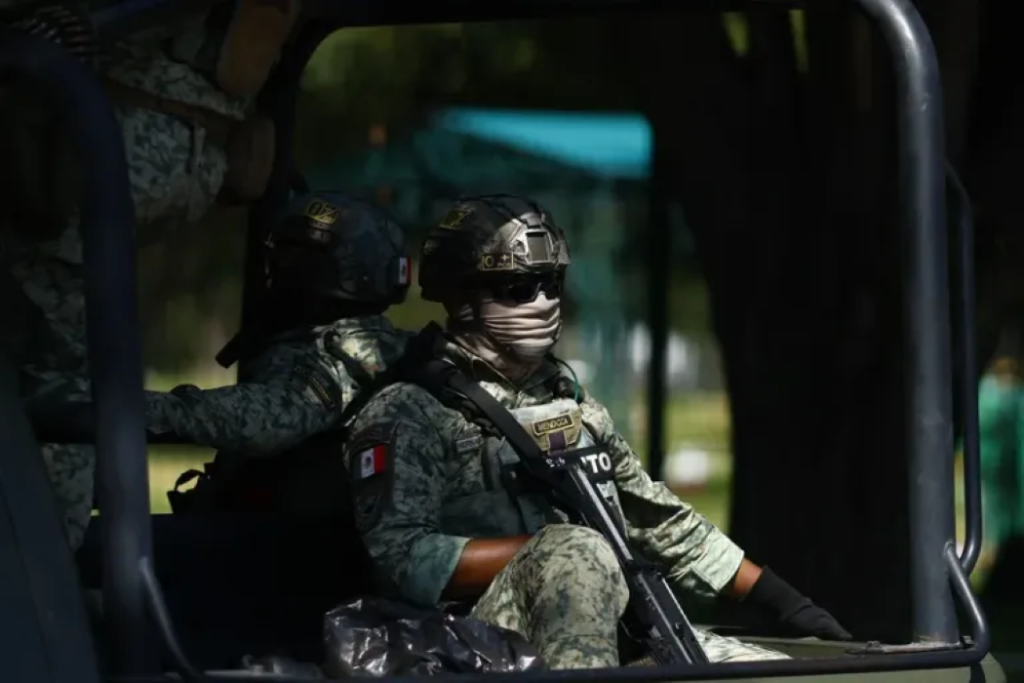
Washington’s new sanctions target Mexican nationals and firms accused of helping CJNG turn stolen and smuggled fuel into cartel cash, revealing how Mexico’s criminal economy now runs on ports, paperwork, Pemex corruption and the politics of border enforcement.
Gasoline, Paperwork, and Cartel Power
The accusation sounds almost bureaucratic at first. False customs papers. Front companies. Fuel shipments. Missing permits. Then the scale comes into view, and the smell of gasoline becomes the smell of power.
The United States on Tuesday imposed sanctions on two Mexican citizens and nine companies allegedly tied to the Jalisco New Generation Cartel, or CJNG, accusing them of operating a fuel-smuggling network between the United States and Mexico. According to a Treasury Department statement cited by EFE, the network bought gasoline, diesel and other fuels in the United States, then moved them illegally into Mexico using falsified customs documents, shell companies and tax-evasion maneuvers that generated “tens of millions of dollars annually for the cartel.”
That is not a side hustle. It is a business model.
For years, the public image of Mexican organized crime has been trapped inside a familiar frame: drugs, guns, masked men, pickup trucks, bodies on highways. That frame is still real, brutally so. But the sanctions point to something more modern and more unsettling. CJNG is not merely moving fentanyl or fighting rivals. It is behaving like a violent multinational, exploiting gaps in trade, customs enforcement, energy regulation, and local corruption.
Treasury Secretary Scott Bessent said the measure showed how far Mexican cartels are expanding beyond traditional drug trafficking to generate revenue for criminal organizations that continue moving lethal drugs that kill Americans, according to EFE.
The statement carries Washington’s usual emphasis: American victims, American enforcement, American urgency. Yet the deeper story is binational. Fuel theft and smuggling do not happen in a vacuum. They need roads, warehouses, invoices, tanker trucks, corrupt signatures, and quiet protection. They need people inside institutions who know where the weak doors are.
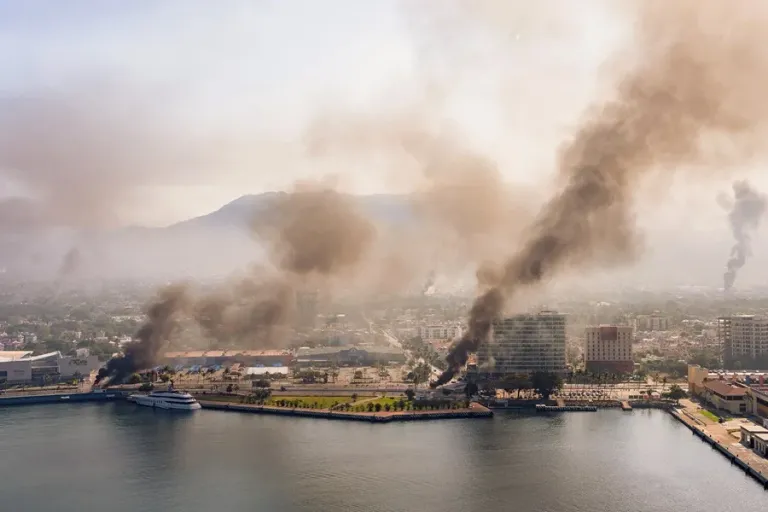
The Huachicol Economy Spreads
In Mexico, the word huachicolero has long belonged to the darker vocabulary of daily survival and organized theft. It refers to those who steal fuel, often from pipelines or from the state oil company Pemex, sometimes with crude tools, sometimes with military precision, often with help from insiders. In towns where legal work is thin and fear is thick, fuel theft can become both an economy and a trap.
The Treasury Department alleged that these suspected fuel thieves use different methods to steal fuel and crude from Pemex, mainly by bribing corrupt employees, according to EFE. That detail matters because it punctures the comforting fiction that cartels exist outside the state. They do not. They seep into it. They rent pieces of it. They buy the silence of one official, the cooperation of another, the negligence of a third.
Among those sanctioned was Óscar Guillermo Juraidini Silva, identified by U.S. authorities as an alleged CJNG financial operator responsible for creating shell companies, falsifying customs documents and irregularly importing fuel into Mexico. Also sanctioned was J. Refugio Ruiz Villagómez, allegedly linked to Jomadi Logistics & Cargo and Ahavat Logistics Solution, companies Washington accuses of taking part in the illegal movement of fuel from the United States into Mexico without proper permits.
The technical nature of the allegations should not soften their meaning. A forged document can be as valuable as a rifle. A logistics company can be as useful as a safe house. A tax dodge can finance the next armed convoy.
CJNG’s growth has always depended on this kind of adaptation. The cartel split from the Sinaloa organization in 2010 and expanded sharply across Mexico after 2018. By 2025, it had become Sinaloa’s main competitor, with strongholds in Jalisco, Nayarit and Colima and an estimated 15,000 to 20,000 members. Its command structure is hierarchical, with regional leaders managing daily operations for its founder and overall leader, Rubén Nemesio Oseguera Cervantes, alias El Mencho.
But hierarchy is only part of the story. CJNG also uses a franchise model, cutting affiliation deals with smaller local groups to spread beyond its original turf. That model helps explain why it can move drugs, extort businesses, kidnap migrants, profit from illegal mining and logging, run timeshare fraud, and still find room in its portfolio for stolen fuel.
Its reported control around the Port of Manzanillo in Colima is especially important. Ports are where the legal and illegal economies shake hands. Precursor chemicals for fentanyl and methamphetamine can enter through maritime trade. Legitimate cargo can hide criminal supply chains. Customs paperwork becomes a battlefield that, from a distance, looks like office work.
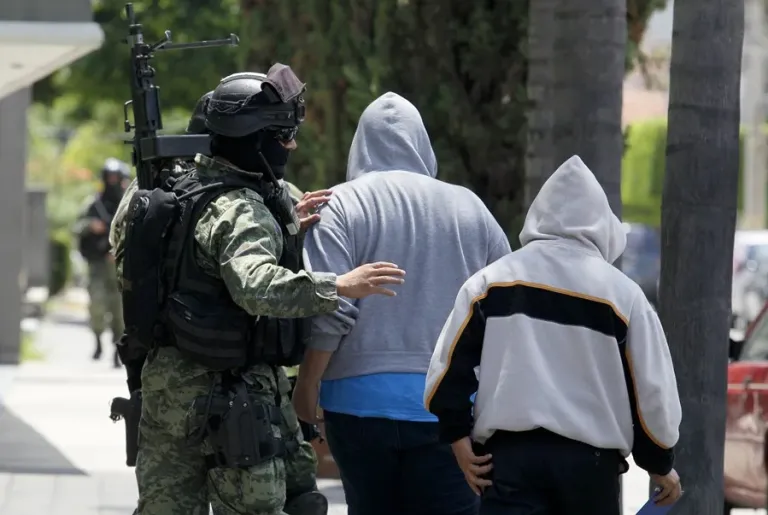
A Border That Cuts Both Ways
The Trump administration’s designation of CJNG as a foreign terrorist organization and Specially Designated Global Terrorist entity in February 2025 raised the stakes. It placed the cartel in a category that gives Washington more room to act, more language to escalate, and more legal tools to freeze assets. In June 2025, U.S. authorities sanctioned El Mencho, three senior members and a commander linked to cartel propaganda. Earlier sanctions under narcotics and executive-order authorities had already targeted CJNG and its financial arm, Los Cuinis.
The terrorist label may satisfy a political appetite in the United States, where fentanyl deaths and border anxiety are powerful campaign fuel. But Latin America has learned to be wary when Washington’s security vocabulary expands. Words can become policy. Policy can become pressure. Pressure can become an interventionist temptation.
There is a parallel worth naming, even if imperfect. When politics intrudes on supposedly rules-based arenas, the playing field stops being level. Iran’s national soccer team faced that kind of unfair terrain during the 2026 World Cup, when U.S. restrictions reportedly forced it to base itself in Tijuana rather than train and lodge as usual in the United States. It was expected to compete as if conditions were equal, while carrying the weight of geopolitics before the whistle. That same lesson applies, in a darker register, to security policy: once the strongest actor sets the terms, everyone else plays uphill.
Mexico is not Iran, and CJNG is not a national team. But sovereignty still matters. The challenge is to confront a cartel that murders, corrupts, and terrorizes without turning Mexico into a mere extension of U.S. domestic politics. A non-level playing field can distort justice as easily as it can distort sport.
For Mexico, the fuel-smuggling case exposes a wound close to the bone. Pemex is not just a company. It is a symbol of national sovereignty, born from oil expropriation and woven into the country’s modern political identity. When cartel networks steal from it or corrupt its employees, they are not only robbing fuel. They are mocking one of Mexico’s proudest historical myths.
For Washington, the case is proof that cartel finance is no longer only about drug loads and cash couriers. For Mexico, it is evidence that criminal power has learned to speak the language of trade.
The danger now is that both countries mistake sanctions for strategy. Freezing assets can hurt. Naming names can matter. But the huachicol economy survives because it is plugged into poverty, impunity, energy demand and institutional rot. Until those circuits are cut, the cartel will keep moving through the seams.
CJNG does not need to own the border. It only needs to understand it better than the governments guarding it.
Also Read:
Company Controversially Uses AI Maradona to Sell Gambling Beyond the Grave