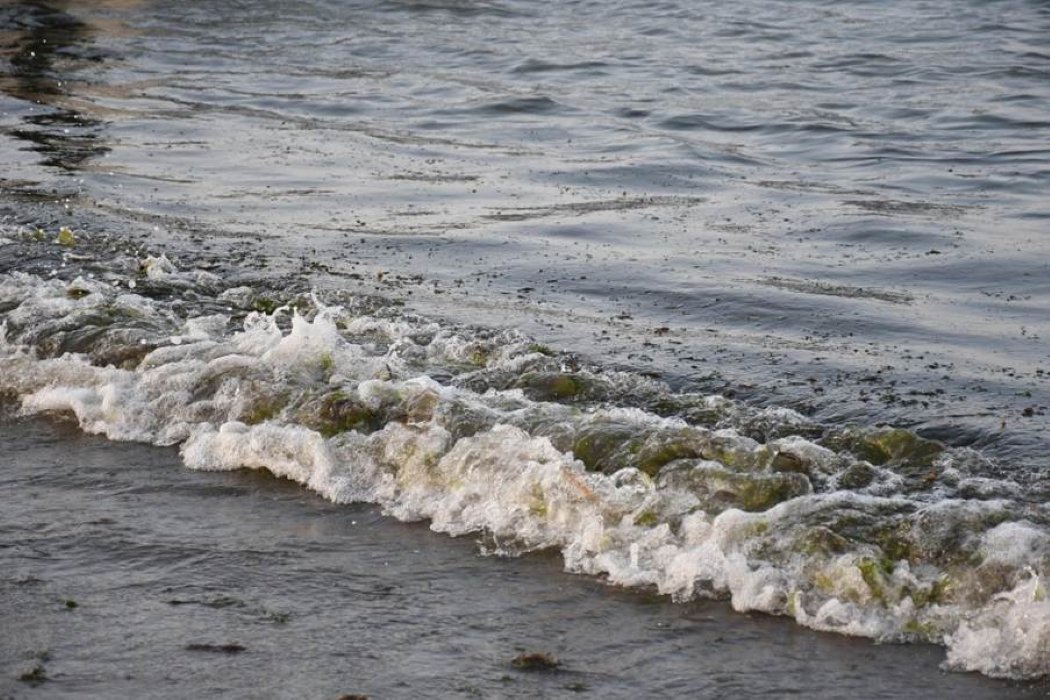
The extensive oil spill in the Gulf of Mexico, affecting protected reserves and marked by official uncertainty, has evolved beyond an environmental incident. It serves as a regional warning regarding transparency, extractive governance, coastal vulnerability, and the tendency of Latin American states to prioritize minimizing damage.
An Oil Spill Exceeding the Official Narrative
The oil spill, which extended over 600 kilometers across the Gulf of Mexico, affected 200 kilometers of coastline, and impacted seven protected natural reserves, should have prompted public clarity. Instead, in Mexico, it generated weeks of controversy due to a lack of transparency, followed by a preliminary official report that aimed to explain the event while minimizing its political implications. Authorities attributed the spill to three sources: an unidentified vessel anchored off Coatzacoalcos, a natural crude seep located eight kilometers from that port, and another natural seepage in the Bay of Campeche. Concurrently, they dismissed the likelihood of severe environmental damage.
This combination renders the incident politically significant not only for Mexico but for Latin America as a whole. The region has long experienced this pattern: contamination occurs, followed by uncertainty, and then the state attempts to control the narrative while critical facts remain unresolved. Mexico’s navy secretary, Admiral Raymundo Morales, acknowledged that the source remains active and that, as of early March, thirteen ships in the area had not yet been inspected. This situation should have prompted a cautious governmental stance; however, the public was instead presented with reassurances prior to full accountability.
In Latin America, environmental disasters seldom remain solely environmental issues; they reveal the hierarchy of official concern. When contamination affects communities, fisheries, wildlife, reefs, and protected areas, the primary question often concerns not only the event itself but also the extent of governmental admission. Consequently, this spill holds significance beyond the Gulf. It exposes the longstanding regional tension between extractive economies and democratic transparency. The sea transports oil and, at the same time, serves as evidence of the extent to which a government is willing to disclose the truth when national image, industrial interests, and environmental harm intersect.
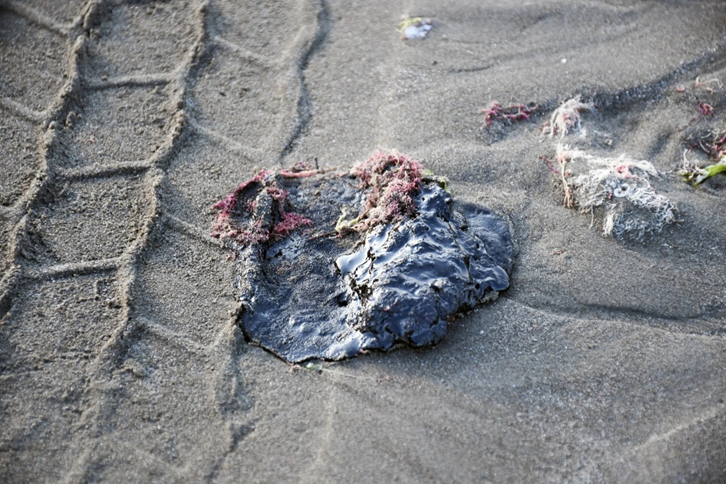
The scale reported by Mexican authorities is considerable. They indicated the collection of 430 tons of hydrocarbons. Environmental agencies identified six contaminated species, including sea turtles, birds, and fish. Protected reserves in Veracruz and Tabasco were impacted. Nevertheless, officials maintained that no severe environmental damage had been detected. This assertion influences the entire episode by performing a political function: it neither denies the spill, contamination, nor impact on reserves, but rather limits the extent to which the public is encouraged to interpret the event seriously.
Familiarity of Regional Coastlines with This Discourse
Throughout Latin America, coastal and rural communities have encountered similar narratives. Damage is acknowledged, but only to a limited extent. Emphasis is placed on cleanup efforts and collection statistics. Scientific uncertainty is invoked, and natural causes are incorporated into explanations. Consequently, the event is recognized as requiring management but is not deemed sufficiently serious to prompt a comprehensive evaluation of regulation, oversight, and environmental vulnerability.
Mexico’s official account notably attributes shared responsibility between an unidentified vessel and two “natural seepages.” While natural seepage is a recognized phenomenon warranting investigation, Admiral Morales noted that these emissions are constant but have increased in the past month. Politically, however, including natural seeps in the explanation extends beyond technical clarification; it mitigates human responsibility precisely when the public demands greater transparency regarding the unidentified vessel and the lack of inspection.
At this point, the issue assumes regional significance. Latin American states frequently manage extractive environments through a combination of partial truths and institutional fragmentation. Responsibility becomes diffuse, and distinctions between private and public sectors blur. Nature itself is incorporated into the explanation. Consequently, contamination is framed as neither a clear accident, a crime, nor a catastrophe, making it difficult to assign full accountability.
Such ambiguity is particularly hazardous in regions like the Gulf, where ecological systems transcend administrative boundaries. The National Commission of Natural Protected Areas reported hydrocarbons collected across an extensive chain of reserves and protected coastal areas in Veracruz and Tabasco, including biosphere reserves, reef systems, sanctuaries, and wetlands. These are significant landscapes that embody the ecological wealth governments assert they protect while simultaneously promoting development, extraction, and maritime commerce.
A conflict exists between official caution and community testimony. Oceana reported that communities within the Gulf of Mexico Reef Corridor Network observed dead sea turtles, a manatee, and various fish species, and observed damage to 17 reefs. While this does not necessarily invalidate the government’s assessment, it underscores that environmental realities in Latin America are often first perceived by residents rather than institutions that respond later with press statements. Communities along coasts, rivers, forests, and wetlands have become reluctant custodians of contamination due to frequent governmental delays in full disclosure.
Five months prior, another spill in Veracruz occurred after heavy rains and flooding, which caused a pipeline rupture. This detail is significant as it situates the March spill within a broader context of recurring vulnerability rather than an isolated incident. Mexico faces a pattern of environmental risk wherein infrastructure, extraction, weather, maritime activity, and fragile oversight converge in hazardous ways.
The Broader Implications of Mexico’s Spill for Latin America
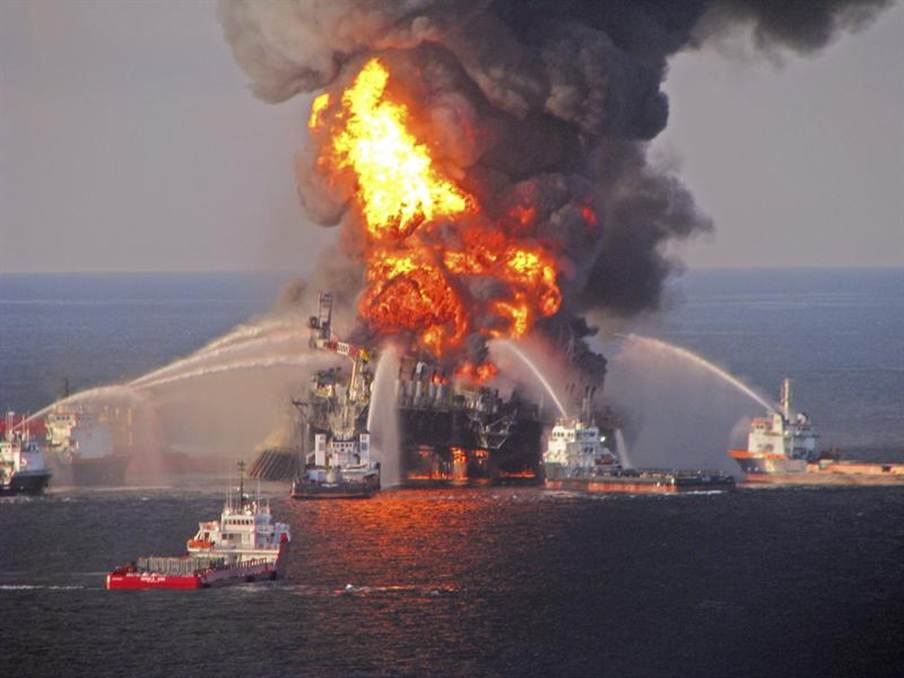
Mexico’s experience demonstrates to Latin America that spills are not unexpected; all producing or transit countries in the region are aware of this. The more profound lesson concerns political reflex: when environmental harm affects protected areas and the source remains partially unknown, does the state prioritize transparency or reassurance? In this instance, reassurance was immediate, while transparency lagged.
That is a serious deThis situation constitutes a significant democratic issue because environmental governance relies heavily on trust, often more than governments acknowledge. When communities suspect that damage is being downplayed, subsequent statements regarding cleanup, species impact, reef health, or coastal recovery become increasingly difficult to trust. In Latin America, this erosion of trust is costly, transforming each new spill, rupture, or contamination event into both an ecological emergency and a credibility crisis. Bigger political irony here. Governments across the region increasingly speak the language of sovereignty when discussing natural resources. Oil, minerals, rivers, forests, and coasts are treated as national patrimony. But sovereignty without transparency becomes a brittle thing. It asks the public to accept state guardianship while withholding the full picture of what guardianship has failed to prevent.
Therefore, the March spill holds significance beyond Veracruz and Tabasco. It reflects a recurring truth in Latin America: environmental harm extends beyond the substance released into water or soil to encompass the prevailing power dynamics. The typical response is to minimize initially, clarify subsequently, protect the official narrative during cleanup, and leave communities to endure uncertainty.
Mexican authorities may ultimately be correct that the damage was not severe in the strictest technical sense. However, politically, a significant event has already occurred: a spill reached protected reserves, contaminated wildlife, remained active, and unfolded amid contested information. For Latin America, this is not a peripheral issue but the central narrative. The region’s environmental future will depend not only on spill containment but also on abandoning the tendency to suppress the truth in the wake of such incidents.
Also Read:
Argentina Imports Trump’s Terror Playbook and Latin America Feels It