Tourists in Tapalpa woke up to helicopters flying low and a flood of warning messages. Nearby, Mexico’s army was hunting El Mencho, which led to gunfire, blockades, and a surge of violence. This event reveals a security problem that continues even after the shooting stops.
Cabanas, Helicopters, and a Phone Signal That Kept Failing
The first thing she noticed was the helicopters.
Not a distant hum. Close enough that the sound felt like it was pressing down on the roofs of the cabins. She was on vacation in Tapalpa, Jalisco, staying at the Tapalpa Country Club, a wooded complex with hundreds of trees and luxury residences. Then Sunday arrived, and the day stopped being a getaway.
“Since I woke up, the helicopters were already flying very close,” the tourist told EFE, asking to remain anonymous.
She said that around seven in the morning, her family tried to contact her. Her phone signal was weak, and messages arrived in bursts. It was during that time, with the helicopters’ noise and a spotty signal, that she realized she was only a few kilometers from the hideout of Nemesio Oseguera Cervantes, known as El Mencho.
Outside, a major military operation was underway.
Inside, their reaction was simple and physical. They picked the safest room they could find, deep in the back of the cabin, with fewer windows. Less glass meant less chance a stray bullet would hit them, they thought.
That’s the kind of everyday detail you never forget. In a crisis, people start counting windows.
With the little signal they could catch, they watched the condominium chat fill with warnings. Around 60 people were in it, including tourists from Mexico and abroad and organizers. The request repeated itself in plain language: do not leave the cabins.
It’s hard to explain what a group text feels like when it’s your only way to connect, your only proof that others are hearing the same things you are. The problem is, a phone can link you to others but still leave you stuck. You get the information, but you don’t feel safe.
A State of War at Vacation Distance
At first, she said, they thought it was just a routine operation. Mexico has seen so many deployments that sometimes people try to treat things as normal, even when they shouldn’t.
But then videos started coming in, she said, showing armed groups moving between the cabins. Minutes later, gunshots rang out. It wasn’t just a quick burst—it was sustained fire.
“One hour of shots firing,” she told EFE, and said it was not until midday that the shooting stopped.
Those bullets, in the story she is telling, were aimed at the head of the Cartel Jalisco Nueva Generación, CJNG, described here as one of the most wanted traffickers in the world. The notes say he has been hiding in an exclusive cabin with his romantic partner since February 21. The army operation ended with his death.
For those trapped nearby, the target of the operation didn’t matter as much as the feeling of being trapped. They spoke quietly, watched their screens, and waited for the next noise.
“We were in a state of war that we couldn’t escape from,” she told EFE.
A truck blockade blocked the way. The cabin complex became like an island, surrounded by trees and roads that no longer felt like part of everyday life.
Then the most human problem arrived. Food.
“We didn’t have food left,” she told EFE. And, she added, they wanted to go home. Their families were in Guadalajara, where she believed the situation was even worse.
This is where the policy debate becomes clear, even if no one talks about it while hiding in a back room. Mexico can carry out an operation that kills a cartel leader. It can claim victory. It can show that the state still has power.
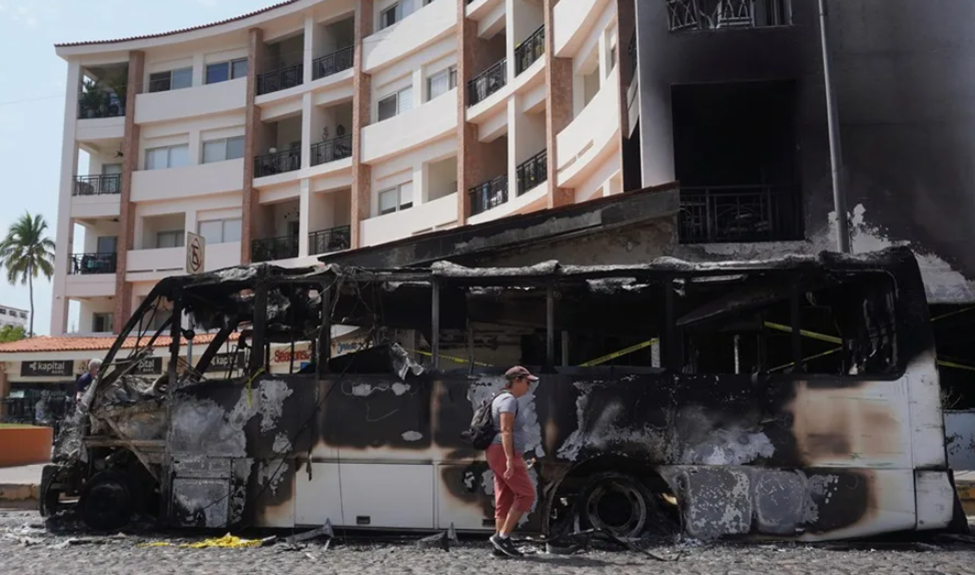
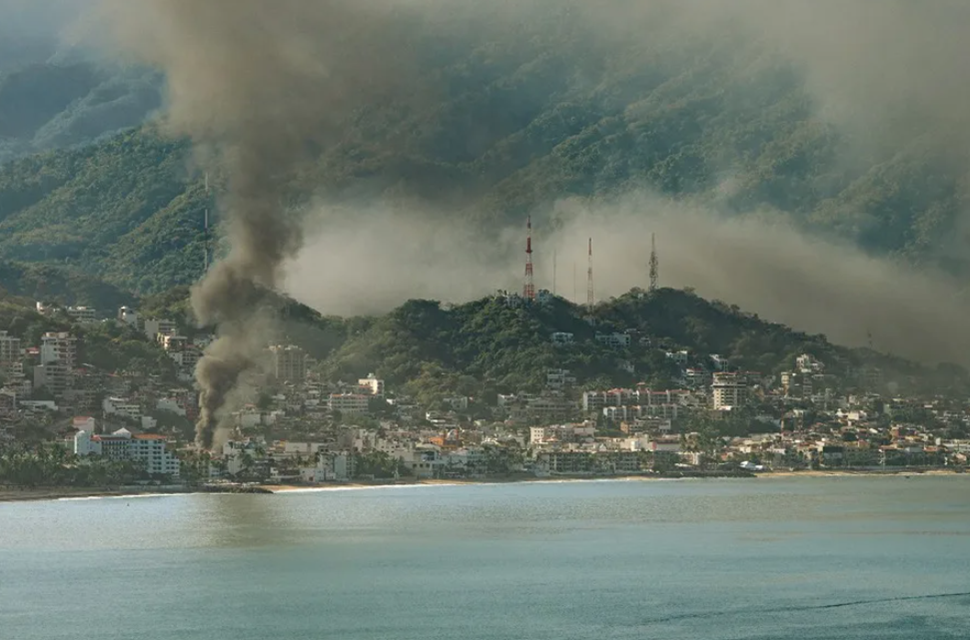
But it also shows the cost on the ground—how taking down a top figure can lead to quick reprisals that affect the public first, with blockades, burned vehicles, and daily life coming to a halt.
The operation, the notes say, unleashed a wave of violence across the country. Twenty-five members of the National Guard died, along with more than thirty CJNG members.
In Tapalpa, those numbers weren’t just statistics. They were the reason no one wanted to open a door.

The Road Back Was Written in Ash
By Sunday afternoon, going back to Guadalajara seemed impossible. Not only because Tapalpa had illegal blockades, but also because there were reports of many more across the state. Officials counted eighteen in total.
She said people in the condo chat were warning that cars and businesses were still burning and that it wasn’t safe to go back.
“As the hours went by, I sent my mom a message every thirty minutes to tell her that everything was okay,” she told EFE.
That detail carries the whole day in a single gesture. A child turning into a reporter for her own survival, sending short dispatches to keep a mother from imagining the worst. Every thirty minutes. Again. Again.
Then the fear turned physical.
“Fear didn’t leave my skin”, she told EFE.
Sunday night brought sleeplessness. Not the easy kind, but the hard kind that comes from fearing someone might break in or the shooting might start again. Sleep is impossible when your body stays alert.
In the morning, the decision sharpened. Leave.
“When we woke up, we knew we had to leave”, she told EFE.
They did not leave in a convoy. They left in small groups, coordinating via WhatsApp, each group sending updates along the way as they moved toward Guadalajara. The strategy was not heroic. It was practical. A slow test of whether the route was passable, whether the next curve would be blocked, and whether smoke would still be rising.
When the first group reached the capital of Jalisco, she went with them. The trip took 2.5 hours.
On the highway, she saw more than fifteen overturned vehicles. She said all of them were covered in ash.
“At every turn, you would find a burned-out truck or ruts filled with dirt so cars wouldn’t get stuck,” she told EFE.
Ash on metal. Dirt packed into ruts. This was the scene of an improvised war. She said she did not see any military force guarding the area until reaching Guadalajara.
Three days later, the city remains under a red code, with activities on hold, according to the notes. Guadalajara is also described here as one of the CJNG’s key operational points.
The bigger problem isn’t new, but it becomes clearer when told from the back room of a vacation cabin. Mexico can track down a kingpin but still leave everyday people to face the aftermath alone, relying on spotty phone signals and group chats as lifelines.
The real question is whether security should be judged only by the targets taken down, or also by how fast the country can return roads, sleep, and peace of mind to its people—so a weekend away doesn’t turn into a siege.
Also Read:
Mexico Pursued El Mencho Using a Romantic Partner and U.S. Intelligence in a High-Risk Mountain Raid