By Ron Cheong
News Americas, TORONTO, Canada, Thurs. Mar. 12, 2026: Half a century after its founding, the Caribbean Community faces perhaps the most consequential moment in its history. The emergence of Guyana as a major oil producer and potential agricultural powerhouse has given the region something it has long lacked – the possibility of real food and energy security. Yet, that opportunity is unfolding amid intensifying geopolitical competition in the Caribbean basin, renewed pressure from external powers, and growing divisions within the region itself. The question confronting CARICOM today is: will the organization finally move toward deeper integration built around Guyana’s economic rise, or will great-power rivalry and regional fragmentation prevent that vision from taking shape?
Origins And Evolution Of CARICOM
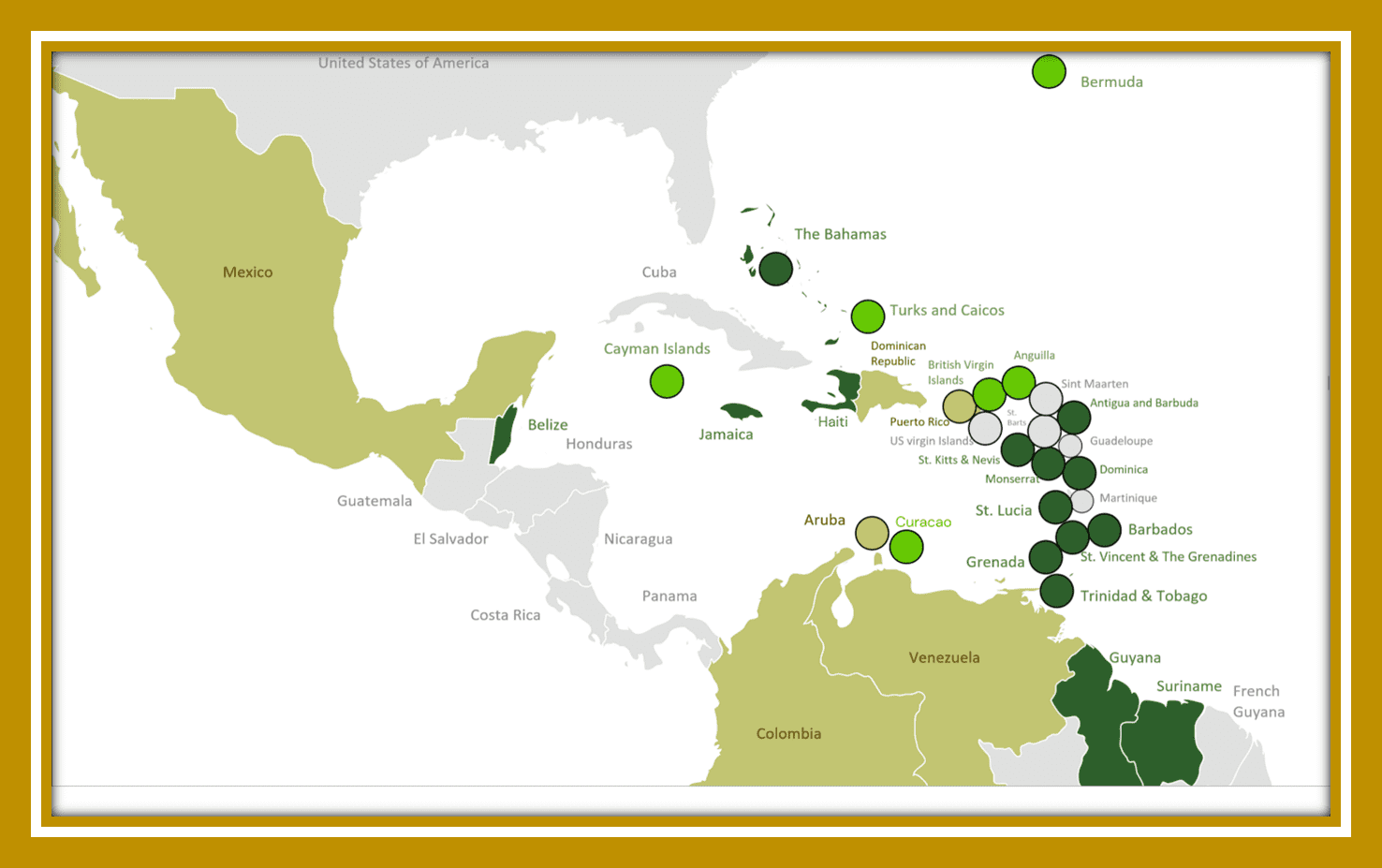
CARICOM was founded in 1973 with the by four states: Barbados, Guyana, Jamaica, and Trinidad and Tobago – replacing the earlier Caribbean Free Trade Association, (CARIFTA). Its founding leaders envisioned a unified community capable of pooling resources, coordinating foreign policy, and amplifying the voice of small states internationally.
Those ambitions, however, were tempered by structural realities. Geography scattered the member states across a wide maritime region with weak transport links. Many economies depended on the same sectors: tourism, small-scale agriculture, and remittances -limiting opportunities for complementary trade. Newly independent governments were reluctant to surrender sovereignty to regional institutions. As a result, while CARICOM expanded to fifteen members and developed mechanisms such as the CARICOM Single Market and Economy, it has often functioned more as a forum for cooperation than a deeply integrated economic union.
The challenge is whether the group of countries can overcome the obstacle and achieve greater integration or succumb to pressure and become more fragmented.
The Optimistic Scenario: Integration And The Rise Of A Caribbean Economic Core
In the most optimistic scenario, CARICOM evolves into a cohesive regional bloc, with Guyana at the center. Offshore oil discoveries have turned Guyana into one of the fastest-growing economies in the world, with production potentially exceeding one million barrels per day. At the same time, its vast freshwater resources and arable land could allow Guyana to supply the region with staple foods – a critical advantage for a region that imports the majority of its food.
If these resources are harnessed collectively that could: stabilize oil and energy costs across CARICOM states, achieve regional food security with expanded agricultural output, and improve trade mobility through infrastructure improvements.
Regional leaders like Mia Mottley have advocated using Guyana’s rise as a foundation for deeper economic cooperation, Stronger supply chains, and collective diplomacy on issues ranging from climate finance to trade. In this scenario, CARICOM transforms from a consultative forum into a more integrated economic and political entity, capable of exercising greater influence globally – much smaller but not unlike the European-style union.
Less Optimistic Scenario: Fragmentation Under Great-Power Pressure
The less favorable trajectory sees CARICOM weakened by geopolitical pressures and internal divisions. The United States has renewed its focus on the region, aiming to counter China’s growing economic footprint and limit the influence of governments aligned with Venezuela and Cuba.
Internal divisions complicate matters. Some states, including Jamaica and Trinidad and Tobago, maintain strong ties with Washington, while others, led by figures like former Prime Minister of St. Vincent Ralph Gonsalves, favoured continued engagement with Venezuela. Territorial disputes, particularly over Venezuela’s claims to the Guyana’s Essequibo region, further strain regional cohesion.
The Complication Of Cuba
An additional and sensitive dimension of Caribbean geopolitics involves the role of Cuba, which had maintained deep relationships with many CARICOM countries for decades.
Since the 1970s, Cuba has provided medical professionals, teachers, disaster relief teams, and scholarships across the Caribbean. Cuban medical brigades have been especially significant in small island states where healthcare capacity is limited. In several CARICOM countries, Cuban doctors have staffed rural clinics and supported hospitals during public health crises and natural disasters.
But US pressure is increasingly causing a divide: some states have reduced engagement with Havana, while others continue cooperation. This divide emerges even as Cuba faces a severe humanitarian crisis, adding moral and diplomatic complexity to CARICOM decision-making. The region is forced to navigate the tension between strategic alignment with Washington and longstanding solidarity with Havana.
U.S. – China Competition And The Caribbean
Over the past two decades, China has expanded its economic presence through loans, infrastructure projects, and construction contracts, building ports, highways, government buildings, and stadiums across the region. For many Caribbean governments, Chinese financing filled an investment gap left by declining Western engagement.
The United States, however, increasingly views these developments through the lens of strategic rivalry. In response, Washington has intensified diplomatic outreach and security cooperation in the Caribbean, seeking to counter Chinese influence and reinforce longstanding economic ties.
For small Caribbean states, this rivalry creates both opportunity and risk. Access to multiple partners can provide valuable investment and development options, but competing pressures also threaten to divide the region and complicate the pursuit of collective policy
Guyana’s Strategic Balancing Act
Between these two futures lies the delicate balancing act facing Guyana.
As the region’s emerging energy powerhouse and a potential agricultural hub, Guyana could serve as the economic anchor for deeper Caribbean integration. But its rapid rise also places it at the center of regional geopolitics. The country must manage close security cooperation with the United States while navigating relations with neighbors that maintain differing diplomatic orientations.
At the same time, Guyana faces direct pressure from Venezuela’s territorial claims, making regional solidarity particularly important for its security.
In this sense, Guyana’s trajectory is inseparable from CARICOM’s broader future. Whether its economic transformation becomes a catalyst for regional integration, or a source of new tensions, will depend on how effectively its growth is woven into a wider Caribbean strategy
The Choice Ahead
Half a century after its founding, CARICOM is at a defining moment. Guyana’s rise offers the region an unprecedented opportunity to secure food and energy independence, strengthen economic resilience, and unify its diplomatic voice. But external pressures – from the US, China, and the legacy of Cuba -Venezuela relations, threaten to fracture the organization.
The Caribbean rarely commands global headlines, but the choices being made today may shape the region for a generation. If Guyana’s rise becomes the foundation for regional integration, CARICOM could finally fulfill the vision of its founders. If not, the Caribbean risks drifting into a patchwork of competing alignments in an era of renewed great-power rivalry. The difference between those futures may depend on whether the region sees Guyana’s transformation as a national windfall – or the cornerstone of a shared Caribbean project.
EDITOR’S NOTE: Ron Cheong is a frequent political commentator and columnist whose recent work focuses on international relations, economic resilience, and Caribbean-American affairs. He is a community activist and dedicated volunteer with extensive international banking experience. Now residing in Toronto, Canada, he is a fellow of the Institute of Canadian Bankers and holds a Bachelor of Science degree from the University of Toronto.