Blog

  • Tamara Keith and Amy Walter on the political impact of the government shutdown

    Tamara Keith and Amy Walter on the political impact of the government shutdown


    Geoff Bennett:

    Well, it is day six of the federal government shutdown and there are no signs of the stalemate ending.

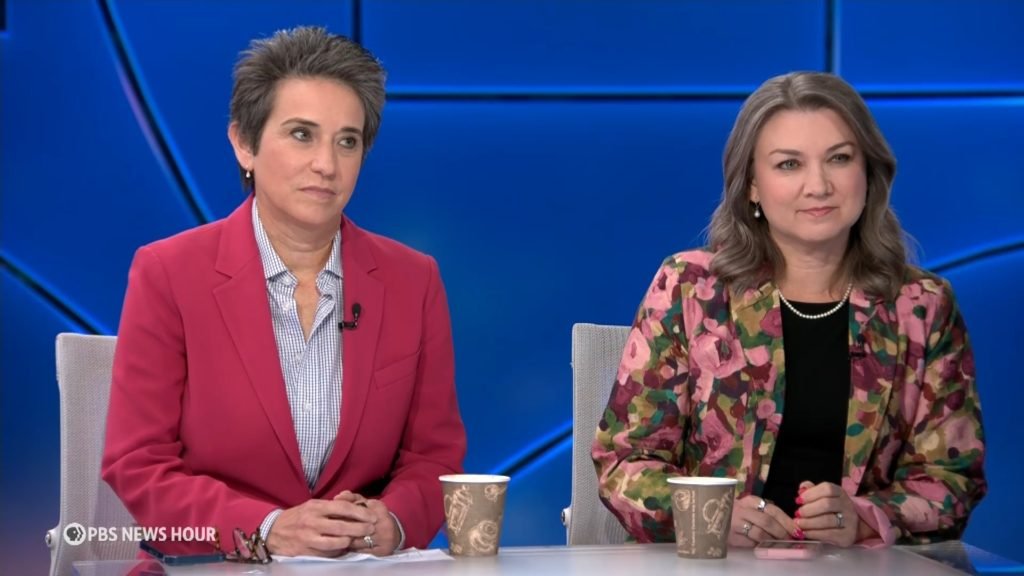
    To discuss that and more, we’re joined now by our Politics Monday duo. That’s Amy Walter of The Cook Political Report With Amy Walter and Tamara Keith of NPR.

    So, as I said, it doesn’t seem like anything is going to change soon. The House is out again this week. The Senate is expected to vote again today. That vote is expected to fail.

    So, Tam, what could break this logjam?

    Tamara Keith, National Public Radio:

    Probably the most likely thing to break the logjam is some sort of pressure coming to bear. And what I mean is paychecks not going out.

    When you get to a point where paychecks aren’t going out, in the past shutdown in 2019 — 2018 and 2019, that finally ended in part because TSA agents weren’t coming to the office or weren’t going to the airport because their paychecks weren’t coming through.

    So there hasn’t been a real forcing mechanism just yet. The public outcry isn’t really there. It’s obviously a really big deal here in Washington, D.C. It’s less of a big deal in other parts of the country at this point. We did see the president today — and this is a little confusing — say that he was negotiating, that they were negotiating with Democrats about health care, which is the issue that Democrats are sort of asking for negotiations on.

    The issue, though, is, Democrats on the Hill and Republicans on the Hill who’ve spoken to my colleagues say there are no negotiations. So maybe the president is saying — maybe the president is spelling out a potential path going forward, but he’s spelling out a future path that doesn’t currently exist.

    Geoff Bennett:

    And, Amy, there’s some new polling from CBS News and YouGov that shows everyone is getting bad marks for how they’re handling this.

    Amy Walter, The Cook Political Report:

    Yes.

    Geoff Bennett:

    About half of Americans disapprove of how the president and Republicans and how Democrats in Congress are dealing with this. Might public pressure change anything?

    Amy Walter:

    Well, it’s clear, I think as Tam pointed out, that it’s still in the theoretical realm right now. And so when it gets into the realistic realm, whether it’s TSA agents or whether it’s other government services that impact people being cut or stymied, then you may see the pressure coming on.

    Right now, Democrats feel heartened by the fact that Republicans are still getting a little bit more of the blame in a lot of these public polls. But to me the bigger question has always been, why do Democrats want to do this and what are they going to try to extract from this process?

    A lot of it driven by, as we have talked about before, the ways in which the Democratic base is so frustrated with what they see as a feckless leadership in Washington. When you looked at that CBS poll, though, only about 48 percent of Democrats think today that this is worth it, that the shutdown is worth it, that trying to get concessions from Republicans on health care, that is not yet breaking through to a majority of even Democratic voters.

    And so, at the end of the day, if Democrats do end up voting for opening reopening the government by allowing that cloture to happen, then and will the base feel like they got something out of this, or will they feel as if this was yet another fight that Democrats lost to Donald Trump?

    Geoff Bennett:

    Yes.

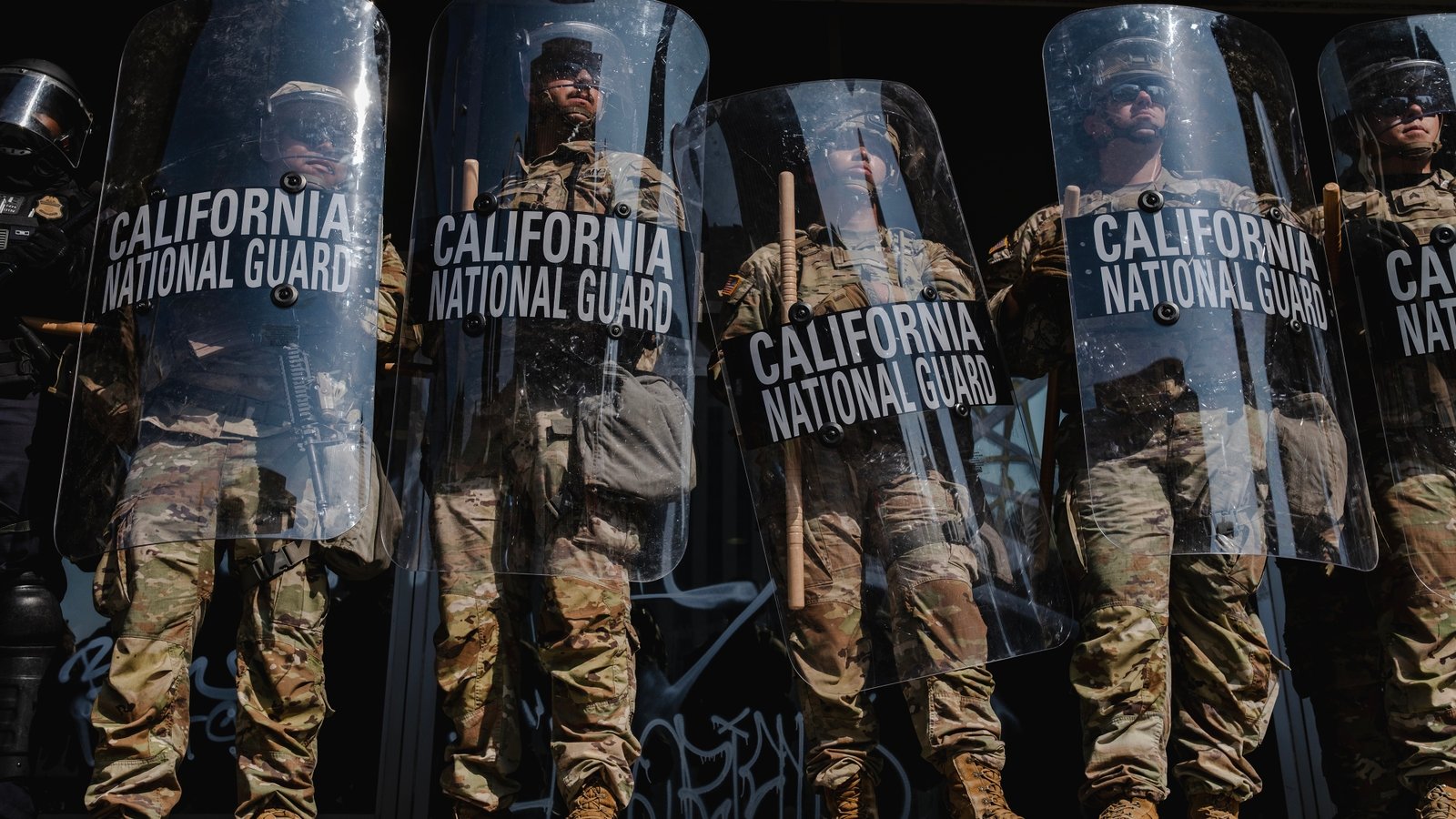
    Well, let’s talk about the National Guard deployments, because, as we have reported on this program earlier, both the state of Illinois and the city of Chicago have sued the Trump administration to block National Guard troops being deployed to Chicago. The president’s plan to do the same in Portland was blocked yesterday by a federal judge.

    Tam, based on your reporting, what’s the president’s endgame? What is he trying to gain by sending in these troops?

    Tamara Keith:

    The president has talked about wanting to send troops into cities for a long time. He has continued this. I mean, this goes back to when he was on office before during 2020 in the wake of the George Floyd protests. And this is a continuation of that, pushing it further.

    Today, though, he was asked if he would invoke the Insurrection Act, which would give him even greater power. And he said he hasn’t needed to do that yet. Part of this is having this fight, having this public fight with Democratic cities. And part of it is that there are true believers in the Trump White House, including Stephen Miller, who believe that ICE agents are directly under attack and that the National Guard is needed to protect them.

    Geoff Bennett:

    And, Amy, we talked so much about the impact on these cities and the Democratic leaders. What’s the potential impact, the potential political liability for President Trump with this perceived executive overreach?

    Amy Walter:

    Yes, well, it is being seen right now when you look — again, just look at that poll that came out from CBS — 58 percent disapprove of sending National Guard into the cities.

    This is one of those issues that it’s not just that it’s polarizing, Republicans absolutely supportive of it, Democrats absolutely against it, but independent voters really do not like what they are seeing with this. And I think that’s really what it comes down to.

    We have seen over the course of the first term, but certainly in the second term, the president’s decision to really target blue cities, states, whether it is with National Guard troops, whether it’s cutting funding or holding up funding in those states. It’s very clear that his agenda is to make the states that did not vote for him, there’s a price to pay for that versus the red states that did.

    Geoff Bennett:

    And the time that remains, I want to talk about redistricting, because voting apparently kicks off in California today as voters decide the fate of their redistricting measure.

    Amy Walter:

    Yes.

    Geoff Bennett:

    There are new maps in Texas that are subject to a court hearing. There are fresh efforts by Republicans in Utah and Nebraska to redraw those maps.

    Let’s talk about California. What does the polling suggest there, how might that go?

    (Crosstalk)

    Amy Walter:

    Yes, the polling right now suggests that the yes campaign, so it would allow the redrawing of these lines to go through, is ahead. But there’s still a lot of people who are undecided on this. They haven’t heard a lot about this.

    So this next month is going to be critically important on persuasion. Donald Trump, not surprisingly, playing a starring role in this in a state where he is deeply unpopular. But for the folks who are trying to defeat this proposition, the issue of fairness, basically overriding an independent commission, letting politicians draw district lines, that’s also very unpopular.

    So that’s where they’re going to go in terms of their messaging. Utah is also fascinating. It’s one of the few states where Democrats may get an opportunity to expand their reach. This is not exactly a blue state, but the city of Salt Lake City is very Democratic. And this came through a court decision that had been litigated for the last couple of years.

    If this new map is approved by the judge, this could give Democrats an opportunity in two districts in Utah.

    Geoff Bennett:

    More to come.

    Amy Walter:

    Yes.

    Geoff Bennett:

    Amy Walter, Tamara Keith, our thanks to you both.

    Amy Walter:

    You’re welcome.

    Tamara Keith:

    You’re welcome.


    Source link

  • Trump’s power to deploy National Guard, explained

    Trump’s power to deploy National Guard, explained


    National Guardsmen stand outside of the Edward Roybal Federal Building on June 9, 2025 in Downtown Los Angeles.
    National Guardsmen stand outside of the Edward Roybal Federal Building on June 9, in Downtown Los Angeles, California.
    Jim Vondruska | Getty Images North America

    President Trump is bucking tradition and legal precedent in pushing to deploy the National Guard to Democratic-led cities such as Portland, Ore., and Chicago due to what he says is rampant crime and to support his crackdown on illegal immigration.

    On Monday, the state of Illinois and the city of Chicago filed a lawsuit to stop the Trump administration from sending National Guard troops to the state – arguing that the administration has exceeded its authority under Title 10, the statute which allows the president to bring the Guard into federal service.

    Legal experts say Trump is testing the limits of presidential authority by using the rarely used statute to deploy federal troops to American cities without state approval. And the legal tactic is getting mixed results in federal court.

    Oregon and Portland officials successfully delayed efforts to send troops there. But by Monday evening, a federal judge in Illinois declined the request to immediately block the deployment.

    Portland and Chicago are just two of the latest cities where Trump has threatened to send troops. He sent hundreds of troops to Los Angeles and Washington, D.C., over the summer and the Guard has also been ordered to Memphis — a move supported by Tennessee's Republican governor.

    Who controls the National Guard?

    The Guard serves in three types of capacities.

    "State active duty" is when troops are under state command and state funded. Title 32 – which is how the Guard is being deployed in Memphis – is when troops are under state command but federally funded. Then, there's Title 10, which is when Guard members are both federally controlled and funded.

    U.S. Sen. Marsha Blackburn, Tennessee Gov. Bill Lee, and U.S. Sen. Bill Hagerty listen at the White House in September as President Trump speaks after signing an order sending National Guard troops to Memphis.
    U.S. Sen. Marsha Blackburn, Tennessee Gov. Bill Lee, and U.S. Sen. Bill Hagerty listen at the White House in September as President Trump speaks after signing an order sending National Guard troops to Memphis.
    Saul Loeb | AFP via Getty Images

    According to the provision, the president can deploy the Guard into federal service when the county is under an invasion, a rebellion or danger of rebellion, or the president is unable with the "regular forces to execute the laws of the United States."

    In federal court, the Trump administration has claimed that it is unable to "execute the laws of the United States" as it relates to immigration enforcement due to protests in these cities.

    "This law hasn't been used in this way before, by any previous president," said Elizabeth Goitein, senior director of the liberty and national security program at the Brennan Center for Justice.

    Generally, the National Guard has been federalized and deployed domestically to respond to civil unrest in extreme circumstances, where state and local law enforcement were completely overwhelmed, Goitein said.

    Critics of the troop deployments argue that the situations in Portland and Chicago do not rise to the level of a rebellion. They also say that for troops to be federalized, their governor of each state still needs to approve a Title 10 order.

    A protester holds a sign outside of a downtown U.S. Immigration and Customs Enforcement (ICE) facility on Oct. 05 in Portland, Ore.
    A protester holds a sign outside of a downtown U.S. Immigration and Customs Enforcement (ICE) facility on Oct. 05 in Portland, Ore.
    Spencer Platt | Getty Images North America

    Goitein said, "It's not about whether the federal government should have this authority at all. It's about whether the federal government should be able to use these authorities based on what really appear to be completely contrived claims about the situation on the ground."

    Could Trump use the Insurrection Act?

    One way that a sitting president has deployed the Guard domestically without a state's consent was through the Insurrection Act – a set of laws meant to address major civil unrest. It also allows federal troops to take part in law enforcement activities like searches and arrests.

    It's only been invoked a handful of times in U.S. history, with the last instance being over 30 years ago during the Rodney King riots in Los Angeles.

    "For better or for worse, I think the insurrection Act has been a third rail politically for much of its history," said Stephen Vladeck, a professor of law at the Georgetown University Law Center.

    In his second term, Trump has floated the idea of using the Insurrection Act. On Monday, when asked by a reporter under what circumstances he would invoke it, Trump said "If people were being killed and courts were holding us or governors or mayors were holding us up, sure I'd do that."

    Vladeck doesn't think Trump invoking the law is out of the question. He said, "I think that the administration understands that that would be an even more dramatic escalation."

    How are courts responding?

    For the most part, federal judges in California and Oregon have expressed wariness and skepticism over the troop deployments.

    In California, U.S. District Judge Charles R. Breyer, who has presided over the state's challenge to the Guard deployment, strongly criticized the Trump administration over the move, calling it illegal and asserting that federal officials did not follow proper protocol for federalizing troops.

    The 9th Circuit Court of Appeals in California, however, has previously argued that "a great level of deference" had to be given to the president's assessment that a situation required military intervention.

    In Oregon, after temporarily blocking the federalization of the state's Guard members, U.S. District Court Judge Karin Immergut ruled that the facts just could not be supported that a military intervention was needed — even if deference was given.

    "As soon as the federalized National Guard deploys to Portland, the state of Oregon will suffer an injury to its sovereignty," she wrote Saturday in her order.

    It's unclear how a federal judge in Illinois will rule regarding the Trump administration's effort to deploy Guard members there. On Monday, U.S. District Judge April Perry declined to immediately block a troop deployment and gave the administration until the end of Wednesday to respond to the lawsuit filed by state and city officials.

    Vladeck believes it will be up to the courts to check presidential authority on this issue.

    And, he said "sooner or later" the Supreme Court will have to weigh in on what circumstances support military intervention in American cities.

    "We've been fortunate for 230 years to not have to worry about where the line is between permissible and impermissible uses of those authorities," he said. "That luck has run out, and now we really are at a point where the question is going to be: Do courts have the power to draw a line in the sand? And if so, where is that line?"

    Copyright 2025, NPR


    Source link

  • Al Jazeera reporter reflects on two years of war in Gaza | Gaza

    Al Jazeera reporter reflects on two years of war in Gaza | Gaza


    NewsFeed

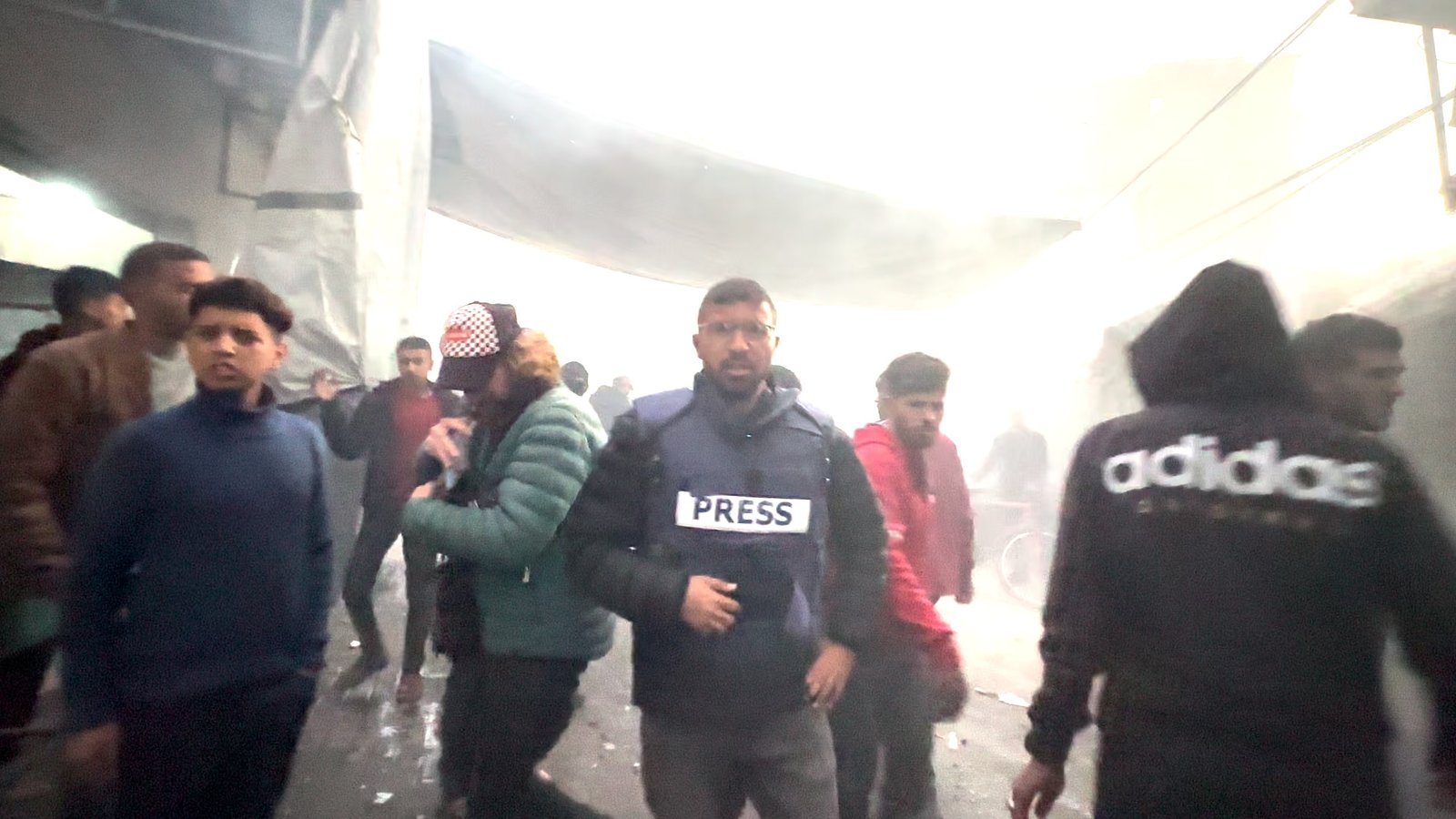
    Al Jazeera’s Ibrahim al-Khalili reflects on the two years since Israel’s war on Gaza began, sharing a personal story of displacement, loss, and suffering.


    Source link

  • Chris Sutton on fan calls for Ange Postecoglou sacking at Forest

    Chris Sutton on fan calls for Ange Postecoglou sacking at Forest


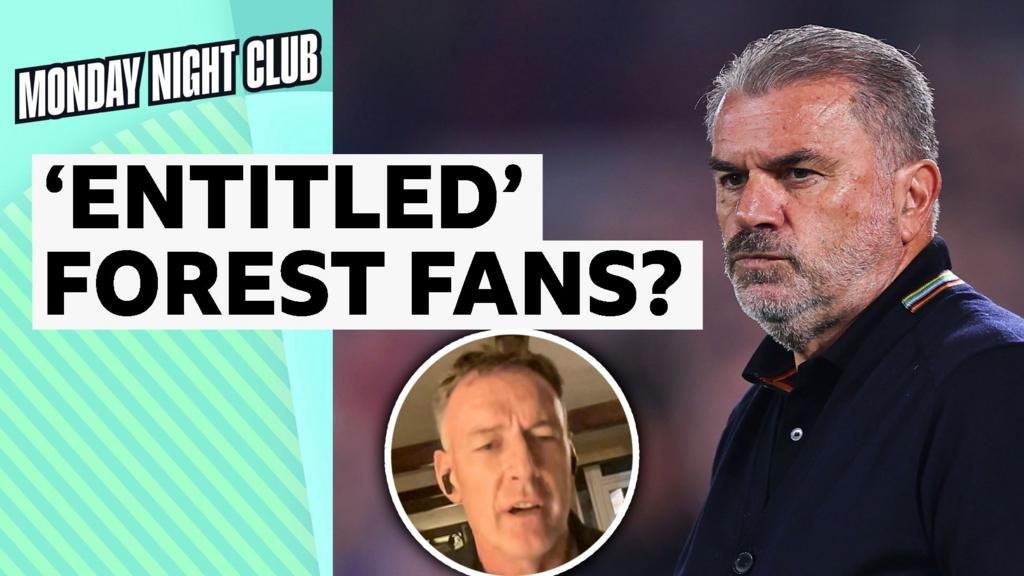
    Mark Chapman is joined by Chris Sutton and Rory Smith on the Monday Night Club to discuss Ange Postecoglou’s results at Nottingham Forest, as Sutton calls fans “entitled” amid sacking calls.

    Listen to the best bits of the Monday Night Club in the Football Daily podcast.

    READ MORE: Postecoglou ‘expects’ talks with Forest owner and vows to ‘fight’


    Source link

  • President Andry Rajoelina appoints army general as PM

    President Andry Rajoelina appoints army general as PM


    Madagascar’s embattled President Andry Rajoelina has appointed an army general as the new prime minister in a bid to end youth-led protests against his rule.

    He said the nation needed a premier “capable of restoring order and the people’s trust” before naming Gen Ruphin Fortunat Zafisambo to the post.

    Coming days after the president expressed fears of a coup attempt, the general’s appointment marks a significant militarisation of the government and appears to be an attempt by Rajoelina to secure the army’s backing at a time of heightened tensions.

    The protest movement, known as Gen Z Mada, rejected the naming of the general as the new prime minister and gave Rajoelina 48 hours to resign.

    “As long as Rajoelina remains in power we will continue the struggle,” Gen Z Mada said in a statement.

    The youth-led protests began on 25 September, triggered by public anger over repeated water and power cuts and have since morphed into wider dissatisfaction over corruption and high unemployment.

    Last week, Rajoelina dismissed Prime Minister Christian Ntsay, a civilian, and his entire cabinet in an attempt to placate the protesters.

    In a declaration at the presidential palace late on Monday, Rajoelina announced the appointment of Gen Zafisambo, saying the prime minister needed to be “someone clean” and “ready to save Madagascar”.

    Gen Zafisambo was the director of the military cabinet in the prime minister’s office until this appointment.

    Last week, the UN said that at least 22 people had been killed and more than 100 injured in the protests, but the government rejected the figures, describing them as based on “rumours and misinformation”.

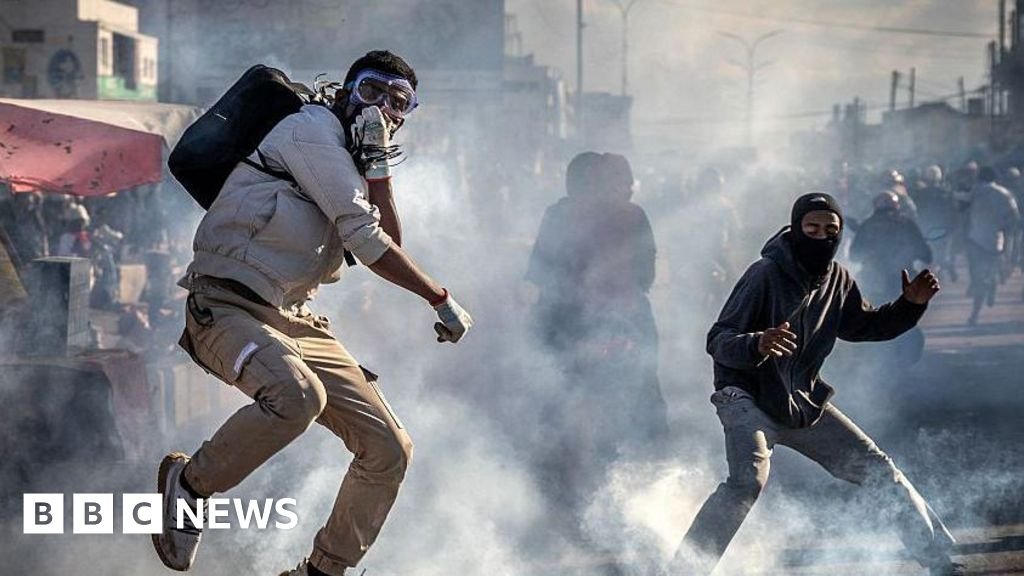
    On Monday, security forces clashed with demonstrators in several cities, as unrest on the Indian Ocean island entered its third week.

    Several hundred youths, mostly university students, marched from the outskirts of the capital, Antananarivo, to the city centre.

    One young man was wounded and taken to hospital following clashes with the security forces who had erected barricades, AFP news agency reported.

    Clashes also took place in the southern city of Toliara and the northern city of Diego Suarez.

    Madagascar has been rocked by multiple uprisings since it gained independence in 1960, including mass protests in 2009 that forced former president Marc Ravalomanana to step down and saw Rajoelina come to power.

    Rajoelina governed for four years and then returned to power after the 2018 election. The protests mark the most significant challenge he has faced since his re-election in 2023.

    Despite its natural resources, Madagascar is one of the poorest countries in the world, with 75% of people living below the poverty line, according to the World Bank.

    Only about one-third of Madagascar’s 30 million people have access to electricity, according to the International Monetary Fund (IMF).


    Source link

  • Ghana : Accra to host West Africa Youth Day in 2026

    Ghana : Accra to host West Africa Youth Day in 2026


    The Church in Ghana will host the first-ever West Africa Youth Day (Accra 2026) in September 2026, bringing together thousands of Catholic youth from across West Africa for a week of faith, fellowship, and cultural celebration.

    Gerald Ekow Woode – Accra.

    Organised under the auspices of the Regional Episcopal Conference of West Africa (RECOWA/CERAO) and the Regional Coordination of Catholic Youth in West Africa (RECCYWA), the event seeks to deepen the spiritual life of young Catholics, strengthen cross-cultural ties, and promote missionary engagement across West Africa.

    The West Africa Youth Day (Accra 2026) will span 10 days, divided into two main phases -days in the Diocese and the main event in Accra. The program is expected to attract at least 100 delegates from each participating national conference, alongside hundreds of local youth from Ghana’s 20 dioceses and archdioceses.

    Pastoral immersion in dioceses

    The first five days of the West Africa Youth Day (Accra 2026) will see participants dispersed across the five host dioceses of Kumasi, Cape Coast, Koforidua, Ho, and Sekondi-Takoradi for pastoral immersion and local engagement. Activities will include parish Masses, cultural exchanges, games, community service, and interactions with local youth movements.

    Each host diocese’s Local Organising Committee (LOC) will coordinate hospitality, liturgy, and cultural experiences, providing pilgrims a firsthand encounter with Ghana’s rich Catholic heritage and hospitality.

    The main event in Accra

    After five days of diocesan immersion, all delegations will converge in Accra for the grand four-day celebration, which will be the climax of the West Africa Youth Day (Accra 2026) experience. Hosted by the Catholic Archdiocese of Accra, the main event will feature catechesis, Eucharistic celebrations, workshops, cultural showcases, and opportunities for missionary commitment and fellowship.

    Planning, fundraising, and collaboration

    The Central Planning Committee (CPC), chaired by Fr. James Bour-Mensah and endorsed by Archbishop John Bonaventure Kwofie, CSSp and Bishop John Alphonse Asiedu, SVD, has outlined a comprehensive structure for the successful organisation of the event. A multi-level fundraising strategy will mobilise both local and international support, engaging dioceses, Catholic societies, corporate sponsors, benefactors, and government agencies.

    WYD Accra 2026 -the Journey ahead

    The official launch of the West Africa Youth Day (Accra 2026) is slated for November 2025 in Accra, when Ghana will receive the Youth Day Cross and the Icon of Mary -symbols of unity, pilgrimage, and devotion from RECOWA.

    The event will also unveil the official logo, and prayer, signaling the beginning of a continental journey of faith leading up to 2026.

    Africa Youth Day (Accra 2026) will not only be a historic first but also a defining moment of Catholic unity, youth empowerment, and regional solidarity.


    Source link

Translate »
Share via
Copy link