Cryptocurrency prediction site Polymarket is trying to tap into the Chinese market by hiring Mandarin-speaking staff and listing bets related to the Lunar New Year, even though it has little chance of being officially allowed into China.
Justin Yang, who works on Polymarket’s go-to-market strategy in Asia, said he dropped out of Stanford University to join the company in October. “China is becoming a very important geography for Polymarket,” Yang told Rest of World. “They’ve just brought me in to do everything we can to serve our Chinese users better.”
Polymarket, a leading prediction market platform, allows users to wager cryptocurrency on topics as wide-ranging as the Federal Reserve’s next rate decision or whether Jesus will return before 2027. The platform has surged in popularity since the 2024 U.S. presidential election, with weekly trading volumes now reaching billions of dollars.
Polymarket and Kalshi, the two biggest prediction markets, have recently been valued at $9 billion and $11 billion, respectively. Polymarket was founded in 2020 by now 27-year-old New York University dropout Shayne Coplan, and counts Peter Thiel’s venture capital firm and the parent company of New York Stock Exchange as investors. It creates revenue by collecting trading fees.
The prediction hype has rippled through China’s financial and tech communities, particularly among crypto traders. China maintains strict bans on online gambling and cryptocurrency trading — Polymarket and Kalshi are both blocked by the Great Firewall. But speculators have been able to access prediction markets through virtual private networks.
Yang said he was unsure how many Polymarket users were based in China, but that the site receives millions of monthly visits from Asia-based users, with trading volume in the “hundreds of millions” of dollars every month.
[China] is not naive about these things. … It looks like a duck, it walks like a duck, it quacks like a duck. … I don’t even think we’re going to get to that regulatory conversation.”
Yang, who says he is Chinese-American and lives in California, is now hiring four to five Mandarin-speaking customer experience staff members focused on the Chinese community. He said the team would support Chinese market makers, develop a Chinese-language interface for the site, and monitor search trends in China to add more culturally relevant topics for bets.
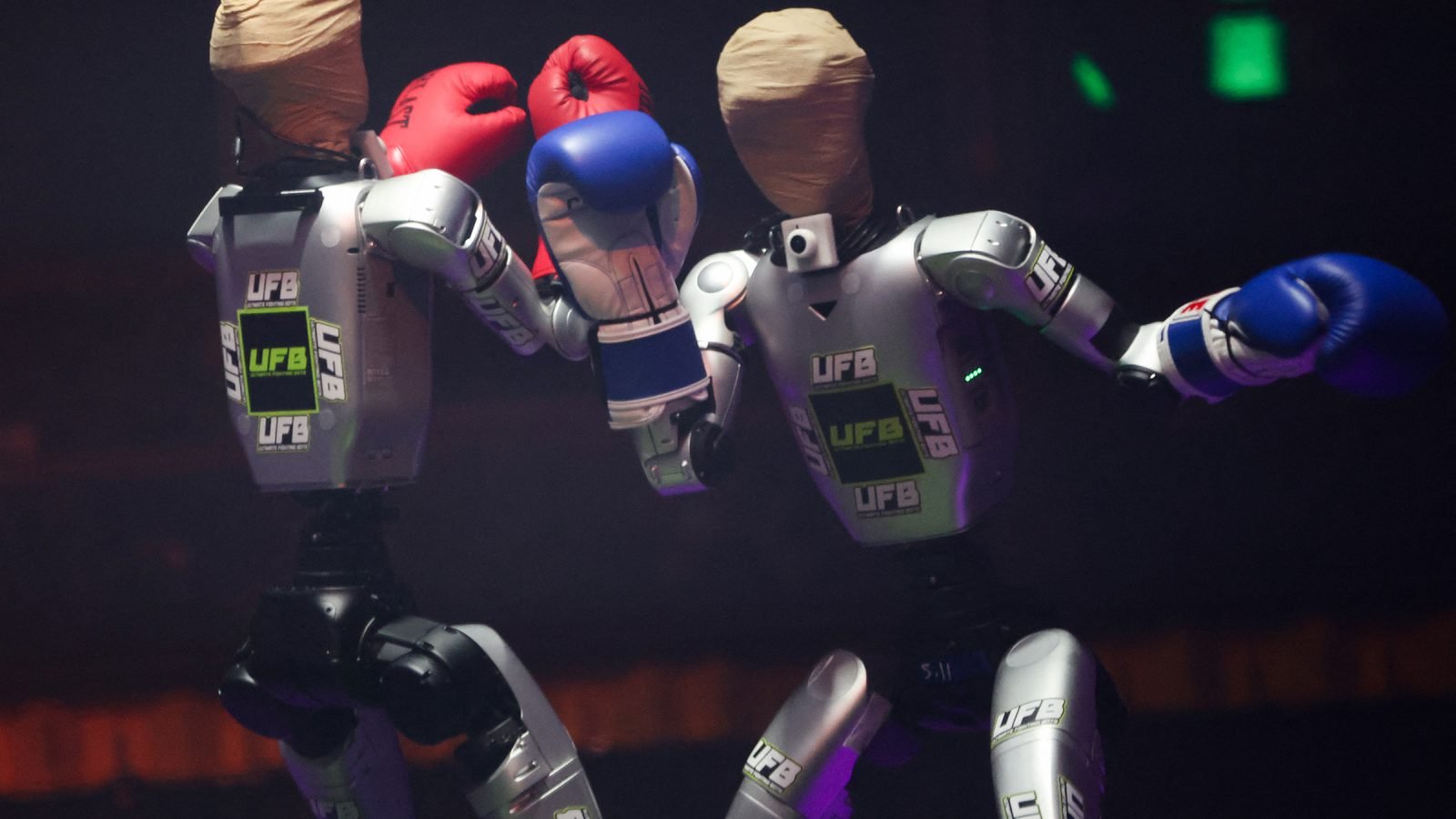
Recently, at users’ suggestion, Yang added several China-focused markets. “Which robot dancer brands will feature at the 2026 Spring Festival Gala” has recorded about $74,000 in trading volume — bettors give Unitree a 99% chance of appearing. Chinese users are also active in markets tied to the NBA and the recent under-23 Asian Cup, he said.
On social network Xiaohongshu, some Polymarket enthusiasts have been posting about their bets and homemade algorithms that they hope will lead to profits. Jihong Zhou, an entrepreneur in Beijing, said he has developed an AI assistant that tracks Polymarket activity, including an algorithm that calculates whether it is worth betting on an NBA game while it’s ongoing. “Eventually, [prediction markets] will be able to complement the mainstream financial markets,” he said.
U.S. prediction markets are actively seeking international growth, although they fall into legal gray zones in many places. Kalshi said last year it would become available in more than 140 countries.
These platforms are unlikely to become mainstream in China. The Chinese government has been intensifying its crackdown on cryptocurrency. Offshore entities are banned from providing crypto-related services to individuals in China. Polymarket’s Yang said the company would include the Chinese diaspora in its growth plan.
While U.S. regulators are now trying to govern prediction markets as financial instruments, the betting will not enjoy such tolerance in many Asian countries that have long been against gambling, said Patrick Tan, general counsel at blockchain intelligence firm ChainArgos. “[China] is not naive about these things,” Tan told Rest of World. “It looks like a duck, it walks like a duck, it quacks like a duck. … I don’t even think we’re going to get to that regulatory conversation.”