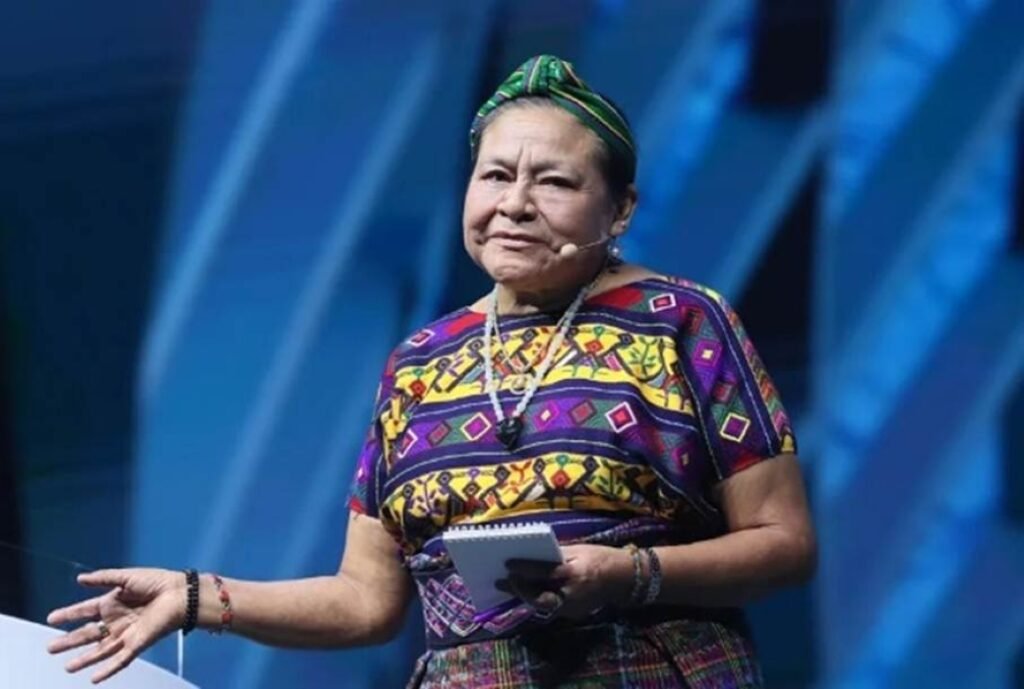
Rigoberta Menchú’s latest warning is not nostalgia from Guatemala’s war years. It is a woman’s indictment of courts captured by impunity, and a regional alarm for Latin American women still fighting violence, erasure and the right to be heard today.
A Nobel Voice Returns to the Wound
In Guatemala City, where the old ghosts never quite leave the room, Rigoberta Menchú Tum sounded less like a ceremonial Nobel laureate than a witness still taking attendance. In an interview with EFE ahead of a tribute at the Guatemala International Book Fair, Filgua 2026, the K’iche’ leader said the country’s networks of impunity had exploited weaknesses in the legal system and co-opted the institutions that were supposed to protect citizens. “Justice here is in the hands of whoever can exercise justice,” she told EFE, “and that is the saddest thing.”
That sentence carries the weight of a courthouse, a village road, a mother’s unanswered complaint. Menchú was not speaking from theory. Born in 1959 into a poor K’iche’ Maya peasant family, she worked as a child on family plots in the highlands and on coffee plantations along the Pacific coast. As a teenager, she was already involved in social reform through the Catholic Church and women’s rights organizing. Her father, Vicente, was imprisoned and tortured. Her brother was arrested, tortured, and killed by the army. Her father later died when security forces stormed the Spanish Embassy in Guatemala City. Her mother, according to the Nobel biographical record, was arrested, tortured, raped, and killed. Menchú taught herself Spanish and other Mayan languages, went into hiding, fled to Mexico, and turned testimony into a form of survival.
Courage is too small a word for that history. It was not the clean courage of statues. It was the rougher kind, the kind made of flight, translation, mourning, and return. Menchú helped organize abroad against oppression in Guatemala, took part in the founding of opposition networks, and gave the life story that became I, Rigoberta Menchú, a book that forced much of the world to hear Indigenous Guatemala in a woman’s voice. Later, she narrated When the Mountains Tremble, a film about Maya suffering and resistance. On several returns to Guatemala, death threats pushed her back into exile. Still, she returned. Again and again.
Her warning arrives as Guatemala approaches the 30th anniversary of the 1996 Peace Accords, which formally ended 36 years of internal armed conflict. But the data behind that peace remains brutal. The United Nations-sponsored Historical Clarification Commission estimated more than 200,000 people killed or forcibly disappeared, 669 massacres, 1,465 acts of sexual violence, and more than 1.5 million people displaced. Of the victims identified, 83% were Maya, and the commission attributed 93% of violations to the army, civil patrols, military commissioners, death squads, and other state forces.
Impunity Has a Woman’s Face
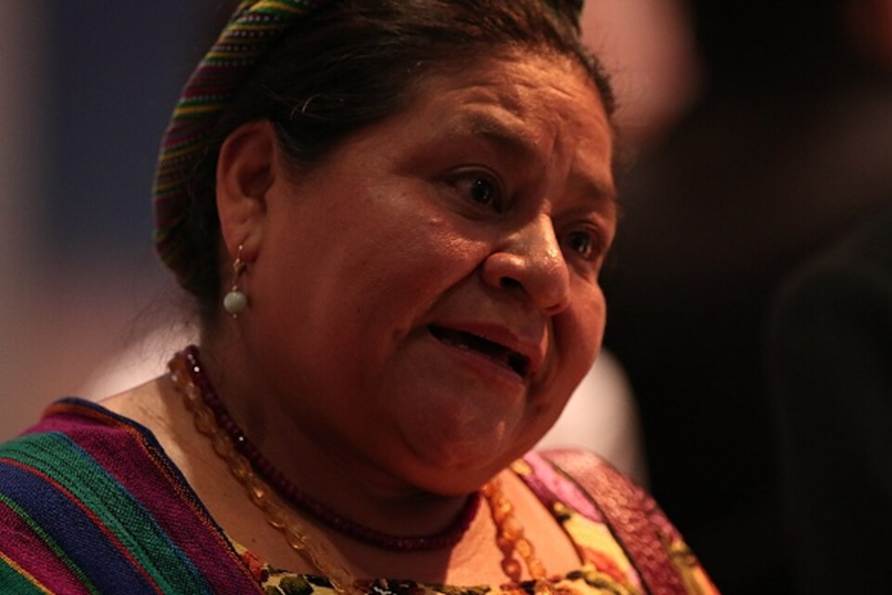
The numbers explain why Menchú’s critique matters for women across Latin America. Impunity is not abstract when the victim is a girl reporting abuse in a rural municipality, an Indigenous woman defending land, a journalist’s wife watching a prosecution unfold, or a mother seeking wartime reparations with no official category that recognizes her wound. Menchú told EFE that Guatemala’s reparations system remains tangled because the Peace Accords never clearly defined who counts as a victim. That gap, bureaucratic on paper, becomes intimate in real life. It decides who receives recognition, who is asked to prove pain, and who is sent home with silence.
The World Justice Project’s 2025 Rule of Law Index gives Menchú’s lament a measurable skeleton. Guatemala ranked 110th of 143 countries overall and 25th of 32 in Latin America and the Caribbean. Its civil justice ranking was 136th globally, criminal justice 125th, order and security 124th, and absence of corruption 112th. For a woman trying to escape violence, those are not rankings. They are the distance between a complaint and protection, between testimony and conviction, between fear and the possibility of a life not organized around fear.
The gender data deepens the indictment. UN Women reports that in Guatemala, 29.5% of women ages 20 to 24 were married or in a union before 18, while only 19.4% of parliamentary seats were held by women as of February 2024. In 2018, 7.3% of women ages 15 to 49 reported physical or sexual violence by a current or former partner in the previous year. Women and girls 15 and older spent 20.6% of their time on unpaid care and domestic work, compared with 2.1% for men. A country can write equality into law and still assign women the waiting room, the kitchen, the grave, and the unpaid shift.
Regionally, the pattern is obscene in its regularity. ECLAC’s Gender Equality Observatory reported at least 3,770 femicides or gender-related violent deaths of women in 26 Latin American and Caribbean countries and territories in 2024, at least 11 every day. Over five years, the regional total reached at least 19,237. These figures make Menchú’s Guatemala interview more than a national diagnosis. Latin America has laws, ministries, slogans, and commemorative days. What women keep demanding is enforcement and the right to be believed before they become statistics.
Menchú’s Indigenous lens sharpens the point. She told EFE that Guatemala still lacks a genuine framework that recognizes the country as pluricultural, multiethnic, and multilingual, and that decision-makers stigmatize communities because they cannot imagine the other as a thinking person with experience and fundamental freedom. That is not only racism. It is a gendered machinery. Indigenous women often face violence through language barriers, land conflicts, poverty, distance from courts, and the old colonial suspicion that their knowledge does not count.
Books as a Living Barricade
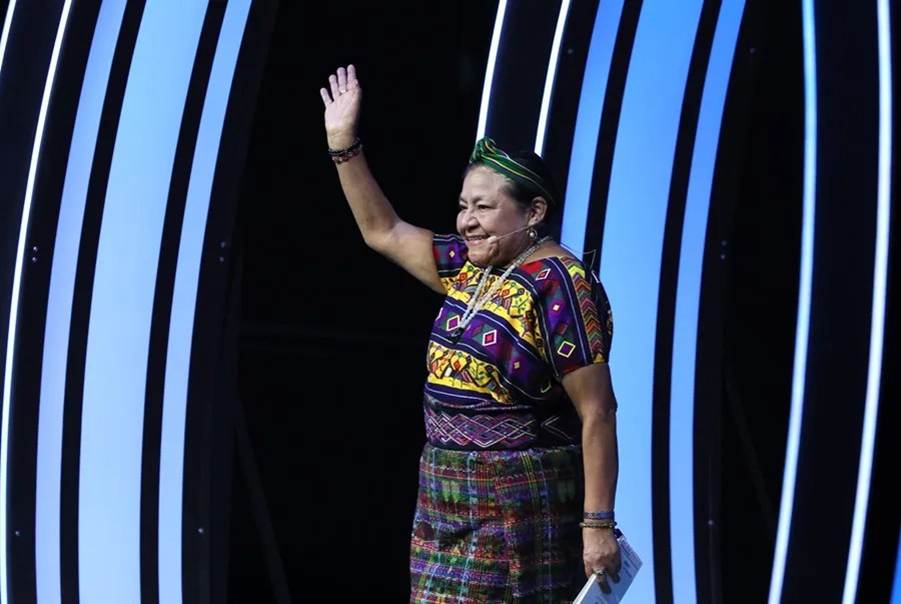
At Filgua, Menchú’s life will be honored not with a monument of stone, but with books. That feels right. She told EFE that reading frees the mind and that “a book cannot be murdered.” It was a startling line because Guatemala knows how many bodies there were. Books, in her telling, are not decoration. They are paper trenches, places where young people can study the mistakes of the past before the powerful rename them as order.
For women in Latin America, Menchú represents something larger than individual heroism. She is proof that testimony can become a political force, that an Indigenous woman’s memory can challenge presidents, generals, judges, diplomats and archivists. Her life says that survival is not silence. Her latest warning says peace without justice can be captured, polished, and sold back to the people who buried their dead.
That is why her voice still unsettles Guatemala. Not because it belongs to the past, but because it keeps asking the present to testify.
Also Read:
La Guaira Quake Turns Deportation Flight Into Venezuela’s Cruelest Homecoming