Thousands march in Buenos Aires on 50th anniversary of military coup under Never Again banner
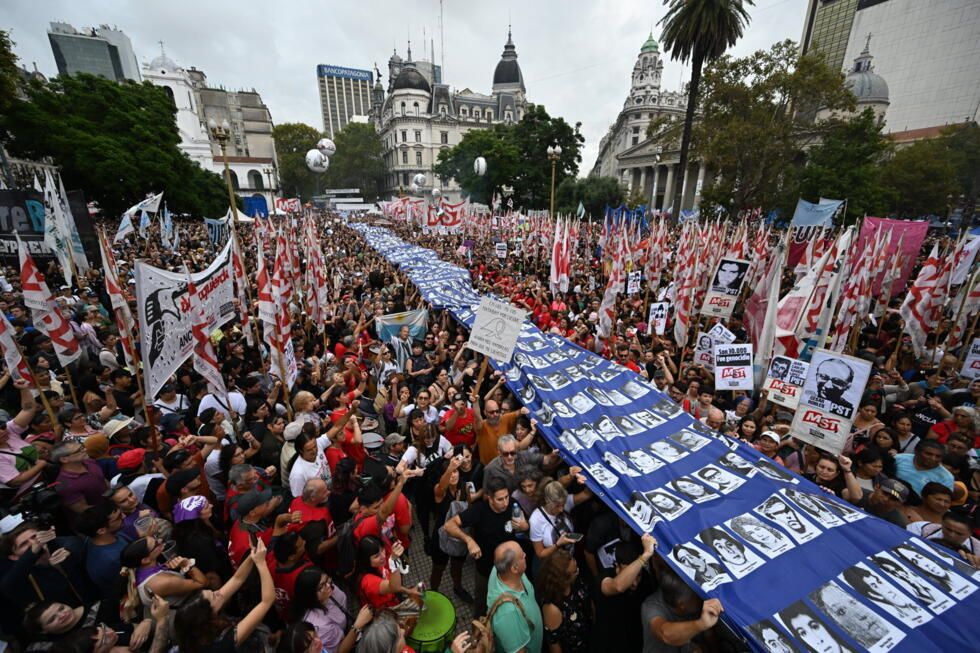
Photo: Luis Robayo / AFP
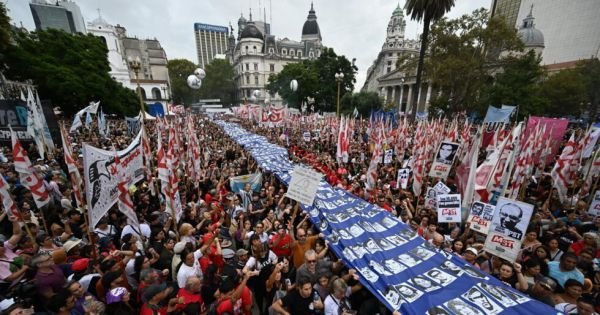
Tens of thousands marched in Buenos Aires on Tuesday to commemorate the 50th anniversary of the coup that installed Argentina’s last military dictatorship, in a day shaped by the dispute between the human rights movement and President Javier Milei’s government over how that period is narrated.
The mobilization stretched along the kilometer separating Plaza de Mayo from Avenida 9 de Julio and spilled into surrounding streets, according to AFP. Marchers carried signs reading They have not defeated us and white balloons bearing photos of the disappeared with the inscription We are still looking for you.
The Mothers and Grandmothers of Plaza de Mayo led the march, continuing a tradition begun during the dictatorship itself. Estela de Carlotto, 95, president of the Grandmothers, noted from the stage that the organization has restored the identity of 140 grandchildren who were seized as babies or born in captivity. Each restitution of a grandchild is evidence of the atrocities committed by state terrorism, she said. More than 300 are estimated to remain missing.
The civic-military coup of March 24, 1976, overthrew the government of Isabel Perón and installed a regime that ruled until 1983, responsible for forced disappearances, torture and the theft of babies that drove thousands into exile. In its final stage, the dictatorship launched the Falklands War (1982) in a desperate bid to cling to power, a defeat that hastened the return to democracy, as MercoPress reported earlier. Human rights organizations put the number of disappeared at 30,000, a figure Milei’s government disputes, placing it below 9,000. Over five decades, 1,208 people have been convicted in more than 350 trials for crimes against humanity, though over 300 cases remain open.
The day was marked by political tension. That same morning, the Casa Rosada released a video accusing what it called a biased and revanchist view of history, which it said had been used as an instrument of manipulation by the left. The government maintains there was a war between two sides in which excesses were committed, downplaying the role of the military.
A study by the University of Buenos Aires and the Center for Legal and Social Studies, based on 1,136 respondents, found that seven out of ten Argentines condemn the dictatorship. Something of the democratic pact has been broken under this government, political scientist Iván Schuliaquer of the National University of San Martín told AFP, though he added that condemnation of the systematic plan of persecution, torture and disappearance remains strong among most of the population.
Miriam Lewin, a 68-year-old journalist and survivor of the Navy Mechanics School, one of the main clandestine detention centers, recalled in the days before the anniversary: We thought that after a few days of torture, people would reappear. But that didn’t happen.