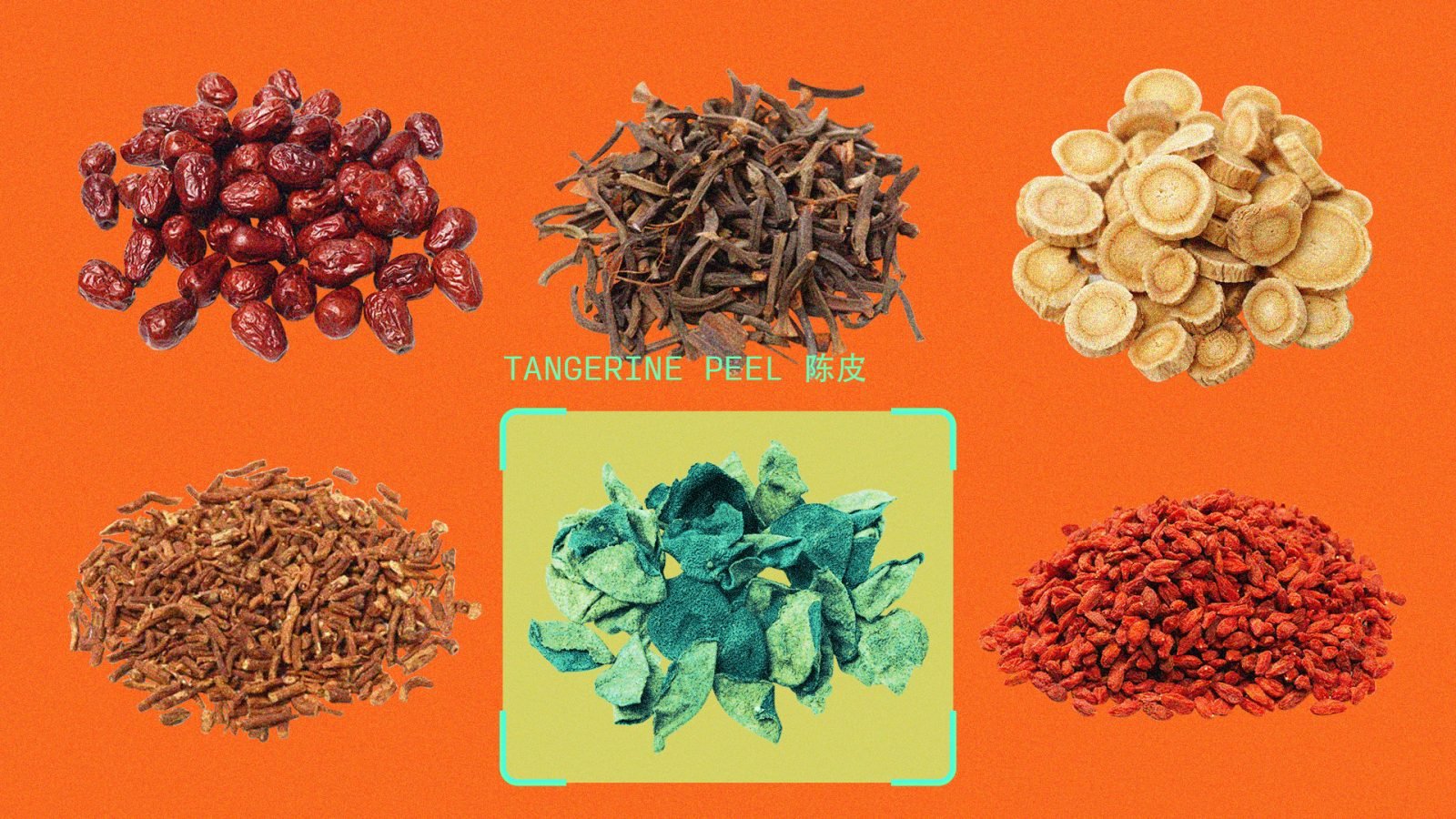
At first glance, Que Tang Yu Fang in the Chinese city of Nanjing looks like any other milk-tea shop offering freshly brewed drinks. But step inside, and every order begins with a traditional Chinese medicine diagnosis carried out entirely by artificial intelligence-powered devices. Customers have their levels of yin, yang, and qi assessed with an automated tongue scanner and a sensor-based pulse reader before receiving custom tea blends.
As generative AI adoption grows quickly in China in sectors including manufacturing, education, and automotive, the technology is also being embedded in TCM, transforming the centuries-old practice. Providers are using AI in clinical diagnostics and prescriptions, while robots deliver acupuncture, and labs build AI agents to cater to the growing number of users who go online with their queries.
“With this modern technology, TCM now has the chance to experience significant breakthroughs in treating patients, curing diseases, and discovering more accurate scientific explanations,” Zhou Bin, deputy director of TCM at Pudong Gongli Hospital in Shanghai, told Rest of World. “If we leverage this … traditional Chinese medicine can have just as profound an impact [as Western medicine].”
Culturally, TCM is considered a part of China’s national heritage. Its remedies are as widely used as modern pharmaceuticals, treating over 1 billion people across the country every year. Yet, gaps in access and quality have long persisted.
With an aging population and fewer people working in TCM, the ratio of practitioners stood at just 0.75 per 10,000 people in 2022, according to an analysis. Studies have also found inconsistencies in TCM remedies due to differences in key ingredients.
1 billion The number of people treated with TCM in China every year.
Technology is helping narrow these gaps. Since 2012, nearly 30 major TCM policies and measures have been launched. A 2021 government directive to “strengthen the heritage and innovative development of TCM culture” has been backed with increased funding, which hit a record of more than 22 billion yuan ($3 billion) in 2024.
As a result, “hospitals, universities, and research institutes have started investing in technology,” said Zhou.
One of the biggest beneficiaries is research and development. Over 1,200 TCM research platforms have been set up in provinces across the country, and some teams are using scientific methodology such as gene sequencing and immunoassays to examine TCM compounds, analyze their molecular compositions, and map interactions with modern pharmaceuticals, with the help of AI.
“These were extremely difficult to research in the past,” said Zhou. “Now, thanks to big data and advanced chemical methods, the process has advanced by leaps and bounds.” It has given researchers clearer insight into how TCM works at a molecular and cellular level, allowing them to assess its pharmacological effects and potential applications more precisely, he said.
As millions of Chinese go to DeepSeek and Ant Group’s AQ app with their health queries, some are also using AI and machine learning to make TCM knowledge more accessible. A team at the Chinese University of Hong Kong has extracted more than 48,000 concepts from dozens of classical books to build OpenTCM, an AI system that educators and students use to search ingredients, link symptoms with treatments, and answer diagnostic queries.
Clinical settings are also evolving. Tasks that were once the domain of practitioners are increasingly automated, with AI avatars identifying symptoms and logging records, and robotic masseuses performing tui na massages.
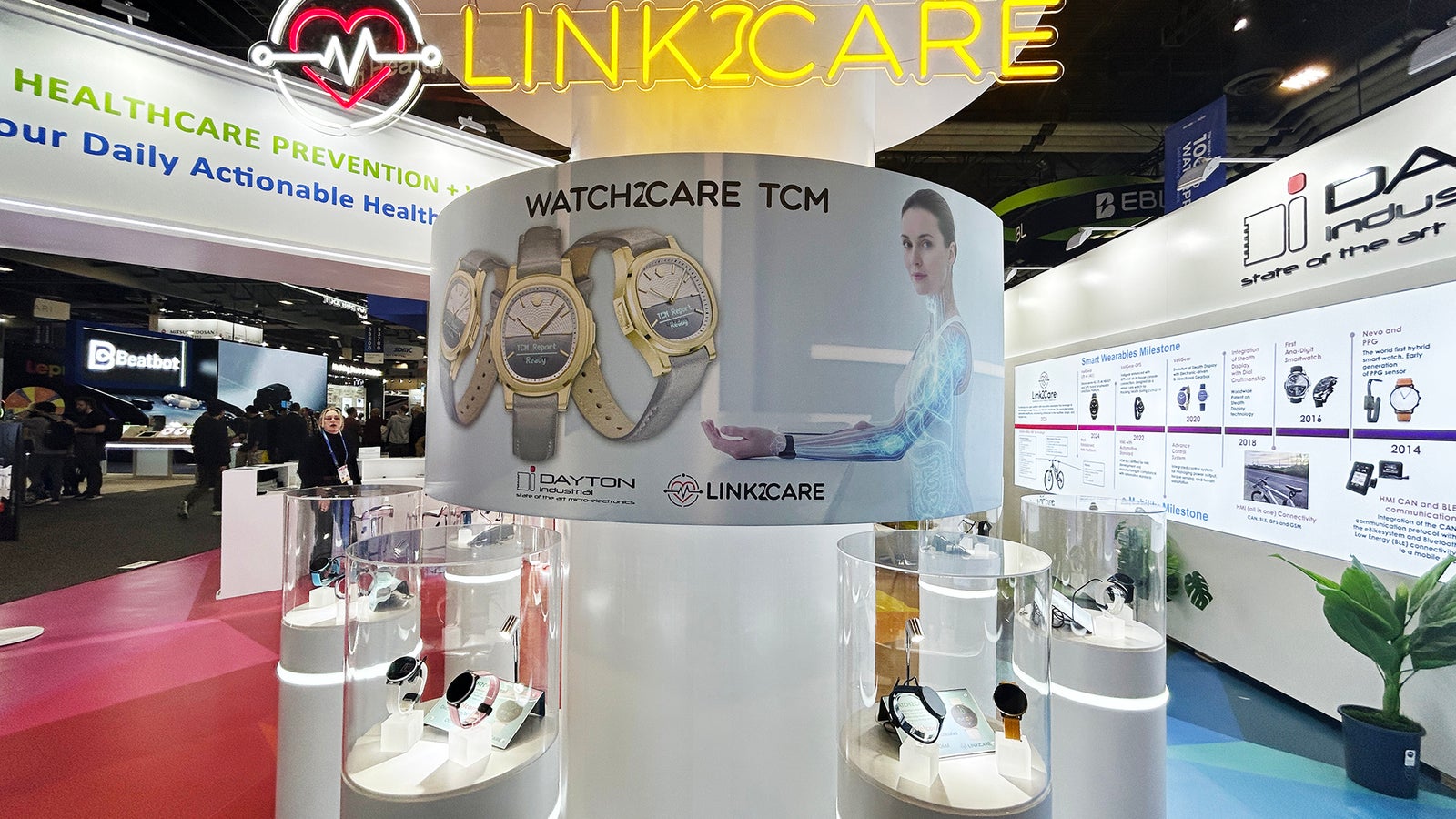
At the same time, consumer-facing wearables are bringing TCM into daily life for a new generation of younger users, including those outside of China. While Asia is the biggest market for TCM, North America is its fastest-growing market. Influencers are sharing their experience with TCM on social media, and at the recent Consumer Electronics Show in Las Vegas, visitors thronged the booth of Link2Care, which makes smartwatches that combine biometrics with TCM principles.
Rest of World
“We cater to users who are proactive about their health and find standard fitness trackers insufficient,” Tony Chung, chief marketing officer of Dayton Industrial, the company behind Link2Care, told Rest of World. “Our initial traction was in Asia, but we’re rapidly expanding into Western markets, especially among the health-conscious tech community.”
The Chinese government has established about 30 overseas TCM centers and signed agreements with more than 40 governments and organizations to strengthen the research, teaching, practice and regulation of TCM in their countries. At last year’s World Health Assembly in Geneva, China co-hosted an inaugural side event showcasing advances in TCM.
It all reflects on TCM’s role in the country’s global health ambitions. Since the launch of the Health Silk Road strategy in 2017, China has been strengthening its status as an international health-care provider. The government’s plans to put “equal emphasis on Chinese and Western medicine,” and “promote TCM to the world,” are a part of this strategy.
It helps that Chinese innovation and culture — its electric vehicles, its fast fashion, its social media platforms and cinema — are having a moment. And AI makes it easier for users to understand and access TCM better, Lam Lai-Kwan, a postdoctoral fellow in the Department of Obstetrics and Gynaecology at the Chinese University of Hong Kong who has evaluated these tools, told Rest of World.
For providers, the tools provide greater efficiency and standardization, she said. “For patients, it may improve their understanding of the condition.”
AI is particularly valuable in settings where experienced practitioners are scarce.”
The technologies are also shaping how TCM fits into wider health-care systems at home and abroad. “The main focus is on making TCM data more interoperable and clinically interpretable across settings,” Lam said. “It is particularly valuable in settings where experienced practitioners are scarce.”
Still, AI alone cannot solve all TCM’s challenges. The practice is grounded in abstract concepts that have historically been difficult to quantify and fit into modern scientific frameworks.
“Classical TCM texts are rich in knowledge but written in terse, era-specific language, making them difficult to interpret,” Jinglin He, lead researcher at OpenTCM, told Rest of World. Building a usable AI system requires standardizing some of that ambiguity, but that risks oversimplifying, and some aspects of diagnosis and treatment remain difficult to process accurately, he said.
“TCM diagnosis relies on context-specific information and integrating patterns in the constitution, emotions, and lifestyle,” Lam said. “These elements are hard to capture reliably, and even harder to interpret without flattening the clinical meaning.”
That makes human oversight — and accountability — essential. He said he is aware of the limitations in OpenTCM.
“For both safety and clinical integrity, we treat it strictly as an assistive tool,” he said. “It is best suited to support practitioners in research, education, or preliminary triage — not replace professional clinical judgment.”
Practitioners are similarly cautious about being overly reliant on AI. The technology can handle routine, standardized procedures, Zhou said. “But highly individualized cases with significant variability — where differences are substantial and procedures may encounter numerous unforeseen complications — could prove challenging for its capabilities.”
Patients, too, remain wary. Despite seeing the technology become more common in clinics, and having tried an AI tongue diagnosis, Xinmin Han, a long-time TCM user in the Chinese city of Suzhou, is not convinced, she told Rest of World.
“Honestly, I don’t really trust the results,” she said. “I still prefer seeing a real doctor — someone who can check my pulse, look at my complexion, and evaluate me in a more holistic way.”