The Middle East just became the newest battlefield in the U.S.-China artificial intelligence war.
The Commerce Department’s approval of 70,000 advanced AI chips to the United Arab Emirates and Saudi Arabia marks a turning point in the technology competition between the U.S. and China.
The UAE’s AI company G42 and Saudi Arabia’s Humain will each get clearance to buy semiconductors with computing power equivalent to 35,000 of Nvidia’s most powerful Blackwell GB300 processors. The approvals follow G42’s earlier severing of ties with Chinese tech giant Huawei and divestment from ByteDance, and Humain’s pledge not to purchase Huawei equipment.
Our technology ecosystem today is firmly anchored in partnerships with U.S. and allied companies.”
The deal underscores how the Gulf nations have turned the U.S.-China rivalry into leverage for their own AI ambitions. In exchange for cutting Chinese ties, Saudi Arabia and the UAE have now gained entry to an exclusive club of nations approved for the world’s most powerful processors.
“Our technology ecosystem today is firmly anchored in partnerships with U.S. and allied companies,” Talal Al Kaissi, group chief global affairs officer at G42, told Rest of World. “Our operations and future growth are aligned with U.S.-approved technologies and governed by clear bilateral frameworks.”
The chips will power major projects including Stargate UAE, a one-gigawatt AI facility being built with OpenAI, Oracle, and Nvidia, with the first phase planned to be operational next year. Humain and G42 will now be among the largest non-U.S. operators of Nvidia’s newest hardware globally, positioning the Gulf to serve AI computing needs for emerging markets across Asia and Africa.
The approval we have received from the U.S. government reflects deep trust in our compliance standards and our shared commitment to secure and responsible AI development and deployment.”
The agreements include strict security protocols to prevent diversion to China, with companies required to declare planned uses, storage locations, and security measures against unauthorized transfers. These requirements reflect Washington’s strategy to isolate Beijing from advanced semiconductor access.
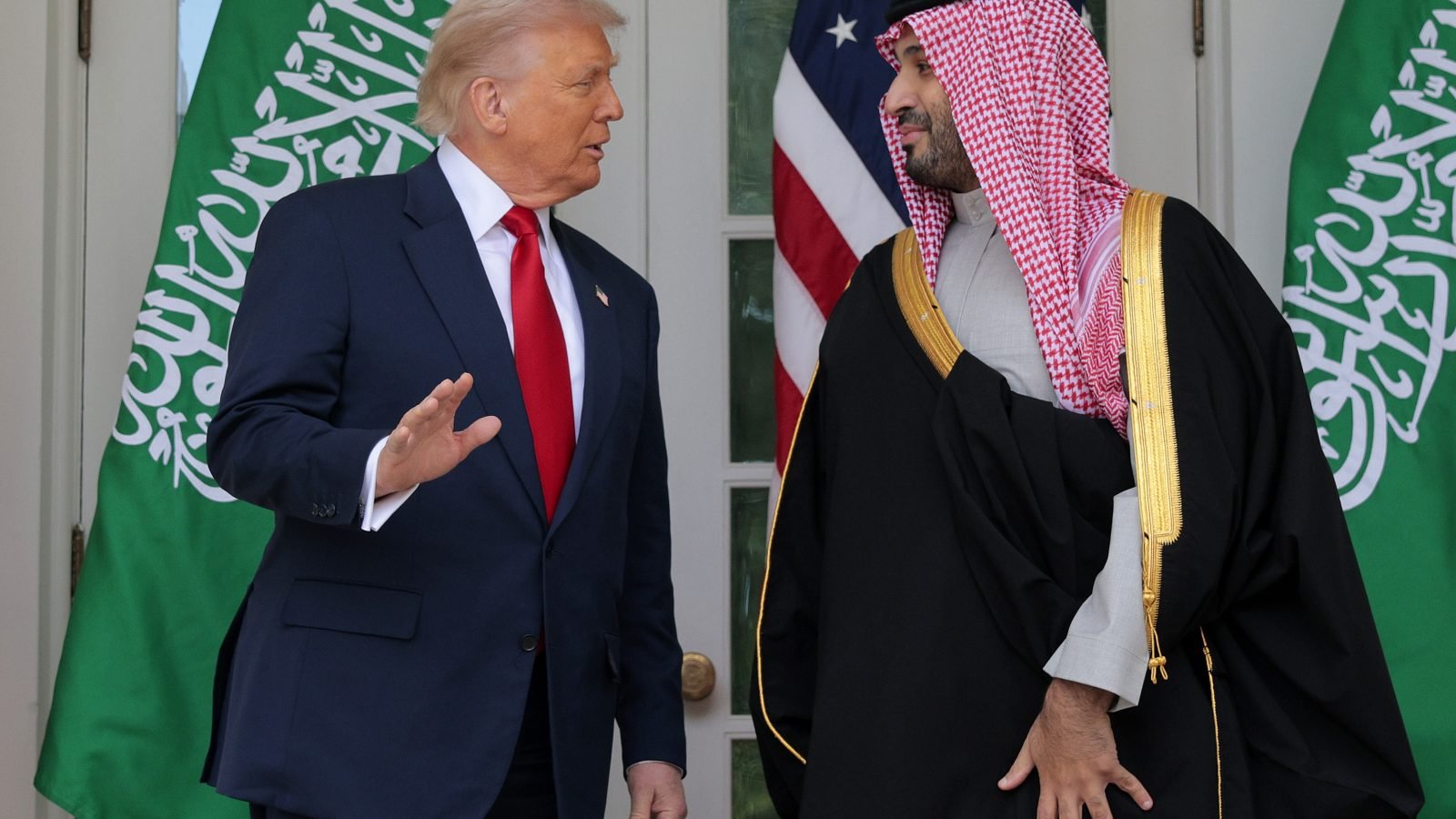
U.S. President Donald Trump, during his May visit to the Middle East, had lifted restrictions that prevented the Gulf states from buying the U.S.’ most advanced chips, hoping to counter China’s growing tech presence. Chinese firms had been making inroads by offering solutions that matched local security requirements.
Huawei planned to invest $400 million in Saudi Arabia’s cloud region by 2028, and launched a new cloud data center in Riyadh in 2023. Alibaba launched cloud regions in both Saudi Arabia and the UAE, and Tencent announced expansion plans in March last year.
As recently as July this year, Huawei was trying to export its Ascend 910B processors to the UAE, Saudi Arabia, and Thailand, although these efforts had limited success.
The economic stakes of the Nvidia chip agreement are substantial. AI could contribute more than $135 billion to Saudi Arabia’s economy and $96 billion to the UAE’s by 2030, according to a PwC analysis.
The conditions attached to these approvals set a new precedent for how the U.S. will share its most sensitive technology.
“The approval we have received from the U.S. government reflects deep trust in our compliance standards and our shared commitment to secure and responsible AI development and deployment,” Al Kaissi said.