Venezuela sets fast-track protocol for amnesty as families wait for further releases
Foro Penal also warned that about 400 detainees would remain outside the law’s coverage
Venezuelan authorities approved on Friday a protocol to speed up implementation of an amnesty law passed the previous day by the National Assembly, as relatives of political detainees kept vigils outside several detention sites, calling for additional releases.
The protocol — whose content has not been published — was agreed at a meeting attended by Supreme Court chief Caryslia Rodríguez, Attorney General Tarek William Saab and a special parliamentary commission tasked with overseeing the amnesty law, chaired by ruling-party lawmaker Jorge Arreaza, according to the EFE report.
In a post on X, Saab said the protocol would ensure justice institutions apply the law’s benefits “quickly and effectively” for people linked to the events covered by the legislation.
While the law is framed as covering the period from 1999 to 2026, its practical scope is tied to 13 specific political junctures across 13 different years, leaving out arrests from much of the stated timeline and excluding cases connected to military operations, according to the publicly reported parameters of the measure.
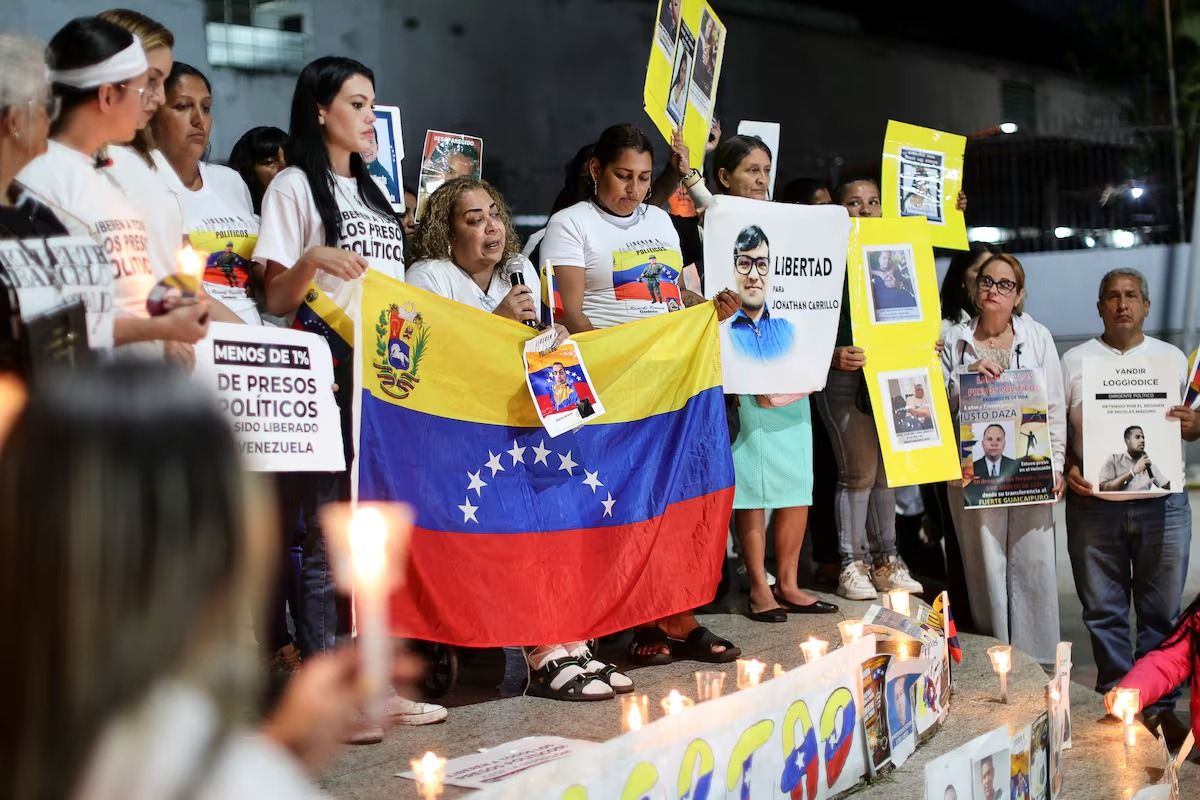
As officials moved to operationalize the law, families held vigils outside facilities including Rodeo I prison in Miranda state, El Helicoide — the headquarters of Venezuela’s intelligence service (Sebin) in Caracas — and a National Bolivarian Police (PNB) command known as Zona 7. The Committee for the Freedom of Political Prisoners shared photos of the gatherings and said it would keep pressing for “the freedom of all” detainees.
Foro Penal, the NGO that documents politically motivated detentions, puts the number of political prisoners at 644, following more than 400 releases since Jan. 8, when the acting government launched a process of excarcerations.
Foro Penal also warned that about 400 detainees would remain outside the law’s coverage. Its president, Alfredo Romero, said that group is largely linked to military operations — though it includes civilians — and argued that some people are excluded because they were arrested in periods not covered by the legislation, including cases in which individuals were accused of crimes they “did not commit,” according to his remarks.
Acting President Delcy Rodríguez signed the bill into law after its approval and urged the oversight commission to work with “speed” to review cases “not contemplated” in the legislation, according to official accounts of the promulgation process.
Foro Penal vice president Gonzalo Himiob said the organization will submit a list of 232 cases it describes as involving “serious human rights violations,” including detainees with disabilities, people over 70, and others held for years without being brought before a judge, according to the group’s documentation. “Venezuelan law perfectly allows all these people to be free immediately,” he said. Himiob added that even within the 13 years included, the measure is limited to events occurring in 20 of the 156 months in the overall period, and said Foro Penal had verified 448 releases through Feb. 18.
In the National Assembly, opposition lawmakers in the Libertad bloc said they expect many uncovered cases to be addressed through the commission’s work. Lawmaker Nora Bracho said the body would split into “specific areas” and examine files “case by case,” drawing on data collected during the law’s public consultation process.
In Spain, Venezuelan opposition movements criticized the amnesty for not guaranteeing freedom for all political prisoners and called for the “immediate and unconditional” release of those detained for political reasons or conscience, while denouncing “inhuman” detention conditions and a lack of procedural guarantees, according to a statement cited by EFE.