More than two months after Nicolás Maduro’s capture, Venezuela’s democratic opposition faces more than just Chavismo. It is fighting to stay relevant on the political stage, while Latin America watches closely to see if authoritarian stability supported by Washington can outlast popular legitimacy.
A Movement Afraid of Becoming an Afterthought
For Venezuela’s opposition, the most dangerous word in politics right now may not be repression, exile, or even defeat. It is irrelevant.
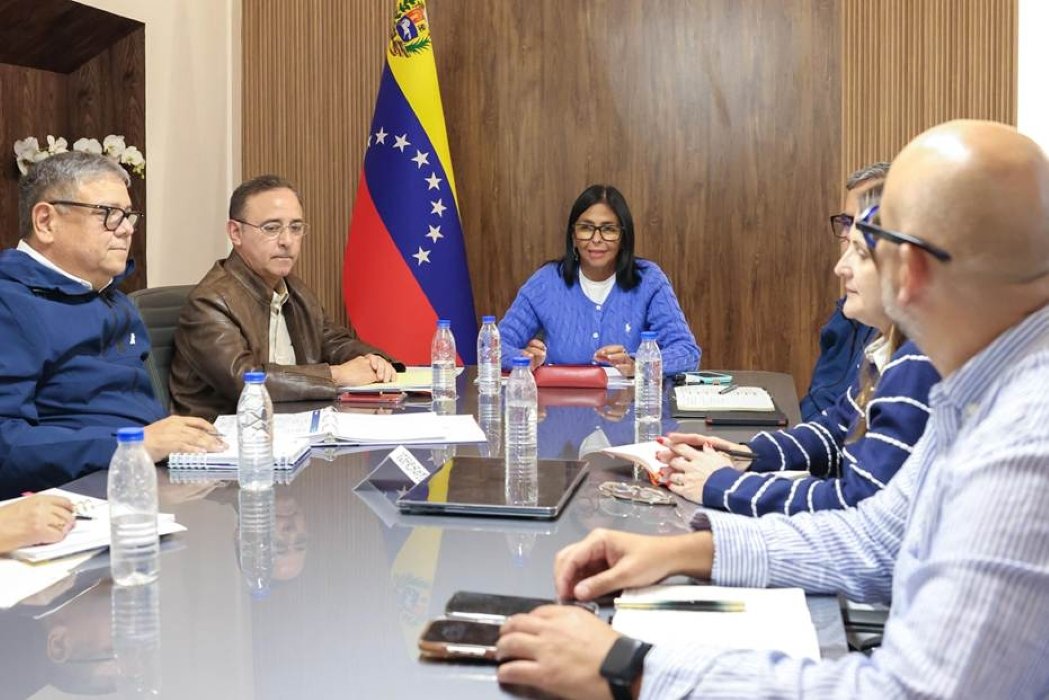
This mood runs through the debate described in the notes, more than two months after Nicolás Maduro’s capture and during a confusing new phase. Acting President Delcy Rodríguez has not only survived the upheaval but, with Donald Trump’s support, has established herself as the country’s new leader. The opposition, which once hoped Maduro’s fall would lead directly to a democratic transition, now faces a tougher reality: the political future is moving forward without them at the center.
Andrés Caleca made the danger clear when he warned that “the danger, now already a reality, is the opposition’s irrelevance in the unfolding of events in Venezuela.” This hits hard because it goes beyond a single setback. It describes the oldest fear of democratic opposition movements in Latin America: not just repression from above, but being overtaken by events. The state changes, foreign powers shift, new elites take hold, and those who once led the call for democratic change start to seem like bystanders in a process they no longer control.
This is what makes the current situation in Venezuela so important for the region. Latin America has seen many forms of authoritarian resilience. What we see now in Venezuela is more subtle and maybe more worrying: a regime that lost its historic leader but kept its power, police, political control, and enough outside recognition to keep running the country. The lesson is clear: taking away a system’s leader doesn’t always break the system. Sometimes it allows a more flexible version to take over.
That’s why the opposition’s current debate matters beyond Caracas. They’re discussing how to stay visible in a country where power hasn’t fallen but just shifted. The decisions are big: when should María Corina Machado return? How strongly should the opposition pressure Trump and the international community for new elections? How can they secure the release of over 500 Venezuelans still jailed for political reasons? These questions are tactical but also about survival. The opposition isn’t just planning its next move; it’s fighting to avoid disappearing.
Unity in a Country Still Ruled by the Same Machine
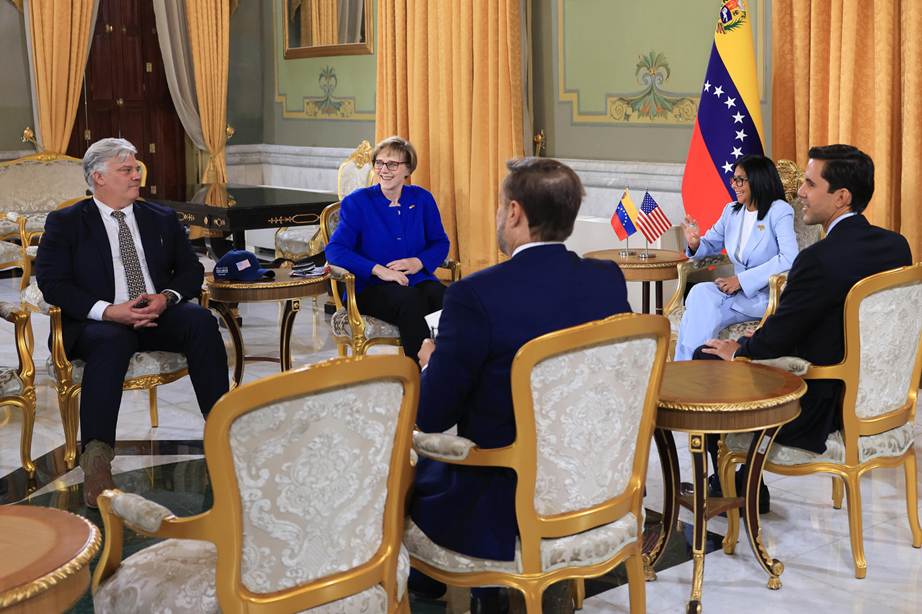
One immediate answer has been to revive unity. The Democratic Unitary Platform, which helped forge consensus for the 2024 elections, is being reactivated after drifting into dormancy. Opposition leaders believe they will need to negotiate with a united voice, whether with Rodríguez, with the White House, or with both. Delsa Solórzano said a new roadmap would soon be made public, one designed to align with the current U.S. strategy of stabilization, recovery, and then democratic transition.
This alignment says a lot politically. It shows the opposition no longer believes it controls the pace of the crisis. Instead, it’s trying to find its place in a process already set by others, mainly Washington and the new leaders in Miraflores. This is cautious, but it also shows weakness. A democratic movement seeking change at home is now adjusting its tactics to avoid upsetting the foreign government with the most influence.
Latin America will see the risk right away. The region’s democratic groups often need international support, but relying too much on outside timelines can weaken their influence at home. This tension is clear in the notes. Ricardo Hausmann says the opposition must confront Delcy and Trump and fight to restore Venezuelans’ rights because “no one else will do it.” Others disagree, warning that confrontation might push the White House away and hurt Machado’s chances to shape the country’s future. The opposition faces a tough choice: resist too little and fade away, or resist too much and get left out of the key talks.
Meanwhile, Chavismo has lost none of its instinct for institutional continuity. Even while taking a pragmatic stance toward Washington, it has kept its military, police, and political power structure intact. That is one of the most important facts in the notes. The state apparatus remains recognizably Chavista even as the leadership package evolves. The recent amnesty law freed 690 political prisoners since January 8, but Foro Penal says 515 political activists remain captive, including 188 military officials, 53 women, and one adolescent. So the state has offered a controlled release while preserving the essential instruments of fear.
Social tensions are starting to rise. Public sector unions are back on the streets demanding higher wages and better pensions. A public transport strike brought the capital to a halt for the first time in years. University students, the Catholic Church, civil groups, and relatives of prisoners are holding careful protests outside prisons. These aren’t mass uprisings yet. Their fragility is telling. They show that dissent still exists, but civil liberties are so limited that even small protests are risky.
For Latin America, this is the image of a country entering conditional stability, not democratic opening. The streets stir, but carefully. The opposition reorganizes, but defensively. The regime adapts, but does not retreat.
The Long Wait for a Transition That Keeps Receding
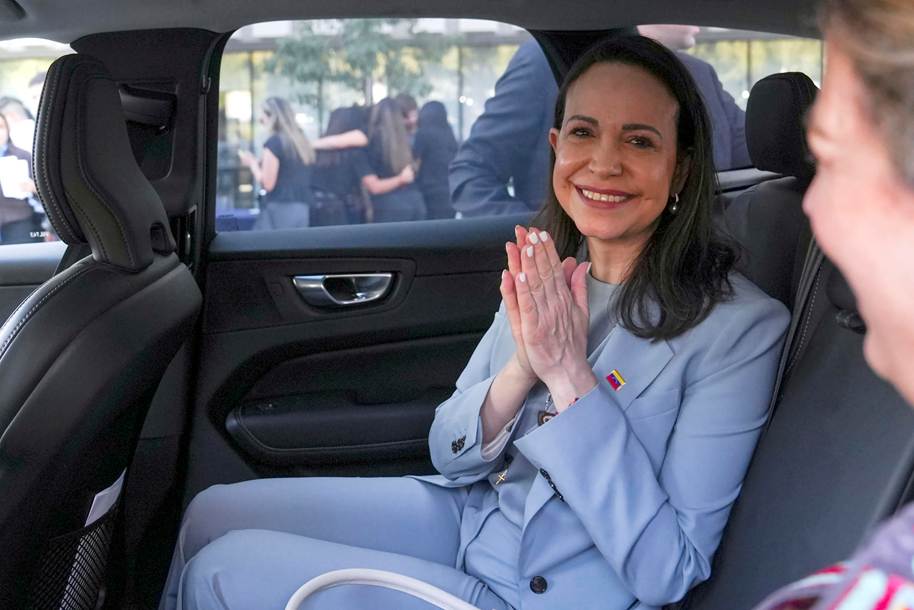
The most delicate issue may be Machado’s return. Trump reportedly advised her not to come back at this time, citing security concerns and a fragile political environment. Diosdado Cabello has threatened to imprison her if she returns. Machado has responded by saying her return will happen “in a harmonious and coordinated way with our allies” and by repeating the idea of a national accord, a government for all Venezuelans rather than one faction.
That language is carefully chosen. It seeks to preserve broad legitimacy while avoiding a direct clash with either the government or Washington. Yet it also shows how much the opposition’s vocabulary has shifted. Rather than pressing for recognition of the opposition’s 2024 victory, Machado and other leaders are now speaking of fresh elections. Ricardo Ríos says the political game must be opened up and that the country must talk about elections. Enrique Márquez goes further, arguing the country is not ready for a vote and that the voter registry, electoral authority, and legislation must first be rebuilt. Juan Pablo Guanipa urges alignment with the United States government and insists that all those convinced that political change must take place remain united.
Again, Latin America should take note. Venezuela is becoming an example of how democratic hopes can be delayed not just by repression but by controlled uncertainty. Elections are talked about but postponed due to conditions. National unity is called for, but under a state that stays structurally intact. Some political prisoners are freed, but hundreds remain jailed. Slogans on the streets are changing. “Delcy Avanza” is now heard in parts of the capital, showing that Chavismo believes Rodríguez can stay in power until Maduro’s original term ends.
That phrase sums up the current situation. According to the notes, the country’s mood now focuses more on new U.S.-backed investments in oil and mining than on the democratic transition many expected after Maduro’s capture. In other words, normalization risks come before justice. Economic reopening might happen before political change. Stability could become more appealing to the outside world than democracy.
That is the real warning Venezuela gives Latin America. Authoritarian systems don’t always survive by resisting change. Sometimes they survive by offering just enough rebranding, amnesty, economic opportunity, and foreign partnerships to make real transformation seem always out of reach. The opposition sees this danger clearly. The problem is that seeing it and stopping it are no longer the same.
Also Read:
Venezuela’s Amnesty Conceals a More Complex Reality for Latin America Today