In Mexico, families searching for the disappeared have become investigators, excavators, and witnesses, filling a vacuum left by impunity, fear, and official delay. In contrast, cartel violence keeps swallowing people and forcing loved ones to find tenderness, evidence, and closure in the same pit.
Where Grief Becomes Labor
For hours under a blistering sun, Raúl Servín digs through dirt that might hold the answer he has feared for eight years. He is looking for his son. He is also looking, as he puts it, for all the other missing people in Mexico. Every Tuesday, he loads a van with picks, shovels, water, and lunches, commends himself to God, picks up his teammates, and heads out to places where the ground may be keeping terrible secrets. The Associated Press shadows that routine closely, and what emerges is not only a portrait of one father but of a country where grief has been turned into unpaid, dangerous labor.
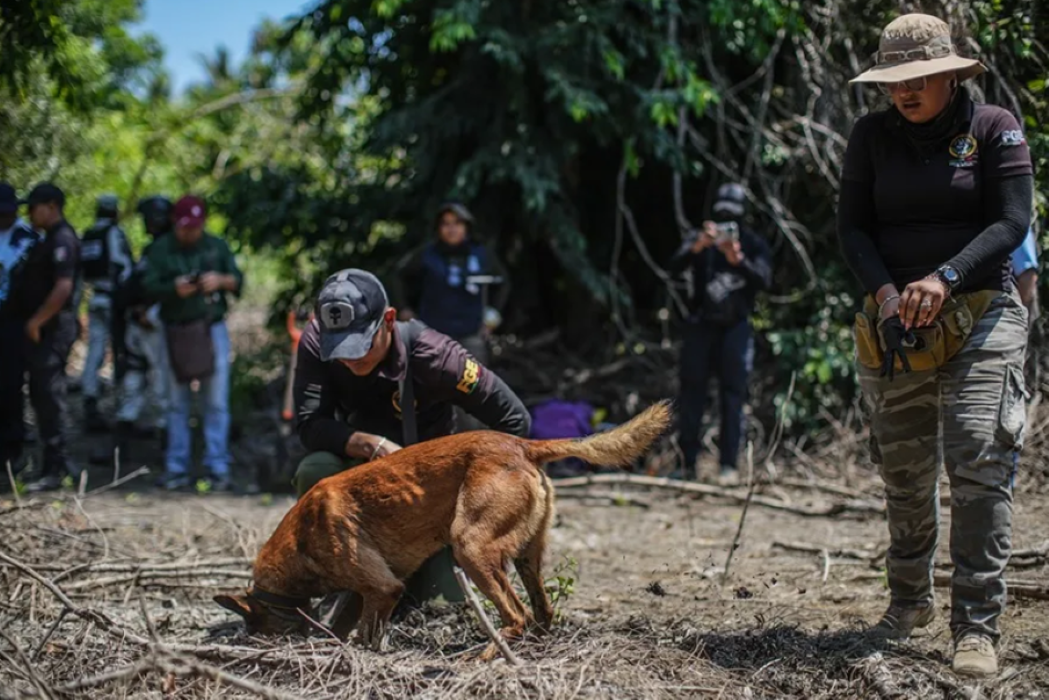
Servín and the women in the Guerreros Buscadores, the Searching Warriors, do not move like amateurs anymore. Their work has rhythm, procedure, instinct. They follow up on anonymous tips sent to the group’s website from people who heard screams or gunshots or saw something suspicious but fear going to the authorities. They carry a metal rod they call the seer, stick it into the earth, pull it out, and smell for signs of organic decay. They know how to scan a patch of dirt, how to notice softness in the ground, how to read the small irregularities that other people would miss. Mexico has taught them this. Or, more precisely, Mexico’s absence has.
That is one of the hardest truths sitting inside this story. Families search because families have learned they cannot wait. Official records say more than 130,000 people have been reported missing since 2006. More than 70,000 unidentified remains have piled up in morgues and cemeteries. The previous administration recognized the magnitude of the problem. It launched official search commissions, yet high levels of impunity and inaction remain. The current government has said that missing information for one-third of those disappeared makes it impossible to search for them at all. In practice, that means the burden of proof, persistence, and physical risk has been pushed downward, onto the shoulders of relatives already living with devastation.
This is not how a modern state is supposed to work. When parents and spouses become the most reliable search institution in the country, the crisis is no longer only criminal. It is moral and political.
The Tenderness Inside the Horror
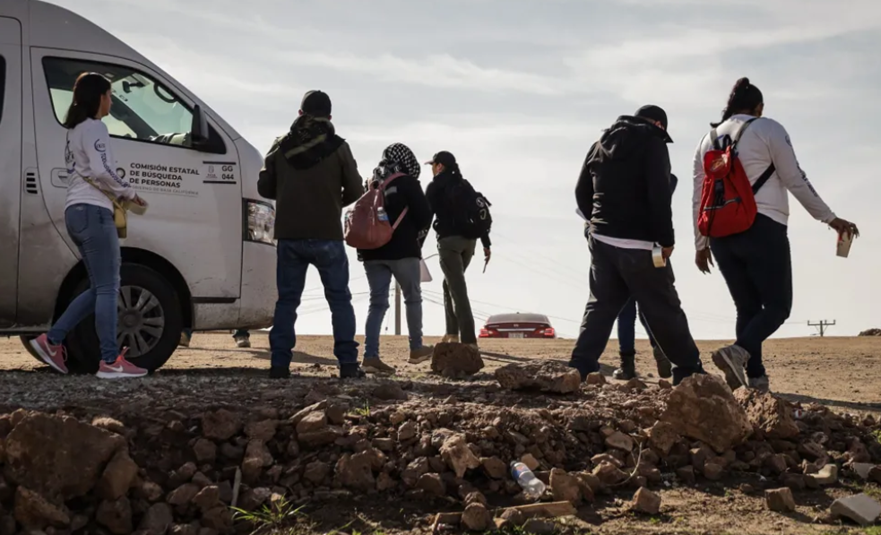
The Associated Press account follows the group to the outskirts of Guadalajara, in Jalisco, where the city is plastered with fliers of missing people and the state is described as an epicenter of disappearances. The searchers go alone. No escort. No visible security. The closest thing to protection is a panic button held by Servín, linked to a federal network for rights activists. That detail says more than any official speech could. These families are not merely grieving. They are doing dangerous work in territory shaped by cartel power, and they know enough to avoid checking certain places in advance because lookouts or gunmen might force them away with shots into the sky.
Then comes the moment that explains why they keep going.
After hours of digging inside a residential complex, finding nothing, Servín notices soft ground between a wall and train tracks. He kneels. A train passes. He digs and sees part of a skull. Soon, there is a jawbone, a bag of bones, a shoe, a pelvis. The women gather around the pit in masks and gloves and begin speaking to the remains with astonishing softness. “Hi, baby, you’re going home soon.” “Your family is waiting for you.” One lights a candle.
To outsiders, that scene can look unbearable, even macabre. But the people inside it understand something outsiders often do not. In a country where criminals hide bodies because no body can mean no crime, finding remains can be a form of rescue. Nearly 20,000 missing people have been found dead since 2010. That fact is brutal. It is also why, in this world, the worst possible outcome can still carry relief. A body means evidence. A body means DNA. A body means a family might finally stop searching blindly.
This is the emotional paradox at the center of the Mexican disappearance crisis. Closure arrives mutilated. Peace comes in fragments. The state has left families in such prolonged uncertainty that confirmation of death can feel, if not merciful, then at least solid. Something to hold. Something to bury. Something real.
Servín says when they find bodies in pieces, he feels like crying because he imagines his own child that way. But he also says he feels good because he knows there are answers there. That is not a contradiction. That is survival.
A Country Preparing for the World and Failing Its Own
The story lands with extra force because it unfolds near a World Cup host city, in a period when President Claudia Sheinbaum is insisting that security for the tournament will be guaranteed after violence erupted in February over the killing of the cartel’s leader. Servín says he loves soccer, but it will not stop him from searching. That line lingers because it captures a familiar Latin American tension. The state is often most efficient when it needs to reassure the world, attract attention, stage order, and protect a national image. Families of the disappeared are asking for something smaller and much harder: not spectacle, not slogans, but lasting truth.
They know an image can betray. One of the women goes live on Facebook after the remains are found because public visibility has become a defense. The live stream preserves the evidence, helps people identify belongings, and creates a record that cannot be easily denied. That instinct comes from experience. So does the mistrust when police arrive. Servín says some officers work for the cartel. He remembers authorities once accusing the collectives of contaminating crime scenes. He remembers what it means to be re-victimized by institutions that should have been helping all along. The notes recall the case of a woman who, in 2021, was handed a relative’s remains in a trash bag by a prosecutor. That image went viral because it condensed years of institutional disregard into one unspeakably clear frame.
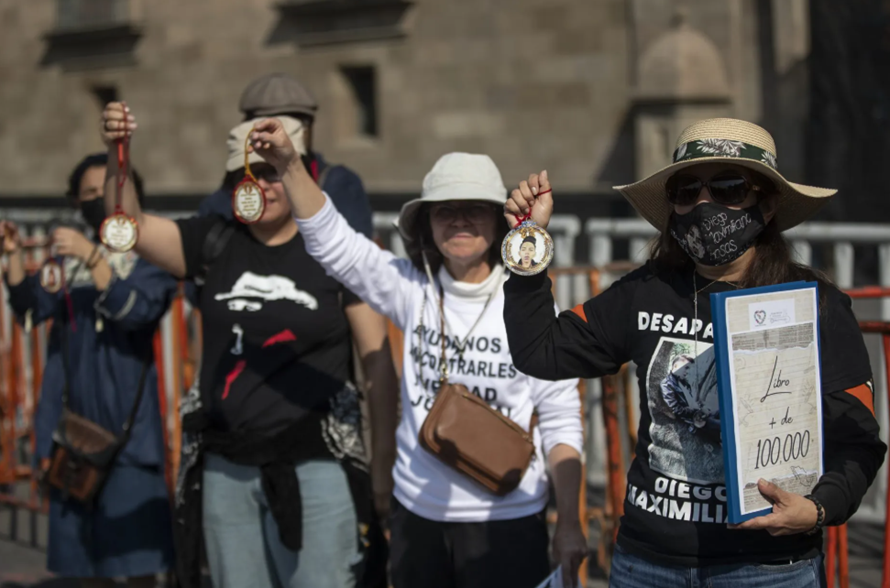
And yet these collectives keep producing what the state cannot or will not produce quickly enough: findings, records, pressure, witness, dignity. When neighbors arrive asking whether they recognize a shoe or a piece of clothing, when another mother is told to go to the attorney’s office for a DNA test, when the searchers sit down together in the evening to rest, what emerges is not only loss. It is a form of civic repair built from below.
At 9 P.M., after the forensic team has begun its work and after another day inside Mexico’s vast machinery of disappearance, Servín presses the panic button again to report that he is home. He says he arrives feeling at peace, knowing the day was fruitful. It is an extraordinary sentence, and also an indictment. In too much of Mexico, peace no longer means safety. It means finding what the country failed to find for you.
Also Read:
Ecuador War Creeps Across Farms While Washington Calls It Deterrence