US intervention forces end to decade of statistical opacity at Venezuela’s Central Bank
The year-on-year inflation stood at 649.5% at the end of the first quarter
The Central Bank of Venezuela (BCV) has begun systematically publishing economic indicators that had been held under wraps for at least a decade, in an institutional shift driven by the US military intervention that culminated on January 3 with the capture of former president Nicolás Maduro and by the subsequent reconfiguration of Venezuela’s financial system under Washington’s oversight. The updating of historical series on the central bank’s website now makes it possible to learn for the first time in years that monthly inflation reached 32% in January, 14.6% in February and 13.1% in March, while the year-on-year figure stood at 649.5% at the end of the first quarter.
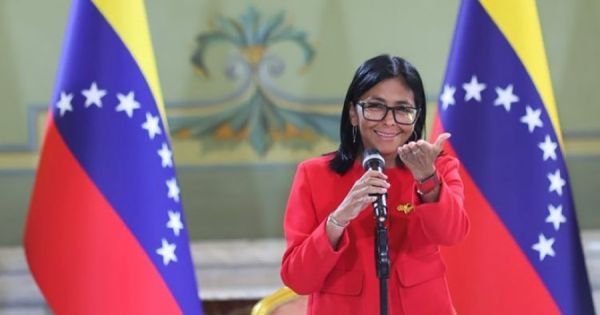
Statistical opacity had been a structural feature of the Chavista regime. Since 2016, on the eve of hyperinflation and debt default, the BCV stopped publishing its bulletins on a regular basis, though the government released partial figures at certain points. The transparency crisis led the country to fall out of compliance since 2004 with Article IV of its IMF membership, which requires member states to submit regular data. In 2007, Hugo Chávez expelled IMF staff and closed the agency’s office in Caracas. Since the change of government, acting President Delcy Rodríguez has restored relations with the IMF and the World Bank, which has required bringing the accounts into order.
Institutional change accelerated after the partial lifting of sanctions by the US Treasury’s Office of Foreign Assets Control (OFAC), which in April authorized financial operations with four state-owned Venezuelan banks, including the BCV itself. Days later, petroleum engineer Laura Guerra, Maduro’s former sister-in-law, resigned from the bank’s presidency and was replaced on an interim basis by Luis Alberto Pérez González, a member of the board. On Monday, the BCV confirmed that both the United States and the Caracas government had hired independent auditing firms to review the management of Venezuelan resources held abroad, foreign exchange operations and the traceability of reserves. Press reports attribute the audit hired by Washington to consultancy Deloitte.
Having the Republic’s resources audited by external consultants gives us peace of mind. The country must have full confidence that resources are passing through where they should and reaching where they should, Pérez González said at a meeting with representatives of the banking system and the banking superintendency held on April 24. The acting central bank chief stated that the Venezuelan economy is heading toward a new period of exchange rate stability and inflation reduction and reported that gross domestic product expanded in the first quarter of 2026, without providing figures.
The opening of the data has also allowed political narratives advanced by Chavismo to be revisited. The update of the World Bank database shows a fall in Venezuela’s GDP per capita from $13,000 in 2012 to $4,300 in 2024, a contraction that began before the first individual sanctions on officials in 2014. Venezuela closed 2025 with annual inflation of 475.28%, according to the BCV’s own recently released data, while the IMF projects 4% GDP growth for 2026 driven by the oil sector.