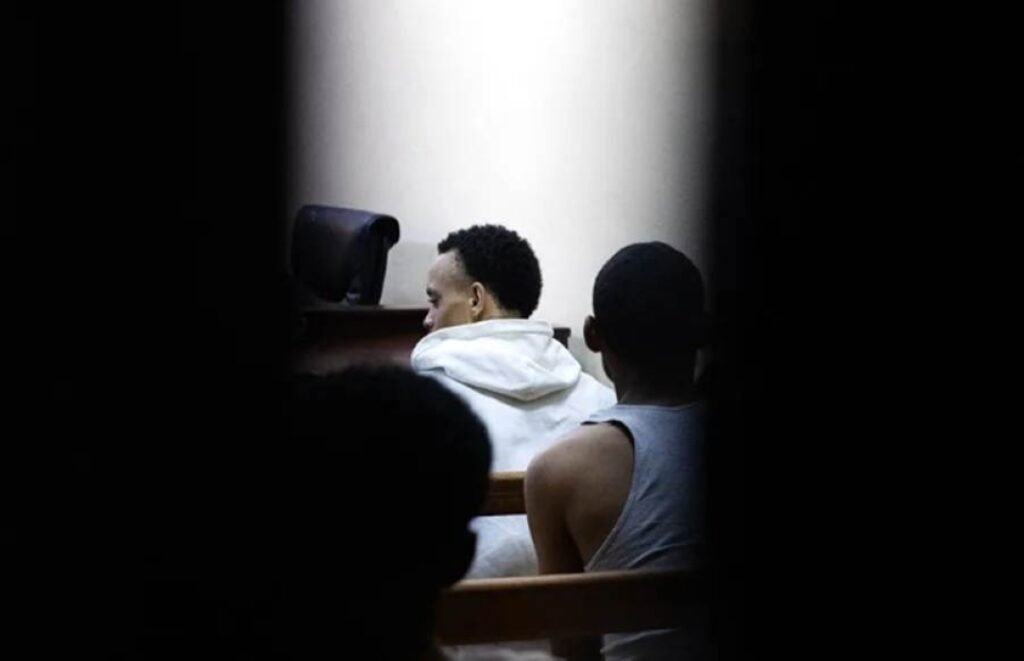
An infant’s killing in the Dominican Republic has reopened a national wound: child abuse, violent discipline, and family silence in a country where six in ten children suffer aggression at home, according to UNICEF data cited by EFE.
A Baby’s Death, a Nation’s Habit
The horror arrived small enough to be carried, and that is what makes it unbearable. An eight-month-old girl in the Dominican Republic died recently from bites and blows, according to an EFE report, allegedly killed by her mother’s partner in San Cristóbal, southeast of the capital. A judge sent the man to prison after prosecutors accused him of voluntary homicide and acts of torture and barbarity against the child.
Some cases shock a country because they seem unimaginable. Then, some cases shock a country because everyone knows they came from somewhere familiar.
This one belongs to the second category.
Dominicans recoiled last year when a 7-year-old girl was tortured to death in Santo Domingo while under the care of her aunt and the aunt’s partner. The country had already been shaken in 2024 by the death of an 8-year-old boy in Verón, in the east, whose body showed 147 wounds. His aunt confessed to investigators that she attacked him because, in her words, the boy had bad behavior.
That phrase marks the shift from crime blotter to national diagnosis. Bad behavior. A child’s defiance, hunger, noise, fear, crying, clumsiness, or ordinary childhood converted into evidence against him. A grown hand becomes punishment. Punishment becomes correction. Correction becomes culture. Then, when the child dies, everyone asks how it could have happened.
Carlos Carrera, the UNICEF representative in the Dominican Republic, told EFE that six out of every ten children in the country suffer violent discipline at home. The figure, 63 percent, places the Dominican Republic slightly above the Latin America and Caribbean average of 60 percent. The difference may look small on paper. In real life, it means violence is not marginal. It is not hidden in one remote barrio, one poor household, one monstrous relative. It is ordinary enough to be statistically normal.

Where Discipline Becomes Damage
The Dominican Republic is a country of open doors, loud sidewalks, protective grandmothers, church language, and family pride. It is also a country where many adults were raised under the doctrine that fear produces respect. The chancleta, the belt, the slap, the threat, the public humiliation, these have long lived inside the vocabulary of crianza. Not always with cruelty. Often, love is confused with inheritance. That confusion is precisely the danger.
Carrera’s point to EFE was not that Dominican parents are uniquely violent or unwilling to change. He argued the opposite. Many mothers and fathers would use other tools if they had received them, learned them, and seen them work. The problem is that millions were raised inside the same script they now repeat. Limits are necessary. Violence is not. But in homes where stress is high, money is short, and support is thin, the old script is the one closest to the hand.
That is why this crisis is not just moral. It is institutional.
Carrera warned that Dominican laws have been relatively lax on violent discipline and that parents lack enough support and sensitization from public institutions. He called for legal reforms that truly prohibit all violence against children in the home, along with family support programs and parent education. The language matters. Prohibiting violence without teaching alternatives can sound like the state scolding families from a distance. Teaching alternatives without changing the law can leave children unprotected. The Dominican Republic needs both.
This is also where the data cuts deepest. A 63 percent rate of violent discipline means child protection cannot be treated as an emergency service that appears only after blood is visible. It has to become basic infrastructure, as real as schools, clinics, water systems, and policing. A country cannot build tourism towers, free zones, and highways while treating childhood as a private battlefield.
Latin America knows this contradiction well. The region often speaks of family as a refuge from weak states and unequal economies. But family can also become the place where inequality, machismo, religious fatalism, and adult frustration are downloaded onto children. In countries marked by colonial hierarchy and authoritarian habits, obedience is too often mistaken for virtue. The child is expected to lower their eyes. The adult is rarely asked to lower their hand.

Latin America’s Private Violence
The science Carrera described is brutal in its clarity. Repeated, intense violence can produce toxic stress, a biochemical response that disrupts brain development and harms cognition. Children exposed to violence may struggle more with learning, communication, and emotional regulation. Later, as adults, they face higher risks not only of mental health problems and lower productivity, but also physical conditions such as cardiovascular disease and asthma, Carrera told EFE.
That means child abuse is not only a family tragedy. It is an economic policy failure. Every beaten child carries a cost the country will meet later in classrooms, hospitals, prisons, workplaces, and neighborhoods. The wound becomes a budget line. The slap becomes a learning gap. The terror becomes a public health burden.
Carrera also warned that children who suffer violence are more likely as adults to come into conflict with the law, commit crimes, or enter prison. This does not mean abused children are doomed. It means societies help produce the problems they later punish. Latin America spends heavily on police crackdowns, prison expansion, and mano dura politics, then invests too little in the first years where violence is learned, absorbed, and normalized.
The Dominican Republic’s latest child killing should therefore not be filed away as another appalling exception. The infant in San Cristóbal, the girl in Santo Domingo, and the boy in Verón point to a continuum. At one end is the supposedly corrective blow. At the other is torture. Carrera put it plainly: to justify some forms of violence is, underneath, to justify all forms of violence.
That sentence should unsettle a region that still negotiates too much with cruelty.
For the Dominican Republic, the path forward has to be intimate and public at once. Courts must punish the adults who torture and kill children. But the deeper work is slower: pediatricians asking better questions, teachers trained to recognize signs, churches preaching against violent crianza, social workers entering homes before catastrophe, fathers being taught that authority is not domination, mothers receiving help before exhaustion becomes rage.
This is not foreign moralism. It is Latin America talking to itself in the mirror.
The country’s grief will fade, as it always does, when the next scandal arrives. But the numbers will remain unless the culture changes. Six in ten children. A baby died before her first birthday. A boy with 147 wounds. A girl tortured by those meant to protect her.
A nation can mourn them. Or it can finally believe them.
Also Read:
Colombia May Fail Girls as Female Genital Mutilation Bill Stalls