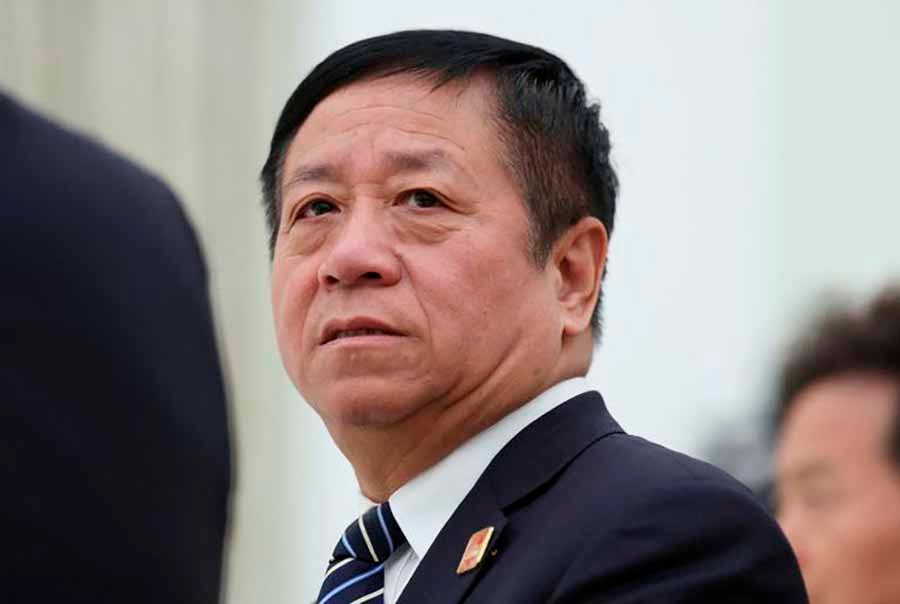
The diplomat, who gave an interview to Izvestia newspaper this Monday, noted significant potential for cooperation between China and Russia in high-tech areas such as information technologies and artificial intelligence (AI), microelectronics and semiconductors, as well as the construction of civil aircraft.
The ambassador said, “We welcome and look forward to the active participation of the Russian side in the Chinese initiative to create a global cooperation organization in the field of AI.
We intend to further deepen bilateral interaction in the development of AI technologies, industrial development, personnel training, and management.”
The Chinese side, in turn, is also willing to jointly deepen cooperation with Russia in areas such as semiconductor materials, the design of specialized microchips, the development of advanced manufacturing processes, and the creation of equipment to improve the stability and security of supply chains.
Manager Unai Emery says any talk of the title “does not make sense” for Aston Villa despite their historic form.
The Spaniard has overseen a club-record equalling 11 straight wins in all competitions – eight in the Premier League, where Villa sit third.
They are three points behind Arsenal and travel to the Gunners, Emery’s former club, on Tuesday (20:15 GMT) but the head coach continues to play down Villa’s title chances.
He said: “To speak about the title does not make sense for us. Now, in December, it does not make sense. We are motivated and excited but for the moment we are motivated for the match we play tomorrow.
“With three points difference between them and us, this is our motivation.
“With how we are performing, we can feel proud of everything we are building. Tactically, mentally, individually. We are trying to feel inside as a family, we are spending more time here than with family.
“The next challenge is very difficult, the most difficult challenge we can face now because it’s the best team.”
The parties welcomed the signing, on December 27, of the joint ceasefire declaration at the third special meeting of the Cambodia-Thailand General Border Committee (GBC).
Participants noted that the agreement serves the fundamental and long-term interests of both peoples and sends a positive signal for regional peace and stability.
China voiced support for both nations’ efforts to ensure a comprehensive and lasting ceasefire as a foundation for peacebuilding.
All three sides endorsed the work of the Joint Boundary Commission (JBC) to implement the signed declaration and advance coordination mechanisms. China expressed its willingness to provide necessary support, including humanitarian cooperation for demining and support for the functioning of the observer team of the ASEAN (Association of Southeast Asian Nations).
The meeting stressed the priority of gradually restoring normal exchanges and cooperation in border areas, as well as the livelihoods of displaced persons.
Here is what to look out for on the final round of Scottish Premiership fixtures for 2025, including Celtic v Motherwell, Djeidi Gassama’s form and the pressure on David Martindale.
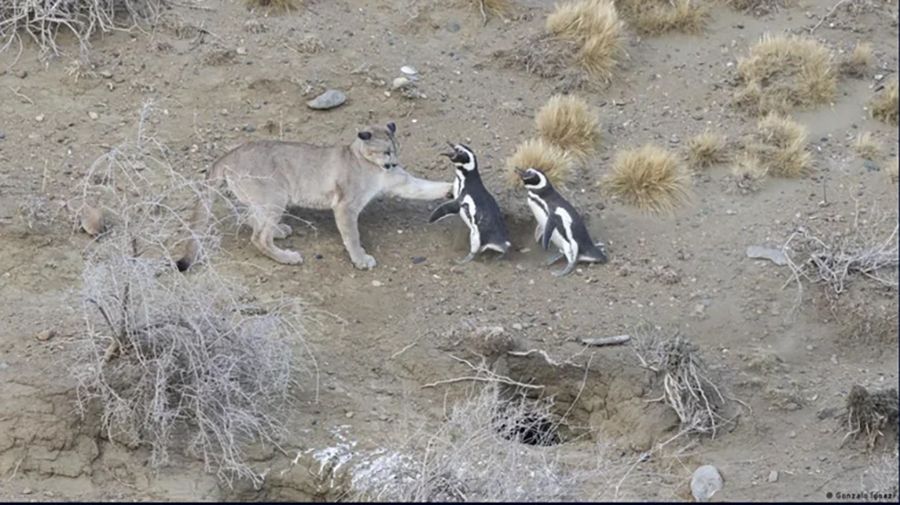
Lonely hunter pumas now operate in groups, given the abundance of penguins
A recent study published in Proceedings of the Royal Society B has documented an unprecedented ecological interaction in Argentina, where Pumas (Puma concolor) are hunting Magellanic penguins (Spheniscus magellanicus) along the Patagonian coast as a direct result of historical human intervention.
Historically, penguins nested primarily on offshore islands to avoid land predators. However, in the early 20th century, the expansion of sheep farming led to the massive hunting and near-extinction of pumas in coastal areas.
With pumas gone, penguins began colonizing the mainland coast (such as Monte León National Park in the province of Santa Cruz) because there were no large terrestrial predators to threaten their nests.
In the 21st Century, successful rewilding and protection efforts have seen the puma -known typically to be solitary hunters that rely on mammals like guanacos (a relative of the llama)- return to coastal regions. Researchers from Rewilding Argentina and international universities tracked 14 pumas with GPS collars between 2019 and 2023.
Among their findings is the highest density of pumas near penguin colonies ever recorded, roughly double that of other regions. Additionally, the presence of large numbers of penguins in one spot resulted in these otherwise solitary cats interacting with each other more frequently. Coastal pumas move much less and maintain smaller territories because they no longer need to travel long distances to hunt guanacos.
The pumas that consume penguins interact more with other pumas, because they find themselves in the colony or its surroundings, and have smaller territories and move less, since they do not have to make long journeys to find their prey, explained Rewilding Argentina Scientific Director Emiliano Donadio, a co-author of the study.
Data showed that the penguin colonies were in no way at risk. In fact, they were found to be stable and even growing. The pumas’ impact is not yet threatening the survival of the species.
When penguins migrate away from the coast for the season, the pumas simply switch back to their traditional diet of guanacos.
Mitchel Serota, the study’s lead author, warned that because pumas and guanacos are the dominant predator-prey pair in Patagonia, this shift to eating penguins could have a domino effect on the vegetation and other animals in the region.
The return of the puma is seen as a success for conservation, showing that the landscape is recovering its native predators, with new behaviors and interactions that scientists are just beginning to understand.
Carnivores are being reintroduced into an ecosystem that does not necessarily resemble the one that saw them become locally extinct, warned Iowa State University Ecologist Jake Goheen, who did not participate in the research.
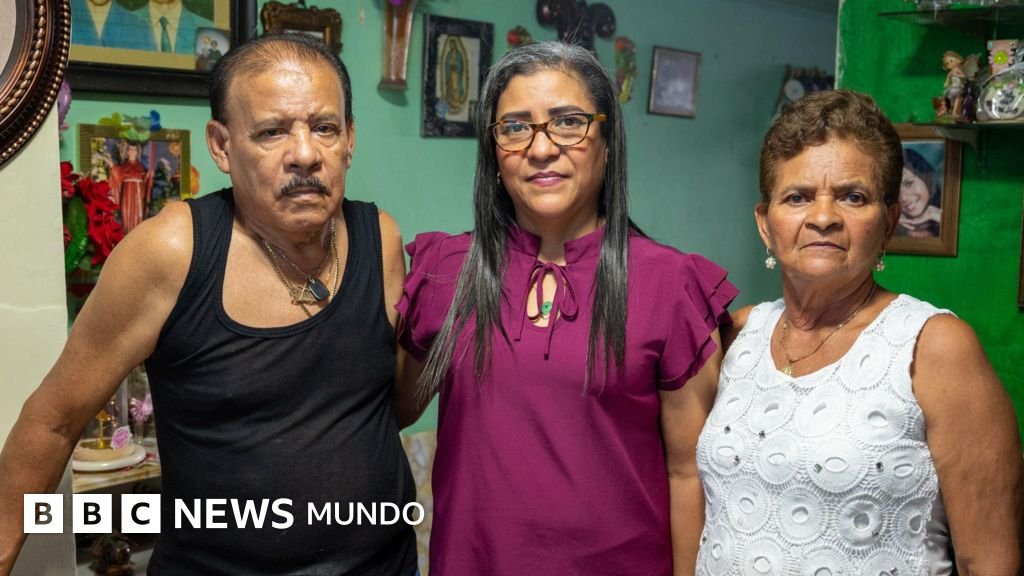
Pie de foto, Ernesto Mendoza e Isidora Gómez con su hija Jovana, a 37 años de vivir en primera persona la invasión de EE.UU. a Panamá.Información del artículo
Autor, Óscar Sulbarán
Título del autor, Especial para BBC Mundo
Tiempo de lectura: 7 min
Cuando Isidora Gómez y Ernesto Mendoza se instalaron en los años 70 en el barrio El Chorrillo, en el oeste de la capital de Panamá, llegaron atraídos por la tranquilidad y seguridad.
El edificio a donde se mudaron y donde todavía viven se llama 24 de diciembre, pero los lugareños lo conocen como “el 15 pisos”. Allí, en el apartamento 6-10, criaron a sus tres hijos.
Allí también vivían en la madrugada del 20 de diciembre de 1989 cuando Estados Unidos invadió Panamá con el objetivo de derrocar al gobierno encabezado por Manuel Antonio Noriega, a quien acusaba de narcotráfico.
“Se escuchaba de todo: bombardeo, balas”, cuenta Jovana Mendoza, la hija mediana del matrimonio, quien hoy tiene 54 años.
Al lado de su hogar se encontraba el cuartel general de las Fuerzas de Defensa de Panamá, la sede del comando militar de Noriega, lo que convirtió a El Chorrillo en objetivo del ataque estadounidense.
Además, estaban cerca de la zona del Canal, un área dentro de Panamá que era ocupada por Estados Unidos, país que entonces tenía control sobre la ruta marítima transoceánica, además de presencia militar.
Tras la última gran incursión militar de EE.UU. en el continente americano, “el 15 pisos” fue uno de los pocos edificios residenciales de la zona que quedarían en pie.
Fuente de la imagen, Getty Images
Pie de foto, La invasión a Panamá en diciembre de 1989 se convirtió en la última incursión de EE.UU. en un país de la región.
A poco de la Navidad
El martes 19 de diciembre de 1989, en el hogar de los Mendoza Gómez todo transcurría con normalidad. lo único distinto es que se acercaban las celebraciones de Navidad y fin de año.
Ernesto regresaba de su trabajo en un almacén; Isidora estuvo en la Avenida Central haciendo compras navideñas; Jovana y su hermano menor, Ernesto José, de 10 años, se preparaban para dormir pues al día siguiente tenían que ir al colegio.
Eran los últimos días de bachillerato de Jovana, pero la entonces adolescente no tendría acto de graduación debido a la invasión. “Yo sentía dolor, tristeza, porque no me gradué como yo quería”, dice. Meses después solo pasó por su antiguo colegio a retirar el título de secundaria.
Aunque los Mendoza Gómez no querían a Noriega en el poder, tampoco tenían expectativas de un cambio para el país.
Una serie de eventos que ocurrieron en Panamá en 1989 culminaron con el entonces presidente estadounidense George H. W. Bush enviando entre 20.000 y 30.000 soldados al país centroamericano para, entre otros objetivos, llevar a Noriega “ante la justicia”.
Los eventos previos a la invasión
Fuente de la imagen, Getty Images
Pie de foto, La ONU estima que unos 500 civiles panameños murieron en la invasión, EE. UU. afirma que fueron muchos menos y sus críticos dicen que fueron muchos más.
En mayo de 1989 se realizaron elecciones generales en Panamá para escoger a un nuevo presidente y a la Asamblea Nacional legislativa.
Los comicios fueron anulados por Noriega ante la posibilidad de que la oposición, encabezada por Guillermo Endara, se hiciera con el poder. Los dirigentes políticos fueron atacados y perseguidos por los denominados “Batallones de la Dignidad”, una milicia formada por civiles adeptos al régimen de Noriega.
Cinco meses después, en octubre, hubo un intento de golpe de Estado contra Noriega. La conspiración encabezada por el mayor Moisés Giroldi fracasó y terminó con la ejecución de Giroldi y quienes lo acompañaban.
Cada vez más presionado y cercado por el gobierno de Bush, el 15 de diciembre Noriega declaró a Panamá en “estado de guerra” con EE.UU.
Un día después, un miembro de la marina estadounidense murió por un arma de fuego en un altercado con militares panameños en un puesto de control cercano al cuartel general de las Fuerzas de Defensa de Panamá.
Este fue el hecho que se señala como el disparador de la incursión de EE.UU. en Panamá por tierra, mar y aire.
Bajo el colchón de la cama
En la noche del 19 de diciembre un vecino de El Chorrillo alertó a Ernesto de una posible invasión.
Isidora dice que también lo informaron en el Canal 8, una televisora estadounidense que transmitía en inglés desde la Zona del Canal.
Fuente de la imagen, Óscar Sulbarán
Pie de foto, Isidora cocinando en el apartamento 6-10 donde vive con su familia desde los años 70.
Pero, a pesar de la creciente tensión entre ambos países, Isidora no creyó que fuera suceder: “¿Cómo van a invadir a Panamá si aquí no había armas? Y esa gente son guerra por todos lados y tienen armas y tanquetas”.
En el apartamento 6-10 se encontraban Isidora, Ernesto, Jovana y Ernesto José cuando, después de las 23 horas, comenzaron las explosiones.
Los hijos fueron corriendo a la habitación de sus padres. El miedo se apoderó de ellos y, por instinto, utilizaron como protección el colchón matrimonial para intentar cubrirse del ataque.
“Yo me tiré con ellos a rezar bajo el colchón de la cama”, cuenta Ernesto.
Las primeras explosiones hicieron estallar los vidrios del apartamento y quedaron más expuestos. Inmediatamente su hogar, como el resto del edificio, quedó sin electricidad.
“La única luz que se veía era el fuego de lo que se estaba incendiando”, cuenta Isidora.
El ataque en El Chorrillo no cesaba. Las horas transcurrieron con ellos debajo del colchón hasta que a las 3 de la madrugada un vecino les dijo que se movieran a los pasillos del edificio, donde podrían resguardarse totalmente detrás de los muros.
Un barrio en cenizas
Fuente de la imagen, Getty Images
Pie de foto, Muchas áreas del barrio El Chorrillo quedaron destruidas por el ataque de las tropas de EE.UU. en Panamá.
Con la luz del día 20 de diciembre las explosiones y las balaceras cesaron, pero recién a las 10 de la mañana escucharon una voz desde un megáfono que ordenaba: “Salgan todos con las manos en alto. Vamos a evacuar”.
Comenzaron a entrar militares estadounidenses en el edificio. Les apuntaron con las armas. Una de las personas que estaba cerca de la familia Mendoza Gómez gritó: “¡Somos civiles!”.
Salieron del lugar con las manos en alto. “Todos formamos una fila, caminábamos sin saber adónde íbamos. Solo atendíamos las órdenes de los militares que nos guiaron”, recuerda Jovana.
En el recorrido descubrieron su barrio envuelto en humo y cenizas. También vieron algunos cadáveres.
“Vi una tanqueta que le pasó por encima a un carro rojo donde había una persona”, narra Isidora.
Fuente de la imagen, Cindy Karp/Getty Images
Pie de foto, Tras la invasión, los Mendoza Gómez y otras familias fueron alojadas temporalmente en los hangares de la entonces base Albrook de la Fuerza Aérea estadounidense.
Fuente de la imagen, Óscar Sulbarán
Pie de foto, Este es el documento de identificación de ingreso a Albrook de Jovana.
Desde El Chorrillo caminaron a la Zona del Canal, controlada por los estadounidenses. Se improvisó el Estadio Balboa como albergue. Luego los llevaron a los hangares de la base Albrook de la Fuerza Aérea estadounidense, en lo que hoy es el Aeropuerto Internacional Marcos A. Gelabert.
Allí permanecieron varios meses antes de poder volver a su apartamento.
Y aunque tres días después de la invasión les permitieron ir a sus hogares en busca de objetos personales, para entonces los apartamentos de “el 15 pisos” habían sido vandalizados.
Los Mendoza Gómez fueron sobrevivientes de una invasión que no tiene un número claro de víctimas fatales, con márgenes que van de 300 a 3.000 personas. La ONU, por ejemplo, estima que murieron alrededor de 500 civiles panameños.
Isidora dice que, aunque tuvo miedo, no sintió rencor: “Ellos querían a Noriega. Si él se hubiese entregado, eso no hubiese pasado”.
Noriega estuvo refugiado en la nunciatura (embajada de El Vaticano) hasta el 3 de enero de 1990, cuando finalmente se entregó a las fuerzas estadounidenses. Fue trasladado a Miami para enfrentar un juicio por cargos de narcotráfico y murió en prisión 27 años después.
Fuente de la imagen, Óscar Sulbarán
Pie de foto, Así se ve hoy el edificio 24 de diciembre, conocido como “el 15 pisos”, en el barrio El Chorrillo, en Panamá.
Suscríbete aquí a nuestro nuevo newsletter para recibir cada viernes una selección de nuestro mejor contenido de la semana.
Y recuerda que puedes recibir notificaciones en nuestra app. Descarga la última versión y actívalas.
The Brazilian has now started three in a row and will be a bargain £4m option if he keeps his spot, although Matz Sels is now back from injury.
Sean Dyche’s Forest take on his old side Everton, who haven’t scored in three games and could be missing their three best attacking players – Iliman Ndiaye, Jack Grealish and Kiernan Dewsbury-Hall.
Given Everton‘s scoring slump, double Forest defence is worth a punt.
There’s barely anything between Milenkovic and centre-back partner Murillo, with almost identical defensive contribution points (defcon) per 90 mins and £0.1m price difference.
The Serb takes more shots though and has a better scoring record, with five last season, so he gets the nod.
If you watched United’s win over Newcastle on Boxing Day, the player who stood out was Dorgu, playing out of position (OOP) on the right wing.
FPL managers love an OOP player and at £4.1m too, Dorgu could be a gift.
Don’t expect him to be a long-term asset, but United are down to the bare bones at the moment and if you have a spare transfer then why not take a punt.
Given Wolves‘ scoring record and the attacking positions Dorgu takes up, a clean sheet and attacking return haul is a distinct possibility.
Guehi has six attacking returns this season and Palace’s defence is always worth backing at home against teams such as Fulham, who have lost Alex Iwobi and Samuel Chukwueze to the Africa Cup of Nations.
Quintana has a history of shifting from one rightwing party to another
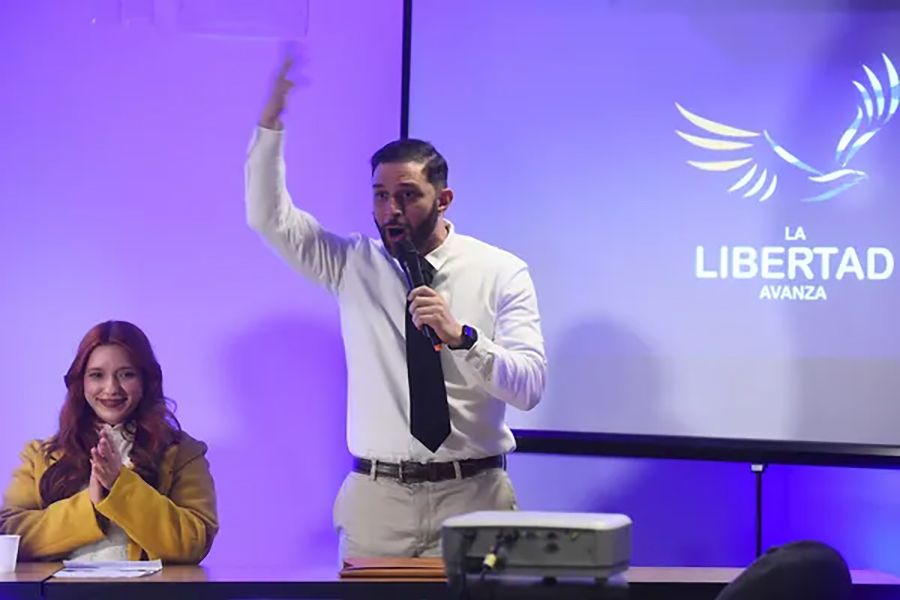
Argentina’s ruling party La Libertad Avanza (LLA) of President Javier Milei has remained silent following recent scandals involving its Uruguayan namesake after initial endorsements involving key figures such as former Security Minister and current Senator Patricia Bullrich.
The Libertarian brand across the pond is going through a crisis involving high-level resignations, accusations of harassment, and financial opacity. Juan Pablo Baeza resigned as party Chairman in mid-November, citing a fractioned directorate plagued by constant infighting. His departure revealed a deep rift between the faction led by Nicolás Quintana and another representing the Libertarian Party of Uruguay (PLU).
The most damaging blow to the party’s reputation involves leaked WhatsApp audio recordings attributed to Quintana, in which he allegedly threatens political rivals with family surveillance and verbal abuse, stating he could access their entire lives and investigate their families to undermine them.
In this scenario, party members signed a ten-point letter accusing the leaders of abuse of power, conspiracy, and using official social media accounts to block and silence internal dissent.
Quintana dismissed the allegations as ridiculous, while other leaders attributed the scandal to young members who lost control of the party and want to cause damage.
Additionally, the party’s funding has become a central point of conflict. Baeza originally managed the party funds through a personal account to ensure transparency, but following his resignation, control of the funds was reportedly transferred to an associate of Quintana without a formal board discussion. When the PLU requested a detailed financial report on December 7, it was flatly rejected by the current leadership.
Later this month, the PLU —deemed to be the ideological backbone of the coalition— announced its total withdrawal from La Libertad Avanza Uruguay, citing a number of irregularities, such as the creation of an unauthorized National Political Command used to persecute dissidents.
The PLU formally repudiated the threats against privacy and family, stating that digging into the private lives of individuals was incompatible with their values.
Despite the official exit of the PLU and the documented resignations, LLAuy’s official social media channels continue to label the reports as fake news and party defamation. The remaining leadership maintains that the project is still intact, though analysts suggest the brand is severely tarnished ahead of the next electoral cycle.
Quintana, the party’s current strongman of LLAuy, has a political career shifting from the traditional National Party (Blancos), specifically in the Herrerismo sector. He later moved to Cabildo Abierto, the right-wing party led by former Army Chief of Staff General Guido Manini Ríos, where he was considered a soldier of the movement. In early 2025, Quintana broke away from Cabildo Abierto, declaring the party dead and accusing its leaders of political fraud for supporting government debt and the Agenda 2030. He resurfaced as a political influencer and founder of LLAuy, using Milei-style rhetoric like taming the political caste.
More permanent repairs were still needed on the taxiway and runway
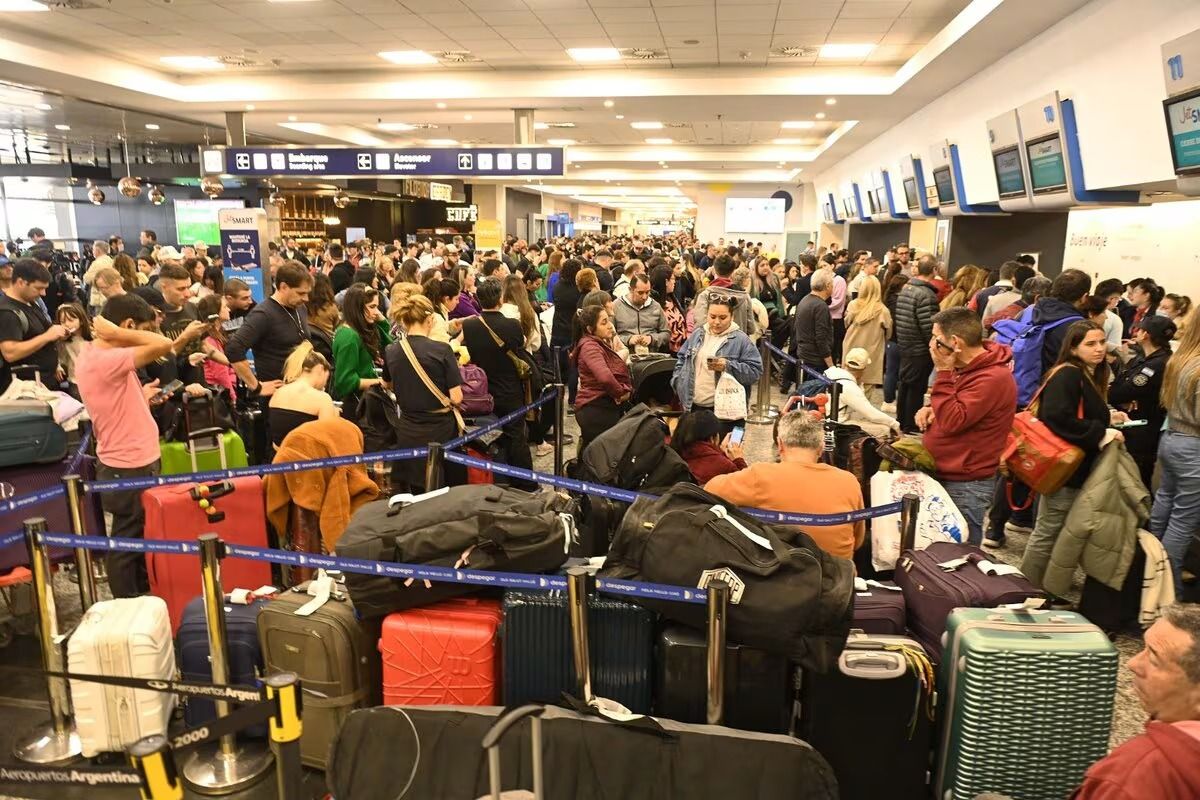
Buenos Aires’ Aeroparque Jorge Newbery, Argentina’s busiest airport and the only commercial terminal within the country’s capital, was forced to suspend all operations for nearly three hours on Saturday during peak travel time amid a severe heatwave and the ensuing infrastructure failure.
The shutdown began around 3:00 PM as temperatures in Buenos Aires soared past 35°C (95°F). Officials detected asphalt detachment and cracks near the southern end of the runway.
Although the damage was in a peripheral area, authorities feared that the high engine power used during takeoff could suck loose debris into aircraft turbines, potentially causing catastrophic engine failure.
Technicians had to wait for the materials to stabilize before making emergency repairs, a process complicated by recent rains and the extreme heat.
The closure triggered a massive domino effect, with at least 12 incoming flights diverted to the larger Ezeiza International Airport, which is not within the Autonomous City of Buenos Aires (CABA).
Additionally, more than 50 flights experienced significant delays. Major carriers affected included Aerolíneas Argentinas, JetSMART, Flybondi, and Latam Airlines.
Regional flights from São Paulo, Lima, Florianópolis, and Rio de Janeiro to Aeroparque were pushed into the late evening.
The incident occurred during a period of record-breaking activity at Aeroparque. By November 2025, the airport had already handled 16.3 million passengers, a 20% increase over the previous year.
Aeropuertos Argentina warned that while operations resumed, temporary delays would persist throughout the weekend. Furthermore, permanent repairs are still required, with a more comprehensive closure.
The airport was reported open and operational early Monday, albeit with most flights departing within 30–45 minutes of their scheduled time.
Netanyahu’s Israel also announced immediate bilateral agreements in agriculture, technology, and health
Israeli Prime Minister Benjamin Netanyahu officially recognized the Republic of Somaliland as an independent and sovereign state on Friday, making his country the first UN member state to grant de jure recognition to the breakaway region since it declared independence from Somalia in 1991.
The decision marks a radical departure from the African Union’s longstanding policy on the inviolability of colonial borders.
Netanyahu justified the recognition as an extension of the Abraham Accords, positioning Somaliland as a vital pro-Western anchor in a volatile region, such as the Horn of Africa. Additionally, military analysts point to a more immediate tactical motivation, given Somaliland’s coastline between 300 and 500 kilometers from Houthi-controlled territory in Yemen.
Formal recognition allows Israel to establish a permanent presence in the Gulf of Aden, creating a southern counter-Houthi axis to secure vital shipping lanes.
In this scenario, Israel announced immediate bilateral agreements in agriculture, technology, and health, aiming to stabilize the region through economic peace.
The announcement was met with a scathing joint condemnation from Somalia, Egypt, Turkey, and Djibouti. Somali Prime Minister Hamza Abdi Barre declared the recognition null and void, labeling it a direct attack on Somalia’s territorial integrity. Following Israel’s announcement, Egyptian Foreign Minister Badr Abdelatty led a series of telephone consultations with his counterparts from those countries, it was reported in Cairo.
Furthermore, regional allies of Somalia have voiced categorical rejection of unconfirmed reports suggesting that Israel may view Somaliland as a potential relocation site for Palestinians displaced from Gaza.
While the Somaliland government has not commented on these specific allegations, Somalia warned that it would never accept the Palestinian people becoming stateless on its soil.
Netanyahu’s move also shook the United States because Washington maintains a Somalia First policy, fearing that recognition will undermine the fight against al-Shabaab militants in Mogadishu. However, influential Republicans and security advisors see Somaliland as a critical hedge against Chinese expansion in neighboring Djibouti and a necessary partner for the new US naval strategy in the Red Sea.
With a UN member state now leading the way, Addis Ababa is widely expected to finalize its own recognition in exchange for the long-awaited 20-kilometer lease of Somaliland’s coastline for landlocked Ethiopia.