Author: americalatinanews.com

  • Bolsonaro undergoes another medical procedure in Brazil

    Bolsonaro undergoes another medical procedure in Brazil


    Also to try to control his hiccups, the former president underwent a nerve block on Saturday, but on his right side. “The treatment with a left phrenic nerve block is scheduled to be completed (this Monday), for subsequent evaluation of the results.

    The patient will need to continue with physical therapy for his rehabilitation, measures to prevent venous thrombosis, and clinical care,” doctors reported.

    Bolsonaro, 70, who has been hospitalized since December 24 at the DF Star hospital in Brasilia, continues his post-operative routine related to a hernia, but is suffering discomfort due to a bout of hiccups.

    The contractions are not related to the surgery, but forced the far-right politician to undergo another procedure on Saturday.

    The procedure was successful, according to the doctors, but further observations will be necessary to determine its effectiveness in Bolsonaro’s case.

    jdt/jav/mem/ocs


    Source link

  • Arsenal: Mikel Arteta ‘actively looking’ at signings in January transfer window

    Arsenal: Mikel Arteta ‘actively looking’ at signings in January transfer window


    Arsenal will be “actively looking” at potential signings during the January transfer window, says manager Mikel Arteta.

    The Gunners spent about £250m in the summer and brought in eight new players as they looked to increase the quality in their squad to deal with the packed fixture list and compete for trophies in multiple competitions.

    Last season Arsenal‘s campaign was decimated by injuries.

    They were without defender Gabriel Magalhaes for the final part of the season and played with midfielder Mikel Merino as a makeshift striker as they finished second in the Premier League for a third successive season and were knocked out in the semi-finals of the Champions League by Paris St-Germain.

    This season the Gunners have also been plagued with injuries. They lost Kai Havertz from the opening day, while captain Martin Odegaard and Bukayo Saka, Gabriel Martinelli, Noni Madueke and Max Dowman have had spells on the sidelines.

    Now, after injuries mainly affecting attacking players, it is the Arsenal backline which is suffering.

    Arteta was forced to play Declan Rice in an unfamiliar right-back position against Brighton on Saturday because Jurrien Timber was injured and Riccardo Calafiori picked up an issue in the warm-up.

    Gabriel returned from injury in the 2-1 win, but the return dates of Cristhian Mosquera, Timber and Calafiori are not known.

    “We’re going to be really aware of the situation and the timescale of certain players,” Arteta said.

    “We have to be actively looking, and then can we do it or not?

    “That’s a different story, but our job is to be always very prepared because something can happen.”


    Source link

  • Lithium producers foresee prosperous 2026 — MercoPress

    Lithium producers foresee prosperous 2026 — MercoPress


    Argentina: Lithium producers foresee prosperous 2026

    Monday, December 29th 2025 – 10:50 UTC


    Argentina's total capacity could reach 428,000 tons by 2033, it was explained
    Argentina’s total capacity could reach 428,000 tons by 2033, it was explained

    Argentine lithium producers have expressed optimism towards 2026 after the mineral’s global market showed strong signs of recovery, with major financial institutions and industry bodies projecting a significant price rebound and a massive production surge over the next two years.

    According to a recent report by JP Morgan, lithium prices are expected to rise sharply due to the acceleration of Artificial Intelligence (AI), global vehicle electrification, and energy security needs. With a current price of around US$13,550 per ton, traders forecast US$17,500 per ton in 2026, a 43% increase, and US$22,000 per ton in 2027, a 66% increase from present levels.

    The Argentine Chamber of Mining Companies (CAEM) reports that Argentina is positioned to become a dominant global supplier, targeting 131,000 tons of lithium production for 2025, a 75% increase from 2024, fourfold the historical average of the 2015–2022 period.

    Additionally, exports are expected to reach nearly US$1 billion in 2025, a 44% yoy increase.

    The surge is fueled by new plants coming online (Centenario Ratones, Sal de Oro, and Mariana) and expansions of existing projects in Catamarca, Salta, and Jujuy.

    The International Energy Agency (IEA) has warned of a possible 60% lithium deficit by 2035. Furthermore, global demand is projected to be five times higher by 2040 compared to current levels.

    Mining projects typically take over 16 years to move from discovery to production, making Argentina’s current operational capacity highly strategic, it was also explained.

    In the last decade, mining companies have invested over US$7.6 billion in Argentina, establishing seven production plants and creating more than 5,000 direct jobs in the northwest region. Projections suggest that Argentina’s total capacity could reach 428,000 tons by 2033, solidifying the country’s role alongside Chile and Bolivia, which together make up the so-called “Lithium Triangle.”


    Source link

  • Brazil records highest foreign investment inflow in a decade — MercoPress

    Brazil records highest foreign investment inflow in a decade — MercoPress


    Brazil records highest foreign investment inflow in a decade

    Monday, December 29th 2025 – 10:55 UTC


    In 2025, Brazil thrived regionally, given Argentina's shaky transition and Chile's moderate growth
    In 2025, Brazil thrived regionally, given Argentina’s shaky transition and Chile’s moderate growth

    The Brazilian government announced on Sunday that Foreign Direct Investment (FDI) reached US$84.1 billion between January and November 2025, marking the highest volume of capital inflow since 2014.

    According to the Planalto Palace, the administration of President Luiz Inácio Lula da Silva attributes this surge to a strategic “international repositioning” and an aggressive diplomatic agenda aimed at restoring global investor confidence.

    The November data showed inflows reaching US$9.8 billion, a 72% yoy increase. In the first eleven months of the year, the total volume of investment had already outpaced 2024’s total of US$74 billion by 13.5%.

    Economists note that Brazil is now within reach of all-time historical highs, previously achieved during Dilma Rousseff’s administration (2011–2014), which saw peaks of up to US$102.4 billion.

    The executive branch highlighted that foreign policy has become a central pillar of its national reconstruction project. The official balance sheet detailed a high-intensity diplomatic schedule over the last three years, during which Brazil has “created favorable conditions for opening markets and defending national interests,” by opening more than 500 new international markets for Brazilian products since 2023.

    Positioned as the preferred destination for foreign capital in South America, Brazil is using these figures to demonstrate resilience against current global geopolitical challenges. The government maintains that the stability and predictability offered by the current administration are the primary factors behind the US$10 billion jump in FDI compared to the previous year.

    According to Brazil’s Central Bank (BCB) and Development Ministry data for late 2025, Renewable Energy and Green Hydrogen accounted for 34% of investments, followed by Agribusiness and Infrastructure (28%), Technology and AI Data Centers (18%), and Oil and Gas (12%).

    Furthermore, the massive inflow of dollars has acted as a critical stabilizer for the Real in a year marked by high interest rates and global volatility. The BCB has thus maintained robust reserves, standing currently at around US$355 billion.

    In 2025, Brazil thrived regionally, given Argentina’s shaky transition and Chile’s moderate growth.


    Source link

  • Uruguayan version of La Libertad Avanza crisis deepens — MercoPress

    Uruguayan version of La Libertad Avanza crisis deepens — MercoPress


    Uruguayan version of La Libertad Avanza crisis deepens

    Monday, December 29th 2025 – 10:43 UTC


    Quintana has a history of shifting from one rightwing party to another
    Quintana has a history of shifting from one rightwing party to another

    Argentina’s ruling party La Libertad Avanza (LLA) of President Javier Milei has remained silent following recent scandals involving its Uruguayan namesake after initial endorsements involving key figures such as former Security Minister and current Senator Patricia Bullrich.

    The Libertarian brand across the pond is going through a crisis involving high-level resignations, accusations of harassment, and financial opacity. Juan Pablo Baeza resigned as party Chairman in mid-November, citing a “fractioned” directorate plagued by constant infighting. His departure revealed a deep rift between the faction led by Nicolás Quintana and another representing the Libertarian Party of Uruguay (PLU).

    The most damaging blow to the party’s reputation involves leaked WhatsApp audio recordings attributed to Quintana, in which he allegedly threatens political rivals with “family surveillance” and verbal abuse, stating he could “access their entire lives” and “investigate their families” to undermine them.

    In this scenario, party members signed a ten-point letter accusing the leaders of “abuse of power,” “conspiracy,” and using official social media accounts to block and silence internal dissent.

    Quintana dismissed the allegations as “ridiculous,” while other leaders attributed the scandal to young members who “lost control of the party” and want to cause damage.

    Additionally, the party’s funding has become a central point of conflict. Baeza originally managed the party funds through a personal account to ensure transparency, but following his resignation, control of the funds was reportedly transferred to an associate of Quintana without a formal board discussion. When the PLU requested a detailed financial report on December 7, it was flatly rejected by the current leadership.

    Later this month, the PLU —deemed to be the ideological backbone of the coalition— announced its total withdrawal from La Libertad Avanza Uruguay, citing a number of irregularities, such as the creation of an unauthorized “National Political Command” used to persecute dissidents.

    The PLU formally repudiated the threats against privacy and family, stating that “digging into the private lives of individuals” was incompatible with their values.

    Despite the official exit of the PLU and the documented resignations, LLAuy’s official social media channels continue to label the reports as “fake news” and “party defamation.” The remaining leadership maintains that the project is still intact, though analysts suggest the brand is severely tarnished ahead of the next electoral cycle.

    Quintana, the party’s current strongman of LLAuy, has a political career shifting from the traditional National Party (Blancos), specifically in the “Herrerismo” sector. He later moved to Cabildo Abierto, the right-wing party led by former Army Chief of Staff General Guido Manini Ríos, where he was considered a “soldier” of the movement. In early 2025, Quintana broke away from Cabildo Abierto, declaring the party “dead” and accusing its leaders of “political fraud” for supporting government debt and the “Agenda 2030.” He resurfaced as a “political influencer” and founder of LLAuy, using Milei-style rhetoric like taming the “political caste.”


    Source link

  • Uruguayan Parliament in recess, but the legislative battle continues

    Uruguayan Parliament in recess, but the legislative battle continues


    The ministers summoned by the opposition are the heads of the Ministry of Livestock, Agriculture and Fisheries (MAGP), Alfredo Fratti; the Ministry of the Environment, Edgardo Ortuno; the Ministry of the Interior, Carlos Negro; and the Ministry of Education and Culture, Jose Carlos Mahia.

    The Minister of Economy and Finance, Gabriel Oddone, will also be called, on a date to be determined.

    Ortuno will have to answer questions about the renegotiation of water infrastructure projects with the consortium that was in charge of the Arazatí project, inherited from the previous administration and which the previous government declared closed.

    Fratti is being questioned over an administrative act regarding the appointment of directors at the Ministry of Agriculture, Livestock and Fisheries (MAGP), noted Senator Bettiana Diaz, a member of the Broad Front coalition and head of the Permanent Commission.

    In the case of the Minister of the Interior, “it is basically because of the crime statistics report published at the beginning of the year,” the legislator stated.

    Mahiá’s summons raises concerns due to the intention of the former president of the National Public Education Administration, Colorado Party alternate legislator Robert Silva, to convene the institution’s authorities, whose decentralized nature “requires special majorities.”

    jdt/jav/ro/ool

    The post Uruguayan Parliament in recess, but the legislative battle continues first appeared on Prensa Latina.


    Source link

  • Best AI uses in 2025 around the world

    Best AI uses in 2025 around the world


    2025 was yet another transformative year in the artificial intelligence boom. ChatGPT was the fifth most-visited website in the world, tech companies poured hundreds of millions into refining their models, and chatbots became woven into seemingly every part of society — from assisting with legal work to offering companionship to the sick and the lonely. Here is a look back at some of the innovative ways people around the world used AI this year.

    AI for health care

    For many patients around the world who feel they don’t get the time or attention they need from their health care systems, chatbots have become a trusted alternative. In China, where psychiatric appointments are hard to get, expensive, and mostly paid out of pocket, particularly in rural areas, a survey of young people found that nearly half had used an AI chatbot to discuss their mental health.

    When her mom became smitten with Dr. DeepSeek, Rest of World senior reporter Viola Zhou asked human doctors to review the chat logs. They said the AI bot was giving alarmingly flawed advice. But maybe her mom was after something more than just medical help: “DeepSeek is more humane,” she said. “Doctors are more like machines.”

    AI is also helping to take care of aging populations, easing the workload of caregivers. Twice a week at a senior care facility in Singapore, a few dozen elderly men and women with dementia gather in a large sunlit room with Dexie, a humanoid robot, who leads their morning exercise session. In South Korea, AI companionship robots are given to seniors living alone, who treat the dolls like grandchildren.

    Health care workers themselves have embraced AI: In a remote Brazilian town, Samuel Andrade, the sole pharmacist at a free government clinic serving 22,000 people, is using AI to catch dangerous errors. Developed by nonprofit NoHarm and backed by tech giants including Google and Amazon, the AI assistant has quadrupled Andrade’s capacity to clear prescriptions. 

    Brazil’s judicial system — among the most litigious in the world — has over 140 AI projects to cope with more than 70 million pending lawsuits. Judges are using the technology to clear their dockets faster than ever before. At the same time, those same AI tools are allowing lawyers to open more and more cases. For example, drafting a legal defense used to take 20 minutes. Now it can be done in seconds.

    Can an AI chatbot change how we see criminals? That’s what researchers in Paraguay hoped when they developed Eva, a chatbot that allows people to interact with a woman in prison for drug trafficking. The bot is based on in-depth interviews about her life behind bars: where she slept, what she ate, how she filled her time. 

    “We wanted to build empathy between the audience and a segment of the population that’s largely invisible and excluded from mainstream media,” said the makers of Eva.

    AI on the job

    Creatives in Indonesia’s thriving film and animation sector are fast adopting generative AI in their work. They use ChatGPT for scripting, Midjourney to produce images, and Runway to generate short videos for storyboarding and editing. AI will cut the costs of production and make it possible to make films that match the quality of Hollywood, said Agung Sentausa, chairperson of the Indonesian Film Producer Association.

    Big-name LLMs often underperform in low-resource languages, risking deeper inequality as AI becomes more common. In Mongolia, Egune AI is developing models that specialize in the country’s language, culture, and nomadic traditions, and has created AI applications for a telecom company, a bank, and several government agencies.

    In Kenya, a severe teacher shortage due to large class sizes and burnout has pushed some educators to use ChatGPT and other chatbots. For Sylvia Osewe, an elementary school teacher in the Nairobi area, the bot helped plan lessons in English, social studies, and Christian religious education for her 200 students. If they find the material challenging, she prompts the AI to suggest a simpler way to teach it.

    Traditionally, farmers in Malawi relied on informal, peer-to-peer learning, primarily through word-of-mouth advice passed down through generations and shared among fellow farmers. Now they are turning to an AI chatbot for instant farming advice in their own language.

    “After following its recommendation, the worms were completely eliminated,” said Kingsley Jasi, a farmer who grows corn and beans. “Since then, I have relied solely on the chatbot’s guidance.”




    Source link

  • Afcon 2025: Sudan’s footballers open up on the country’s civil war

    Afcon 2025: Sudan’s footballers open up on the country’s civil war


    The power struggle between Sudan’s army and a paramilitary group, the Rapid Support Force (RSF), has also forced more than 12 million people to flee their homes, with widespread famine and reports of genocide in the western Darfur region.

    Unsurprisingly, football has taken a back seat. Stadiums have been destroyed and the league halted.

    Two of the country’s biggest club sides, Al Hilal and Al Merrikh, are currently playing in the Rwandan league, having spent last season in the Mauritanian top flight.

    “We don’t have a league, we don’t have anything, but we can’t complain because people in my country, they can’t eat, they don’t have food,” says Mano.

    But despite all the challenges – including having to play their home Afcon qualifying matches in neutral countries – Sudan have reached the finals for only the fourth time since 1976.

    Ghanaian head coach Kwesi Appiah has had to convince players to compete without guarantees of payment and has offered consolation on “several occasions” when squad members have lost family members.

    “We try to let players know, even though they’re gone, [they’re] looking at you and what you can do now for the nation,” says the 65-year-old, who took charge in September 2023.

    “I need to give the player maybe two or three days off, to make sure he comes back to himself.”

    Some of the players have not been home in years, with many lucky enough to find a new club overseas.

    Like several others in the Falcons of Jediane squad, Mano has made the move to Libya, first joining Al Ahly and now Al Akhdar.

    But the former Al Hilal man did not escape Sudan before experiencing a death threat of his own.

    “The rebels used to stop us and make fun of us on the road,” he explains.

    “They’d say things like ‘You play for Al Hilal – what is Al Hilal? I support Al Merrikh. I can kill you right now and nobody will question me’.

    “I cannot forget this story until I die.”


    Source link

  • NASA Chief pledges lunar base shortly — MercoPress

    NASA Chief pledges lunar base shortly — MercoPress


    NASA Chief pledges lunar base shortly

    Monday, December 29th 2025 – 10:32 UTC


    Isaacman spoke of “the hub of a nascent orbital economy”
    Isaacman spoke of “the hub of a nascent orbital economy”

    Newly confirmed NASA Administrator Jared Isaacman has announced that the United States is accelerating its space agenda, with plans to return to the Moon and establish a permanent lunar base in the near future.

    In a wide-ranging interview with CNBC, the former civilian astronaut and entrepreneur Isaacman detailed a vision where the Moon serves as the primary hub for a “nascent orbital economy,” highlighting several key strategic objectives for a sustained human presence on the lunar surface. Central to this concept is the potential for lunar mining, specifically targeting Helium-3, a rare isotope found in lunar soil that could power future fusion energy reactors on Earth.

    “The installation of data centers and other infrastructure on the surface, as well as the possible exploitation of helium-3, a rare gas present in lunar regolith that could become an important fuel for fusion energy,” Isaacman explained.

    “We want to have that opportunity to explore and realize the scientific, economic, and national security potential on the Moon,” he also pointed out. Other planned infrastructure projects include the installation of lunar data centers, which would support further space-based communications and computing.

    The Administrator noted that the lunar base is not an end goal but a stepping stone for the “Artemis” campaign. Once the base is operational, NASA intends to shift focus toward space nuclear power to sustain long-term habitats, as well as nuclear propulsion to enable faster and more efficient manned missions to Mars and deeper into the solar system.

    Isaacman, a close ally of SpaceX CEO Elon Musk, emphasized that reaching these goals affordably requires collaboration with commercial contractors. He noted that SpaceX and Jeff Bezos’ Blue Origin are currently refining heavy-lift launch vehicles capable of on-orbit cryogenic propellant transfer—a technology vital for frequent trips to the lunar surface.

    “That’s what’s going to enable us to be able to go to and from the Moon affordably, with great frequency, and set up for missions to Mars and beyond,” Isaacman said.

    The renewed push follows the passage of the “One Big Beautiful Bill Act,” which allocated US$9.9 billion in additional funding to NASA earlier this year.

    As things are, Artemis II, a crewed test flight around the Moon, is expected in the “near future,” while Artemis III, seeking to bring humans onto the satellite’s surface, is currently being developed with SpaceX.

    While permanent lunar bases have long been a staple of science fiction, Isaacman’s remarks signal that the US government now views such infrastructure as a “real and active goal” to be realized within the next decade.


    Source link

  • Israel first country to recognize Somaliland’s sovereignty — MercoPress

    Israel first country to recognize Somaliland’s sovereignty — MercoPress


    Israel first country to recognize Somaliland’s sovereignty

    Monday, December 29th 2025 – 10:28 UTC


    Netanyahu's Israel also announced immediate bilateral agreements in agriculture, technology, and health
    Netanyahu’s Israel also announced immediate bilateral agreements in agriculture, technology, and health

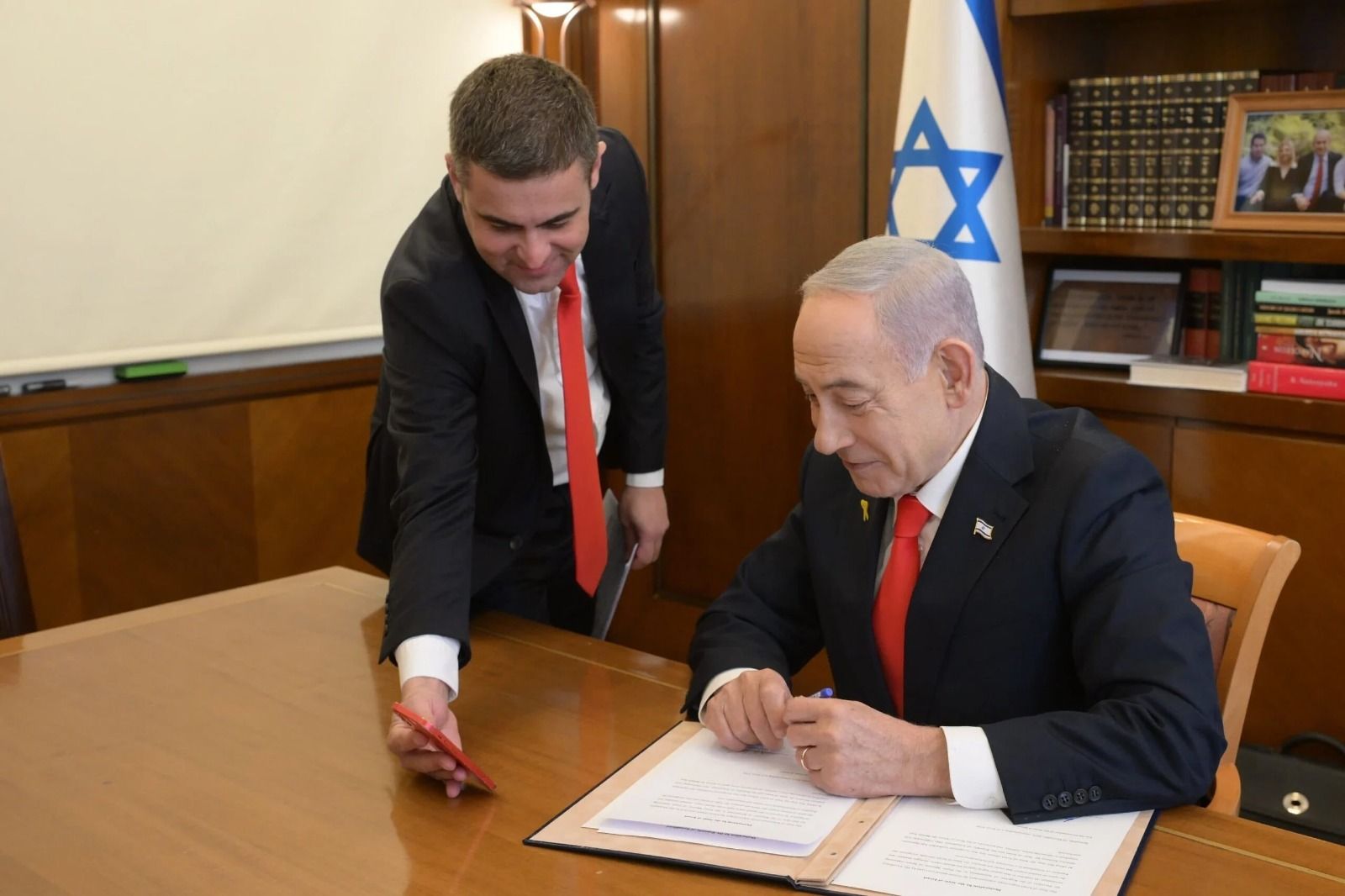
    Israeli Prime Minister Benjamin Netanyahu officially recognized the Republic of Somaliland as an independent and sovereign state on Friday, making his country the first UN member state to grant de jure recognition to the breakaway region since it declared independence from Somalia in 1991.

    The decision marks a radical departure from the African Union’s longstanding policy on the “inviolability of colonial borders.”

    Netanyahu justified the recognition as an extension of the Abraham Accords, positioning Somaliland as a vital pro-Western anchor in a volatile region, such as the Horn of Africa. Additionally, military analysts point to a more immediate tactical motivation, given Somaliland’s coastline between 300 and 500 kilometers from Houthi-controlled territory in Yemen.

    Formal recognition allows Israel to establish a permanent presence in the Gulf of Aden, creating a southern “counter-Houthi” axis to secure vital shipping lanes.

    In this scenario, Israel announced immediate bilateral agreements in agriculture, technology, and health, aiming to stabilize the region through “economic peace.”

    The announcement was met with a scathing joint condemnation from Somalia, Egypt, Turkey, and Djibouti. Somali Prime Minister Hamza Abdi Barre declared the recognition “null and void,” labeling it a direct attack on Somalia’s territorial integrity. Following Israel’s announcement, Egyptian Foreign Minister Badr Abdelatty led a series of telephone consultations with his counterparts from those countries, it was reported in Cairo.

    Furthermore, regional allies of Somalia have voiced “categorical rejection” of unconfirmed reports suggesting that Israel may view Somaliland as a potential relocation site for Palestinians displaced from Gaza.

    While the Somaliland government has not commented on these specific allegations, Somalia warned that it would “never accept the Palestinian people becoming stateless” on its soil.

    Netanyahu’s move also shook the United States because Washington maintains a “Somalia First” policy, fearing that recognition will undermine the fight against al-Shabaab militants in Mogadishu. However, influential Republicans and security advisors see Somaliland as a critical “hedge” against Chinese expansion in neighboring Djibouti and a necessary partner for the new US naval strategy in the Red Sea.

    With a UN member state now leading the way, Addis Ababa is widely expected to finalize its own recognition in exchange for the long-awaited 20-kilometer lease of Somaliland’s coastline for landlocked Ethiopia.


    Source link

Translate »