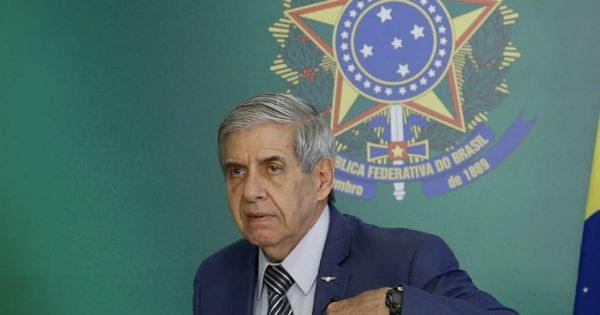
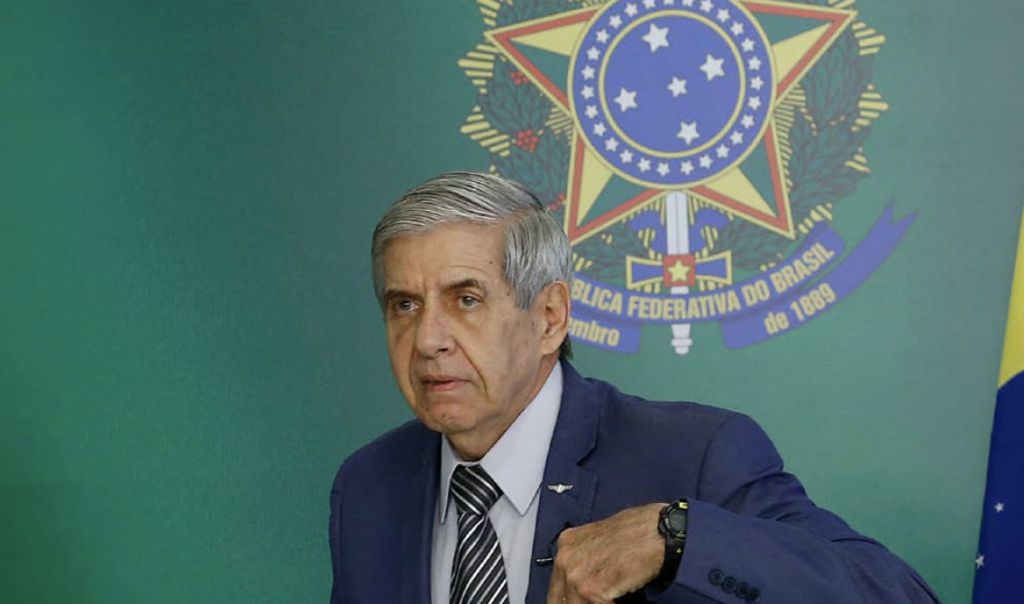
De Moraes warned that the general would return to a detention facility should he break the conditions for his house arrest
Supreme Federal Court (STF) Justice Alexandre de Moraes granted house arrest to General Augusto Heleno, the Minister of Institutional Security (GSI) under former President Jair Bolsonaro, who was among those convicted for the Jan. 8, 2023, coup attempt.
As per De MKoraes’ decision on Monday, Heleno will be required to wear an electronic anklet and surrender his passports. In addition, he is banned from using a cell phone and accessing social media.
Sentenced to 21 years in prison, Heleno, 78, has been jailed since November 25 at the Planalto Military Command (CMP) in Brasilia. According to his defense, Heleno has serious health problems. In granting the measure, the judge cited the results of the official medical report by Federal Police experts. According to the physicians, Heleno is in the early stages of dementia, and remaining in closed custody would worsen the general’s health.
In a custodial institution, this inevitably leads to progressive and irreversible cognitive decline, which tends to accelerate and worsen in a prison environment, with the patient in relative isolation and lacking protective and retarding stimuli, in particular family life and assisted autonomy, the report concluded.
De Moraes also ruled that Heleno must notify the STF of any medical appointments. The convicted person must request prior authorization for trips for health reasons, except in urgent and emergency cases, which must be justified within 48 hours after the respective medical appointment, he added.
If the precautionary measures are not complied with, De Moraes warned that the general would return to a detention facility. (Source: Agencia Brasil)
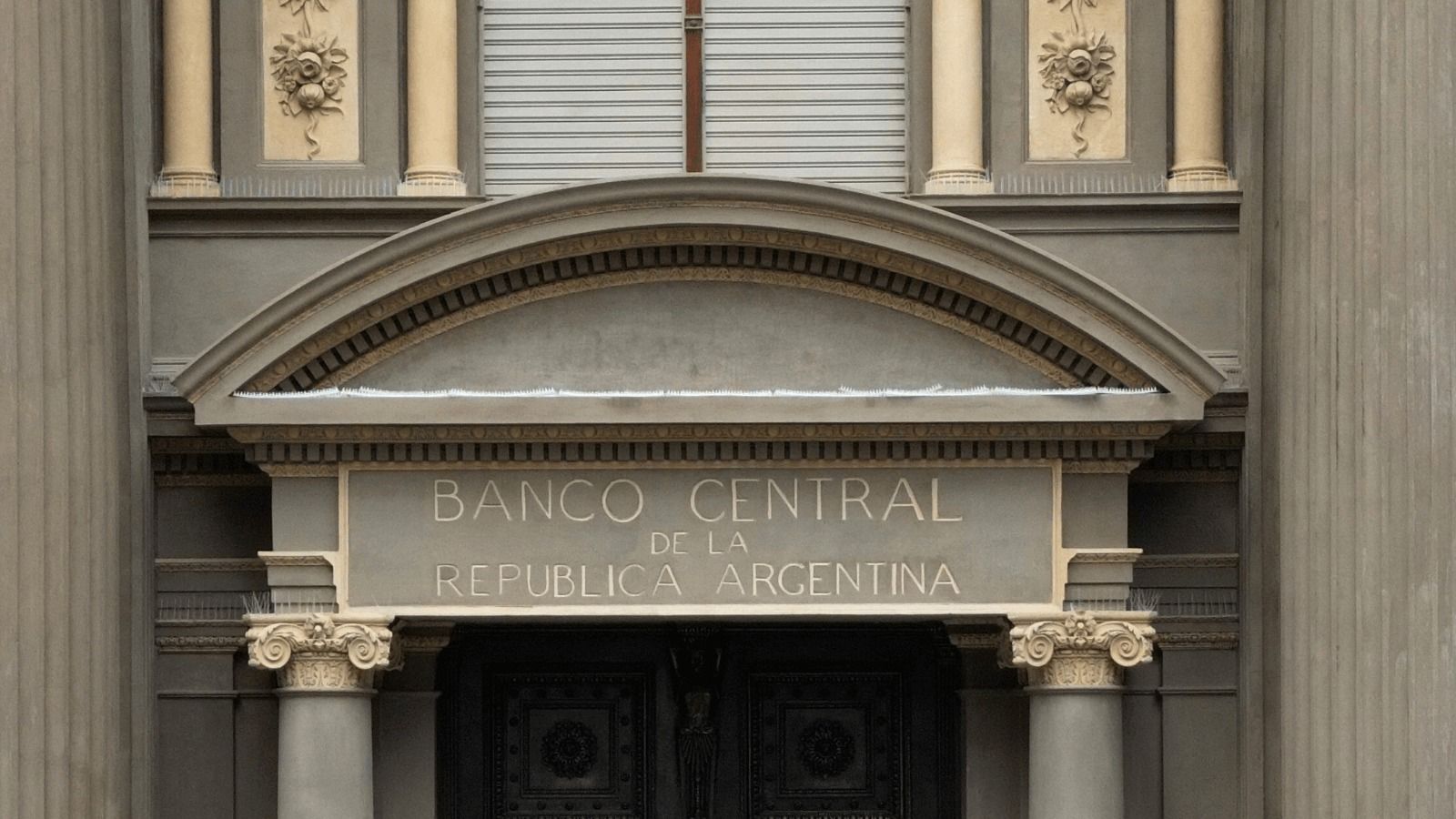
The BCRA must now provide the requested documentation or submit an exhaustive, itemized justification for any data it continues to withhold
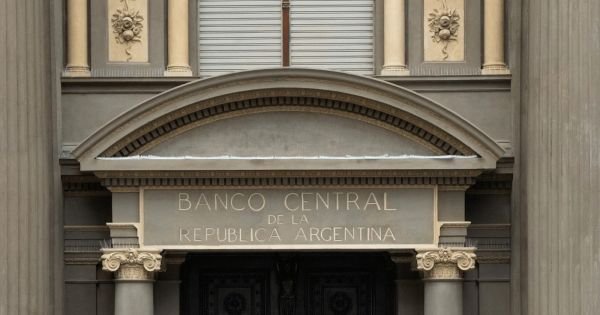
The Buenos Aires Federal Administrative Court of Appeals has dealt a significant legal blow to the Central Bank of the Argentine Republic (BCRA), ordering it to release detailed information regarding the shipment of national gold reserves overseas.
Monday’s ruling overturned a previous lower court decision that had allowed the bank to keep the operations secret.
In mid-2024, the Banking Association labor union, led by lawmaker Sergio Palazzo, filed multiple requests under the Access to Public Information Act, seeking to clarify reports that several shipments of gold bars were sent to London to be deposited at the Bank for International Settlements.
The union’s request demanded the specific amounts of gold moved during June, July, and August, plus the names of the companies hired for transport, insurance costs, and freight details. Additionally, it requested all administrative files, the names of the officials participating in the transaction, and the involvement of the bank’s internal receivership.
The BCRA declared the information totally confidential, arguing that disclosure could compromise the security of the reserves and destabilize the financial system.
However, Justices Guillermo Treacy and Pablo Gallegos Fedriani of the Court’s Fifth Panel ruled that the bank’s refusal was based on generic statements that failed to prove a concrete risk.
The court emphasized that the right to information is a fundamental pillar of public oversight, particularly regarding the administration of international reserves.
The judges also noted that the State must demonstrate point by point why specific data cannot be disclosed, rather than issuing a blanket refusal.
The magistrates cited the fact that government officials had already publicly acknowledged the shipments in the media, making absolute secrecy contradictory to the principle of good faith.
Hence, the BCRA must now provide the requested documentation or submit an exhaustive, itemized justification for any data it continues to withhold. The court suggested the use of a dissociation mechanism, allowing the bank to redact strictly sensitive security details, such as the exact location of vaults, while releasing administrative and contractual information.
The ruling comes at a time of intense scrutiny over the government’s management of international assets. Analysts suggest the gold was likely moved to generate returns or to serve as collateral for liquidity in US dollars.
News Americas, NEW YORK, NY, Tues. Dec. 23, 2025: In a moment when Haitian immigrants are often discussed through the lens of crisis, deportation, or policy debates, Pierre Laborde, a Harlem-based Haitian born designer, is quietly rewriting that narrative – one handcrafted handbag at a time.
Haitian immigrant bag marker Pierre Laborde whose bags have gone viral featured in NY Times
Laborde, a Haitian immigrant and self-taught luxury bag maker, has become an unlikely viral sensation, drawing long lines, sold-out drops, and social media frenzy for his vividly colored, meticulously crafted handbags. Recently featured by The New York Times, Laborde’s story is not just about fashion – it is about Caribbean creativity, immigrant perseverance, and the power of cultural craft in the diaspora.
A Haitian Creative Journey Rooted In Craft
Born and raised in Port-au-Prince, Laborde immigrated to New York shortly after finishing high school, carrying with him a deep love for fashion shaped by Haiti’s tradition of tailoring and personal style. Long before TikTok and viral drops, he was altering fabrics, experimenting with color, and imagining bags that stood apart from mass-produced luxury.
“In Haiti, all my clothes were tailor-made,” Laborde has said, noting that fashion was always personal, expressive, and intentional. That philosophy now defines his handbags — bold, tactile pieces that resist trends and mass replication.
Years Of Quiet Hustle Before The Spotlight
For nearly a decade, Laborde sold his bags at the Grand Bazaar on Manhattan’s Upper West Side, often enduring weeks with few or no sales. He balanced odd jobs, studied fashion design one class at a time at the Fashion Institute of Technology, and turned his Harlem apartment into both workshop and showroom.
There were moments, he admits, when continuing felt impossible.
But persistence – a familiar trait in Caribbean immigrant stories – carried him forward.
A Viral Moment Meets Community Demand
Everything changed when a TikTok video urging viewers to “blow this man’s brand up” circulated late last year. Without major marketing, investors, or fashion-house backing, Laborde’s work found its audience organically. Shoppers began lining up hours early. Drops sold out in minutes. Crowd control systems had to be introduced to keep things orderly.
His bags, now priced between $295 and $1,200, remain handmade, limited, and deeply personal – each reflecting a commitment to craftsmanship rather than scale.
More Than Fashion: A Diaspora Success Story
What makes Laborde’s rise particularly significant is its timing. Haitian immigrants in the U.S. are currently facing heightened scrutiny, the loss of legal protections, and widespread misinformation. Against that backdrop, his success challenges narrow narratives and highlights the economic, cultural, and creative contributions Haitians bring to American life.
His story echoes a broader Caribbean truth: that migration is not merely movement born of hardship, but also a transfer of skill, vision, and cultural capital.
Redefining Luxury Through Caribbean Hands
Laborde’s handbags are not produced in factories or driven by seasonal trends. They are shaped by lived experience, patience, and artistic integrity – values deeply rooted in Caribbean making traditions.
As customers continue to applaud him at market tables and online drops sell out within minutes, Laborde remains grounded.
“There were times I went home with zero dollars,” he has reflected. “So this is overwhelming.”
For many in the Caribbean Diaspora, it is also affirming – a reminder that behind viral moments are years of unseen labor, and behind every “overnight success” is a long immigrant journey worth telling.
The BCRA must now provide the requested documentation or submit an exhaustive, itemized justification for any data it continues to withhold
The Buenos Aires Federal Administrative Court of Appeals has dealt a significant legal blow to the Central Bank of the Argentine Republic (BCRA), ordering it to release detailed information regarding the shipment of national gold reserves overseas.
Monday’s ruling overturned a previous lower court decision that had allowed the bank to keep the operations secret.
In mid-2024, the Banking Association labor union, led by lawmaker Sergio Palazzo, filed multiple requests under the Access to Public Information Act, seeking to clarify reports that several shipments of gold bars were sent to London to be deposited at the Bank for International Settlements.
The union’s request demanded the specific amounts of gold moved during June, July, and August, plus the names of the companies hired for transport, insurance costs, and freight details. Additionally, it requested all administrative files, the names of the officials participating in the transaction, and the involvement of the bank’s internal receivership.
The BCRA declared the information totally confidential, arguing that disclosure could compromise the security of the reserves and destabilize the financial system.
However, Justices Guillermo Treacy and Pablo Gallegos Fedriani of the Court’s Fifth Panel ruled that the bank’s refusal was based on generic statements that failed to prove a concrete risk.
The court emphasized that the right to information is a fundamental pillar of public oversight, particularly regarding the administration of international reserves.
The judges also noted that the State must demonstrate point by point why specific data cannot be disclosed, rather than issuing a blanket refusal.
The magistrates cited the fact that government officials had already publicly acknowledged the shipments in the media, making absolute secrecy contradictory to the principle of good faith.
Hence, the BCRA must now provide the requested documentation or submit an exhaustive, itemized justification for any data it continues to withhold. The court suggested the use of a dissociation mechanism, allowing the bank to redact strictly sensitive security details, such as the exact location of vaults, while releasing administrative and contractual information.
The ruling comes at a time of intense scrutiny over the government’s management of international assets. Analysts suggest the gold was likely moved to generate returns or to serve as collateral for liquidity in US dollars.
According to local press, 37 such incidents occurred in November, primarily in the east of the country, representing a decrease compared to the 55 recorded in October of the same year.
North Kivu is the province with the highest incidence, followed by Ituri, Tanganyika, and South Kivu, according to the November figures.
However, in the overall figures for 2025, although North Kivu continues to have the highest representation with almost half of the incidents (48%), it is followed by South Kivu (27), Ituri (14), Tanganyika (8), and Maniema (3).
Thefts, robberies, and break-ins were the most frequently reported incidents, as were obstructions and restrictions on movement. Acts of intimidation, threats, or physical assaults occurred to a lesser extent.
Eastern Congo is experiencing violence and insecurity due to the presence and clashes between armed groups, leading to the forced displacement of people and increasing the need for humanitarian aid.
Despite these difficult conditions, humanitarian actors are working to access the affected areas and provide emergency medical care, food aid, and other essential assistance.
Rangers need a “new momentum”, says manager Danny Rohl after the “small setback” of Sunday’s 2-1 loss at Tynecastle.
The German’s first league defeat in nine outings leaves the Ibrox side 12 points adrift of the Premiership pacesetters with a game in hand.
However, Rohl is in no mood to give up on the title as we approach the halfway stage of the campaign.
“We looked at the seven games, which started with Hibs [on Monday] until the cup game [against Annan on 16 January] and we spoke about how we need a lot of points,” he said.
“After the Hearts game, of course, the feeling is disappointment.
“But we have to go forward again. It’s about us creating a new momentum, a new run.
“I think when you look back, I know football is not always easy, but if I asked you eight weeks ago if it is possible to have, at the end of December, a game where we can play again for maybe the title race? Then you would say, I’m not sure.
“It hurts so much at the moment that we had this small setback, but it’s for us to start winning games again.
“There are still 20 games to go, and if you do this, then you have a chance.”
Rohl revealed Rangers players will have Christmas Day off, explaining it would be the first week with four training sessions since he replaced Russell Martin in late October.
He pointed to a greater aggression from his players but stressed the need to improve in possession.
As the year draws to a close, everyone at MercoPress extends its best wishes to readers and subscribers across the region and beyond. The holiday season offers a moment to pause, take stock, and look ahead with perspective.
Throughout the year, MercoPress has continued to observe and cover Latin America, the South Atlantic, and Mercosur from an independent standpoint, with a focus on context, continuity, and factual reporting. Our aim has remained unchanged: to report on the region as it is, without shortcuts or imposed narratives, and with respect for its political, economic, and social complexity.
We are grateful to our readers for their sustained interest, and to those partners and sponsors whose discreet support makes it possible to maintain this editorial independence and long-term coverage.
As we move into the coming year, we reaffirm our commitment to clear, accurate, and regionally grounded journalism, attentive to developments that shape the present and will define what comes next.
Falling below the Central Bank’s target can be as undesirable as exceeding it, Oddone explained
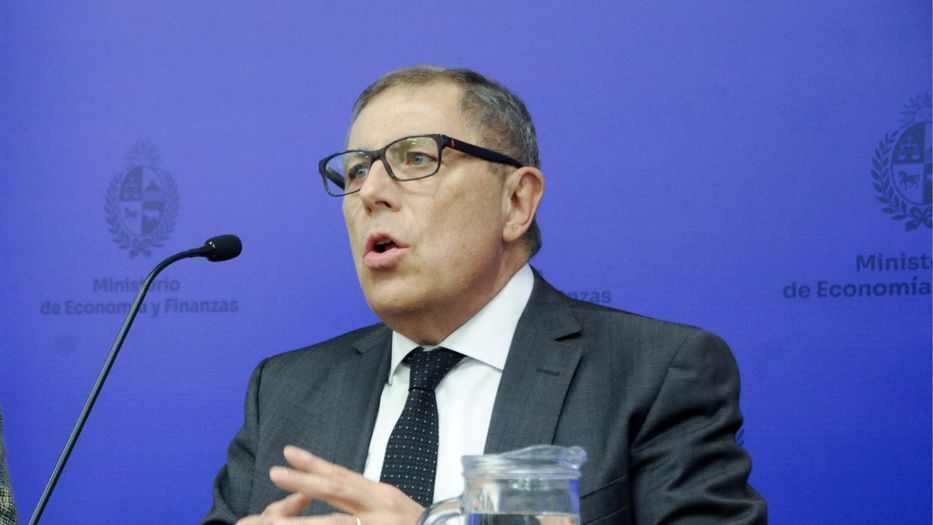
Uruguay’s Economy Minister Gabriel Oddone announced Monday that his country’s GDP was projected to expand by 2.3% this year. While the figure is slightly lower than initial government forecasts, Oddone emphasized that it represents more than double the average growth rate seen over the past decade.
In a radio interview, Oddone provided a roadmap for President Yamandú Orsi’s administration, projecting continued momentum with a 2.4% growth rate for 2026. He highlighted several robust indicators, such as 15,000 new jobs added over the last year, plus the largest-ever debt issuance in national currency, which Oddone described as a confirmation of market confidence in the government’s macroeconomic strategy.
With an annualized inflation of 4.09% in November, marking its lowest level in two decades, Uruguayans should now be concerned about the price of stability, Oddone hinted. Despite the positive growth outlook, the minister admitted he was not comfortable with two specific phenomena: the sharp decline of the US dollar and the overachievement of the inflation target.
The greenback is currently trading near 39 Uruguayan pesos, a significant drop from the 44 pesos earlier this year. Oddone attributed this to high demand for pesos in December and January due to year-end bonus payments and a broad weakening of the dollar against international currencies.
While low inflation is generally a success, Oddone warned that falling below the Central Bank’s (BCU) target can be as undesirable as exceeding it if it damages national competitiveness.
Addressing concerns from exporters and business leaders who have seen their profit margins squeezed by the exchange rate, Oddone was blunt regarding the limits of government intervention. It is important that the Uruguayan business community understands that the state is not a price insurer, he stated.
He further clarified that while the government seeks consistency, it cannot fight global currency trends that are beyond the control of a small economy like Uruguay’s.
The focus now turns to Tuesday’s meeting of the Monetary Policy Committee (Copom). While the Uruguayan Central Bank (BCU) operates independently, Oddone confirmed that the Ministry was closely monitoring the situation. The committee is expected to decide whether to adjust interest rates to address the transitory or seasonal phenomena currently pressuring the exchange rate and keeping inflation below the desired midpoint.
Falling below the Central Bank’s target can be as undesirable as exceeding it, Oddone explained
Uruguay’s Economy Minister Gabriel Oddone announced Monday that his country’s GDP was projected to expand by 2.3% this year. While the figure is slightly lower than initial government forecasts, Oddone emphasized that it represents more than double the average growth rate seen over the past decade.
In a radio interview, Oddone provided a roadmap for President Yamandú Orsi’s administration, projecting continued momentum with a 2.4% growth rate for 2026. He highlighted several robust indicators, such as 15,000 new jobs added over the last year, plus the largest-ever debt issuance in national currency, which Oddone described as a confirmation of market confidence in the government’s macroeconomic strategy.
With an annualized inflation of 4.09% in November, marking its lowest level in two decades, Uruguayans should now be concerned about the price of stability, Oddone hinted. Despite the positive growth outlook, the minister admitted he was not comfortable with two specific phenomena: the sharp decline of the US dollar and the overachievement of the inflation target.
The greenback is currently trading near 39 Uruguayan pesos, a significant drop from the 44 pesos earlier this year. Oddone attributed this to high demand for pesos in December and January due to year-end bonus payments and a broad weakening of the dollar against international currencies.
While low inflation is generally a success, Oddone warned that falling below the Central Bank’s (BCU) target can be as undesirable as exceeding it if it damages national competitiveness.
Addressing concerns from exporters and business leaders who have seen their profit margins squeezed by the exchange rate, Oddone was blunt regarding the limits of government intervention. It is important that the Uruguayan business community understands that the state is not a price insurer, he stated.
He further clarified that while the government seeks consistency, it cannot fight global currency trends that are beyond the control of a small economy like Uruguay’s.
The focus now turns to Tuesday’s meeting of the Monetary Policy Committee (Copom). While the Uruguayan Central Bank (BCU) operates independently, Oddone confirmed that the Ministry was closely monitoring the situation. The committee is expected to decide whether to adjust interest rates to address the transitory or seasonal phenomena currently pressuring the exchange rate and keeping inflation below the desired midpoint.
The decision was announced during the 12th Congress of the Union of Cinematographers of the Russian Federation, held in Moscow at the Gerasimov All-Russian State Film University.
Culture Minister Olga Lyubimova read a message from Russian President Vladimir Putin.
According to the minister, the president emphasized the high level of the forum and expressed his confidence that the participants would discuss a wide range of current issues in the field of cinema and contribute to the implementation of cultural policy.
In his message to the Congress participants, Putin congratulated Mikhalkov on his 80th birthday, highlighting his contribution to the development of Russian cinema and culture, and awarded him the country’s highest order: the Order of St. Andrew First Called.
During the event’s discussions, the need to strengthen film education was emphasized as a tool to counteract the ideological and commercial influence of Western cinema, especially that produced in Hollywood.