John Roberts, presidente de la Corte Suprema de EU, explicó que “el presidente debe señalar una autorización clara del Congreso para justificar esta extraordinaria afirmación de poder. No puede hacerlo”.
Donald Trump utilizó la Ley de Poderes Económicos en Emergencias Internacionales como excusa para aplicar aranceles a decenas de socios comerciales, incluyendo a México, a pesar de que ambos forman parte del T-MEC.
“Esperamos que el alivio del fallo de la Corte Suprema sea temporalmente positivo en términos de riesgo”, dijo Aroop Chatterjee, estratega de Wells Fargo. “El Gobierno conserva una importante autoridad para fijar aranceles mediante otras leyes, pero algunas de ellas aún no se han probado y otras tardarán tiempo”.
¿Cuándo se aprecia el peso HOY 20 de febrero?
El peso se aprecia 0.53 por ciento ante el dólar, por lo que el tipo de cambio se ubica en las 17.16 unidades, 11 centavos menos con respecto al cierre del jueves 19 de febrero.
“El tipo de cambio oscilará en un rango volátil. El soporte inmediato se ubica en las 17.20-17-22 unidades, nivel que podría ser probado si los datos de actividad en Estados Unidos muestran signos de enfriamiento”, apuntó Felipe Mendoza, analista de mercados en EBC Financial Group.
El especialista añadió que si la fortaleza del dólar regresa, el tipo de cambio podría tocar las 17.30 unidades.
Precio del dólar en bancos este viernes
El dólar se vende en las 17.59 unidades, mientras que el precio de compra es de 16.63 pesos por dólar, informó el banco Banamex.
En el mercado de dinero, el rendimiento del bono a 10 años para Estados Unidos es de 4.07 por ciento, mientras que el bono a 10 años en México se mantiene en un nivel de 8.75 por ciento.
Entre las divisas que más retroceden están el dólar neozelandés con 0.35 por ciento; la rupia india con 0.34 por ciento; la lira turca con 0.18 por ciento; el dólar australiano con 0.17 por ciento, y el florín húngaro con 0.15 por ciento.
On Rio’s last official carnival day, street blocos pulled in crowds again, including thousands of foreigners who danced imperfectly, sang traditional marchinhas in rough Portuguese, and blended into the city’s most democratic party. Tourism officials expect record numbers.
Flamengo’s Moving Stage and the Tourist Who Keeps Smiling
By midday, the heat feels heavy on your shoulders. In Flamengo, the crowd still presses in because that’s what you do on the last day. You follow the music, accept the sweat, and get used to the idea that personal space doesn’t really exist.
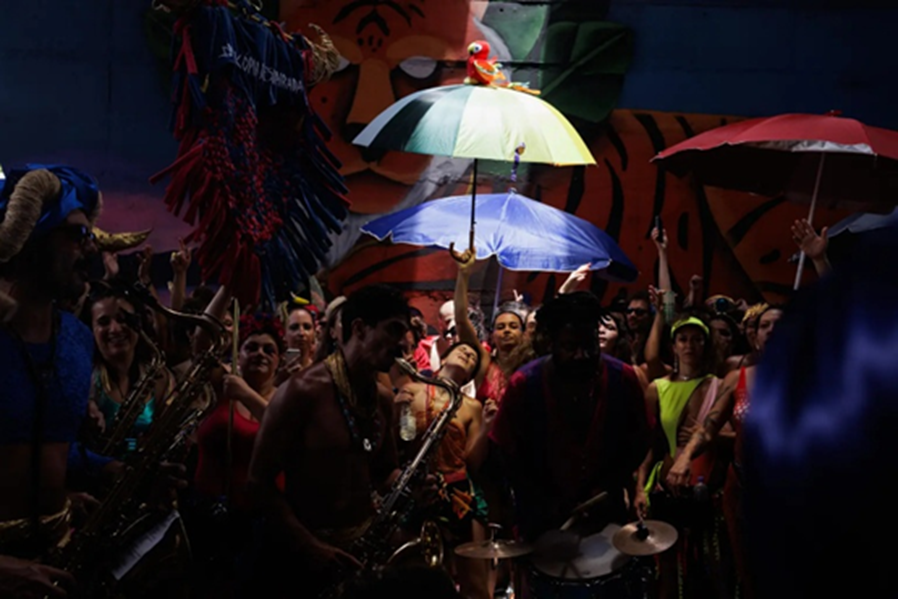
Cachorro Cansado moves through the streets with musicians on a truck turned into a mobile stage with sound, rolling forward like a slow, loud wave. People move along with it, not gracefully but that doesn’t matter. The steps are made up as they go, and the timing doesn’t have to be perfect. The goal is just to stay in the flow.
Then you hear it, scattered through the mass of bodies. Voices that do not sound local. A burst of a foreign phrase, then a pivot into rudimentary Portuguese. The marchinhas, the traditional carnival melodies, pull everyone into the same chorus, even if the words are crooked.
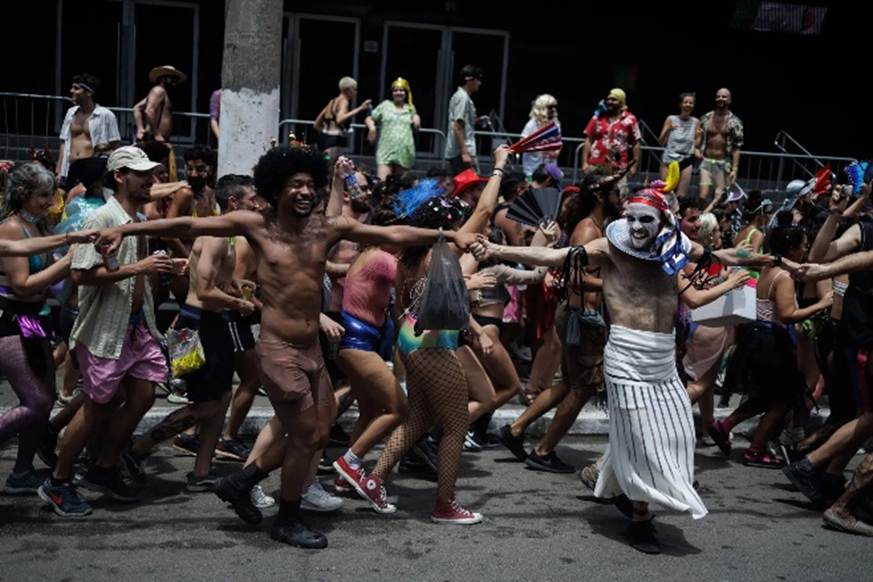
This was the scene last Tuesday, the last day of Rio de Janeiro’s carnival, when street blocos again attracted huge crowds, including a noticeable number of foreigners. Many struggle with the language and move with a certain dance clumsiness, but they mix into the party and enjoy it as Brazilians do.
The problem is that people often think of carnival as something to watch. That’s true in the Sambadrome. But out here on the streets, it’s more like the weather. It surrounds you and asks you to join in. It has a way of making outsiders feel like they belong, at least for a song.
Rio de Janeiro carnival. EFE/ Isaac Fontana
Young Travelers and the Shock of Something That Feels Unrepeatable
Younger foreigners are the most consistent revelers, and EFE saw plenty of them at Cachorro Cansado, including visitors from across Europe and North America. They arrive in groups, drawn by the promise of beaches and nightlife, and then they stay for the part that cannot be captured in a postcard.
Two Austrian visitors, Lilly and Lizzie, said they had never been to Rio. They had been in the city for 10 days, taking in the beaches, the carioca life, and the carnival in its early phase. They agreed that the party is unique and has good vibes.
“It is something you cannot find anywhere else. It is overwhelming,” Lizzie, a twenty-eight-year-old ecologist, told EFE.
Overwhelming is the right word, and not just because of the crowd. It is overwhelming in the way it resets your social instincts. People who would never normally speak to each other are suddenly sharing the same refrain. People who do not know the language still find the beat. People who are self-conscious at first start moving anyway because nobody is grading them.
There’s a simple truth here: if you stand near a chorus long enough, you’ll start singing along, even if you only know half the words. That’s how belonging works here. It’s not given, it’s earned.
Another detail stands out. Most partygoers are locals or domestic tourists, but you can clearly see the foreigners. Their joy feels different, with words from their home countries popping up in the middle of songs. Then, almost without thinking, they switch back to Portuguese, even if it’s simple, because the marchinha calls for it.
This turns the bloco into a live example of soft power. Not the official kind measured by agreements or speeches, but the kind that comes from cultural confidence. Rio doesn’t ask visitors to become Brazilian. It just invites them to sing.
Rio de Janeiro carnival. EFE/ Isaac Fontana
Older Visitors and the Quiet Tourism Debate Beneath the Glitter
It is not only the young chasing this experience.
Tracy Hale and her husband, a retired American couple, have been traveling around South America for five months and have been in Rio since last week. They said they feel ecstatic about the carnival.
“It is the best,” Tracy told EFE with a wide smile.
Her smile says it all. In the heat, in the midday crush, in a crowd that keeps moving because the truck keeps moving. Though described as much older, she still has the energy to sing and dance for hours despite the intense heat and packed crowd around the bloco.
That detail complicates the stereotype that carnival is only for the young, or only for the athletic, or only for those who understand every lyric. It also hints at a broader policy question that hovers around events like this, even when the party tries to pretend it is only a party.
How can a city handle so many visitors while keeping a street festival open and free? How does it welcome foreigners without turning the neighborhood block into a commercial product?
Cachorro Cansado itself is described as a traditional neighborhood parade that has grown year after year since it was founded in a Flamengo bar in nineteen seventy five. Now it is a fiftieth anniversary block, carrying decades of local history while also attracting visitors who did not grow up with it.
The hope is that this can grow without falling apart. That a tradition started in a bar can survive becoming a big attraction.
Tourism officials are keeping track, as usual. Embratur, Brazil’s international tourism agency, expects about three hundred thousand foreign tourists in Rio during the carnival season, which ends next weekend. That number is a twelve percent increase over the same period in 2025, setting a new record for the city.
Those numbers sit alongside another enormous estimate in the notes: around eight million people, residents and tourists combined, enjoy carnival in Rio. Most of them will do it with more than 460 street blocos scheduled across 37 days of fun in the city.
That is not just cultural trivia. It is logistics, economics, and identity. It is also a reminder that Rio’s carnival is not a single event but a long calendar, with a formal end and a practical extension. The notes say the blocos run through next weekend, even though carnival itself, as such, says goodbye until next year on Wednesday.
So last Tuesday in Flamengo, watching foreigners sing marchinhas in rough Portuguese, you could feel two endings at once: the official closing and the determined continuation.
The street does not abruptly turn off. It tapers. It lingers. It echoes.
And if you listen closely, you can still hear it in the mix of voices, the local and the foreign braided together, all of them trying to hit the same chorus before the truck rolls on.
Digital sports fandom has always been about more than the final score. For many Latino communities, sports are tied to identity, tradition, and the shared excitement of cheering together, whether that’s in a packed stadium, a family living room, or a neighborhood bar.
In recent years, digital sportsbooks have become part of this evolving landscape. As sports viewing moves across apps, streaming platforms, and social media, betting platforms are also finding a place in the way many fans follow teams, players, and leagues in real time.
Sports Culture in Latino Communities Keeps Evolving
Latino sports fandom is deeply rooted in passion and loyalty. Soccer remains a major force across Latin America, but the influence of basketball, baseball, and American football continues to grow, especially among younger audiences and diaspora communities. What makes this fandom distinctive is how communal it can be. Match days often feel like events, with food, music, and conversation turning a game into a social gathering.
At the same time, the way fans engage has changed. Highlights are watched on phones, debates happen on social platforms, and group chats keep the energy going long after the final whistle. This shift has opened the door for new tools and experiences. Digital sportsbooks are one of them, offering a way to interact with sports through predictions, live odds, and fast updates.
Digital Sportsbooks and Second-Screen Fandom
Many fans now follow games with a “second screen” in hand. It might be a phone for checking stats, tracking injuries, reading sports news, or watching alternative camera angles.
Digital sportsbooks fit naturally into that habit. They deliver information that moves with the match, from pre-game odds to in-play updates that change minute by minute. For some fans, this adds another layer of excitement. A close game already feels intense, but following odds shifts and live markets can make every moment feel even more active.
It doesn’t replace the love of the game; instead, it adds another layer of engagement, keeping fans connected through long seasons or across multiple leagues. In many cases, sportsbooks also offer tools that resemble sports media platforms, such as game previews, team trends, and performance breakdowns.
US Sports and Latino Diaspora Audiences
Latino communities in the United States play a major role in shaping modern sports fandom. Many fans follow both local US teams and clubs from their country of origin, switching between leagues depending on the season and schedule. This crossover creates a unique viewing culture. A weekend might include Liga MX, the Premier League, MLB, and the NBA, all followed by the same household.
With legal sports betting expanding across the US, more regulated options have moved into the mainstream. Betting sites like FanDuel are now widely recognised, especially among fans who already follow games, news, and highlights through digital channels.
The rise of Spanish-language sports coverage in the US has also made betting-related content more visible. Odds discussions, pre-match predictions, and analysis often mirror traditional sports commentary. For diaspora fans, this cultural blend feels seamless, the passion is the same, but the ways to engage with sports have multiplied.
Why Mobile Access Matters More Than Ever
Mobile access is one of the biggest reasons digital sportsbooks have gained attention. For many users, phones are the main way to watch highlights, follow updates, and stay connected to sports communities.
A mobile-first experience makes it easier to place bets, view markets, and track outcomes without needing a desktop computer. This convenience fits the pace of modern sports consumption and adds flexibility, fans can stay connected while commuting, working, or traveling, without missing the action.
Some of the most common mobile features that attract users include:
Live odds that update during the game,
Quick access to match schedules and markets,
Fast deposits and withdrawals depending on location,
Notifications for key moments or bet results,
Easy tracking of active and settled bets.
For many Latino fans, this fits into an already digital lifestyle. Whether it’s watching match clips on social media or following player news, mobile access keeps everything in one place.
The Importance of Clear Information
As digital sportsbooks become more visible, responsible use becomes an essential part of the conversation. Betting should never feel like a requirement for enjoying sports, and it’s important that fans have clear information about risks and limits.
Many regulated platforms provide tools that encourage control. These features can include spending limits, time reminders, and options to pause or restrict activity. It also matters how betting is discussed in sports spaces. When the focus shifts too much toward odds, some fans may feel the game itself is being overshadowed.
A balanced approach helps keep the experience healthy. Sports are still about the stories, the rivalries, the unforgettable goals, and the pride that comes with supporting a team through every high and low. For those who choose to bet, the best approach is informed and careful, treating it as entertainment rather than a financial plan.
Where Latino Sports Fandom Goes Next
Latino sports culture has always been dynamic, shaped by migration, media, and the rise of new talent across leagues. As fandom becomes more digital, sportsbooks are likely to remain part of the wider sports ecosystem. They won’t replace the traditions that make Latino sports communities special. The chants, family match-day rituals, and shared celebrations will always matter most.
Digital sportsbooks reflect the direction sports engagement is moving, combining live information, mobile convenience, and interactive options that fit the way many fans already follow games. In the end, modern Latino sports fandom is about connection. Whether that connection happens in a stadium, a group chat, or a live match stream, the passion remains the same, and the digital world simply offers more ways to experience it.
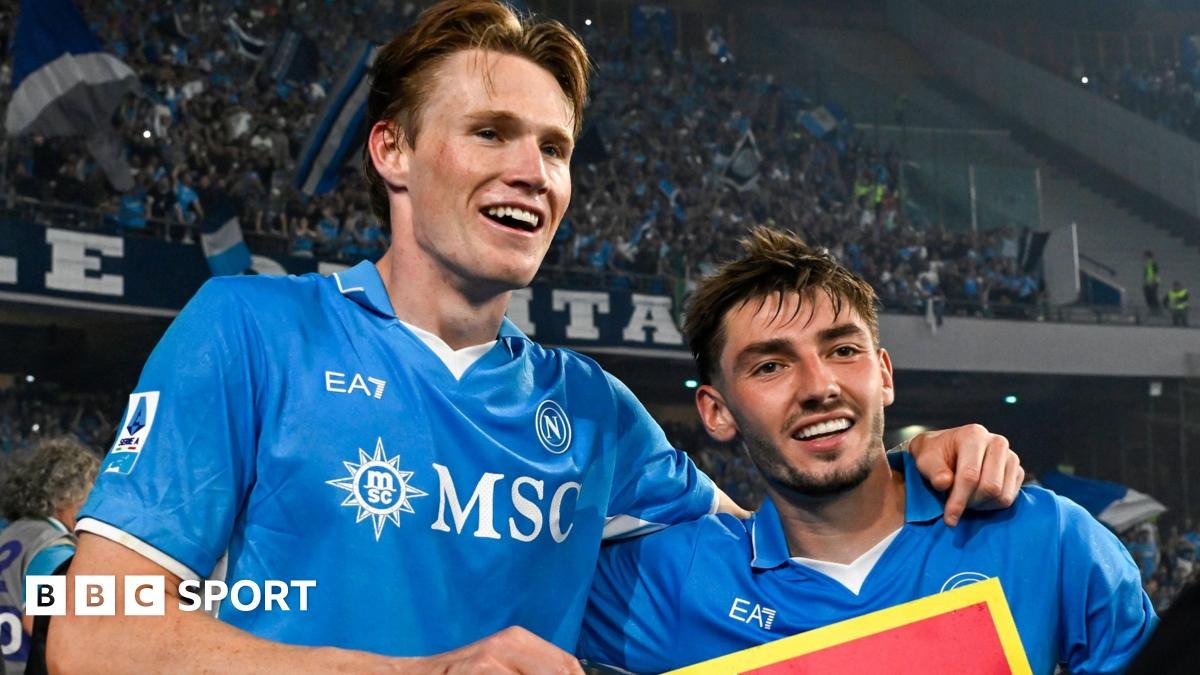
McTominay has blossomed in the more attacking role handed him by head coach Antonio Conte.
“At Napoli, I’ve grown both from a tactical point of view and a physical one,” he said. “Tactically, Italy is different from the Premier League. I had to adapt and learn very quickly how to play, what movements to make… how to become a problem in the opponent’s area and also how to defend.
“Antonio is a great coach, very strong, passionate, he knows football very well. He is different from anyone else I have had in the past.”
McTominay points to Napoli’s lengthy injury list as one of the reasons why they have slipped further behind the leaders in recent weeks but is not giving up on the title just yet.
Should he miss out on Sunday, it will increase the chances of 24-year-old Gilmour making only his seventh start in 14 appearances this season as he looks to gain game time and add to his own 43 caps at this summer’s World Cup.
With only three wins in 11 outings, nine of them in Serie A, Napoli cannot afford any more slip-ups if they are to retain the Scudetto.
Hosts Atalanta lost 2-0 away to Borussia Dortmund in the first leg of their Champions League knockout stage play-off on Tuesday and lost November’s reverse fixture 3-1 at Napoli, who also won 3-2 on their last visit in January, with McTominay scoring one of the goals.
However, Raffaele Palladino’s side have won three in a row domestically, are unbeaten in eight in Serie A since losing at home to leaders Inter at the end of December and are only now eight points adrift of Napoli in seventh.
The meeting of the sides who finished third and first last season is poised to be a cracker live on the BBC.
Para enfrentar los retos de la transformación tecnológica en el sector automotriz, Bridgestone apuesta por el desarrollo del capital humano como palanca estratégica para elevar la eficiencia operativa, optimizar recursos y formar expertos dentro de su red comercial a través de tres innovadoras estrategias de formación tecnológica
El enfoque de la empresa llantera parte de un objetivo claro: formar expertos de marca en cada punto de venta y motivarlos seguircapacitándose de forma constante.
Para lograrlo, ha desarrollado un modelo modular y herramientas tecnológicas que facilitan la profesionalización del personal en áreas técnicas, operativas y comerciales que permiten a los colaboradores avanzar de manera progresiva, alineando el aprendizaje con sus necesidades, ritmo y rol para fortalecer la eficiencia en toda su cadena de valor.
De acuerdo con René Salgado, gerente senior de Trade Marketing para Latinoamérica Norte, las tres nuevas soluciones tecnológicas orientadas a la capacitación son: la tecnología de Gemelos Digitales (IA), el Podcast “Llanteros al Aire” y Herramientas Interactivas para los Puntos de Venta y Distribuidores Bridgestone.
“Estas herramientas nos ayudaron, no solo a incrementar nuestra cobertura en la Red de Puntos de Venta y Distribuidores Bridgestone en México, sino a reducir el costo por participante en más del 50 por ciento”, destacó Salgado.
La empresa detalló que la herramienta digital: Gemelos Digitales amplía la capacidad de cobertura con cursos esenciales para la red de distribuidores, y apoyados por soluciones de Inteligencia Artificial, se mejoró la app Universidad Bridgestone, plataforma modular disponible 24/7 y que brinda capacitación para formación en 3 niveles: Básico, Intermedio y Especializado. Además de acceder a herramientas como la Biblioteca Digital y Fichas Técnicas, todo gracias a la implementación de la tecnología Digital Twins (IA).
Asimismo, con la creación del podcast “Llanteros al Aire” la compañía se hace pionera en este formato, al presentar entrevistas con especialistas que comparten experiencias, recomendaciones y buenas prácticas con el objetivo de democratizar el conocimiento y ofrecer a la fuerza comercial un espacio accesible para mejorar procesos técnicos y comerciales, fortaleciendo la interacción con clientes y distribuidores.
La tercera herramienta digital, son sus Cursos interactivos en puntos de venta, los cuales han sido diseñados específicamente para asesores y distribuidores, ya que buscan potenciar la venta consultiva y enriquecer la experiencia del cliente final. Con ello, Bridgestone impulsa una atención más especializada y eficiente en cada punto de contacto.
La combinación de estas tres estrategias ha permitido a la compañía convertirse en un motor de innovación y diferenciación, alineado con el pilar Efficiencyuno de los 8 pilares del Bridgestone E8 Commitment con el cual ratifica su compromiso para impulsar el talento de las personas y su estrategia hacia una movilidad más sostenible.
On Jan. 1, Colombia’s new minimum wage landed on pay stubs and spreadsheets alike. Now a court has paused the decree behind it, reopening arguments about inflation, dignity, and power as elections near and workers prepare to march Thursday.
A Raise Arrives Before the Argument Ends
On Sunday night, the country experienced a presidential moment that felt both personal and distant. Gustavo Petro addressed the nation on screen, announcing he would issue a provisional decree to maintain the minimum wage at its current level. He also promised new studies to support the increase and described the policy using his chosen term, “salario vital” (living wage), which goes beyond simple numbers.
The trouble is that the arithmetic is exactly what has returned to center stage.
This year’s minimum wage rose by 23.7 percent to 2 million pesos, about 546 dollars, including the transport subsidy. It is a number that shows up in ordinary places, not just in speeches. In payroll runs. In small business calculators. In a quiet moment, someone checks their phone to see whether the deposit has hit. It is not abstract. It has the weight of rent day and bus fare, and the way a price tag can tilt a household’s week.
But just as the policy settled into daily life, a tribunal’s administrative process pulled it back into dispute. The Council of State, the top court for administrative litigation, provisionally suspended the presidential decree that ordered the increase. The court told the government to issue a transitional decree that determines the percentage increase and the total value, pending a definitive ruling by the judiciary.
So the raise is happening in reality, but it’s also being debated at the same time.
This overlap shows why Colombia’s minimum wage debate isn’t just about labor rights. It’s also about who controls the story: the price pressures people worry about, the dignity workers seek, the limits employers say can’t be crossed, and the political gains at stake.
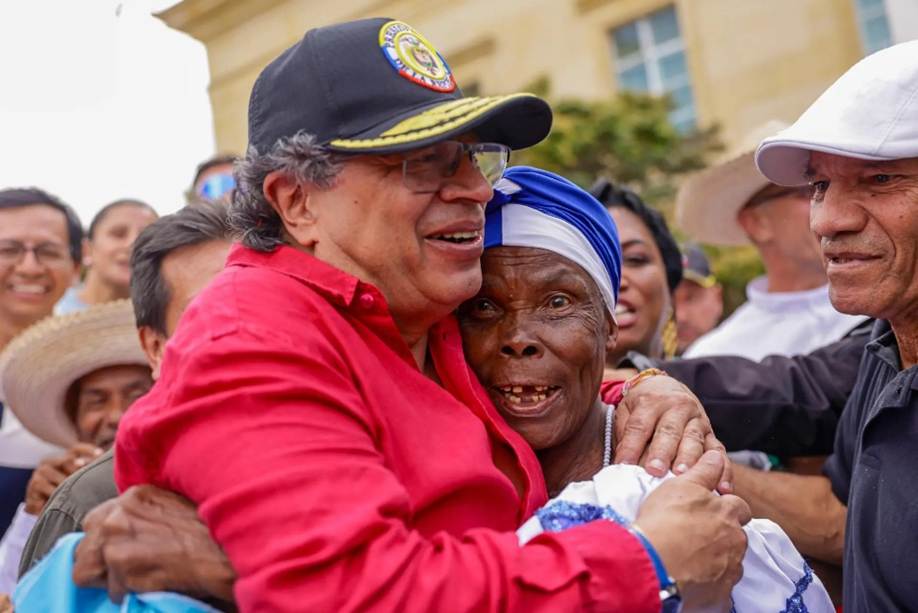
Gustavo Petro (l), meeting with people living on the street. EFE/ Presidencia De Colombia
How Colombia Sets Pay and Why This Time Is Different
Colombia’s minimum wage has a long institutional memory. It was created in nineteen forty-five and began to be applied in nineteen forty-nine. At the beginning, it varied by type of productive activity. It did not become unified until the mid nineteen eighties, a late decision that still echoes in how Colombians talk about fairness across sectors and regions.
In dollar terms, Colombia’s minimum wage has been around the middle compared to other South American countries for the past twenty years. The peso’s devaluation and the usual steady, single-digit increases tied to inflation explain this. But that steady pattern changed in 2022, Iván Duque’s last year, when the wage rose 10.07 percent. Petro continued this trend with increases of 16 percent in 2023, 12.07 percent in 2024, 9.54 percent in 2025, and this year’s surprising 23.7 percent raise.
A key detail sits behind that surprise: the process broke.
Each December, the minimum wage is negotiated in the Permanent Commission for the Coordination of Wage and Labor Policies, a tripartite body that includes the government, labor unions, and business associations. The idea is concertación, coordination, bargaining with institutional guardrails. Workers and employers present proposals, and if they fail to reach consensus, the government sets the wage by decree no later than Dec. 30.
This time, there was no agreement. Workers asked for a sixteen percent increase. Business groups offered 7.21%. Petro’s government set 23.7 percent, exceeding what both sides had put on the table.
This turned a normal end-of-year negotiation into a debate about how the government leads. Is the state just a referee in talks, or is it setting a goal and making the economy follow?
Petro has argued for the second approach, invoking the “salario vital” to calculate a higher wage and, in his words, guarantee better living conditions for workers and their families. The notes make clear that the minimum wage directly benefits about 2.3 million workers, around 10% of Colombia’s salaried workers. The critics’ counterargument is also clear: they say a 23.7% jump in inflation because it affects some tariffs, and they argue it can disadvantage workers who earn above the minimum wage because the raise does not apply to them.
In simple terms, the main disagreement is this: one side says life’s costs are real and wages must keep up. The other says prices react to policy, and that policy can backfire.
Legal challenges soon followed. After the new minimum wage took effect on January 1, opponents filed lawsuits based on economic concerns. The Council of State’s temporary suspension last Friday was the biggest impact so far, forcing the government to find a legal workaround while the wage remains in effect.
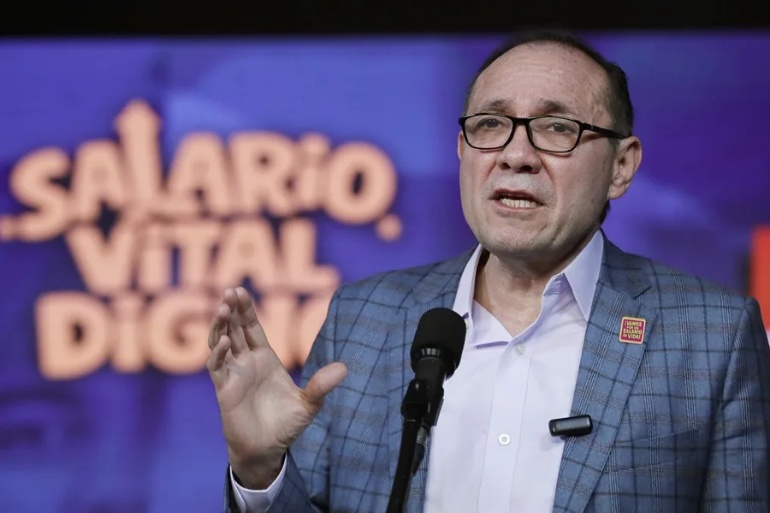
Colombia’s Labor Minister, Antonio Sanguino. EFE/ Carlos Ortega
Elections in the Background and a March in the Foreground
The political calendar is not subtle here. Colombia will hold legislative elections on March 8 and presidential elections on May 31. In that context, the minimum wage becomes a litmus test, a campaign object, a symbol candidates handle carefully because it can burn them.
The notes describe right-wing candidates who opposed the 23.7% increase and now, wary of its electoral impact, defend keeping it. They propose compensating companies for higher costs by reducing taxes. It is a pivot that tells you something about how quickly economic arguments bend under electoral pressure, and how a policy can become popular simply by appearing on a pay stub.
Petro appears at ease speaking directly to the public. He urged workers to march on Thursday to defend the living wage, calling it a major historic achievement. The hope is that strong public support can protect a disputed policy, that a street protest can back a decree challenged in court, and that politics can achieve what the legal system cannot.
And yet, the uneven truth of the moment is that Colombia is being asked to hold several realities at once. A wage that has already changed. A decree that has been provisionally suspended. A court is demanding a transitional fix while it decides. A business association, ANDI, initially criticized the increase and later acknowledged that, as a fait accompli, society must assume it, and that employers, within their means, should find mechanisms to avoid harming workers.
That phrase, “within their possibilities,” stands as a quiet warning. It’s practical but also cautious.
Because minimum wage debates always end up in the same place: at the edge of what is possible for whom. For the worker whose transport subsidy is folded into the monthly math. For the employer trying to absorb a higher payroll. The government is trying to claim a social victory without triggering the very inflation that can erase it.
It’s easy to see this as just a technical issue or a year-end routine gone wrong. But that misses the human side. The raise is already here. People have felt it or expected it. The court acted afterward.
Right now in Colombia, the minimum wage isn’t just a number decided behind closed doors. It’s a number moving through the country, shaped by law, politics, fear, and hope. It’s repeated, debated, and repeated again.
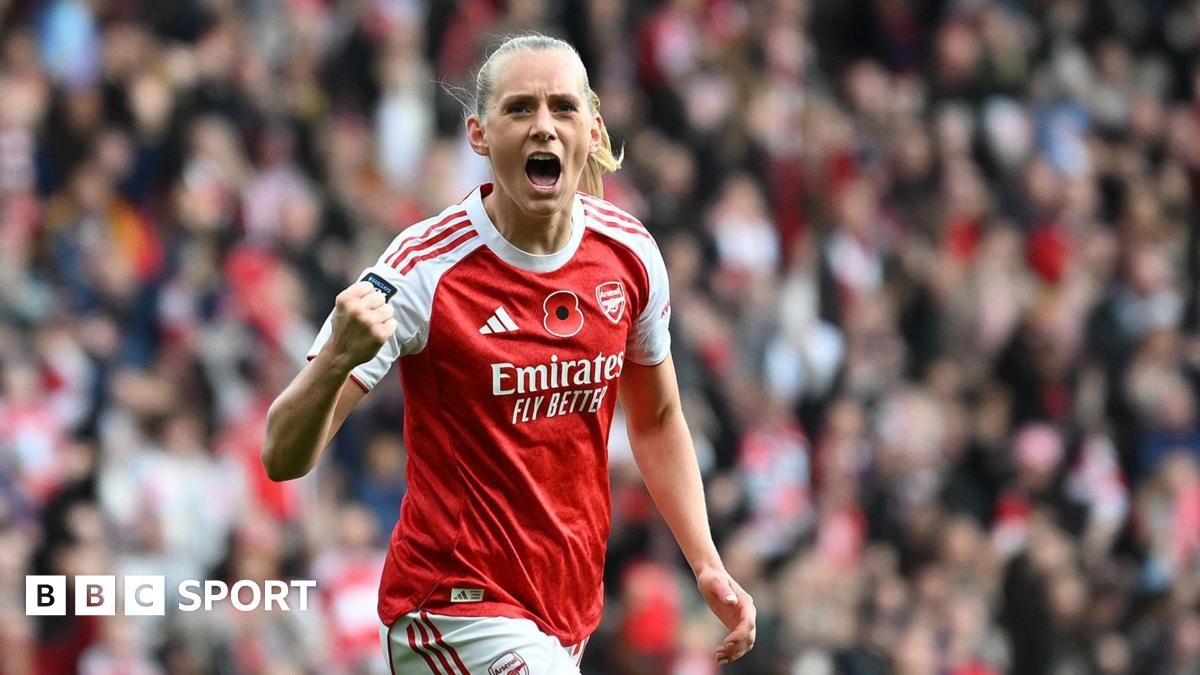
In January, nine Swedish players joined English clubs, with seven moving to WSL top-flight sides and two to clubs in WSL 2.
Most arrived from the Damallsvenskan which, founded in 1988, represents the top tier of women’s professional football in Sweden. The season runs from March to November, meaning WSL sides can target players during their off-season, when many are free-agents.
The Damallsvenskan is considered one of the world’s premier leagues. It features 14 clubs and historically places a focus on technical development, often acting as a key competition for nurturing international talent.
Four players were signed from last season’s title winners Hacken, two from Hammarby and one from Rosengard.
However, the players signed have to show proven quality.
“There are big restrictions on the players WSL clubs can sign as they have to meet the Governing Body Endorsement (GBE) criteria as foreign players,” explained Emma Sanders, BBC Sport’s women’s football news reporter. “This is to secure work permits in the United Kingdom.
“The criteria covers things such as Champions League experience, international caps and the quality of the league the selling club plays in.
“Scandinavian players often meet the criteria more easily.”
Liberación es un espacio radial con Regis Iglesias, portavoz del Movimiento Cristiano Liberación, para abordar temas de actualidad y fomentar las voces e iniciativas que buscan transformar positivamente la sociedad cubana.
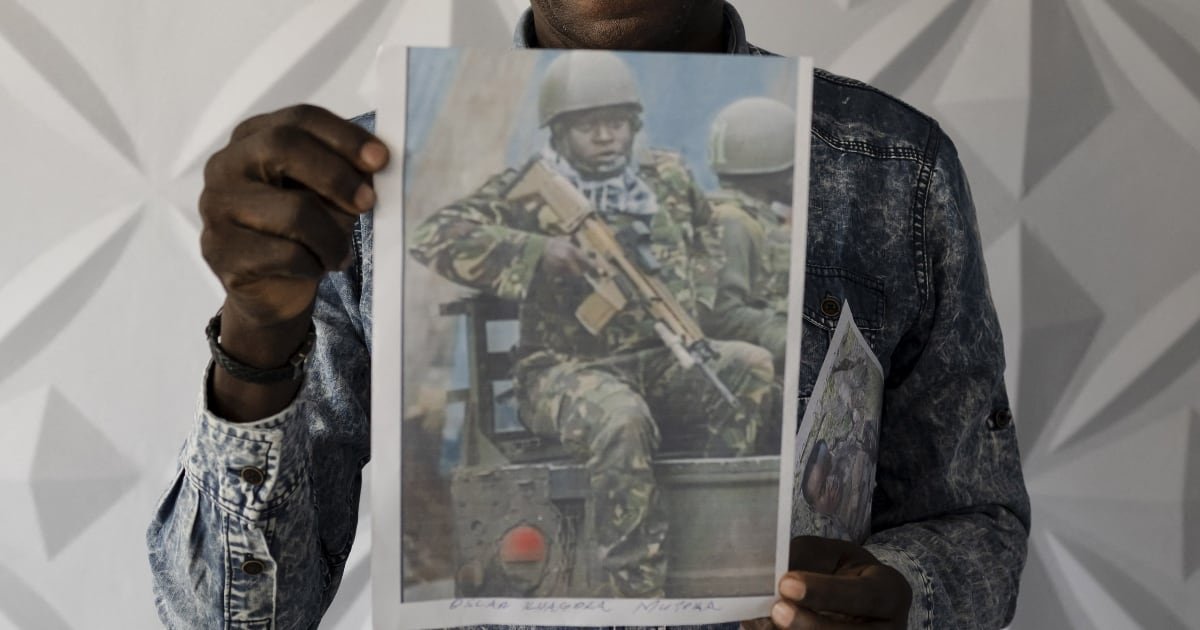
Se han reclutado hasta 1.000 kenianos para luchar por Rusia en su guerra contra Ucrania, un hecho que amenaza con provocar una ruptura diplomática.
Los kenianos fueron contratados por “agencias clandestinas” que ofrecían a civiles, así como a exmilitares y policías, hasta 350 mil chelines (2.715 dólares) al mes para combatir, según declaró Manikin Ichung’wah, presidente de la Asamblea Nacional del país de África Oriental.
También se les prometieron primas de reclutamiento de hasta 1.2 millones de chelines y la ciudadanía rusa, añadió, citando un informe de inteligencia keniana.
Existe una creciente preocupación en varios países africanos por el reclutamiento ruso en el extranjero para reforzar su ejército, que cuenta con pocos efectivos.
Un informe de lucro Inpact, que gestiona el programa All Eyes On Wagner, indicó que al menos 316 africanos han muerto combatiendo contra Ucrania, muchos de los cuales tenían un entrenamiento militar mínimo. La mayor cantidad de muertos provenía de Camerún, Ghana y Egipto.
“El reclutamiento de kenianos para luchar en la actual guerra entre Rusia y Ucrania está exponiendo a Kenia a diversos riesgos, poniendo en peligro las vidas de jóvenes inocentes y tiene el potencial de causar disputas diplomáticas entre Kenia y los dos países en guerra”, dijo Ichung’wah.
‘Debe detenerse’: Kenia pide a Rusia frenar envío de africanos a guerra con Ucrania
A principios de este mes, Musalia Mudavadi, ministro de Asuntos Exteriores de Kenia, dijo que se estaban perdiendo vidas y que viajaría a Moscú para “enfatizar que esto es algo que debe detenerse”.
En una publicación en X el jueves por la mañana, la embajada de Rusia en Kenia dijo que “se ha estado desarrollando una campaña de propaganda peligrosa y engañosa” sobre el reclutamiento.
“Las autoridades gubernamentales de Rusia nunca han participado en el reclutamiento ilegal de ciudadanos kenianos en las fuerzas armadas de la Federación Rusa”, declaró. “La legislación de la Federación Rusa no impide que ciudadanos de países extranjeros se alisten voluntariamente”.
La embajada rusa en Nigeria emitió una declaración similar el mismo día.
“Son mucho más baratos que los soldados rusos”, declaró Thierry Vircoulon, coordinador del Observatorio de África Central y Austral del Instituto Francés de Relaciones Internacionales, en un seminario web organizado por la Unión Europea el viernes. “Atraer extranjeros a Rusia es una forma de conseguir mano de obra barata. Hay escasez de trabajadores”.
Ichung’wah enumeró a varios kenianos involucrados en el reclutamiento e identificó a un ruso que ya ha sido deportado. Aseguró que se estaban utilizando varias rutas, desde Turquía hasta Sudáfrica, para enviar hombres a Rusia.
Cuatro sudafricanos fueron repatriados al país el miércoles, tras ser engañados para firmar contratos con el ejército ruso, lo cual constituye un delito según la legislación sudafricana. A principios de este mes, Kenia anunció que 27 de sus ciudadanos, reclutados para combatir, habían regresado a casa.
Los reclutas se están alistando para “una sentencia de muerte debido al entrenamiento mínimo”, declaró Liubov Abravitova, directora general de Ucrania para África, en el seminario web. Los gobiernos deben “concienciarlos de que esto es una sentencia de muerte para quienes se unirán”, añadió.
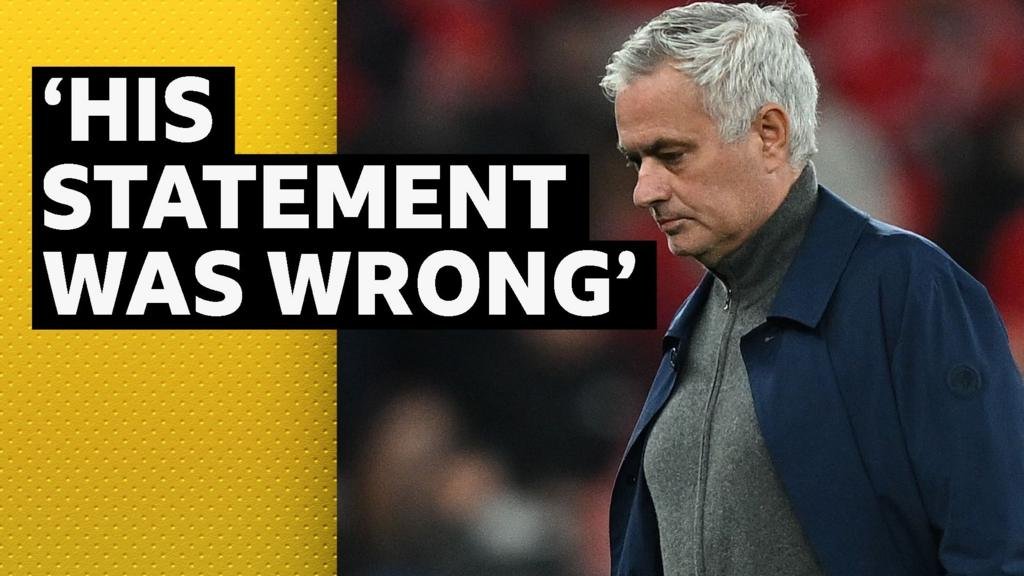
Ex-Premier League striker Benni McCarthy says his former manager Jose Mourinho should apologise for his “very wrong” comments after the alleged racial abuse of Vinicius Jr during Real Madrid’s 1-0 win against Benfica in the first leg of their Champions League play-off tie.