Author: americalatinanews.com

  • The Majesty Of Reverend Jesse Jackson

    The Majesty Of Reverend Jesse Jackson


    By Dr. Isaac Newton

    News Americas, NEW YORK, NY, Weds. Feb. 18, 2026: I was deeply touched by his incredible capacity to let words and meaning jolt the soul through the rhythm of hope, the call to faith, and his relentless pursuit of freedom, dignity, and justice for all, especially the downtrodden and outcast. Long before I met him, his voice had already crossed oceans and entered the crowded chambers of my own conscience. Then I met him in Jersey City when he attended an African American Interdenominational Convention. His presence was radiant, marked by his moving smile and infectious, confident humility, which drew people to him with a sense of wonder and whispering pride. In that room, I encountered a leader and a living sermon. Before my eyes stood a man whose very cadence carried the heartbeat of generations who had been told to wait their turn in history.
    The Majesty of Reverend Jesse Jackson
    FLASHBACK – The Rev. Jesse Jackson, seated, cheers on Aug. 19, 2024, during the Democratic National Convention at the United Center. (Brian Cassella/Chicago Tribune/Tribune News Service via Getty Images)

    The man was Jesse Jackson, but the moment belonged to something larger than biography. He rose from the soil of segregation and shaped his public life with the discipline of Christian conviction and the daring imagination of prophetic faith. As a protégé of Martin Luther King Jr., he learned that moral courage must be organized and that faith without public action is only private comfort. His declaration to keep hope alive evolved beyond a slogan into a theology of survival for people battered by exclusion. When he affirmed that he was somebody, he was restoring sacred worth to those who had been measured and dismissed. He taught that dignity is conferred by the Creator, not the powerful, and therefore cannot be revoked by prejudice, poverty, or political neglect.

    For Caribbean and African peoples, his words traveled like trade winds across the Atlantic. In Kingston, Port of Spain, Bridgetown, Georgetown, Lagos, Monrovia, Accra, Nairobi, and Gaborone, communities wrestling with the aftershocks of colonialism and economic vulnerability heard in his voice a summons to believe again. Hope, in his lexicon, was nothing short of disciplined resistance. It was the courage to count the cost of freedom and to pay it with patience, organization, and sacrifice. He insisted that faith must move beyond sanctuary walls into voting booths, classrooms, boardrooms, and streets. He spoke to fishermen and factory workers, to teachers and taxi drivers, to students who feared their dreams were too fragile for harsh realities. His mission dignified ordinary labor and reminded entire regions that the foundation of justice is built by hands that history often overlooks.

    Yet, his majesty did not depend on perfection. He faced his own foibles in public view, and critics were swift and relentless. What distinguished him was not an absence of flaw but an unwillingness to be imprisoned by it. He understood that moral authority will not share the same room with moral infallibility. His Christian faith compelled confession, correction, and continuation. In this he modeled a rare form of leadership for a skeptical age. He showed that one can stumble and still stand for something larger than the stumble. For communities accustomed to seeing their champions either idolized or discarded, his resilience offered a third path, accountability without annihilation. That lesson is vital for societies struggling to nurture leaders who are human yet heroic in purpose.

    As he transitions from the center of public life into the solemn dignity of legacy, his meaning deepens. The majesty of Reverend Jackson lives in the marches he led, the speeches he delivered, and in the moral vocabulary he expanded for the world. He taught that hope is a discipline, that dignity is sacred, that freedom demands cost, and that faith can animate public courage across race, region, and religion. His love for ordinary men and women of all races transcended pedigree and geography because he believed each person bore a divine imprint. For Caribbean and African peoples, and for all who yearn to triumph over despair, his life stands as a testament that history can bend when souls refuse to bow. His legacy lives on, both as memory and as mandate for generations yet unborn to keep hope alive and to rise each morning declaring with conviction that they too are somebody.

    EDITOR’S NOTE: Dr. Isaac Newton is a globally experienced thought leader, Harvard, Princeton, and Columbia trained strategist, and advocate for social justice and leadership excellence. With over 30 years of expertise in bridging cultural, economic, and ideological divides, he brings a nuanced perspective to complex issues shaping global and regional landscapes.

    Help Sustain Independent Caribbean Diaspora Media.
    Support NewsAmericas


    Source link

  • Peru’s Congress heads to runoff vote to pick José Jerí’s successor — MercoPress

    Peru’s Congress heads to runoff vote to pick José Jerí’s successor — MercoPress


    Peru’s Congress heads to runoff vote to pick José Jerí’s successor

    Thursday, February 19th 2026 – 00:23 UTC


    The incoming president will serve a five-month interim term and must hand over power on July 28 to the winner of the April 12 general election
    The incoming president will serve a five-month interim term and must hand over power on July 28 to the winner of the April 12 general election

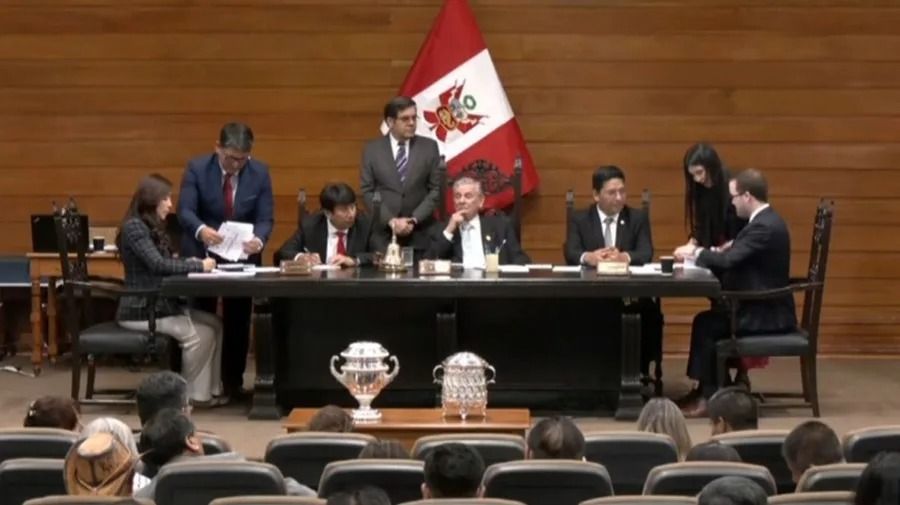
    Peru’s Congress moved to a second-round vote to elect a new head of the legislature, who will automatically become president after José Jerí was removed on Tuesday amid allegations of influence peddling and suspicious links to Chinese businessmen.

    In an extraordinary session on Wednesday, lawmakers weighed four bids for the speakership: María del Carmen Alva (Popular Action), José María Balcázar (Free Peru/Perú Libre), Héctor Acuña (Honor and Democracy) and Edgard Reymundo (Popular Democratic Bloc). No candidate secured the required majority in the first count, triggering a runoff between the top two vote-getters: Balcázar and Alva.

    The tally reported during the session showed Balcázar with 46 votes and Alva with 43, while Acuña drew 13 and Reymundo 7, eliminating the latter two from the contest. Acting congressional vice president Fernando Rospigliosi said the second round would proceed immediately, with the winner decided by a simple majority.

    The incoming president will serve a five-month interim term and must hand over power on July 28 to the winner of the April 12 general election. In the 24 hours following Jerí’s ouster, Peru was formally without a president in office, while ministers remained in place for administrative duties.

    Jerí’s removal —the 39-year-old lawyer had taken office four months earlier after Dina Boluarte’s exit— renewed a parliamentary succession mechanism that has repeatedly been activated in a decade marked by rapid turnover at the top. Wednesday’s runoff will determine whether the presidency goes to a right-leaning lawmaker with prior experience leading Congress (Alva) or to a Perú Libre legislator from the party that brought Pedro Castillo to power in 2021 (Balcázar).


    Source link

  • India’s AI sovereignty: Why open source is the new infrastructure

    India’s AI sovereignty: Why open source is the new infrastructure


    As the world descends on New Delhi for India’s AI Impact Summit this week, the questions on the table could not be more consequential.

    Artificial intelligence has become a core digital infrastructure. It is in our search results, our inboxes, our workflows. According to analytics and advisory company Gallup, 45% of employees now use AI at work. AI mediates how we find information, interact with services, and work.

    The global AI industry is presently dominated by a handful of corporations offering proprietary models. On its face, the value proposition is compelling: A single provider handles the model, hosting, guardrails, and billing. But this dominance stands in the way of widespread economic growth and genuine sovereignty.

    Closed models cannot fully accommodate the contextual nuances, languages, and customizations that different societies and cultures require. In a world that has grown more polarized and protectionist — where technology platforms are increasingly enlisted as instruments of state policy — building critical national infrastructure on systems you don’t own, and cannot audit or adapt, is an enormous and growing risk.

    The challenge has an economic dimension as much as a political one.

    A state concerned with AI sovereignty in 2026 cannot credibly justify financing a foreign, vertically integrated AI stack while neglecting investment in domestic and open-source alternatives.

    Investing in hyperscalers can minimize short-term costs but it also entrenches digital rents paid to foreign entities, maximizes long-term dependency on unreliable partners, and dramatically increases exit costs.

    If governments finance dependency, dependency is what they will get.

    If governments finance dependency, dependency is what they will get.

    The current absence of large-scale private funding for open AI infrastructure reflects its public-good characteristics, not its capabilities. Open-source models already routinely achieve 90% or more of the performance of proprietary systems at a fraction of the cost. Investing in open AI frameworks is investing in digital public infrastructure because it yields benefits through lower costs, retained policy autonomy, and economy-wide productivity gains.

    It also offers something proprietary systems cannot: democratic legitimacy.

    Countries do not capture value by reselling foreign stacks — they capture it by building differentiated products on cheaper, open, shared foundations. This is an industrial policy that promotes competition and the accumulation of domestic capabilities, not a rejection of domestic industry.

    Open infrastructure expands the competitive surface for local firms rather than concentrating it in a few foreign providers.

    This logic has proved itself before: The internet did not emerge from private actors alone, but from sustained public investment in open technologies. From Linux to Apache, shared open-source foundations have become the backbone of the global digital economy, enabling private innovation while preventing capture at the infrastructure layer. From CERN to Airbus to Galileo, the lesson is consistent: When states co-finance open or shared foundations, private innovation flourishes above them. When they finance access instead, dependence hardens. AI is at exactly that inflection point.

    Sovereignty, however, does not mean solitude.

    The costs of developing open-source AI can be shared.

    As Canadian Prime Minister Mark Carney put it at Davos: “Collective investments in resilience are cheaper than everyone building their own fortress.”

    The opportunity is not for each country to construct its own walled garden. It is for nations to collaborate around open standards and shared infrastructure, rejecting the false binary of platform dependency or isolation, and instead building AI futures they actually control.

    At Mozilla, we are committing our billion-dollar-plus reserves to open-source AI capability development — investing in existing companies, establishing new ones, funding research and development, building training programs, and mapping open-source AI capabilities and gaps across the stack. We are already in discussions with governments and partners to establish a multi-stakeholder investment and development program that leverages the open-source community to build at real scale and speed.

    New Delhi is the right place to make that commitment collectively.

    If we want resilient, open, trustworthy AI ecosystems, we must finance them as such — not as an act of idealism, but as a hard-headed investment in sovereignty, resilience, and democratic legitimacy. Countries that want AI sovereignty must be part of this conversation, not as observers, but as co-investors and co-builders. The longer we wait, the harder it gets to change course.


    Source link

  • How Celtic can overcome Stuttgart in Europa League, according to Andreas Hinkel

    How Celtic can overcome Stuttgart in Europa League, according to Andreas Hinkel


    Hinkel believes Stuttgart may have “a small advantage over the two legs because the second one is at home”.

    If Celtic are looking for an added source of optimism it could perhaps come from Stuttgart’s away record in this season’s competition.

    They have lost three of their four away games – at Basel, Fenerbahce and Roma.

    Although it should be said there is no shame in that, and a 4-0 win at Dutch side Go Ahead Eagles is also an impressive outlier.

    “The first leg at Celtic Park is important because away over the years Stuttgart had some results in the Champions League or the Europa League where they lost quite heavily,” said Hinkel.

    “For example, in Belgrade they lost 5-1. If you have a game like this at Celtic Park everything can happen if the crowd is there and team gets into the rhythm and they play and attack and something can happen like that.

    “Stuttgart is a very good side, they are fighting for the Champions League places in Germany but since Martin O’Neill took over again, Celtic get the results. They get results when it is not that easy – it is always close at the end, maybe in injury time.

    “But they get the results and it is a good side and I think the mentality is back so I expect tight games.”


    Source link

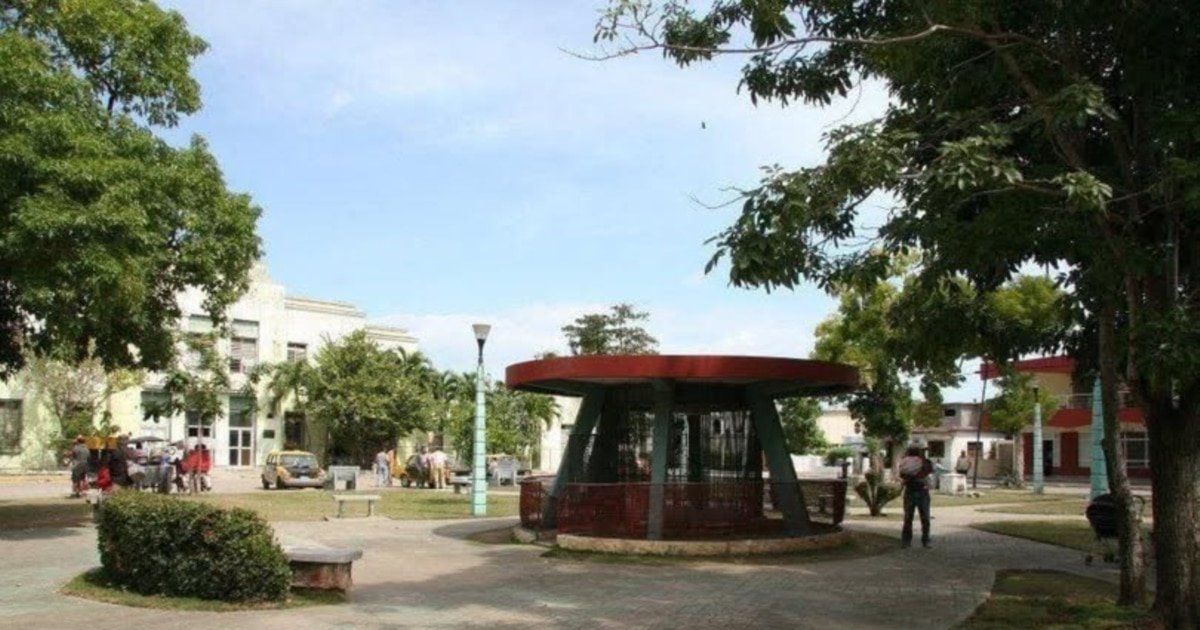
  • Isla de la Juventud sufre apagones de 21 horas diarias por crisis de combustible

    Isla de la Juventud sufre apagones de 21 horas diarias por crisis de combustible


    El municipio especial Isla de la Juventud atraviesa una parálisis casi total debido a la crisis de combustible en Cuba, lo que ha llevado a una reducción drástica del servicio eléctrico, disponible en algunas localidades solo tres horas al día.

    Sin conexión a la red eléctrica nacional, la Isla de la Juventud depende exclusivamente del combustible que llega por vía marítima para alimentar sus grupos electrógenos, lo que la sitúa en el centro de la vulnerabilidad logística actual.

    Según datos de la Unión Eléctrica (UNE), la disponibilidad actual del sistema en el llamado municipio especial es de 1963 MW, frente a una demanda pico de 1950 MW. El déficit de generación alcanza los 1090 MW, lo que ha forzado un esquema de racionamiento de 9 horas de apagón por cada 3 de servicio.

    Ante esta situación, el Consejo Energético local ha ordenado la paralización total de las inversiones en agricultura y pesca, el cierre de centros internos de educación y la suspensión del servicio eléctrico en edificios administrativos durante los fines de semana.

    La crisis ha provocado manifestaciones en Nueva Gerona. Marta Pérez, residente y activista, describe un fuerte descontento popular.

    “Acá la situación está bastante difícil. El descontento popular es grande. Sí, se hicieron unos toques de cacerolazos… Lo que quiere el pueblo pinero es que si ellos [el gobierno] no pueden sostener esto, que entreguen la isla y nosotros la arreglaremos internamente”, dijo desde Gerona, la capital pinera.

    En medio de la crisis energética, el transporte y el abastecimiento han colapsado. La conexión marítima con Batabanó se ha reducido a dos frecuencias semanales, elevando el pasaje del ferry que une al municipio con el resto del país de 50 a 200 pesos, señaló Pérez.

    Raiza, otra habitante de Nueva Gerona, señaló que el impacto en todas las esferas de la vida diaria ha sido fuerte: “No hay transporte, no hay petróleo, no hay comida, no hay corriente. Nosotros tenemos al día 3 horas de corriente nada más… Un paquete de pollo está en 5,000 pesos en las Mipymes y hay que comprarlo porque no hay más nada”.

    La UNE, en el municipio especialm informó además que las afectaciones en todos los circuitos serán continuas y que los horarios de apertura y cierre del servicio eléctrico pueden variar sin previo aviso, según la operatividad del sistema.

    Paralelamente, los testimonios de los residentes apuntan a que la inestabilidad eléctrica ha afectado severamente las comunicaciones telefónicas y de internet, dificultando el contacto con el exterior y la gestión de actividades básicas.

    Este escenario se produce en medio de nuevas sanciones de Estados Unidos contra el régimen de La Habana, con una orden ejecutiva del presidente Donald Trump que impone aranceles adicionales a cualquier país que suministre petróleo a la isla.


    Source link

  • Salomón Jara renueva a su gabinete y anuncia evaluaciones en Oaxaca – El Financiero

    Salomón Jara renueva a su gabinete y anuncia evaluaciones en Oaxaca – El Financiero


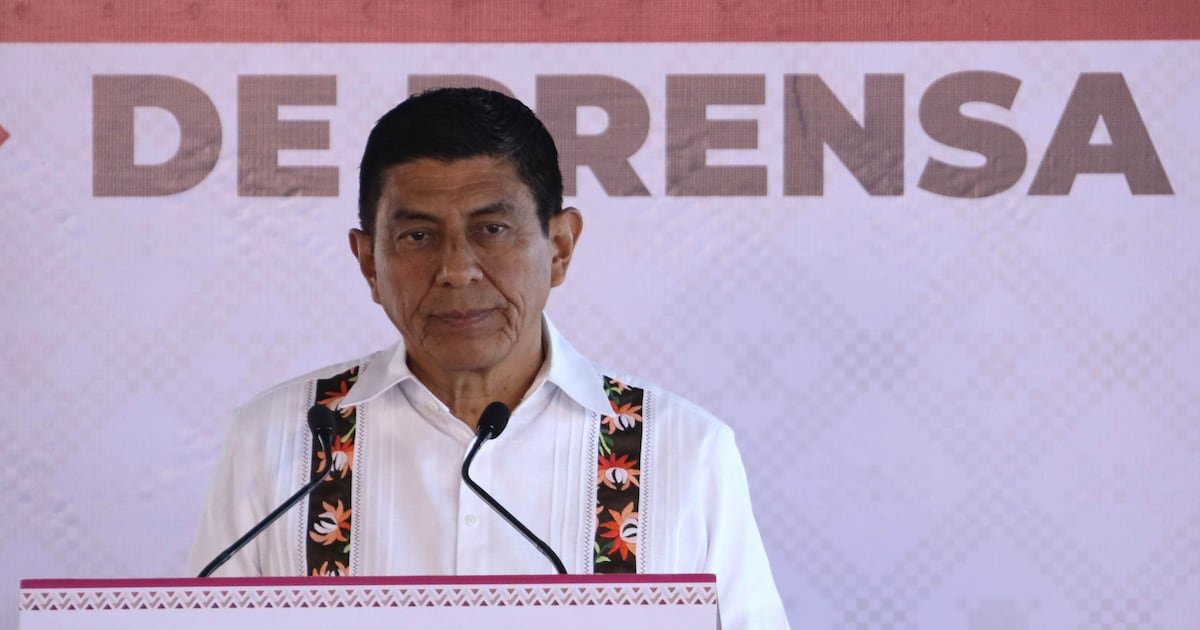
    El gobernador de Oaxaca, Salomón Jara Cruz, realizó 12 cambios en su gabinete y adelantó que los nuevos funcionarios estarán sujetos a evaluaciones periódicas para que entreguen resultados.

    En entrevista con El Financiero, dijo que desde diciembre pasado anunció una serie de modificaciones en la estructura de su gobierno y tras los resultados del ejercicio de revocación de mandato del 25 de enero –en donde un porcentaje de la población votó a favor de que deje el cargo–, escuchó las inconformidades y actuó para responder a la exigencia ciudadana. Lo que incluyó la renuncia de todos los funcionarios con los que se le señalaba de tener parentesco.

    “(Los funcionarios) que generaban malestar social y (con los) que se me vinculaba en lo personal, todos han renunciado, todos. Eran 14 y el año pasado renunciaron la mitad o casi, fueron creo que 10 y faltaban cuatro, ahora han renunciado todos. No tengo a ningún personal de parentesco. Como lo dije antes, gobernar es escuchar, y yo escuché y por eso hice esos cambios. Además viene una nueva etapa en la que vamos a resolver temas como el agua, seguridad y la pobreza.

    “Vamos a realizar evaluaciones periódicas porque lo más importante son el trabajo y los resultados que le den al pueblo de Oaxaca y lo vamos a hacer cada periodo corto, tres, cuatro meses para que den resultados y sí lo vamos a estar haciendo de manera más constante y permanente”, indicó.

    El mandatario estatal destacó que en los tres años de gobierno que le restan priorizará cuatro rubros: salud, con visitas de médicos casa por casa; seguridad, dependencia en la que nombró como secretario al almirante Félix Quiroz Javier y a la que se sumarán 300 nuevos policías, 100 en los próximos días y los 200 restantes de manera posterior con el objetivo de mejorar la respuesta a la población; agua, con la creación de una secretaría hídrica y proyectos como la presa Mujer Solteca, que dará a la capital agua por los próximos 50 años, así como repavimentación de los caminos y un bacheo de la zona metropolitana.

    Jara hizo también los siguientes nombramientos:

    • Fernanda Chávez – Secretaría de Educación Pública.
    • Rogelia González Luis – Secretaría de las Mujeres.
    • Sildia Mecott Gómez – Secretaría de Infraestructura y Comunicaciones.
    • Víctor Vásquez Castillejos – Secretaría de Interculturalidad, Pueblos y Comunidades Indígenas y Afromexicanas.

    Los cambios se dieron en cinco direcciones, entre ellas Registro Civil, Vivienda Bienestar, Instituto de la Juventud, Cobao, Coreturo y los medios públicos del estado.


    Source link

  • Peru’s Congress heads to runoff vote to pick José Jerí’s successor — MercoPress

    Peru’s Congress heads to runoff vote to pick José Jerí’s successor — MercoPress


    Peru’s Congress heads to runoff vote to pick José Jerí’s successor

    Thursday, February 19th 2026 – 00:23 UTC


    The incoming president will serve a five-month interim term and must hand over power on July 28 to the winner of the April 12 general election
    The incoming president will serve a five-month interim term and must hand over power on July 28 to the winner of the April 12 general election

    Peru’s Congress moved to a second-round vote to elect a new head of the legislature, who will automatically become president after José Jerí was removed on Tuesday amid allegations of influence peddling and suspicious links to Chinese businessmen.

    In an extraordinary session on Wednesday, lawmakers weighed four bids for the speakership: María del Carmen Alva (Popular Action), José María Balcázar (Free Peru/Perú Libre), Héctor Acuña (Honor and Democracy) and Edgard Reymundo (Popular Democratic Bloc). No candidate secured the required majority in the first count, triggering a runoff between the top two vote-getters: Balcázar and Alva.

    The tally reported during the session showed Balcázar with 46 votes and Alva with 43, while Acuña drew 13 and Reymundo 7, eliminating the latter two from the contest. Acting congressional vice president Fernando Rospigliosi said the second round would proceed immediately, with the winner decided by a simple majority.

    The incoming president will serve a five-month interim term and must hand over power on July 28 to the winner of the April 12 general election. In the 24 hours following Jerí’s ouster, Peru was formally without a president in office, while ministers remained in place for administrative duties.

    Jerí’s removal —the 39-year-old lawyer had taken office four months earlier after Dina Boluarte’s exit— renewed a parliamentary succession mechanism that has repeatedly been activated in a decade marked by rapid turnover at the top. Wednesday’s runoff will determine whether the presidency goes to a right-leaning lawmaker with prior experience leading Congress (Alva) or to a Perú Libre legislator from the party that brought Pedro Castillo to power in 2021 (Balcázar).


    Source link

  • Flávio Bolsonaro mocks samba school’s demotion after Lula tribute, says the “next drop” will be him — MercoPress

    Flávio Bolsonaro mocks samba school’s demotion after Lula tribute, says the “next drop” will be him — MercoPress


    Flávio Bolsonaro mocks samba school’s demotion after Lula tribute, says the “next drop” will be him

    Thursday, February 19th 2026 – 01:33 UTC


    Flávio Bolsonaro is cited in polling as one of Lula’s main prospective challengers
    Flávio Bolsonaro is cited in polling as one of Lula’s main prospective challengers

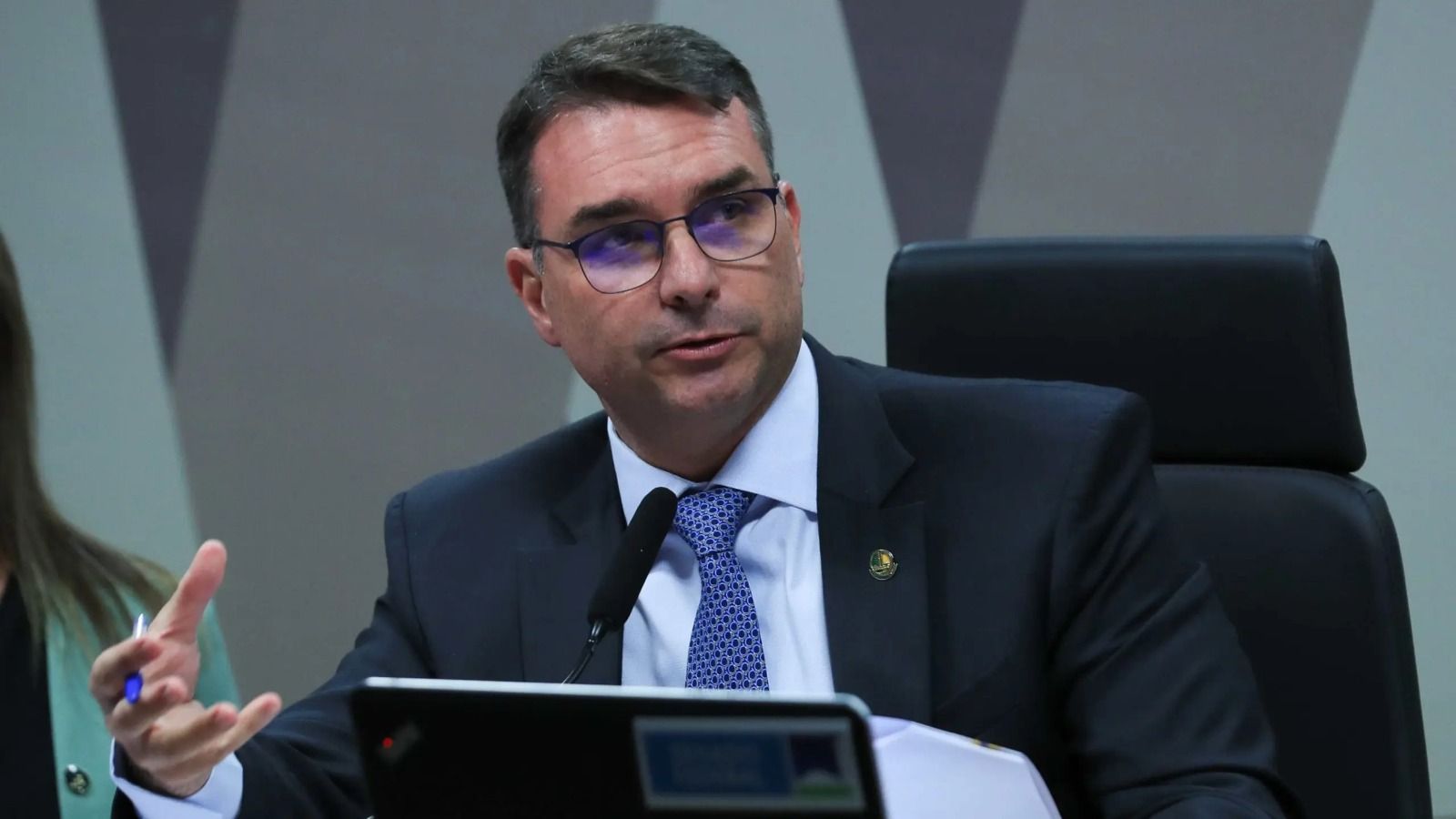
    Senator Flávio Bolsonaro (Liberal Party, PL), seen as a potential right-wing contender in Brazil’s October presidential election, said that after the samba school that paid tribute to President Luiz Inácio Lula da Silva was relegated in Rio de Janeiro’s carnival standings, the “next drop” will be Lula’s — and that of the Workers’ Party (PT).

    The remark was posted on social media after Acadêmicos de Niterói finished last in the Grupo Especial rankings and was demoted, meaning it will return to the Serie Ouro in 2027, one year after earning promotion.

    The school was making its debut in Rio’s top tier and staged a parade tracing Lula’s life — from his roots in Brazil’s northeast to his rise as a union leader and eventual election as president — with Lula watching from a sambadrome box.

    The performance sparked controversy, particularly over a segment depicting the “traditional family” inside a tin can, a scene critics framed as a jab at conservative values. The episode drew condemnation from opposition figures and criticism from pastors linked to influential evangelical churches as well as Catholic voices, according to the report.

    In that context, a PL presidential hopeful — from a party with a strong evangelical base — said “the family is sacred” and criticized the choice to include that imagery in the parade’s narrative, EFE reported.

    The decision to honor Lula had been contentious even before parade night. Right-wing groups argued the tribute could amount to premature political messaging and sought to block it. Brazil’s Superior Electoral Court (TSE) rejected pre-parade requests to prohibit the theme, while warning it could still trigger a subsequent inquiry, according to TV Globo’s RJ2.

    Flávio Bolsonaro is cited in polling as one of Lula’s main prospective challengers, while Lula has said he intends to seek re-election. The senator’s post sought to translate a carnival result into a political jab as parties begin shaping strategies ahead of the 2026 campaign.


    Source link

  • Scottish Gossip: McGinn says VAR in Scotland is “a mess” as O’Neill backs Hatate

    Scottish Gossip: McGinn says VAR in Scotland is “a mess” as O’Neill backs Hatate


    Reo Hatate does not have an attitude problem, says Celtic manager Martin O’Neill following talks with the Japan midfielder. (Sun), external

    O’Neill wants to see Hatate “knuckle down”. (Record), external

    Former Celtic target Kasper Hogh scored Bodo/Glimt’s third in Wednesday’s 3-1 Champions League knockout round first leg over Inter Milan in Norway. (Sun), external

    Scotland great Eddie Gray is disappointed his great-nephews Archie and Harry look likely to represent England rather than Scotland. (Scotsman – subscription required), external


    Source link

  • Reportan cacerolazos tras largos apagones en Isla de la Juventud

    Reportan cacerolazos tras largos apagones en Isla de la Juventud


    Denuncian incomunicación, altos precios de alimentos y crisis del transporte en el municipio especial.


    Source link

Translate »