Brazil’s deputies moved to limit satellite-based environmental enforcement just as Amazon deforestation fell sharply, exposing a fierce struggle over agribusiness power, climate diplomacy, Indigenous territories, and Lula’s promise to end illegal forest destruction by 2030.
The Forest Seen From Space
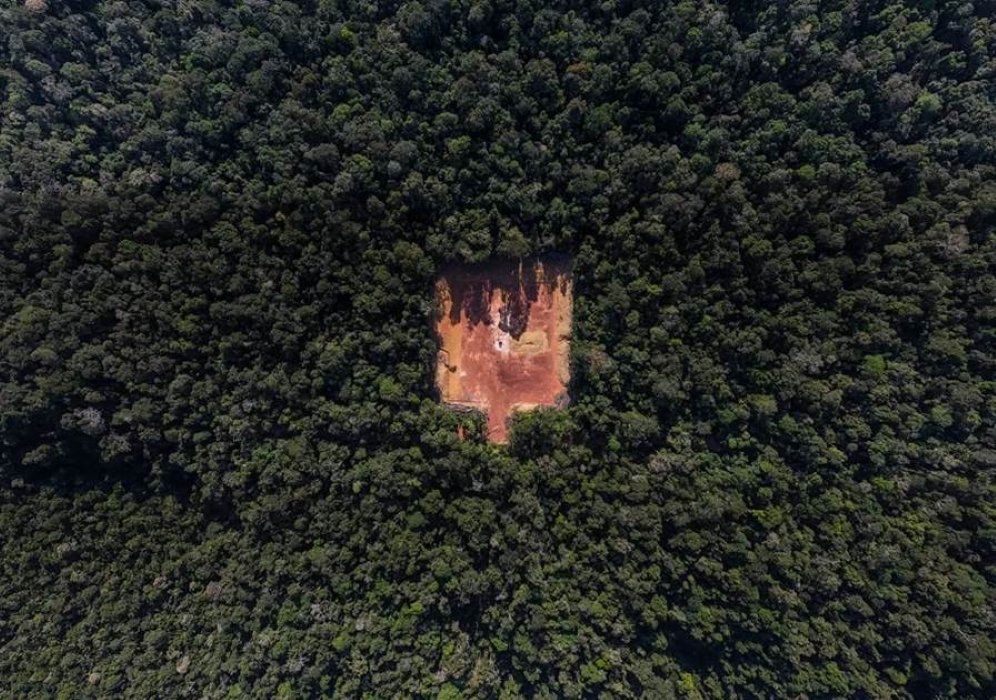
In the Brazilian Amazon, the state often arrives first as a pixel. A clearing appears where green should be. A burn scar widens. A road cuts deeper into the canopy. Long before an inspector can reach the place by truck, boat, or helicopter, a satellite has already seen the wound.
That is why the bill approved Wednesday by Brazil’s Chamber of Deputies is so politically explosive. The proposal, backed by center-right lawmakers tied to the agribusiness sector, would restrict the use of remote technologies in environmental enforcement. In practice, it would prevent IBAMA, Brazil’s main environmental agency, from imposing sanctions based exclusively on satellite images used to detect illegal deforestation and other environmental crimes.
The bill still needs approval in the Senate before reaching President Luiz Inácio Lula da Silva, whose government has promised to eliminate illegal deforestation in the Amazon by 2030. But even before becoming law, it sends a clear message: the battle over the forest is no longer only fought with chainsaws, fire, cattle, miners, and land grabbers. It is being fought over evidence itself.
According to the government, nearly 90 percent of oversight of deforestation in the world’s largest tropical forest is carried out with satellite support. That figure explains the stakes. Remove or weaken satellite-based enforcement, and the state is not just losing a tool; it is losing a tool. It is losing distance, speed, memory, and reach.
The bill also requires authorities to notify those accused of illegal logging in advance so they can present defenses and explanations before being sanctioned. Due process is necessary in any democracy. But in the Amazon, advanced warning can easily become advanced escape. Illegal deforestation is often fast, mobile, and tied to networks that understand the geography better than Brasília does. When forests are cut in remote places, delay is not neutral. Delay favors the chainsaw.

A Victory for the Ruralist Offensive
The timing reveals the broader political operation. The vote came amid an offensive by the powerful congressional bloc linked to agribusiness, which has pushed a series of bills weakening environmental protections. On the same day, the lower house approved another proposal that reduced the area of the Jamanxim National Forest by 40 percent, a major conservation reserve in the Amazonian state of Pará that has long been targeted by groups seeking timber and mineral wealth.
A third bill approved by deputies and sent to the Senate weakens protections for native grasslands and other non-forest formations across 48 million hectares. Greenpeace warned that the package weakens environmental enforcement, threatens Brazilian ecosystems, and favors rural producers at the expense of environmental protection. Gabriela Nepomuceno, the organization’s public policy specialist in Brazil, called the congressional climate anti-democratic and said lawmakers have acted systematically and authoritatively to serve predatory agribusiness interests.
Environment Ministry official João Paulo Capobianco had warned only hours earlier that the wave of bills moving through Congress threatened the authorities’ ability to fight Amazon deforestation and represented an “unimaginable setback.” The phrase sounds dramatic until one considers the numbers.
Amazon deforestation has been falling under Lula. Preliminary government data showed that forest loss in February dropped 35.4 percent from the previous six months and 12.4 percent from the same period a year earlier, reaching the lowest level since records began. From August to January, 1,324 square kilometers of forest were cleared, down from 2,050 square kilometers in the prior period. The contrast with Jair Bolsonaro’s final year is even sharper: during the same stretch then, 4,970 square kilometers were deforested, a record under the alert system.
That decline is not accidental. It reflects renewed enforcement, political signals from Brasília, international pressure, and the return of climate policy after years in which environmental agencies were weakened and illegal actors grew bolder. Marina Silva, Brazil’s environment minister, said the data points to a strong downward trend and expressed hope that Brazil could reach the lowest annual deforestation rate in its history.
But the Amazon is not the only front. In the Cerrado, Brazil’s vast tropical savanna under constant agricultural pressure, deforestation fell by only 5.9 percent over the same six-month period, affecting 1,905 square kilometers. In the Pantanal, one of the planet’s largest wetlands, the trend moved the other way: clearing rose 45.5 percent to 294 square kilometers.
Those figures show why the congressional offensive is so dangerous. The Amazon may be improving, but Brazil’s environmental crisis has not been solved. It has shifted terrain.

Latin America’s Climate Test
For Latin America, the Brazilian Amazon is not a distant green symbol. It is a continental climate engine, a diplomatic asset, a battlefield of development models, and a warning about how democracies can be hollowed out from within by economic interests cloaked in law.
Brazil is the region’s largest country, largest economy, and largest environmental power. If it proves that deforestation can decline while the economy continues to function, it gives Latin America leverage in global climate negotiations. It can demand financing, technology, and fairer trade terms not as a supplicant, but as a country delivering measurable climate results. If it weakens enforcement while promising green leadership, it confirms the world’s suspicion that Latin American climate pledges are too vulnerable to domestic political bargaining.
The stakes are especially high before Brazil’s next election. Lula has made environmental protection central to his international image and wants reelection. But the congressional ruralist bloc is showing that executive promises can be undercut by legislative arithmetic. A president can speak at climate summits. Deputies can rewrite the rules that enable enforcement.
This matters for Indigenous communities, forest peoples, small farmers, and traditional populations who live where the law often arrives late. Satellite monitoring is one of the few ways the state can see illegal incursions quickly enough to respond. Weakening it would not only help large illegal operators. It would also increase danger for those who defend the land with their bodies.
The bill also exposes a deeper Latin American dilemma. The region has resources the world wants: soy, beef, lithium, copper, oil, timber, water, biodiversity, and carbon sinks. It is asked to conserve and export, protect and grow, absorb climate expectations, while still fighting poverty. Agribusiness argues that production feeds economies. Environmentalists argue that destruction mortgages the future. Both claims enter politics, but only one side profits directly from making the forest harder to police.
The Amazon does not need romantic speeches. It needs institutions with eyes, teeth, budgets, and legal authority. Satellites are not perfect. They can misread, require verification, and must be paired with fair procedures. But banning sanctions based solely on satellite evidence, when 90 percent of enforcement depends on remote monitoring, is not reform. It is strategic blindness.
The forest has been telling Brazil the truth from above. The question now is whether Congress wants the country to stop looking.
Also Read:
Venezuela’s Stalled Ballot Turns Transition Talk Into Political Theater Again