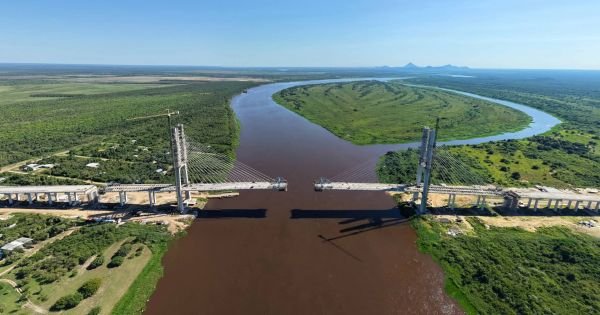
Capricorn Bioceanic Corridor advances to final stretch to connect Atlantic with Pacific
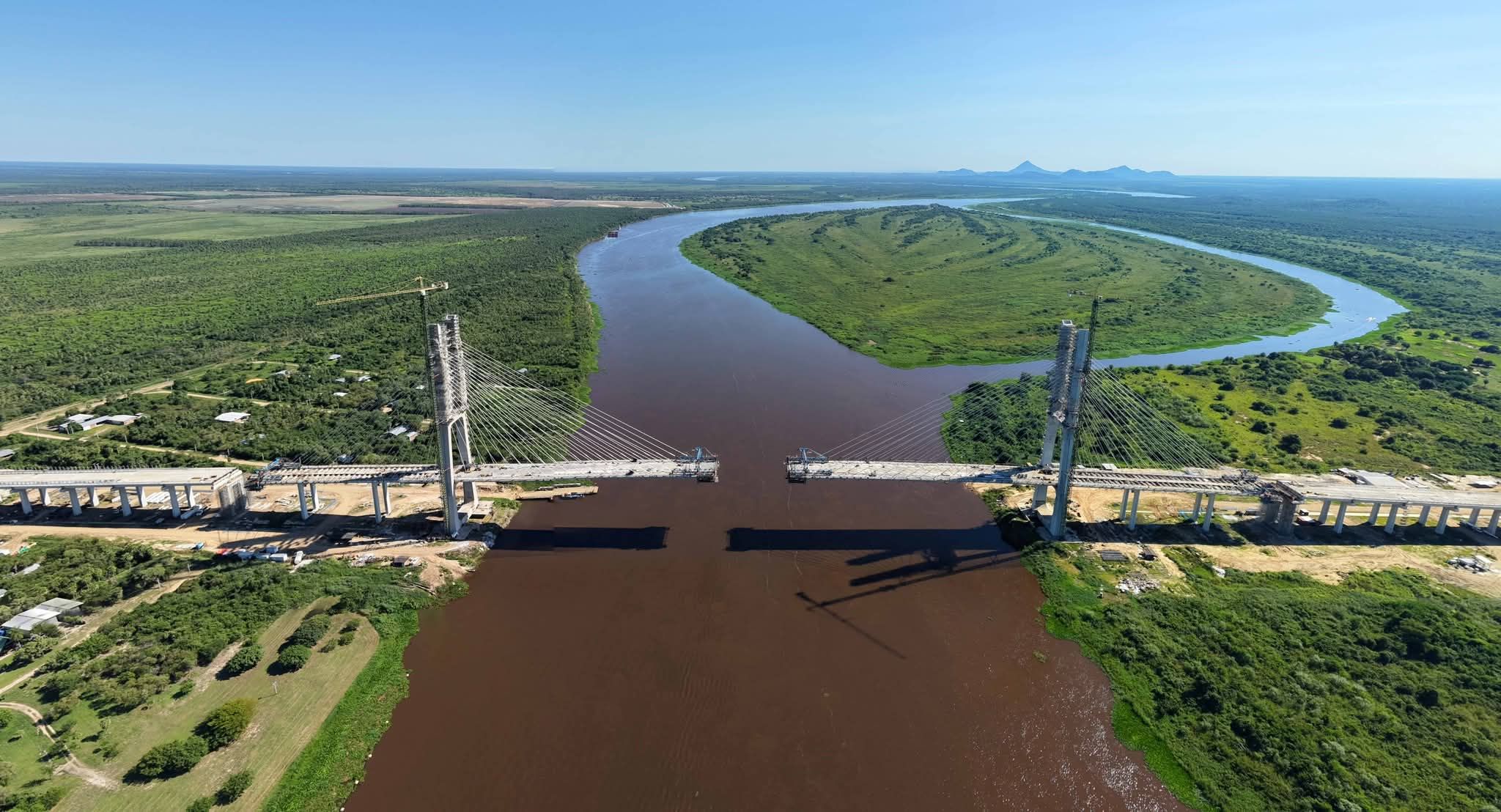
For Paraguay, the corridor carries a particular strategic dimension
The Capricorn Bioceanic Corridor, one of the most ambitious infrastructure projects underway in South America, is moving through its final stretch on the border between Paraguay and Brazil, with just twenty-one metres remaining to complete the physical link of the so-called Bioceanic Bridge, according to Paraguayan government authorities cited in late May 2026. The structure, built over the Paraguay River, will connect the cities of Carmelo Peralta, in the department of Alto Paraguay, and Puerto Murtinho, in the Brazilian state of Mato Grosso do Sul, and constitutes one of the central pieces of a logistics corridor that will link the Atlantic Ocean with the Pacific across four South American countries.
The corridor, extending more than 3,200 kilometres, will integrate overland routes and logistics centres traversing western Brazil, the Paraguayan Chaco, northern Argentina, and the Andean region of Chile, until reaching the Pacific ports of Antofagasta and Iquique. The initiative, which has been negotiated for more than a decade by Argentina, Brazil, Chile, and Paraguay, seeks to significantly shorten export times to Asian markets. Preliminary estimates handled by the governments involved suggest that certain commercial routes could save between ten and fifteen days of transit toward destinations such as China, Japan, and South Korea, compared with current shipping through Atlantic ports.
The project also fits into the regional debate on alternatives to the Panama Canal, a route affected in recent years by draft restrictions stemming from sustained drought and by structural logistical delays. South American economies, particularly intensive in the export of agro-industrial, mining, and energy products, have faced growing exposure to these disruptions, which has reinforced the political relevance of the corridor.
For Paraguay, the corridor carries a particular strategic dimension. The landlocked country conducts the bulk of its exports —which reached USD 16.72 billion in 2025— through the Paraguay-Paraná Waterway, a river system of more than 3,400 kilometres that connects to the Atlantic via Argentina and Uruguay. The opening of the bioceanic corridor will provide the country with a second outlet toward overseas markets, this time via the Pacific coast. The administration of President Santiago Peña has positioned the corridor as a central piece of its regional integration agenda, alongside the still pending debate on a possible sea outlet through Uruguay reactivated by former Uruguayan President Luis Lacalle Pou.
The project also incorporates new road and rail infrastructure works aimed at strengthening connectivity between productive zones historically far from major ports, with a view to boosting the agricultural, mining, and energy sectors. The governments involved aspire to formally inaugurate the bridge and the corridor over the course of the second half of 2026, once the physical connection and complementary works in Paraguayan, Brazilian, and Argentine territory have been completed.