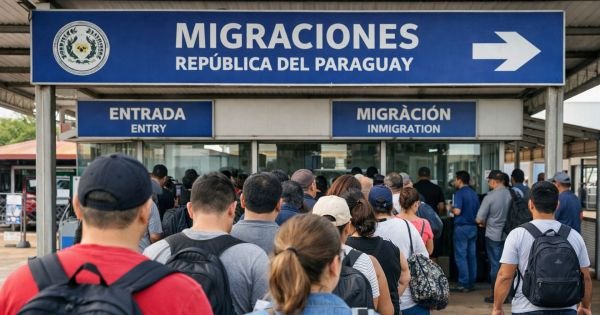
Chile launches deportation flights under Kast with 40 migrants expelled to Bolivia, Ecuador and Colombia
The operation is not unprecedented in Chile. Under the government of Gabriel Boric (2022-2026), more than 20 deportation flights were carried out and roughly 4,500 people were expelled
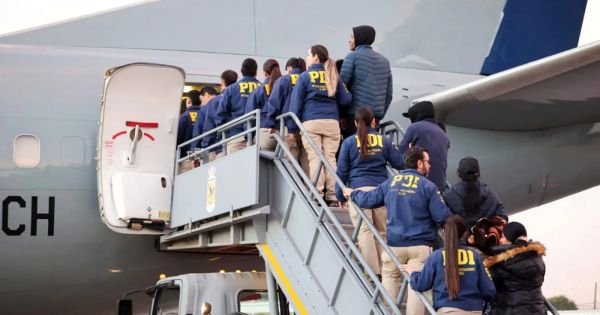
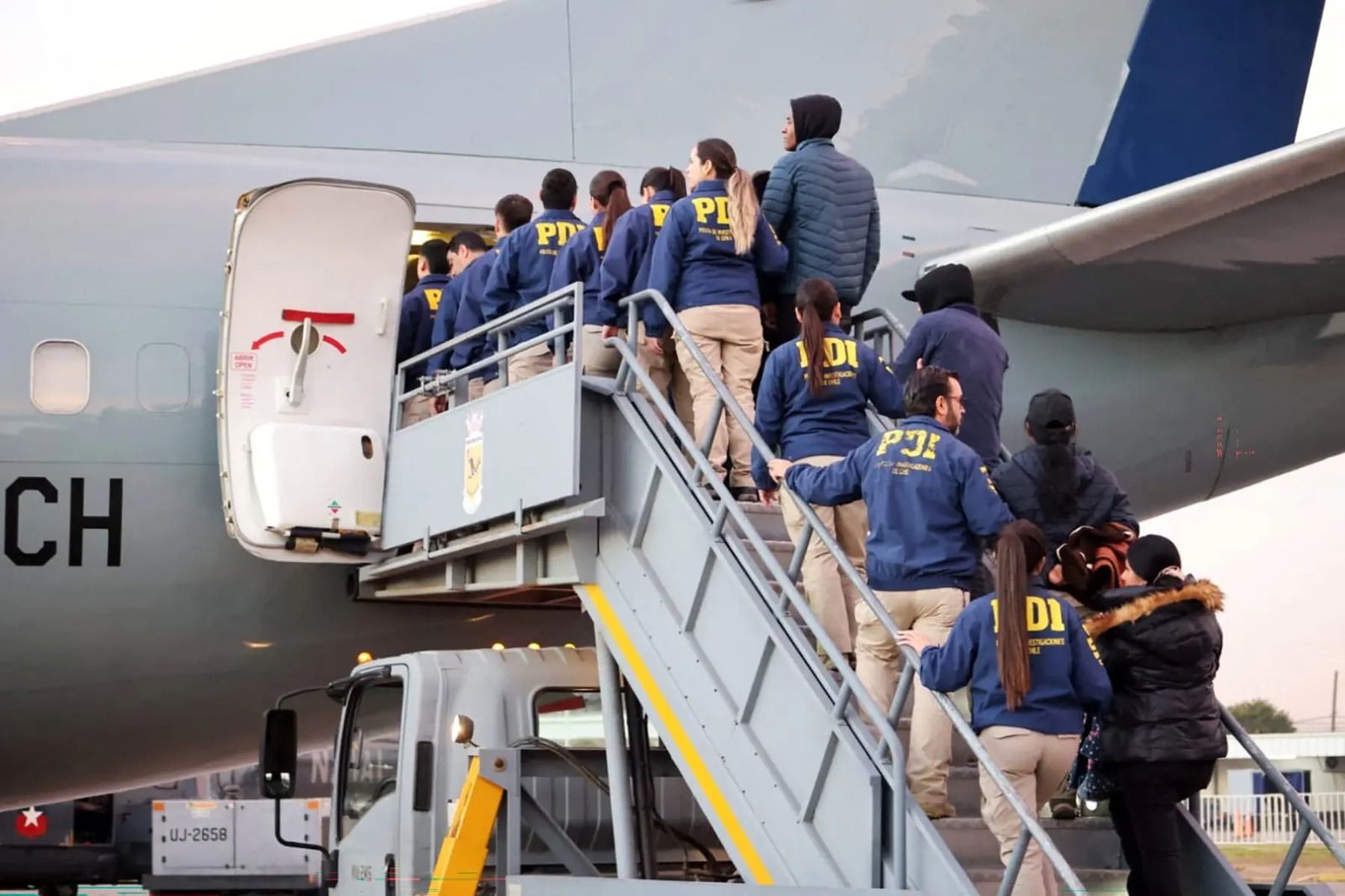
The government of Chilean President José Antonio Kast carried out its first deportation flight of irregular migrants on Thursday, expelling 40 people on a Chilean Air Force (FACh) Boeing 737 that made stops in Bolivia, Ecuador and Colombia. The 19 Colombians, the last group to disembark, arrived in Bogotá shortly after 8:00 p.m. local time. The 17 Bolivians and four Ecuadorians were dropped off previously in La Paz and Guayaquil, respectively. Each deportee traveled accompanied by an officer from Chile’s Investigative Police (PDI).
All those expelled had standing deportation orders for offenses including violent robbery, drug trafficking, illegal weapons possession or for having entered Chile irregularly, an administrative violation that enables deportation. Deputy Interior Minister Máximo Pavez described the operation as the first of many and announced that the frequency of flights will increase in coming weeks, though he did not specify the schedule for security reasons.
The operation is not unprecedented in Chile. Under the government of Gabriel Boric (2022-2026), more than 20 deportation flights were carried out and roughly 4,500 people were expelled, according to the National Migration Service. In 2025, 1,117 foreigners were deported. What distinguishes Kast’s approach — he has been in office since March 11 — is the projected scale and the decision to halt the regularization of more than 180,000 irregular migrants who had begun paperwork under the previous administration, according to Euronews. The government argued that at least 6,000 of those enrolled in the process had criminal records.
In his first address to the nation on Wednesday, Kast announced that alongside the flights he would launch land-based expulsions to continuously remove all irregular immigrants who should not remain in Chile. According to official figures, more than 44,000 people are ready to be returned to their countries, and some 75,000 deportation orders are pending.
The case of Venezuelan migrants — who account for 65% of deportation orders — poses a larger obstacle. Santiago and Caracas have had frozen consular relations since Venezuela’s 2024 elections, making direct deportations impossible. The Kast government is studying ways to expel Venezuelans by air more expeditiously, though it has not been determined whether a third country could serve as a bridge.
In Colombia, the flight’s reception was low-key. Colombia’s Foreign Ministry said it had no official information on the matter when the plane was already 20 minutes from Bogotá, according to El País. A Migration Colombia official said the deportees would not be detained if they have a clean record in the country. It is unlikely that Chile would issue an Interpol notice for these offenses, the official said.
Colombian President Gustavo Petro, who has been critical of deportations ordered by Donald Trump to the point of nearly triggering a diplomatic crisis with Washington in early 2025, made no statement about Kast’s expulsions. In a Cabinet meeting after the Chilean far-right leader’s election, Petro had urged Colombians in Chile to return because the political changes there will target the Colombian community as enemies.
Chile currently has more than 330,000 foreigners in irregular status, according to the National Statistics Institute. The Kast government is simultaneously advancing the construction of trenches three meters wide by three meters deep along the northern border with Peru and Bolivia, with 30% progress on the projected 30 kilometers.