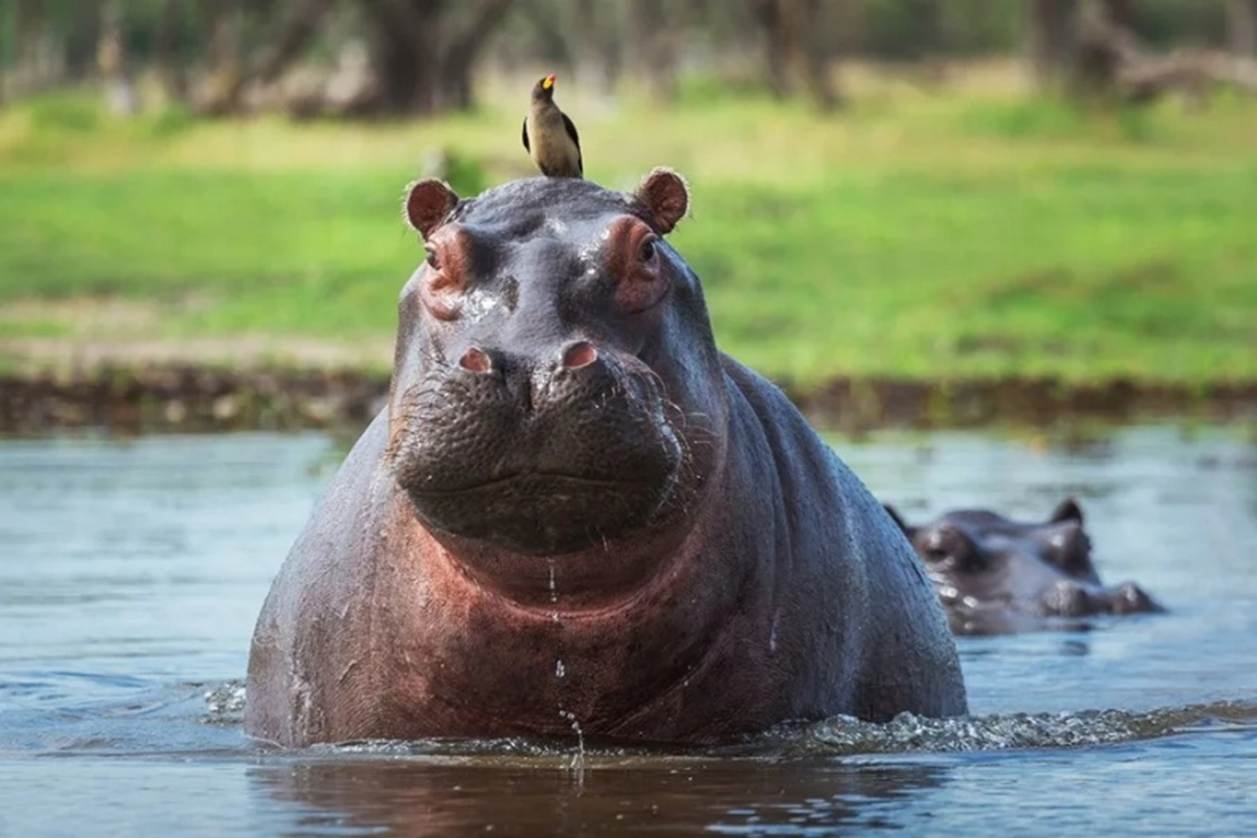
Colombia’s plan to euthanize up to eighty of Pablo Escobar’s invasive hippos exposes a country trapped between ecological urgency, tourism dependency, and the stubborn afterlife of narco mythology, where even wildlife can become political inheritance in the present tense.
The Animals That Outlived the Drug Lord
Colombia has decided it can no longer keep pretending this problem is strange but manageable. The government has approved plans to cull dozens of hippos roaming across part of the country’s center, with Environment Minister Irene Velez announcing that up to 80 of the invasive animals will be euthanized after earlier efforts to control the population proved either too expensive or simply ineffective. “We have to take this action to preserve our ecosystems,” Velez said.
That sentence is clean and official. The reality around it is not. Because Colombia is not only dealing with an invasive species. It is dealing with one of the most surreal leftovers of the Escobar era, an ecological problem born from narco spectacle and allowed to ripen into something larger than a curiosity. The hippos were first brought to the country by Pablo Escobar in the 1980s, when he imported four for his private zoo. That act, at the time, was the kind of vulgar extravagance that made sense inside his world. Wealth had to be theatrical. Power had to look exotic. Animals themselves became trophies.
Then Escobar died, and the trophies stayed.
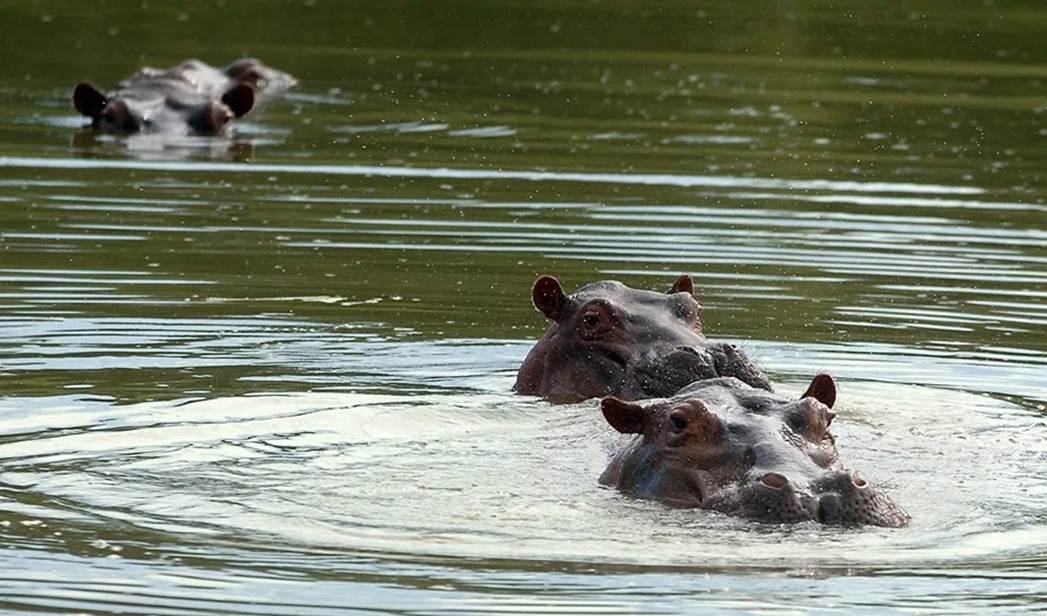
What followed was the Latin American irony that history seems to specialize in. A private whim tied to criminal opulence became a public burden for the state. By 2022, one study estimated that around 170 hippos were roaming freely. They have been spotted up to 60 miles from Hacienda Napoles in the Magdalena River basin. Another study suggested the animals reproduce especially quickly in Colombia’s lush environment. So what began as a grotesque zoo project has turned into a living population with its own momentum.
That is what makes the current decision feel so revealing. The Colombian state is not merely responding to a wildlife management issue. It is finally confronting a piece of Escobar’s afterlife that has moved beyond memory and into territory, water, fear, and economics. These hippos are not symbolic in some abstract sense. They occupy space. They alter ecosystems. They force decisions.
And that is where the old myth starts to break down. It is easier to romanticize a narco ruin than a four-ton animal crossing into the wrong landscape.

A Tourist Attraction with Teeth
The trouble, of course, is that the hippos are not only feared. They are also profitable, photogenic, and by now deeply woven into the local imagination.
Authorities say the animals pose a threat to villagers who encounter them and compete with endemic wildlife, such as manatees, for food. That alone would be enough to justify serious alarm. Hippos are not gentle mascots. They are massive, territorial mammals that can do real damage in the wrong place at the wrong moment. But Colombia’s difficulty is that the problem does not arrive stripped of sentiment. These animals have also become a tourist attraction.
Hacienda Napoles is now a tourist destination, and the hippos are a major part of that draw. Local vendors sell hippo-themed souvenirs. Hippo-spotting tours bring in visitors. The absurdity of the story has become marketable. Escobar’s imported animals, which should never have been there in the first place, now help sustain a local economy of spectacle and memory. That complicates everything.
Because once an invasive species becomes part of a tourism circuit, public policy stops feeling merely technical. It begins to touch livelihoods, habits, and the strange economies that grow around notoriety. In Colombia, especially, that tension runs deep. The country has spent years trying to escape the flattening power of narcotrafficking mythology while also living with the fact that parts of that mythology remain economically useful. The hippos are one more example. They are dangerous and out of place, yet also familiar enough to be sold as postcards.
That tension helps explain why earlier control efforts stalled. Authorities had tried sterilization. They had tried to capture the animals and send them to zoos. Neither approach worked. The state wanted a solution that looked less brutal and more palatable, something that would manage the problem without forcing the country into an ugly moral confrontation. But the methods were too costly or ineffective. Eventually, the choice narrowed.
Even then, the politics of killing these animals remains emotionally charged. Animal welfare activists have long opposed calls to cull the hippos, arguing that it would set a poor example in a country that has already endured decades of conflict. That objection matters because it speaks to something larger than the animals themselves. In a place marked by long violence, public killing, even in the name of management, carries a heavier symbolic load. The hippos are invasive, yes. But they are also living creatures in a society already exhausted by histories of blood and force.
That is why one previous attempt backfired so intensely. In 2009, when an aggressive male hippo was killed, a photograph of soldiers posing with its body sparked outrage and helped halt efforts to control the animals. The image was too blunt, too triumphant, too tone-deaf to what people were actually reacting to. It did not look like stewardship. It looked like domination dressed as policy. Colombia has been living with the consequences of that failure ever since.
Escobar’s Legacy Still Walks the Riverbanks
There is another reason this debate refuses to stay simple. The animals cannot be returned to their natural habitat. Because they descend from just four original hippos, their limited gene pool means they could carry diseases. So the most emotionally satisfying escape route, sending them back to where hippos belong, is not really available.
That detail seals the whole story shut. Colombia is left with animals that should not be there, cannot be easily moved, have not been successfully contained, and now affect both ecosystems and public life. The cull is not a sign of confidence so much as a sign that the other exits have narrowed to almost nothing.
And that is what gives this decision its deeper meaning. Colombia is once again being asked to clean up an inheritance from the Escobar years, but not through policing, extradition, or memory politics. This time, the inheritance has hooves, weight, and appetite. It swims, breeds, wanders, and unsettles the line between folklore and threat.
There is something almost cruelly fitting in that. Escobar’s violence never stayed neatly inside the years of his rule. It spilled outward into institutions, fear, corruption, and global imagination. Now even the physical landscape bears his residue. The hippos are perhaps the most bizarre expression of that fact, but also one of the clearest. A criminal empire once wealthy enough to import African megafauna has left Colombia with a problem that local villagers, environmental officials, activists, and tourist operators must now argue over decades later.
In that sense, this cull is not just about animals. It is about the state trying to recover authority over a landscape deformed by criminal excess and then softened by spectacle. The government is saying that a problem can be famous and still needs to be solved. That something people photograph, market, and talk about with a half-smile can still be dangerous enough to require a hard decision.
For Colombia, that may be the real test here. Not whether the hippos are lovable, or whether they draw visitors, or whether their origin story remains irresistible to foreigners. But whether the country can finally treat one more piece of narcotrafficking’s legacy as what it is: not a darkly comic anecdote, but a burden that kept growing. At the same time, everyone else was busy turning it into a tale.
Also Read:
Haiti Faces Gangs as Childhood Becomes the Front Line Again