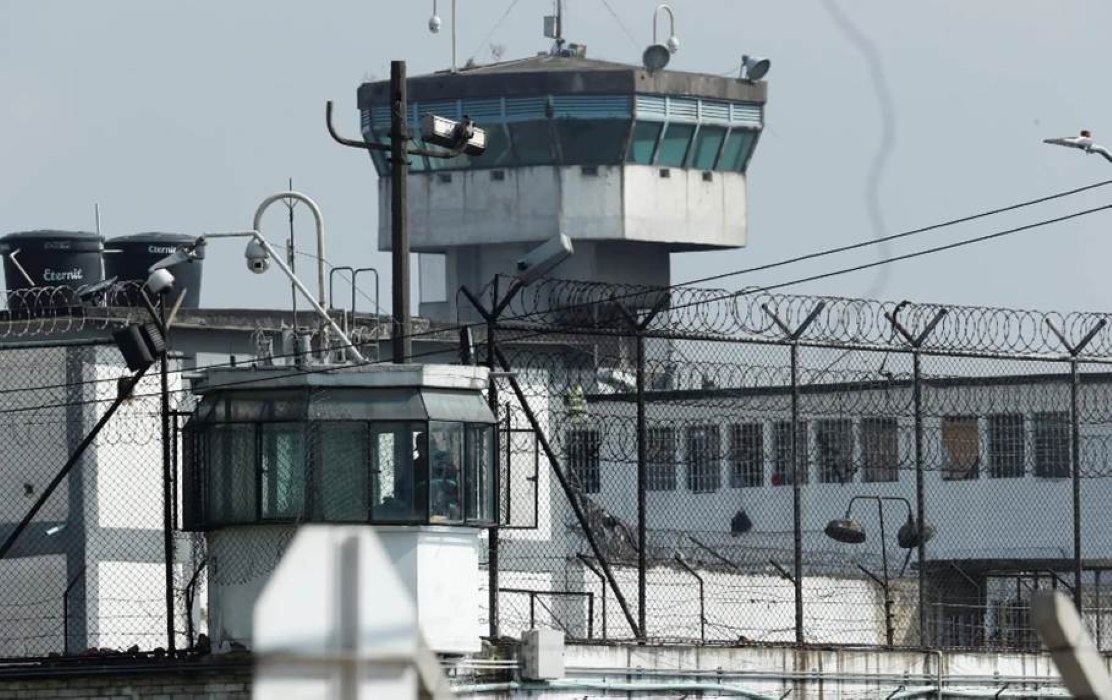
Colombia’s prison crisis is no longer only about crowded cells. New oversight findings show beds, toilets, medicine, extortion, murdered guards, and criminal command networks converging into a state emergency that exposes the country’s unfinished struggle over punishment, dignity, and control.
A Bed Becomes a Measure
In Colombia’s prisons, dignity can begin with a bed. Not freedom. Not justice. Just a bed. The right to sleep without curling into a hallway, without waiting for a patch of floor, without building a private corner from cardboard, cloth, fear, and exhaustion.
Only 58.6 percent of people deprived of liberty in prisons inspected by Colombia’s Ombudsman’s Office have their own bed, the agency warned Thursday. The rest are forced into the informal architecture of overcrowding: floors, corridors, improvised structures, spaces that were never meant to hold bodies through the night. It is a brutal metric because it strips the penal debate down to its physical truth. Before rehabilitation, before security, before legal theory, the body must lie somewhere.
The finding comes from the Ombudsman’s contrast report to the government’s nineteenth analysis of the national penitentiary and prison system, based on inspections carried out at 20 prisons during the second half of 2025. Those facilities represent 16 percent of Colombia’s operating prisons, but they hold 33,567 people, nearly 30 percent of the country’s prison population. In other words, the sample is not marginal. It is a window into the system’s center.
The Ombudsman found shortages of bunks, insufficient sanitary units, and the absence of adequate spaces for intimate visits. It also documented repeated barriers to medical care, including delays in procedures, difficulty accessing specialized appointments, and shortages of medicines in men’s prisons, such as La Modelo, and women’s prisons, such as El Buen Pastor, in Bogotá.
A prison system can survive bad walls longer than it can survive this kind of institutional neglect. When people cannot sleep, bathe, see a doctor, receive medicine, or maintain basic human contact, the prison stops being a sentence and becomes a slow method of abandonment. Colombia calls this punishment. The data suggests something closer to state failure.

The Overflow Beyond the Cell
The crisis does not end in national prisons. The Ombudsman also inspected 55 temporary detention centers, places designed for stays of less than 36 hours. Instead, inspectors found 5,510 people being held there. According to the report, 82.5 percent had remained longer than legally permitted, and 15 percent had been there for more than a year.
That figure should be politically explosive. A temporary detention center holding people for more than a year is no longer temporary. It is a shadow prison, often without the infrastructure, oversight, health systems, ventilation, lighting, or legal seriousness that even ordinary prisons are supposed to provide.
In some centers, one toilet was shared by 125 people, even though the standard requires one toilet for every 25 detainees. That is not an administrative shortfall. It is a public health risk, a human rights warning, and a factory of humiliation. A state that cannot provide sanitation to people it has locked up loses moral authority every time it turns the key.
The Ombudsman has called on the government to advance the “humanization of punishment,” strengthen prison infrastructure, guarantee resources for health and food, and modernize prison information systems. The phrase sounds bureaucratic, but its meaning is simple. Colombia must decide whether people in custody remain human beings under state responsibility, or whether prison is allowed to become the place where the Constitution goes to die quietly.
The deeper problem is that overcrowding is not an accident. It is the predictable outcome of a justice system that uses incarceration as a default answer while underinvesting in alternatives, due process, rehabilitation, mental health care, and social prevention. Colombia’s prison crisis reflects the broader contradictions of a country that has spent decades trying to control violence through confinement. In contrast, violence keeps reorganizing itself inside and outside prison walls.
That brings the emergency into sharper focus.

Emergency Without Reform
In February, Colombia declared a prison emergency after a wave of violence against guards from the National Penitentiary and Prison Institute, known as Inpec, and amid efforts to combat extortion operations run from detention centers. Justice Minister Néstor Osuna said in remarks reported by EFE that the measure had two purposes: to protect the lives and integrity of correctional officers and to eradicate extortion and corruption originating in prisons.
The immediate context was frightening. Dragoneante Jesús Cárdenas was shot by two hitmen near Cartagena’s San Sebastián de Ternera prison while eating breakfast. Criminal groups were not merely surviving inside the prison system. They were reaching outward, threatening guards, ordering violence, and projecting power into cities.
The emergency allows restrictions on visits, communications, internal operations, and the transfer of inmates suspected of committing crimes from prison. Authorities specifically referred to gang leaders such as those linked to La Inmaculada, also known as La Oficina, which recently spread terror in Tuluá after the capture of Mauricio Marín Silva, alias Nacho. The group killed a traffic guard, burned eight vehicles, and threatened Mayor Gustavo Vélez, forcing authorities in Valle del Cauca to militarize the city before reporting the situation under control.
Osuna also said funds would be used to buy equipment to block cellphone signals in prisons, since inmates use mobile phones to extort and plan crimes. He said surprise searches and raids would continue, along with transfers of prisoners suspected of criminal activity from inside facilities.
This security response is necessary, but incomplete. Blocking signals may disrupt extortion. Raids may seize weapons and phones. Transfers may break certain command chains. But none of that fixes the structural furnace described by the Ombudsman. Overcrowding, poor sanitation, medical neglect, and exhausted guards create the conditions in which criminal governance thrives. When the state cannot provide order, gangs sell it. When legal authority is weak, illegal authority becomes practical.
Inpec administers 125 prisons with a capacity for 81,740 inmates. The system currently holds 101,976 people, exceeding capacity by 20,236 and producing overcrowding of 24.7 percent, classified as high by Inpec. This is the fourth prison emergency declared in Colombia: after 2013 for overcrowding, 2016 for multiple problems, and 2020 for the coronavirus emergency.
Four emergencies in little more than a decade are no longer emergencies. They are a pattern.
For Latin America, Colombia’s prisons offer a regional warning. Across the continent, overcrowded prisons have become incubators of organized crime, from Brazil’s prison-born factions to Ecuador’s massacres and Central America’s gang systems. When states pack human beings into unlivable facilities and then lose control of internal order, prisons become command centers, recruitment zones, torture chambers, and political liabilities.
Colombia’s challenge is therefore both geopolitical and domestic. A prison system that amplifies extortion, protects criminal hierarchies, and fails human rights weakens investor confidence, municipal security, border stability, and democratic legitimacy. It also complicates any serious peace policy, because the state cannot ask armed groups to trust institutions that visibly collapse behind bars.
The prison is the country in miniature. Its inequality, violence, bureaucracy, neglect, and courage all appear there, stripped of decoration. Colombia now faces a hard truth: a state cannot claim to defeat crime while running prisons that help reproduce it. The first reform may be as simple and as radical as making sure every person has a bed.
Also Read:
Northern Mexico Faces Fentanyl’s Border Boomerang as Addiction Crosses South