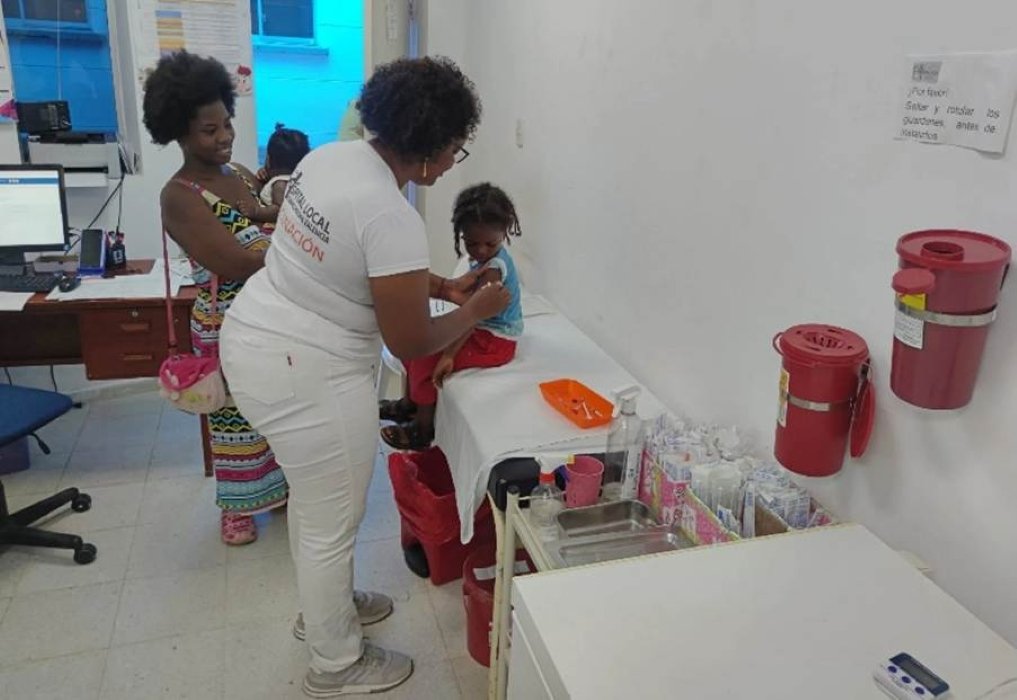
A new Guttmacher Institute study finds Colombia could sharply reduce maternal deaths, unsafe abortions, unintended pregnancies, and newborn deaths by fully funding sexual and reproductive health, turning a long-private crisis into a public test of political will.
The Lives Hidden Inside the Numbers
In Colombia, the numbers arrive with the chill of preventable grief. A recent study by the Guttmacher Institute says the country could reduce maternal deaths by 55 percent and unsafe abortions by 43 percent if it fully met the sexual and reproductive health needs of women and girls. It could also cut unintended pregnancies by 43 percent and neonatal deaths by 62 percent.
Those are not abstract percentages. They are mothers who do not die. Newborns who breathe. Teenagers who do not have their lives narrowed before adulthood. Clinics spared emergency cases that should never have reached crisis. Families that avoid the old Latin American ritual of waiting outside a hospital corridor, while poverty, stigma, geography, and bureaucracy decide who survives.
The findings, reported through interviews credited to EFE and Efeminista, place Colombia before a brutal but clarifying fact: the country already knows where the gaps are. There is already evidence that they can be closed. What remains uncertain is whether the state will treat women’s health as infrastructure or continue treating it as an optional moral argument.
“One of the most relevant points of the study is that closing the gaps in sexual and reproductive health is not only cost-efficient, but also strategically smart,” María Mercedes Vivas, director of Oriéntame, told Efeminista in an interview cited by EFE. Oriéntame is a Colombian foundation with nearly half a century of experience helping women prevent unwanted pregnancies and obtain medical care after unsafe abortions.
The economic case is unusually direct. The study estimates that fully covering these needs in Colombia would require an additional investment of just $1.32 per person. For every additional dollar invested in contraceptive services, the health system would save $3.73 in costs related to maternal, neonatal, and abortion care by preventing high-cost health events before they happen.
That makes the issue difficult to dismiss as ideology alone. Colombia is facing a strained health system, tight public budgets, and a political season in which every candidate will speak of efficiency, security, growth, and the future. Here is efficiency in its plainest form: spend a little now, save much more later, and reduce deaths along the way.

Adolescents at the Edge of Policy
The adolescent data is even more forceful. Among girls and young women who want to avoid pregnancy, the study estimates that full access to modern contraception and reproductive health services would reduce unintended pregnancies by 48 percent, unsafe abortions by 48 percent, and maternal deaths by 57 percent.
“Imagine being able to prevent 57 percent of maternal deaths by investing in contraception,” Vivas said, according to EFE and Efeminista. The astonishment in that sentence is part of the story. Colombia is not being asked to invent a miracle. It is being asked to fund what already works.
The study estimates that 1.2 million women ages 15 to 49 in Colombia want to avoid pregnancy but are not using modern contraception. Of them, 517,000 rely on traditional methods, and 750,000 use no contraceptive method at all. Among adolescents ages 15 to 19, about 156,000 who want to avoid pregnancy are not using modern methods. Of those, 118,000 use no method.
This is where the crisis becomes social, cultural, and deeply political. A teenage girl without access to reliable contraception is not simply missing a medical product. She is facing a chain of consequences that can reach school, employment, family dependence, exposure to violence, and long-term poverty. In rural areas, marginalized neighborhoods, Indigenous and Afro-descendant communities, and conflict-affected territories, those consequences are often heavier.
Latin America knows this pattern well. Reproductive inequality has long been one of the quiet engines of class inequality. Wealthier women find doctors, information, private clinics, discreet pharmacies, and transport. Poorer women confront judgment, distance, waiting lists, misinformation, and sometimes the dangerous improvisations that follow when the formal system fails. The result is a region where rights may exist on paper while access remains uneven on the ground.
Colombia has made significant legal advances in sexual and reproductive rights, including abortion access, and Vivas acknowledges that the country has a robust legal framework. But she also warns that there are still many barriers, and that these gains must not be minimized in a global climate marked by anti-rights movements. The law may open a door. It does not guarantee a girl can walk through it.

A Health Debate with Geopolitical Weight
The geopolitical meaning reaches beyond Colombia. Across Latin America, reproductive health has become a battlefield where public health, religion, party politics, fiscal priorities, gender equality, and democratic legitimacy meet. Governments that claim to defend families often neglect the services that keep women and children alive. States that promise development sometimes avoid the budget decisions that would allow women to study, work, plan, and survive childbirth.
Vivas argues that these issues remain invisible in public debate because security and other topics are treated as more important. That hierarchy is familiar in the region. Security is urgent, of course. Colombia has lived through armed conflict, organized crime, displacement, and political violence. But the narrow definition of security often excludes the body of the woman bleeding in a rural clinic, the adolescent forced out of school by an unintended pregnancy, the newborn lost because care came too late.
A country cannot build peace while ignoring reproductive autonomy. It cannot build productivity while allowing preventable maternal and neonatal deaths to drain families and clinics. It cannot speak seriously of investment while treating women’s health as charity rather than economic policy.
That is why the timing matters. Colombia is approaching a presidential election on May 31, and Vivas says the reductions described in the report require political will. She calls for budgetary and fiscal decisions based on evidence, especially during a health system crisis that demands cost-effective interventions. She also urges citizens to choose proposals from candidates who do not treat rights as an opinion, but as a gained terrain, a fact that must be backed by budgets.
That statement is not just advocacy. It is a diagnosis of democratic seriousness. Rights without money become slogans. Laws without clinics become theater. Public health without contraception becomes emergency medicine pretending to be policy.
For Latin America, Colombia’s numbers offer a regional warning and a regional possibility. The warning is that reproductive health gaps are not side issues. They weaken economies, deepen inequality, and expose the distance between constitutional language and lived reality. The possibility is that some of the most dramatic improvements in women’s and newborn health do not require impossible budgets. They require evidence, delivery, and courage.
There is something almost unbearable about how small the investment sounds compared with the lives at stake: $1.32 per person. Less than the cost of many daily transactions in Bogotá, Medellín, or Cali. Yet behind that figure sits a national question. What does Colombia value enough to fund before the tragedy happens?
The answer will not be found only in campaign speeches. It will be found in clinics, pharmacies, schools, rural roads, health budgets, and the quiet dignity of women whose futures are no longer treated as negotiable.
Also Read:
Mexico City Turns Dua Lipa’s Concerts Into Global Pop Diplomacy