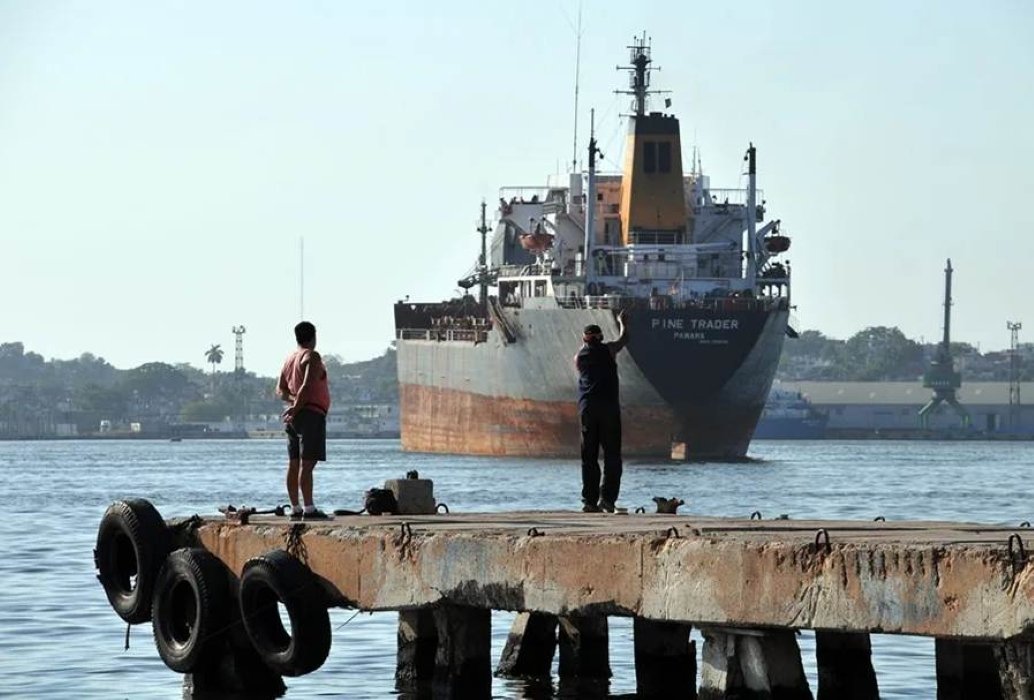
A Supreme Court ruling revives old Cuban expropriation claims, exposing how docks, cruise ships, embargo law, and Cold War property battles still shape Washington’s pressure on Havana and Latin America’s uneasy struggle over sovereignty, restitution, and economic coercion today.
The Past Returns Through a Pier
The old docks of Havana have always carried more than cargo. They carry empire, revolution, exile, business, punishment, and the stubborn memory of property taken when history changed hands. Now, decades after Fidel Castro’s government confiscated U.S.-linked assets following the 1959 revolution, a ruling from the U.S. Supreme Court has dragged those piers back into the center of Washington’s long fight with Havana.
In an eight-to-one decision, the Supreme Court opened the door for Havana Docks, a U.S. company that built several piers in Cuba in the early twentieth century, to seek compensation from cruise operators that used those docks in recent years. The companies involved are Royal Caribbean Cruises, Norwegian Cruise Line Holdings, Carnival Corporation, and MSC Cruises, which used port facilities in Havana between 2016 and 2019.
The legal instrument is the Helms-Burton Act of 1996, one of the harshest pieces of the U.S. embargo architecture. Designed to tighten pressure on Cuba and create a framework for claims over U.S. property confiscated after Castro took power, the law has always been more than a statute. It is a monument to unresolved exile politics, Cold War revenge, and Washington’s refusal to treat the Cuban Revolution as settled history.
The ruling does not simply reopen one dispute over a set of docks. It signals that U.S. courts may become a wider battlefield for claims tied to Cuban expropriations, especially at a moment when Washington is again increasing pressure on Havana in search of political change on the island. What looks like a compensation case may become a map for future litigation, with companies and individuals arguing that any commercial use of confiscated property carries a legal price.
That is why this case matters far beyond maritime infrastructure. A dock is never just a dock when it sits in Havana.

Helms-Burton Finds New Teeth
Havana Docks originally won a major victory in district court, which ordered each of the four cruise operators to pay more than $100 million. The cruise companies argued that they should not owe compensation because Havana Docks’ right to operate the facilities would have expired in 2004, long before the cruise lines used the piers between 2016 and 2019.
An appeals court in Atlanta accepted that logic and reversed the district court decision. It reasoned that a defendant would be liable for trafficking in confiscated property only if its actions interfered with the plaintiff’s property interest, and Havana Docks no longer held an active operating right during the cruise years.
The Supreme Court rejected that view. Writing for the majority, Justice Clarence Thomas argued that Helms-Burton’s language does not limit “confiscated property” to the plaintiff’s specific interest in the property. It can refer to the physical property itself, provided the plaintiff had an interest when the Cuban government took control after January 1, 1959. In plain terms, Havana Docks did not have to prove that the cruise companies interfered with a still-active operating contract. It had to show that they used property contaminated by an earlier confiscation.
Thomas wrote that those who use possessions “tainted by an earlier confiscation” can be liable to any U.S. citizen with a claim to that property. The phrase is powerful because it makes the past legally contagious. A confiscation from the early years of the Cuban Revolution can follow a pier into the cruise economy of the twenty-first century.
That is a dramatic expansion of risk for firms that once saw Cuba as an opening market. Between 2016 and 2019, U.S. cruise travel to Havana formed part of a brief thaw, when tourism, cultural exchange, and limited commercial engagement suggested that the island might be brought closer through contact rather than isolation. This ruling turns that moment into potential liability.
For businesses, the message is clear: Cuban opportunity remains legally haunted. For Havana, the message is harsher: old claims can be weaponized against any foreign or U.S.-linked company willing to touch assets Washington considers unresolved.

Latin America Knows This Script
The geopolitical meaning is not only about Cuba. Latin America has lived for two centuries with foreign powers treating property disputes, debts, investments, and compensation claims as gateways into sovereignty. In the nineteenth and twentieth centuries, the region witnessed how commercial grievances could escalate into diplomatic threats, sanctions, occupations, gunboat diplomacy, and long cycles of dependency.
Cuba’s case is unique because of the revolution, the embargo, exile politics in Florida, and Washington’s six-decade hostility toward the Castro system. But the underlying question is regional: who gets to decide when a revolution’s redistribution of property remains politically and legally actionable across generations?
There is no simple moral answer. Confiscations did affect real owners. Some families and companies lost property without compensation. Revolutions often rewrite ownership through force, and victims of expropriation do not vanish because history moves on. But U.S. policy toward Cuba has rarely been a neutral search for restitution. It has been tied to regime-change pressure, electoral politics, economic strangulation, and a broader desire to discipline a Caribbean island that refused to align with Washington’s orbit.
That is where Helms-Burton becomes more than a law. It exports U.S. punishment beyond U.S. territory by threatening companies that engage with Cuba. It tells global business that the island is not only sanctioned but also legally radioactive. It makes economic normalization more costly, not because Cuba lacks ports, hotels, talent, or demand, but because Washington has built a legal minefield around the country’s revolutionary past.
For Latin America, the ruling reinforces a familiar warning. Sovereignty does not end with flags and borders. It also lives in courts, contracts, sanctions, debt registers, arbitration panels, and property claims that can reach across decades. A country may control a dock physically, while another country’s legal system continues to define that dock as contested ground.
The decision may please Cuban exile sectors and U.S. claimants who believe confiscated property must never be forgotten. It may also chill companies considering Cuban engagement, particularly in tourism, logistics, and infrastructure. That serves a strategic purpose. If Havana cannot easily attract investment, pressure grows inside the island. The legal claim becomes an economic squeeze.
But pressure has a history of hurting ordinary Cubans more quickly than governments. The cruise ships brought tourists, jobs, tips, taxi fares, restaurant income, and small-business activity in a country already strained by shortages, migration, and state dysfunction. Litigation over old docks may satisfy a legal principle. Still, its political effect is to further narrow the island’s economic air.
The Supreme Court has turned a property dispute into a fresh instrument of the embargo era. The piers of Havana, once built for movement, now stand as symbols of a frozen conflict that keeps returning. Cuba remains trapped between a government that has failed its people in many ways and a superpower that still treats the island’s economy as a lever.
That is the deeper tragedy. The dock is old. The punishment is not.
Also Read:
Venezuela’s Blackout Diplomacy Tests Power, Politics, and Survival at Home