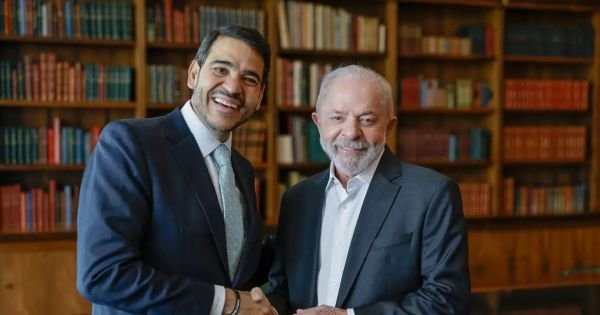
A failed Senate push to curb Trump’s military authority over Cuba leaves Latin America staring at a dangerous pattern: Iran, Venezuela, and now Havana, with executive force moving faster than lawmakers, diplomacy, and the region’s memory of intervention again.
The Caribbean Hears the Vote Differently
The vote failed in Washington, but the echo belongs to the Caribbean.
United States Senate Democrats failed Tuesday in another attempt to limit President Donald Trump’s authority to use military force against Cuba. The initiative, meant to control possible executive-ordered military action against Havana, was blocked in a forty-seven to fifty-one vote, with Republicans voting as a bloc against it. Two Republicans, Susan Collins of Maine and Rand Paul of Kentucky, joined the Democratic effort, but the break was not enough to change the result.
On its surface, this is a procedural defeat inside the Senate. A vote is called. The numbers fall short. Each side accuses the other of misreading danger. Washington moves on to the next fight. But in Latin America, especially in the Caribbean, votes like this do not come as routine. They arrive with history attached.
Cuba is not just another foreign policy file. It is an island carrying decades of punishment, defiance, exile politics, blockade language, and symbolic obsession. When a U.S. president suggests the need for regime change, and his administration intensifies pressure through an oil blockade, the region does not hear theory. It hears a familiar machinery beginning to warm.
The notes say the failed Cuba effort joins a series of Senate failures to control Trump’s military actions, including five votes meant to prevent more attacks on Iran and earlier attempts to restrain him before the capture of Nicolás Maduro in Venezuela. That sequence matters. Cuba is not being read alone. It is being read after Iran. It is being read after Venezuela. It is being read after the demonstration that executive power can move quickly, dramatically, and violently, while Congress debates after the fact.
Before the vote, Democratic Senator Chuck Schumer warned that Republicans needed to get ahead of what he called an “imminent catastrophe in Cuba” before it worsened, as he argued they should have done with “Trump’s war in Iran.” Republicans rejected the accusation that the president intended to use force against Cuba and accused Democrats of ignoring allegations of human rights violations against Miguel Díaz-Canel’s government.
That is the frame now. One side says restraint is necessary before a disaster. The other says restraint amounts to blindness toward abuse. Between them sits a region that has heard both arguments before, often from the mouths of powers that discovered their human rights vocabulary exactly when their strategic interests required it.

Human Rights and Gunboat Memory
This is not a defense of Havana. The notes themselves refer to allegations of human rights violations against the government of Miguel Díaz-Canel, and no serious regional analysis should pretend that Cuban citizens live outside state pressure, scarcity, political control, or fear. Human rights matter in Cuba because Cubans matter, not because Washington finds them useful.
But there is a difference between defending rights and opening the door to force. Latin America knows that difference intimately. The region has seen moral language used as a passport for intervention. It has also seen governments hide behind the guise of sovereignty while mistreating their own people. Both truths can exist at once, and any honest analysis has to carry the discomfort of that double memory.
That is why the Senate vote is so dangerous as a signal. It suggests that, after Iran and Venezuela, lawmakers remain unable or unwilling to build firm barriers around presidential war-making when Latin American and Caribbean targets enter the conversation. The failure does not, by itself, authorize an attack. But it leaves the architecture of restraint weak at the exact moment rhetoric, sanctions, pressure, and regime-change language are intensifying.
At the regional level, this creates a chilling political atmosphere. Cuba becomes not only a country under pressure, but a test case. If Washington can keep escalating against Havana while Congress fails to impose limits, other governments will read the map. Some will move closer to the United States out of fear or calculation. Others will harden anti-U.S. rhetoric and seek protection from rival powers. Smaller Caribbean states will watch quietly, knowing that instability around Cuba never stays neatly inside Cuba.
The oil blockade mentioned in the notes is especially important because it shows that force is not merely about missiles. Energy pressure can be a weapon. Fuel is electricity, transport, food storage, hospital logistics, port movement, and daily survival. In island politics, energy scarcity does not remain abstract. It reaches kitchens, buses, clinics, and generators. A blockade can make ordinary people pay for geopolitical theater long before any soldier moves.
That is where the moral tension deepens. Pressure intended to weaken a government often first spreads through the population. It punishes the tired, the poor, the elderly, the child waiting in a dark apartment, the family measuring food and medicine against another week of uncertainty. Then the same suffering is used as evidence that the government must fall. Latin America has seen this circle before.

A Region Measuring the Blast Radius
The regional question is not whether Cuba’s government deserves scrutiny. It does. The question is whether U.S. executive power, after Iran and Venezuela, is becoming normalized as the first instrument of crisis management. If that happens, Latin America enters a darker phase, one in which diplomacy becomes ornamental, and Congress becomes a witness rather than a guardrail.
Colombia, Mexico, Brazil, Central America, and the Caribbean all have reasons to worry, even if they do not speak with one voice. A military shock involving Cuba would ripple through migration routes, oil flows, diplomatic alignments, security debates, and domestic politics. It would embolden hard-liners on multiple sides. It would give authoritarian governments an old excuse to tighten control in the name of anti-imperial defense. It would also give interventionists proof, in their own minds, that only force gets results.
That is the trap. Militarized pressure rarely strengthens democratic culture in the region. It usually strengthens the men who claim only they can protect the homeland from foreign aggression. It narrows public space. It turns dissent into suspected betrayal. It makes human rights activists more vulnerable, as governments can brand them as instruments of external pressure.
The failed Senate vote also exposes a North American contradiction. If Washington believes Cuba’s human rights situation is urgent, then it should be urgent enough for strategy, diplomacy, humanitarian thinking, and congressional accountability. If it is only urgent enough for executive muscle, then the region is right to suspect that Cuban suffering is being converted into political ammunition.
The Caribbean does not need another spectacle of power. It needs serious diplomacy, honest human rights pressure, migration planning, energy realism, and respect for the fact that islands are not empty stages for imperial drama. The logic of a blockade should not decide Cuba’s future, the temptation of military intervention, or regime-change theater. It should be shaped by Cubans, with regional diplomacy strong enough to defend rights without inviting catastrophe.
Tuesday’s vote did not start a war. It did something quieter and perhaps more revealing. It showed how few locks remain on the war button when the target is close, familiar, and politically useful. For Latin America, that is not a technicality. It is a warning from the old sea, arriving again under new names.
Also Read:
South American Drums Rise as Central American Silence Grows Louder