The board’s design has raised concerns among allied governments over its expanded remit and governance rules
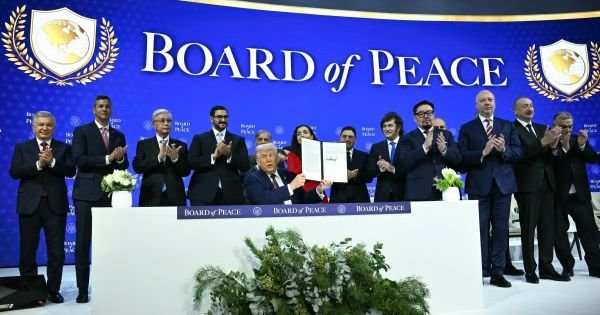
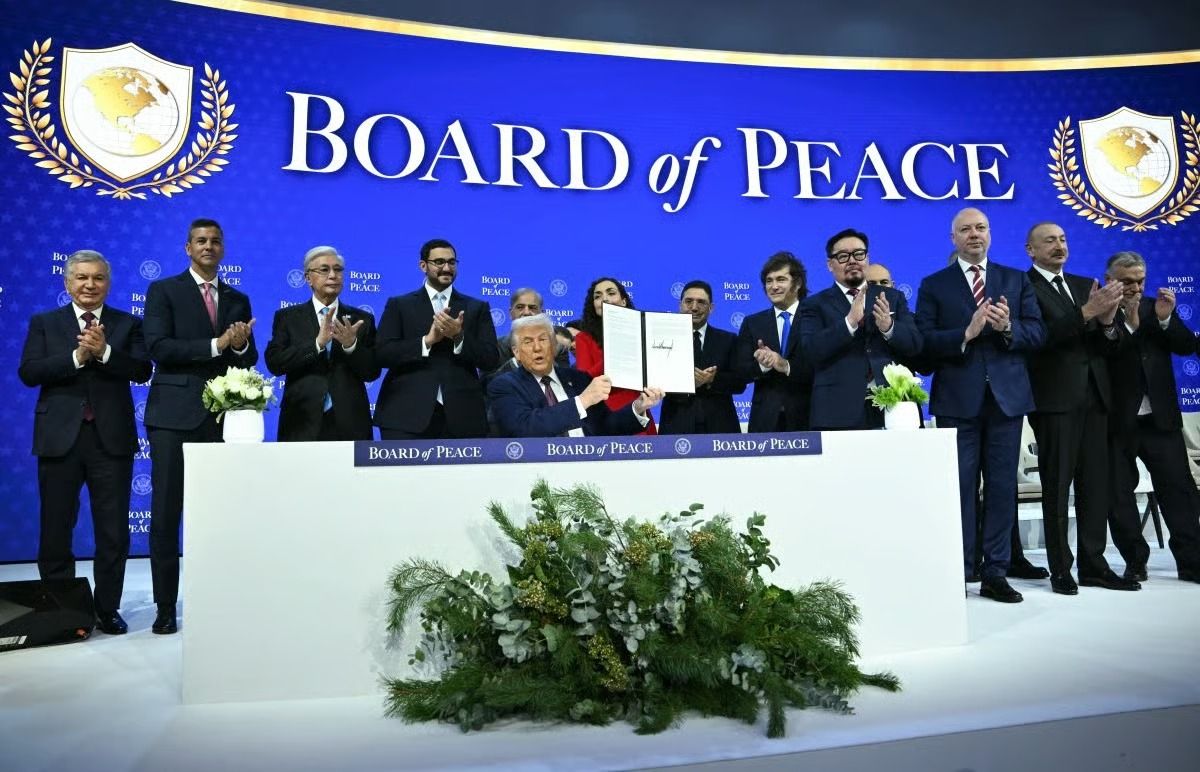
Poland and Italy said they will not join U.S. President Donald Trump’s Board of Peace, adding to the list of Washington allies that are staying on the sidelines, at least for now.
Polish Prime Minister Donald Tusk told a government meeting that, “taking into account certain national doubts regarding the shape of the board,” Poland would not join “under these circumstances,” while continuing to assess the initiative. “Our relations with the United States have been and will remain our priority, so if the circumstances change that will enable joining the work of the Board, we do not rule out any scenario,” he added.
In Italy, Foreign Minister Antonio Tajani said Rome would also stay out because of an “insurmountable constitutional barrier.” “We cannot join the Board of Peace because there is an insurmountable constitutional barrier on Italy’s side,” he told Sky TG24, while saying Italy would be ready to contribute to reconstruction efforts aimed at “ensuring peace in the Middle East.”
The board’s design has raised concerns among allied governments over its expanded remit and governance rules. It was initially presented as a way to cement Gaza’s ceasefire, but Trump has framed it as a mechanism with broader ambitions to address global conflicts—prompting some countries to worry it could rival existing multilateral structures.
Another source of caution, as reflected in Reuters’ account of allied reactions, is that Russia and Belarus were invited to participate, contributing to a guarded approach among several Western capitals.
In Italy’s case, the government has argued that the constitution allows participation in international organizations only on equal terms with other states—conditions Rome says are not met by the current statute, which would grant the U.S. president extensive executive authority. Prime Minister Giorgia Meloni, who has described her ties with Trump as close, said last month she had asked for changes to the board’s “configuration” to make Italian participation possible.
In Warsaw, Tusk was due to raise the issue later at a National Security Council meeting with President Karol Nawrocki, as Polish leaders weigh the implications of the U.S. invitation amid domestic debate.
The Colombian president claims that Edwin Urrego, commander of the Cali police, attempted to plant drugs in a vehicle belonging to his motorcade.
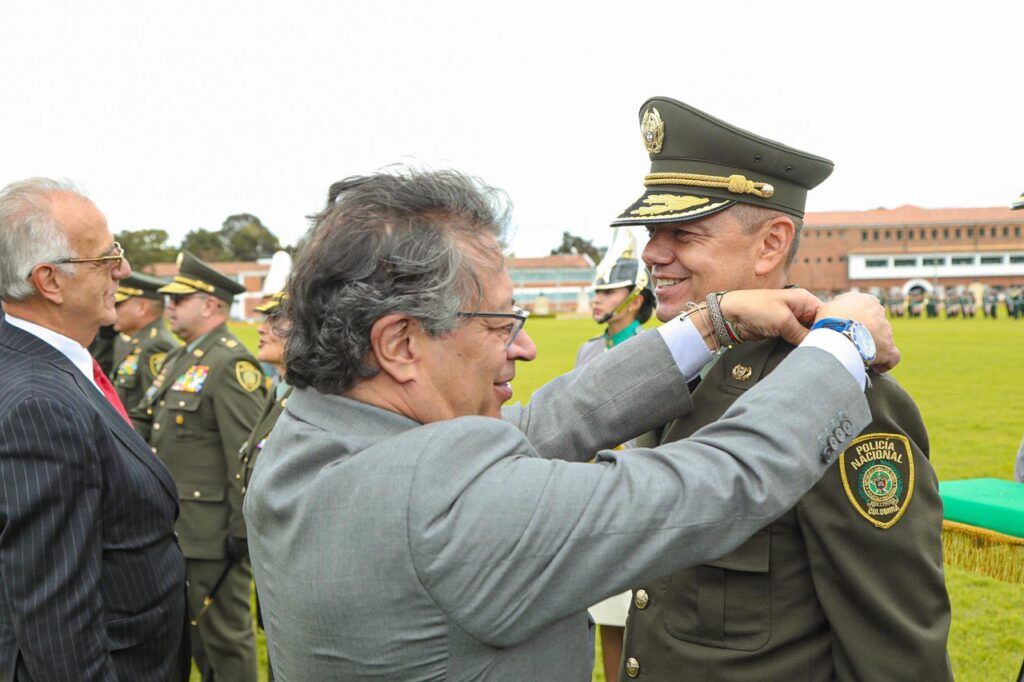
Colombian President Gustavo Petro has ordered the removal from active duty of Brigadier General Edwin Masleider Urrego Pedraza, who had been serving as police commander in Cali, after accusing him of involvement in an alleged attempt to sabotage Petro’s recent meeting with U.S. President Donald Trump.
A February 11 decree issued by Colombia’s Defence Ministry said Urrego was being retired “by call to qualify services,” formalising a move Petro previewed a day earlier in Montería during a government session focused on flood response along the Caribbean coast.
“There is a general I ordered withdrawn from the police… to put psychoactive substances in my car, with the mission of destroying the meeting with Trump,” Petro said, without providing public details on where the alleged plan would have been carried out, how it was detected, or what evidence supports the allegation. Petro also suggested the officer had been linked to a November raid at the home of Interior Minister Armando Benedetti near Barranquilla, when Urrego was posted there.
Urrego rejected the accusation and said he has not been presented with evidence or given a chance to respond. Speaking to Caracol Radio, he said the allegation was based on “total misinformation” and insisted his duties were unrelated to the president’s security detail. “No one has given me the opportunity to defend myself, nor have they presented evidence… because it did not happen,” he said, adding he was considering legal action to defend his name.
The dismissal comes shortly after Petro and Trump met in Washington, an encounter both described in upbeat terms following months of public sparring between the two leaders.
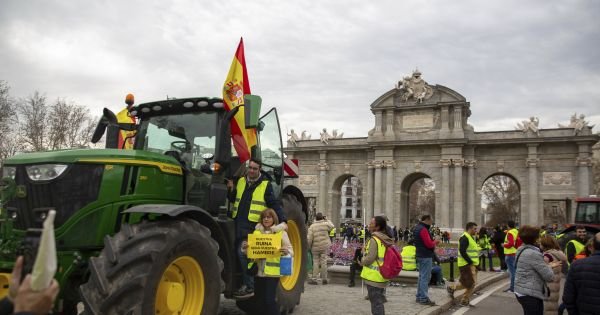
Columns of tractors converged on Plaza de Colón from several starting points before moving along major avenues toward the Agriculture Ministry area
Thousands of farmers and ranchers, alongside hundreds of tractors, rallied in central Madrid on Wednesday to protest expected cuts in the next Common Agricultural Policy (CAP) and to denounce the European Union’s trade agreement with Mercosur, according to organisers and authorities.
The demonstration was called by Unión de Uniones de Agricultores y Ganaderos and the National Union of Independent Primary Sector Associations (Unaspi). Organisers claimed around 8,000 participants and 500 tractors, while Spain’s government delegation in Madrid put the turnout at 2,500 people and 367 tractors, adding that there were no major incidents.
Columns of tractors converged on Plaza de Colón from several starting points before moving along major avenues toward the Agriculture Ministry area, where the vehicles were not allowed to enter and the final rally took place.
Protesters carried banners and chanted slogans targeting both the CAP and Mercosur, including messages such as “No to Mercosur” and warnings that CAP cuts and trade liberalisation would undermine farm viability.
Luis Cortés, national coordinator of Unión de Uniones, said the mobilisation aimed to send a message to political leaders and warned that tractors could return to Madrid if positions are not revised. He also argued that “the Mercosur deal is not a good trade agreement”.
Unaspi president Miguel Ángel Aguilera echoed the criticism, saying European policies were “ruining” the sector and calling on lawmakers to change course.
Organisers focused their criticism on the impact they expect from the EU-Mercosur accord and on the budget outlook for the next CAP, arguing that both developments would tighten margins and accelerate farm closures.
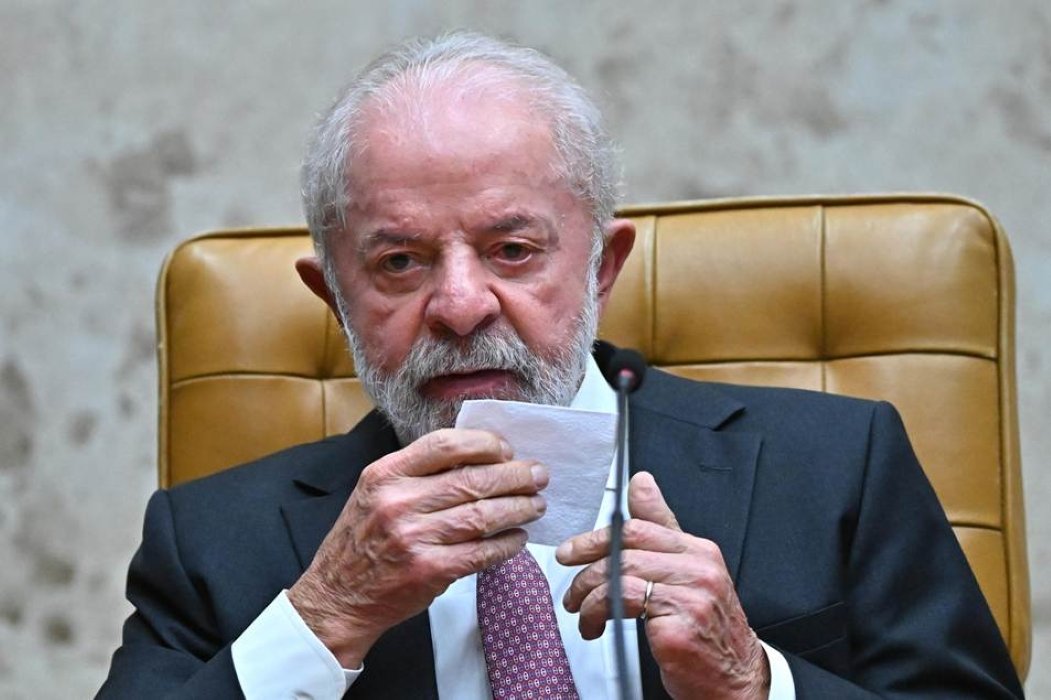
At a public investment event near São Paulo, President Luiz Inácio Lula da Silva warned that betting apps have turned phones into home casinos. His government is tightening rules and taxes, while courts debate limits and families feel the loss.
The Casino in the Living Room
In Mauá, in the São Paulo metropolitan region, microphones and official banners were set up to announce public investments in education and health. Yet the image Lula da Silva chose was not of a classroom or a clinic. It was a living room, lit by the glow of a cellphone screen, with the casino now inside the house.
The sensory detail in his warning was the device’s smallness, how it fits in a palm, how it can slide from a parent’s hand into a child’s. “The casino is in your living rooms, in the palm of your fourteen-year-old children, who take your cellphones and play, many times spending money you do not have,” Lula said, according to EFE. He delivered it as a moral complaint and a policy argument at once, and with an unmistakably electoral cadence as he prepares to seek reelection in October.
What this does is reframe an abstract market story into a domestic one. Online betting is not only advertising during sports broadcasts, but also an industry category and a new tax base. It is a pocket-sized habit that can travel through a household faster than any public service can.
Lula’s core claim was blunt and aimed downward at the social pyramid. “And we are going to take very serious measures against those bets because they are taking the money of the poor people of the country,” he said, according to EFE. The memorable line, the one that sticks like dust in your throat, is the implication that poverty is not only a lack of income but a lack of defenses against a product designed to be irresistible.
Brazilian President Luiz Inácio Lula da Silva takes part in the opening session of the judicial year this Monday at the Supreme Federal Court in Brasília, Brazil. EFE/Andre Borges
Taxes, Restrictions, and a Fast-Moving Market
Lula also framed his opposition in personal and cultural terms, saying he learned to be against games of chance through Catholic teaching, but arguing that something has changed with mass cellphone use. The trouble is that moral language does not regulate an app store, and nostalgia does not compete with the dopamine economics of a betting interface.
His government, in power since January 1, 2023, has already moved on the policy side. A bill promoted by the administration and approved by Parliament raises a tax on revenue for digital betting houses, applied to companies’ gross revenue. The rate, according to the notes, rises from 12% to 13% in 2026, 14% in 2027, and 15% in 2028, with a portion earmarked for actions related to health and social security.
That targeted tax sits alongside other levies, and the notes say the total tax burden could reach around forty percent according to various estimates. In practice, the government is trying to treat betting like a lucrative vice that must help fund the social damage it can accelerate, even as it remains visible and normalized during sports programming.
The market’s direction, however, is not subtle. Data from Grand View Research’s notes projects that the online gambling market in Latin America will reach US$ 10,407.1 million by 2030, growing at a compound annual growth rate of 11.9% from 2025 to 2030, with sports betting the largest revenue-generating segment in 2024 and expected to be the fastest-growing. In that framing, Brazil is not simply regulating a nuisance. It is sitting at the center of a regional boom.
The wager here is that taxation and restrictions can slow the expansion without pushing the behavior deeper into the shadows or turning enforcement into another arena where the poor are policed more than protected. Latin America knows this dilemma well: states often regulate late, after a product has already colonized daily life, and then struggle to build guardrails that do not collapse onto the same households they claim to defend.
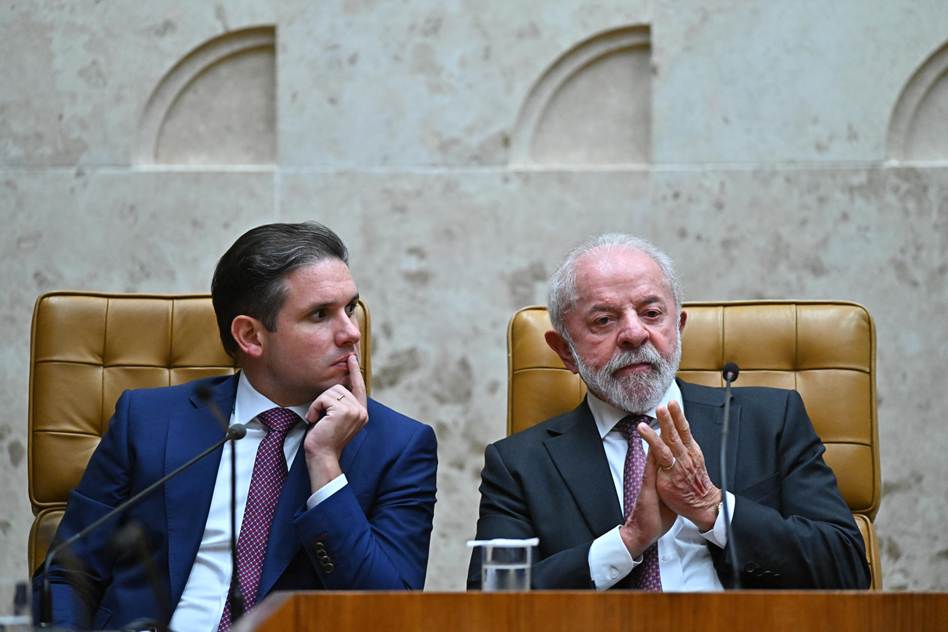
Brazilian President Luiz Inácio Lula da Silva takes part in the opening session of the judicial year this Monday at the Supreme Federal Court in Brasília, Brazil. EFE/Andre Borges
Bolsa Familia, Courts, and the Money Trail
One of the government’s most direct moves came in a regulation published in October that barred beneficiaries of Bolsa Familia and recipients of other social initiatives from placing online bets. It was an attempt to keep subsidized money from flowing straight into private platforms, a boundary line drawn around the flagship program that anchors Lula’s social policy identity.
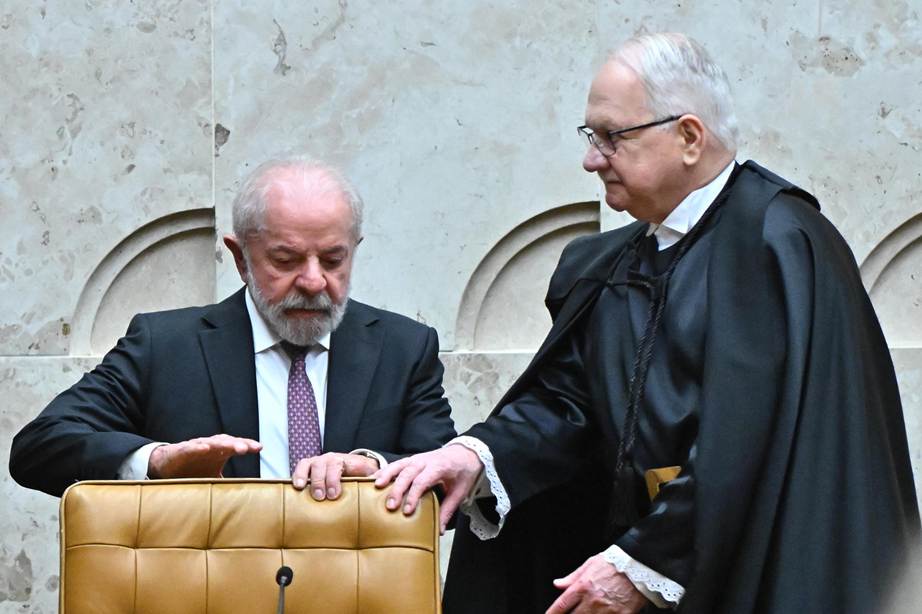
That line did not hold cleanly. Supreme Court Justice Luiz Fux later limited the measure’s reach at the request of the National Association of Games and Lotteries. A conciliation hearing at the high court had been scheduled for Tuesday, involving all parties. Still, it was canceled for scheduling reasons, leaving the dispute unresolved in the institutional space where Brazil often negotiates policy by judicial refinement.
Then there is the data that makes the argument feel less rhetorical. Central Bank figures cited in the notes showed that, in a single month, Bolsa Familia beneficiaries made transfers of up to 3.0 billion reais to betting companies, a figure presented alongside equivalents in dollars and euros. Even without adding anything beyond that number, the everyday observation writes itself. When money is tight, the outflow is louder than the inflow, and the household budget becomes a battlefield of small decisions.
Lula’s framing in Mauá leaned heavily on children and phones, and it is easy to see why. A teenager with access to a parent’s device is not only a family issue but a governance problem, because it turns regulation into a question of enforcement inside private life. It also turns the politics of gambling into the politics of dignity, the same terrain where Bolsa Familia has always operated.
Brazil’s debate is not taking place in a vacuum. Across Latin America, smartphones are the infrastructure of daily survival, connecting people to work, banking, school communication, and public services that can be unreliable or distant. When betting platforms rely on the same infrastructure, the state is forced into an awkward position: warning citizens about a product delivered through the very tool they need to navigate modern life.
Lula promised “very serious” measures, and he placed them inside the emotional geography of the home. The trouble is that the home is where the market now lives too, in the same pocket where a family keeps its last bit of cash, its messages, its hopes, and, increasingly, its risk.
In southern Arizona, two Mexican American sisters run a family recycling company born when the work was dismissed as hauling trash. Now, Recyco processes up to 6,000 tons a year while turning community programs into a quiet borderland civic project.
A Yard Where Kids Once Played and Checks Still Matter
In the same place where they once ran around after school, the sisters now run the day. The air carries that dry industrial smell of dust and metal, and the yard has its own rhythm: the clatter of aluminum, the heavier thud of steel, the pause as a load gets weighed. It is not glamorous work. It is constant work. And it sits inside a long argument about what labor counts, and who gets believed when they say they run the place.
Recyco was founded more than four decades ago by its parents, Marco and Olga Gallego, immigrants from Sonora, Mexico, who built the company after years of industry experience, illustrating resilience and community roots.
“We are a family business, established and operated by women,” Vanessa Gallego Luján told EFE, challenging stereotypes and inspiring respect among the audience.
Their father, they explain, built contacts on both sides of the U.S.-Mexico border to sustain the company, while their mother ran the day-to-day operations. In their telling, this was not a marketing narrative. It was the actual system that kept the doors open. “My mother was and still is our pillar, our motivation, and a role model,” Gallego Luján told EFE. You can hear the family history in that phrasing, as well as the sense of apprenticeship: the business was the classroom, and their mother was the teacher.
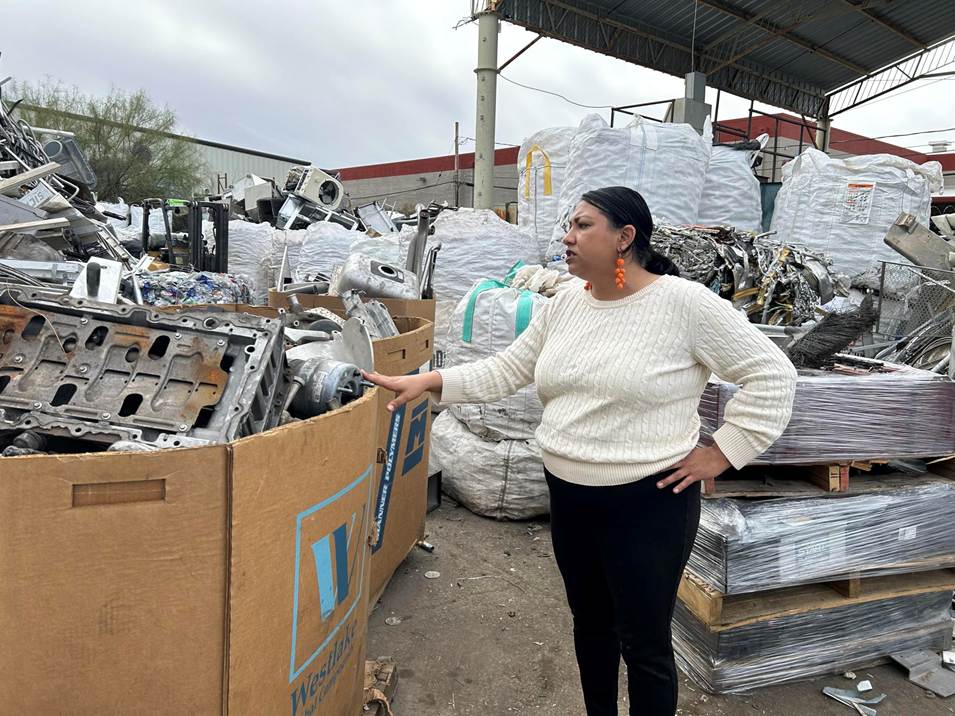
Photograph taken on January 29, 2026, showing Recyco co-owner Vanessa Gallego Luján observing recyclable material during an interview with EFE in Tucson, United States. EFE/María León
From Dismissed Work to an Essential Industry
Over time, the company grew into an operation that processes between 5,000 and 6,000 tons of materials and metals, including aluminum, copper, and steel, across two sites in Tucson. They also acquire unused appliances, keeping bulky items from ending up in the municipal landfill. The scale matters, but so does the way the sisters talk about it. They do not describe a shiny transformation. They describe persistence and a slow cultural shift in which a job once dismissed as dirty is recognized as infrastructure.
Even now, old expectations show up at the counter. “There are still people who ask, ‘Where is the boss?’ or ‘Where is the owner?’ and they are surprised to see that we are two women who own the company,” Bélgica Macías, an administrator and owner of Recyco, told EFE. The surprise is the point. What this does is expose a reflex that stretches beyond one industry: authority is expected to arrive in a certain voice, a certain posture, a certain gender. When it does not, people act as if the enterprise is missing its final signature.
For Macías and Gallego Luján, taking over was not strange. They grew up there. Macías remembers playing and running around after school. At the same time, her mother worked, a detail that lands as both tender and practical because it implies how closely family life and labor were braided. She also remembers paying people who brought recyclable material when she was very young, and receiving her first check at that same site because her mother insisted they learn to manage their own finances. It is an everyday observation with a sharp edge: in many families, children learn money as a source of anxiety; here, it was taught as a tool.
Now Macías runs the plant’s administration while Gallego Luján strengthens community ties, making the yard a source of local pride and belonging.
Photograph taken on January 29, 2026, showing Recyco co-owner Bélgica Macías observing recyclable material during an interview with EFE in Tucson, United States. EFE/María León
Teaching Recycling as a Family Language
Recyco participates in educational programs in local schools to encourage a recycling culture, and the sisters frame the lesson in a way that feels true to family dynamics. “Many times it is the children who educate the parents,” Gallego Luján told EFE. It is a simple line, but it captures something real: habits do not move only downward from adults to kids; they move sideways and upward too, especially in communities where schools serve as a bridge for information that households did not grow up with.
They also collaborate in community events such as Earth Day and Children’s Day, and work with the zoo and other businesses to prevent thousands of tons of material from ending up in the municipal landfill. Their approach blends business logic with neighborhood logic, the idea that the community is not separate from the customer base but made of it. Macías argues that being women gives them the sensitivity to support the community, and their examples stay grounded in specific lives rather than slogans. They speak proudly of a woman who started by recycling small quantities of cans and now receives close to $1,000 per visit, a change that has allowed her to become economically independent. They also point to a man experiencing homelessness who was offered a job after he committed to staying clean for three months, a small conditional promise that turned into stability.
Recyco remains a family business where uncles, cousins, and friends work alongside them, focused not only on increasing recycling but also on educating the Latino community about the environmental and economic benefits of the practice. Their work has been recognized by Tucson Mayor Regina Romero and Arizona Governor Katie Hobbs, a nod from formal power to a business that has spent decades doing the unglamorous labor that keeps a city functioning. The memorable line here is not a slogan so much as a reality check: in border country, dignity is often built in places that smell like metal and dust, long before it is applauded in public.
Among the dead is the person authorities believe carried out the attack, found inside the school with what police described as an apparent self-inflicted injury
At least 10 people were killed and dozens were injured in a shooting at a secondary school in Tumbler Ridge, in Canada’s British Columbia province, police said.
Among the dead is the person authorities believe carried out the attack, found inside the school with what police described as an apparent self-inflicted injury, according to the statement. “As part of the initial response to the active shooter, police entered the school to locate the threat… A person believed to be the shooter was also found deceased, with what appears to be a self-inflicted injury,” the Royal Canadian Mounted Police (RCMP) said, as cited in the report.
The RCMP said it began receiving reports at around 1:20 p.m. local time, and officers located multiple victims while searching the building. Six bodies were found inside the school, while two others were discovered at a related residence, authorities said.
Health officials said about 25 people were being treated for injuries at the local medical center, and two were airlifted with extremely serious wounds, according to police information.
Police said all remaining students and staff were evacuated “safely.” Officers also searched homes and properties to confirm there were no additional victims and said there were no other suspects.
AP reported that authorities believe the suspect was a woman, though police had not released her identity or a motive in the early stages of the investigation.
The Washington meeting will be the seventh face-to-face encounter between Trump and Netanyahu in the 12 months since Trump returned to the White House
Israeli Prime Minister Benjamin Netanyahu is traveling to Washington to meet U.S. President Donald Trump on Wednesday, with Iran at the top of the agenda, after pushing to move the meeting forward from its originally planned date.
Netanyahu wants any engagement with Tehran to go beyond the nuclear file and also cover limits on Iran’s ballistic missile arsenal and an end to Iranian support for allied militias in the region.
The visit follows a first round of Oman-mediated contacts involving White House envoy Steve Witkoff and Iranian Foreign Minister Abbas Araghchi. Araghchi said Tehran “only” discusses the nuclear issue and “does not discuss any other issue” with Washington.
Before boarding his flight, Netanyahu said he would present Trump with Israel’s views on the “guiding principles” for negotiations, which he described as vital not only for Israel but for those seeking “peace and security” in the Middle East.
Reuters noted that Washington wants to broaden the scope to include Iran’s ballistic missiles and support for armed groups across the region, while Iran rejects negotiating its missile program.
Meanwhile, Ali Larijani, secretary of Iran’s Supreme National Security Council, urged U.S. officials to act “rationally” and “not allow” Netanyahu to imply he will dictate the negotiating framework, warning about what he called the “destructive role” of “Zionists” in a post on X.
The Washington meeting will be the seventh face-to-face encounter between Trump and Netanyahu in the 12 months since Trump returned to the White House.
In Israel, Energy Minister Eli Cohen said one message to be conveyed is that, “at least from Israel’s point of view,” negotiations with Iran are “pointless.”
AP reported that Netanyahu is expected to press for talks that also address missiles and Iran’s support for militant groups, as Trump says Tehran wants a deal.
According to that report, the head of the Joint Command of Ecuador’s armed forces, Henry Delgado, would have instructed commanders on Jan. 28 to evaluate journalists for any coverage
Human Rights Watch (HRW) on Tuesday warned of an “attack on freedom of expression and information” after the disclosure of alleged parameters issued by Ecuador’s armed forces to restrict coverage by media outlets deemed critical, EFE reported.
Juanita Goebertus, HRW’s Americas director, wrote on X that excluding media or journalists from coverage based on an institution’s view that their stance is “opposed” or “harmful to its image” undermines core freedoms.
According to that report, the head of the Joint Command of Ecuador’s armed forces, Henry Delgado, would have instructed commanders on Jan. 28 to evaluate journalists for any coverage and to avoid accrediting outlets and communicators whose position, in his view, could damage the institution’s image.
Goebertus said the measures “filter media by editorial line, punish criticism, seek to control public discourse and censor the press,” and described them as practices typical of institutions that “fear public scrutiny.”
Ecuadorian press-freedom groups also criticized the alleged guidelines. Fundamedios called them “an act of prior censorship” and said they amount to “the imposition of an unacceptable state of prior censorship incompatible with a democratic society,” according to EFE.
The Journalists Without Chains Foundation said the provisions “harm the practice of journalism” by seeking to rate media with “arbitrary, subjective and opaque” criteria and demanded they be repealed, EFE added.
Asked about the measure, Ecuador’s Defense Ministry said the armed forces have the “authority to issue their own communication guidelines,” but that this does not exempt them from providing transparent and timely information about actions taken in defense of the country, and it reaffirmed a commitment to press freedom, EFE reported.
According to that report, the head of the Joint Command of Ecuador’s armed forces, Henry Delgado, would have instructed commanders on Jan. 28 to evaluate journalists for any coverage
Human Rights Watch (HRW) on Tuesday warned of an “attack on freedom of expression and information” after the disclosure of alleged parameters issued by Ecuador’s armed forces to restrict coverage by media outlets deemed critical, EFE reported.
Juanita Goebertus, HRW’s Americas director, wrote on X that excluding media or journalists from coverage based on an institution’s view that their stance is “opposed” or “harmful to its image” undermines core freedoms.
According to that report, the head of the Joint Command of Ecuador’s armed forces, Henry Delgado, would have instructed commanders on Jan. 28 to evaluate journalists for any coverage and to avoid accrediting outlets and communicators whose position, in his view, could damage the institution’s image.
Goebertus said the measures “filter media by editorial line, punish criticism, seek to control public discourse and censor the press,” and described them as practices typical of institutions that “fear public scrutiny.”
Ecuadorian press-freedom groups also criticized the alleged guidelines. Fundamedios called them “an act of prior censorship” and said they amount to “the imposition of an unacceptable state of prior censorship incompatible with a democratic society,” according to EFE.
The Journalists Without Chains Foundation said the provisions “harm the practice of journalism” by seeking to rate media with “arbitrary, subjective and opaque” criteria and demanded they be repealed, EFE added.
Asked about the measure, Ecuador’s Defense Ministry said the armed forces have the “authority to issue their own communication guidelines,” but that this does not exempt them from providing transparent and timely information about actions taken in defense of the country, and it reaffirmed a commitment to press freedom, EFE reported.
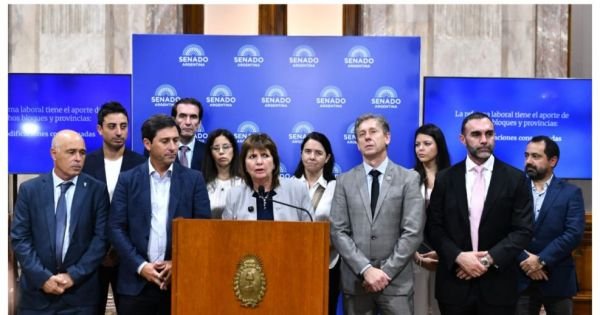
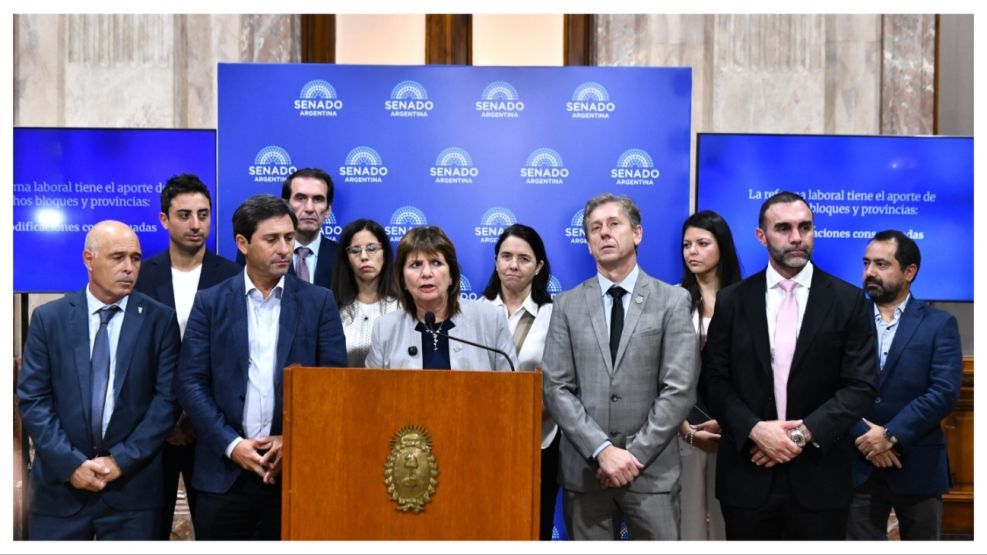
The revisions steered by Senate ruling bloc leader Patricia Bullrich are key to advancing the labor reform
Argentina’s ruling coalition and centrist opposition blocs in the Senate reached a deal to vote on a labor reform bill on Wednesday, starting at 11 a.m., during an extraordinary session, according to the final draft circulated in the upper house and local reporting. The revisions steered by Senate ruling bloc leader Patricia Bullrich are key to advancing the labor reform and include dropping the corporate income tax cut—preserving revenues for provinces and the federal government—concessions to unions and business chambers on mandatory contributions, maintaining the allocation to union-run health funds, and moderating the original severance fund proposal.
A key change is the removal of Article 190 from the majority report, which would have cut the corporate income tax rate for large companies from 30% to 27%.
The agreement keeps the employer contribution to the union-run health funds system at 6% of wages for employees in a formal labor relationship—dropping a proposed cut to 5%—and adds language allowing the health services regulator to audit the use of those contributions.
It also deletes Article 137, which would have allowed employers to act as withholding agents for union membership dues under specific conditions.
On collective bargaining agreement levies, the text sets caps: for business chambers and employer-linked entities, the contribution “may not exceed” 0.5% of wages; for workers’ associations applicable to members and non-members, the cap is 2%. The draft adds that from Jan. 1, 2028, employer contributions to business chambers become “strictly voluntary.”
The final draft also includes provisions on maintaining the National Labor Court system until a transfer of competencies agreement is implemented with the City of Buenos Aires, and a reduction in employer social security contributions of 1 percentage point for large firms and 2.5 points for micro, small and medium-sized companies, with a mechanism to expand the cuts subject to executive action and bicameral approval.
On severance-related changes, the bill outlines Labor Assistance Funds financed through mandatory monthly contributions of 1% (large firms) and 2.5% (SMEs), with potential increases under the same approval framework.
The Senate debate comes amid mounting friction with unions, which have signaled protests against the government’s labor reform push.