Milei said his government was seeking to “correct course” geopolitically and to return “to where we belong in the West, alongside the United States, Israel and the rest of the free world”
Argentine President Javier Milei called Donald Trump “an example of courage and leadership” in a video message sent to the Hispanic Prosperity Gala hosted by Latino Wall Street at Trump’s Mar-a-Lago club in Florida, after receiving an Economic Freedom award, local outlets reported.
Milei said Trump’s leadership had been demonstrated in the hemisphere by “bringing Nicolás Maduro to justice,” using harsh language again to describe the Venezuelan leader in his remarks. Maduro had been captured in an operation in Venezuela and transported to the United States back in January 3rd.
In the recorded address, Milei said his government was seeking to “correct course” geopolitically and to return “to where we belong in the West, alongside the United States, Israel and the rest of the free world,” according to the version circulated by local media.
He also thanked organizers for inviting him to join the Board of Peace, an initiative promoted by Trump, and argued it aimed to bolster peace and security amid what he described as multilateral institutions’ “inaction,” according to the same message.
Milei further highlighted trade and investment agreements with the United States and framed trade liberalization as central to his economic agenda. “We believe trade is the best path to peace and prosperity,” he said, as quoted by local media from the video.
In closing, Milei listed domestic measures taken by his administration and referred to bills it seeks to advance during Congress’s extraordinary session, including initiatives on labor and security policy.
Export revenues in the first month of 2026 totaled US$ 1.175 billion, an 11.7% year-on-year decline, Cecafé said
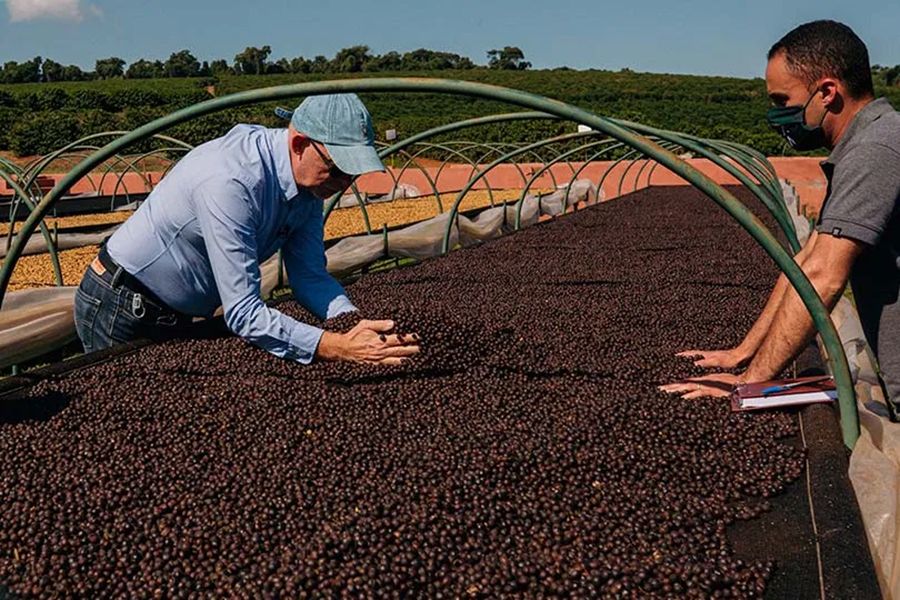
Brazil, the world’s largest coffee producer, exported 2.78 million 60-kg bags in January, down 30.8% from the same month in 2025, according to the Brazilian Coffee Exporters Council (Cecafé), EFE reported on Tuesday.
Export revenues in the first month of 2026 totaled US$ 1.175 billion, an 11.7% year-on-year decline, Cecafé said. Its president, Márcio Ferreira, linked the fall to weaker international prices amid expectations of a record 2026 crop, which “discouraged international business,” according to the statement cited by EFE.
Ferreira also said domestic demand is increasingly being met with robusta coffee as arabica supplies tighten, contributing to lower export volumes. In his assessment, that pattern could persist until the next harvest begins, expected in June.
By destination, Germany regained the top spot in January, importing 391,704 bags (14.1% of the total), though shipments were 16.1% lower than a year earlier. The United States ranked second despite a 46.7% drop in volumes.
For background, Reuters recently reported that Brazil’s instant coffee industry is seeking clarity on a 50% U.S. tariff that remained in place for regular instant coffee even as other coffee categories were exempted, and noted Brazil posted record coffee export revenues in 2025 despite lower shipment volumes.
Protesters argued the draft, “as currently proposed,” would leave out more than half of political prisoners.
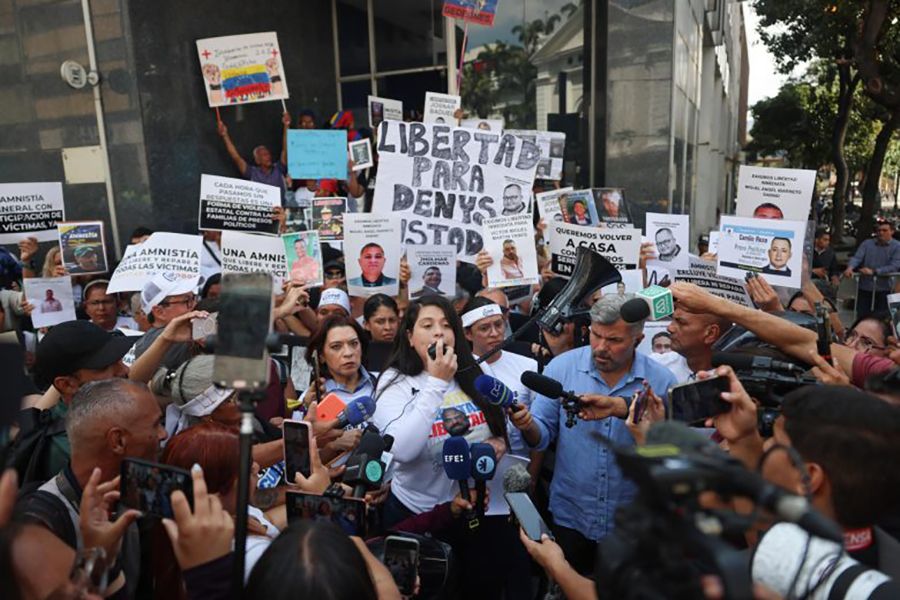
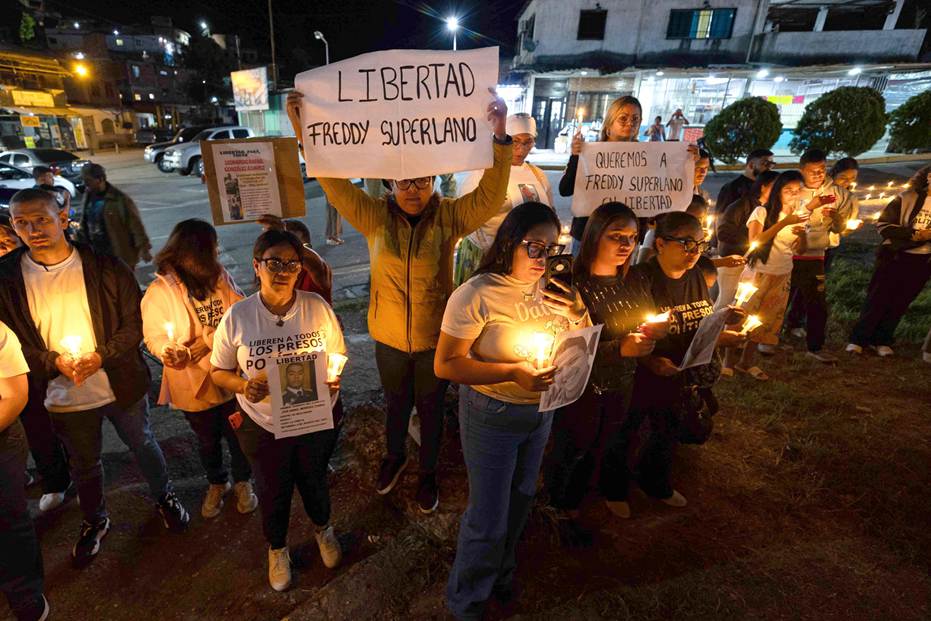
Families of political prisoners and activists gathered on Tuesday outside Venezuela’s National Assembly in central Caracas, calling for the release of detainees who remain behind bars and challenging the scope of a government-backed amnesty bill.
Protesters argued the draft, “as currently proposed,” would leave out more than half of political prisoners.
A parliamentary session scheduled for Tuesday was suspended late Monday, despite National Assembly leader Jorge Rodríguez having said the bill would be approved on an accelerated timetable, the same report said. Lawmakers, including Jorge Arreaza—linked to the group reviewing the proposal—met with relatives of detainees; by midday, no agreement had been reported.
The demonstration also coincided with criticism of renewed restrictions on recently released opposition figures. Juan Pablo Guanipa was placed under house arrest in Maracaibo, his son Ramón Guanipa said.
The amnesty bill cleared an initial legislative vote and is framed to cover cases tied to protests and political criticism.
The data release comes amid controversy over the government’s decision to delay a planned overhaul of the CPI methodology
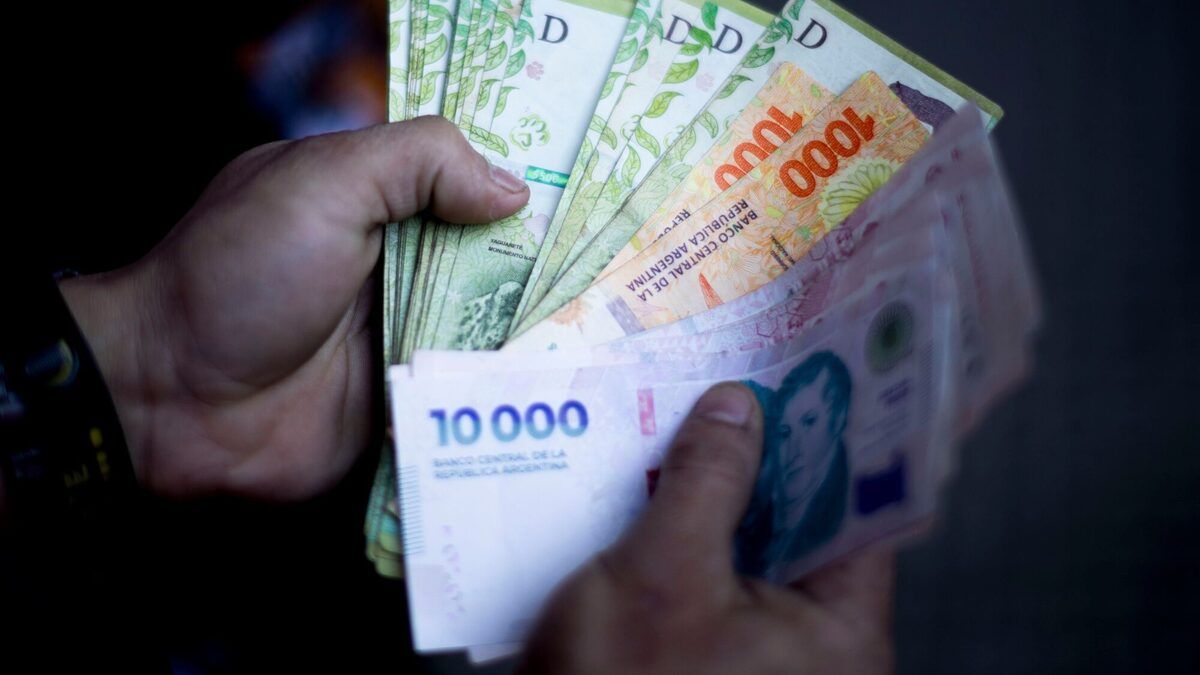
Argentina’s inflation came in at 2.9% in January, taking the 12-month rate to 32.4%, according to the national statistics agency INDEC. The reading marked an acceleration of 0.1 percentage points from December.
By division, Food and non-alcoholic beverages posted the largest monthly increase at 4.7%, followed by Restaurants and hotels (4.1%). By price category, seasonal items rose 5.7%, core CPI increased 2.6%, and regulated prices climbed 2.4%.
The data release comes amid controversy over the government’s decision to delay a planned overhaul of the CPI methodology, including an update to the consumption basket. The issue intensified after the resignation of then-INDEC chief Marco Lavagna, amid disagreements over the timing of the change, Reuters reported.
Economy Minister Luis Caputo defended the decision to postpone the switch: “The change had to be made once the disinflation process was finished,” he said, describing differing views over the appropriate timing.
Separately, Argentina’s central bank said analysts surveyed in the Market Expectations Survey (REM) were projecting monthly inflation around 2.1% for February and 2.1% for March, pointing to a gradual downward path thereafter.
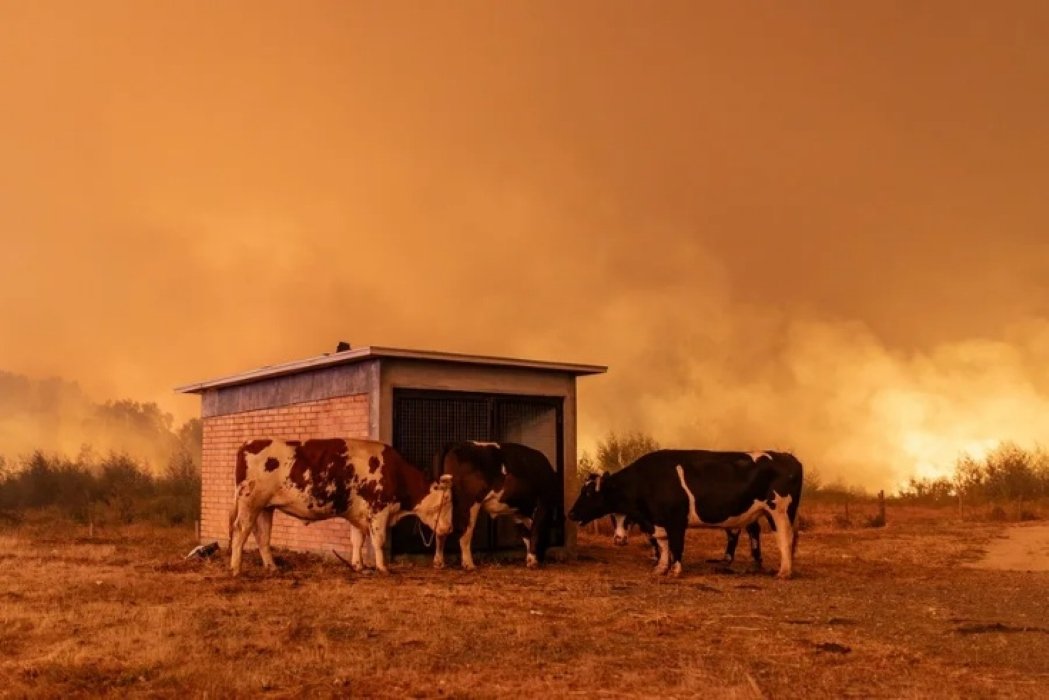
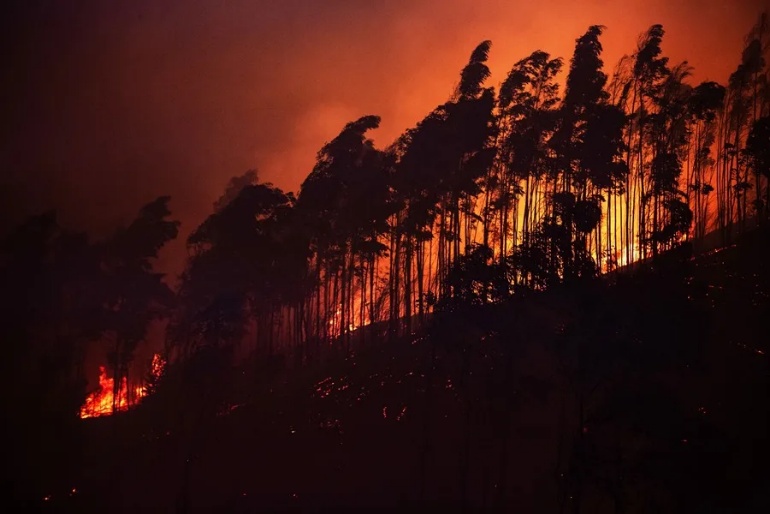
On the edge of Concepción, smoke still clung to rooftops after the evacuations. More than fifty thousand people left as flames crossed forests and streets. Chile’s latest megafires now force a harder question: can policy outrun heat and fuel again?
Concepción’s Charred Block and the Cost of Minutes
The air in south-central Chile in mid-January felt worked over, as if the heat had been chewing on it for days. In Concepción, where aerial and ground photographs later showed neighborhoods blackened and raw, the most ordinary detail became the most unsettling: streets that still looked like streets, except everything a street implies had been interrupted. A front gate that no longer guarded anything. A curb line dusted with ash. A place built for daily routines, suddenly emptied into evacuation routes.
As of January twenty, Chile’s National Forestry Corporation said the deadly spate had burned more than thirty thousand hectares in the Biobío and Ñuble regions. The numbers landed on people the way smoke does, slowly at first, then all at once. On January nineteen, Chile’s U.N. Resident Coordinator’s Office reported that dozens of active fires had prompted the evacuation of fifty thousand people and destroyed more than three hundred homes. The trouble is, evacuations do not feel like policy when you are inside them. They feel like minutes. Like deciding what can be carried out and what will be left to chance.
Above it all, NASA’s Terra satellite caught the smoke on January eighteen, its MODIS instrument framing the fires as multiple plumes rising in parallel, as if the landscape itself had become a set of open chimneys. On the ground, gusty winds and temperatures that exceeded thirty-eight degrees Celsius in places, according to news reports, did what wind and heat do: they made each decision sharper and each delay more expensive. Chile’s president declared a state of catastrophe in Biobío and Ñuble, opening the door for more resources to go toward fighting the blazes and assisting communities that were already living with the consequences.
If this were only about emergency response, the story would have stayed in January. But Chile’s fire seasons have been drifting toward something larger, a longer argument between land, climate, and the way the country has developed its forests.
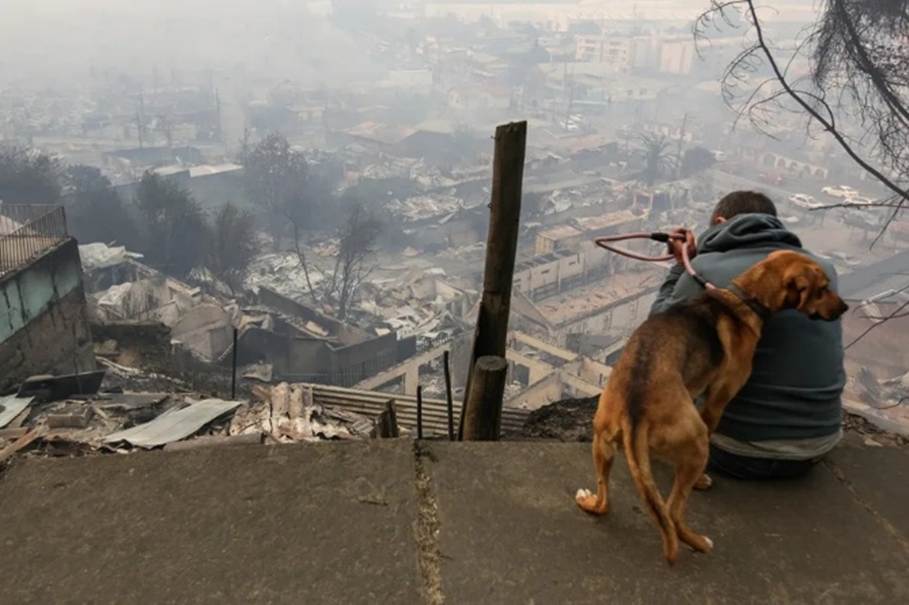
A man and his dog in front of homes damaged by the forest fires on January 18, 2026, in Penco, Concepción, Chile. EFE/ Pablo Hidalgo
When Fire Starts Making Its Own Weather
Chile has lived with wildland fires for decades. Since two thousand ten, flames have destroyed more than two million hectares, an expanse described in the notes as equivalent to burning together the regions of Valparaíso and Santiago, the country’s most populated. What used to be common has increasingly become something the country now names with a new weight: megaincendios, megafires, the kind that do not just move through forests but also arrive at cities with an appetite that feels modern.
One of the most unnerving shifts is how these extreme fires behave once they are established. Jorge Saavedra, head of the Department of Development and Research in Wildland Fires in Chile, described a dynamic that turns firefighting into a wager against physics. “The fire stops being only a phenomenon that responds to wind and starts modifying the atmospheric conditions around it, generating very intense convective columns, local wind changes, air entering toward the fire, and collapses that produce secondary outbreaks at great distances,” he told EFE.
What this does is change the entire frame of responsibility. Extinguishing power is no longer only about how many crews you can deploy. It is about whether anyone can predict where the next ignition will appear, and how far away it might land when a convective column collapses. In that world, a strong initial response can still be too small for the scale of the problem.
Iñaki Bustamante, from the European Union’s Forest Evaluation and Support Team, who traveled to Chile to help fight the fire, put the limitation in plain terms. It was a “question of availability, not resources,” he told EFE. “We would have to know that the fire is going to occur there beforehand and mobilize all the equipment. But once the fire has started, even if you have a strong response at the beginning, it would take so many resources that do not exist to stop it,” he added, speaking to the gap between what institutions can stockpile and what megafires demand in real time.
That gap matters because the public sees aircraft, crews, and emergency declarations, and assumes that more of the same will eventually solve the problem. The science and the field experience embedded in these notes suggest something harsher: once the conditions align, suppression becomes an argument you are likely to lose.
A forest fire on January 18, 2026, in the commune of Penco, Concepción, Chile. EFE/ Pablo Hidalgo
Macro-Drought, Monocultures, and a Plan That Needs Communities
Chile’s current vulnerability is not only atmospheric. It is also botanical and historical. The country’s macro-drought has significantly reduced relative humidity in forest soils, and the notes indicate a shift in plantation types since the nineteen seventies, with more pines and eucalyptus introduced for productivity. Add rising temperatures and the absence of precipitation since two thousand ten, which scientific experts in the notes attribute to climate change, and the fuel bed becomes easier to ignite and faster to carry flame.
Álvaro G. Gutiérrez, an ecologist at the University of Chile and the Institute of Ecology and Biodiversity, described the landscape itself as having been simplified into something fire can read quickly. “The homogenization of the landscape that has existed since the seventies in Chile to today makes the fire advance very rapidly through vegetation,” he told EFE. He called the fires an ecological drama and said eight hundred thousand hectares of natural vegetation have burned, including unique forests of endemic Chilean species that grow only here.
Chile’s National Forestry Corporation, in the same set of notes, pushes back against a single-villain explanation. The agency insists there is no need to “demonize” land modification, arguing that forest plantations have had and continue to deliver benefits. From this view, the problem is not any one type of vegetation, but “the continuity and fuel load at the scale of the landscape,” a reminder that fire follows connectedness. It moves through uninterrupted corridors of burnable material, whether those corridors were intended to be economic assets or ecological systems.
Saavedra returns, not with blame, but with a pivot in emphasis. “The focus today cannot be only on combating, nor on attributing responsibility to a specific type of forest. The challenge is to make territorial management, prevention, and mitigation converge, to move toward more resilient scenarios,” he told EFE. Purposeful repetition is unavoidable here: prevention and mitigation arrive in response to the emergency, because emergency response arrives after the fact.
In Biobío, where the fire known as Trinitarias left twenty-one dead, the regional environmental ministry has confirmed that a new Regional Climate Change Plan centers on mitigation and landscape management to reduce available fuel. Pablo Pinto, the Ministry of Environment representative for Biobío, framed the plan in terms of restoration and community capacity. “Landscape restoration and prevention are the main concepts. We seek to manage the landscape against the spread of fire with very concrete measures and by giving capabilities to Chile’s communities,” he told EFE.
The season itself underscores why those words are being said now. In the current two thousand twenty-five to two thousand twenty-six season, which began last September, more than sixty-four thousand hectares have already been destroyed, an increase of more than two hundred twenty-six percent compared with the two thousand twenty-four to two thousand twenty-five seasons, when nineteen thousand two hundred fifty-two hectares burned.
Chile’s fires, in other words, are no longer only a weather story. They are a development story. They are a land-use story. And they are a story about whether public planning can become as continuous as the fuel that has been keeping the fire going.
With hotels full and flights sold out, Trinidad and Tobago Carnival returns at full volume this month, even as regional tensions hover over the Caribbean. Instead of shrinking the celebration, uncertainty is shaping it, right down to the costumes and themes.
Full Flights, Full Hotels, and a Savannah That Still Calls
By the time the big bands unveil their designs, the season is already moving faster than the island’s traffic can manage. Costumes are released a year in advance, so people can buy them, plan for them, and compete in the grand parade at Queen’s Park Savannah. That long runway matters now. With airfares up and economic uncertainty hanging around the region, a costume becomes both purchase and promise.
Yet the first obvious fact is simple: the carnival is still pulling people in. Hotels are full. Flights are sold out. In Port of Spain, the Savannah is preparing to take on what it always takes on, crowds and color and sound, and something more challenging to describe, the sense that the street is where Trinidad and Tobago tells the truth; it cannot fit into a press release.
Carnival, celebrated for more than two hundred years, will take place on February 16 and seventeen. So far, the expectation is that more than 30 bands, comprising more than 55,000 participants, will take the stage at Queen’s Park Savannah in Port of Spain. The trouble is, the moment you try to treat those numbers like the whole story, you miss what is actually happening. Carnival is not just a gathering. It is a national argument conducted in sequins, a relief valve that also remembers.
The regional backdrop has been tense. The crisis in neighboring Venezuela. The presence of U.S. warships in Caribbean waters. The airfares, the uncertainty, the feeling that geopolitics can drift close enough to touch daily life. Some in Trinidad and Tobago feared being pulled into tensions between the United States and Venezuela, especially after the country hosted U.S. military exercises and Prime Minister Kamla Persad-Bissessar traded threats with Nicolás Maduro. Then the most destabilizing detail arrived in the notes: Maduro was captured by the United States a month ago. It is the sort of event that can make any Caribbean nation recalibrate, quickly, because the region has long experience living near larger powers and their quarrels.
A festival celebrated for more than two hundred years, the carnival has shown resilience and adaptability, inspiring pride and hope despite regional tensions.
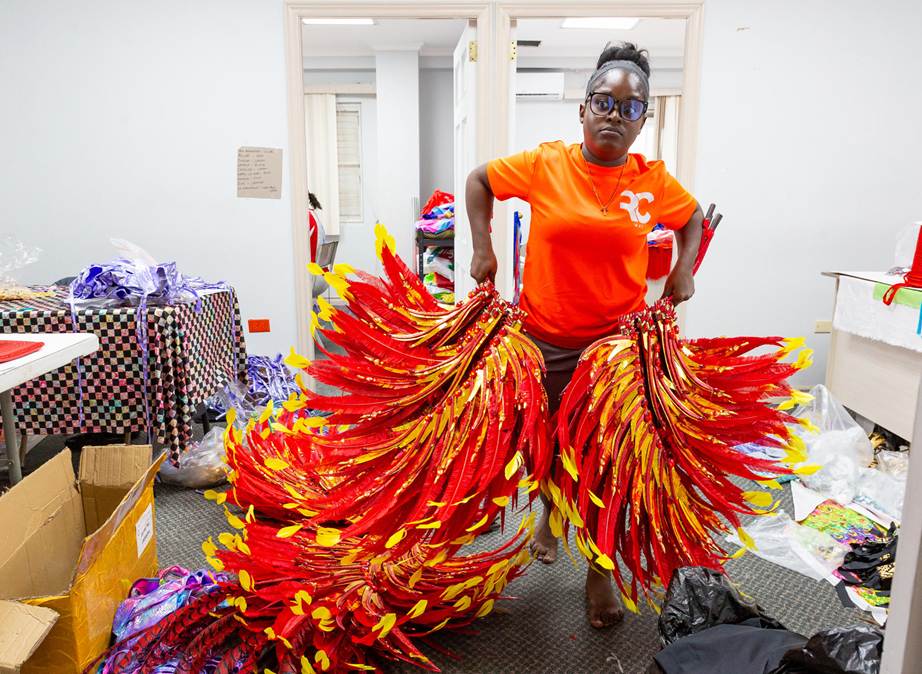
Costume by Renee Abraham in Port of Spain, Trinidad and Tobago. EFE/Andrea De Silva
A Festival That Expands Beyond Port of Spain
The government’s message is that the machine is still running and the plan is still the plan. Minister of Culture and Community Development Michelle Benjamin said early indicators point to strong participation and called Carnival 2026 “bigger and better,” she told EFE.
As the carnival expands beyond Port of Spain, it fosters a sense of regional unity and shared identity, making the audience feel part of a larger Caribbean community.
What this does is shift the policy conversation away from a single stage and toward a wider map. If culture is spreading beyond Port of Spain, then the benefits and the pressures are spreading too. Carnival is not only a national symbol. It is an economic system. When flights are sold out and hotels are full, that money does not stay in one district. It moves, unevenly, into taxis and food stalls and costume workshops, into the ordinary infrastructure that supports the extraordinary two days.
Benjamin also said that despite regional uncertainty after Maduro’s capture, preparations remain on schedule and the government remains committed to supporting the carnival. That commitment is not just rhetorical. It sits in the background of every practical question: how to manage crowds, how to move people, how to keep an event this large functioning when the region feels politically volatile and economically strained.
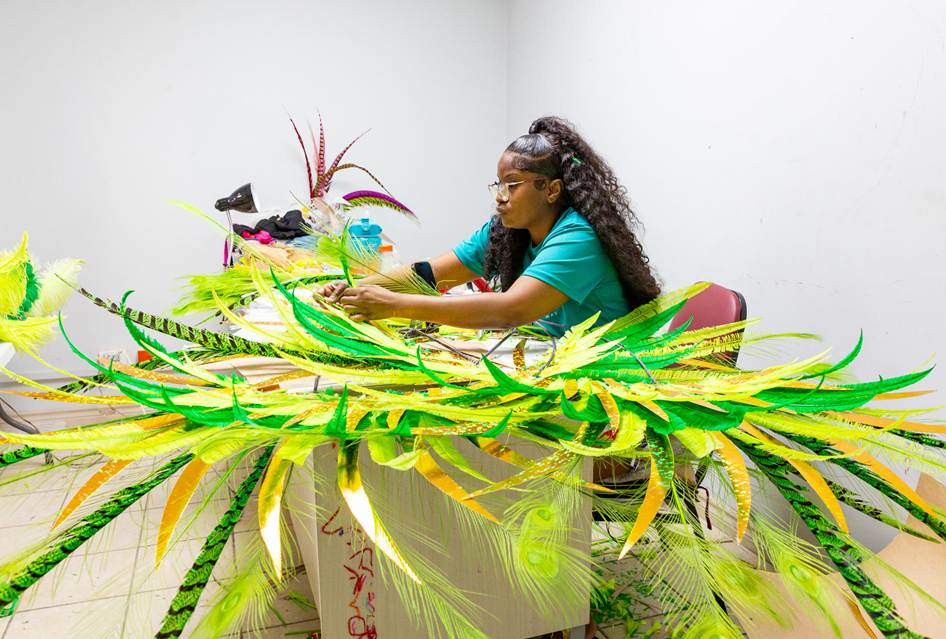
Costume work, meanwhile, keeps its own schedule. Sudesh Ramsaran, a costume decorator, said geopolitics has not dulled the enthusiasm of the most committed participants. “What happens at the regional level has not affected the unconditional Carnival lovers. This is their moment to celebrate, and they will make sacrifices to be part of it,” he told EFE.
That line holds a lot. Sacrifice can mean money. It can tell time. It can mean choosing a costume payment over something else, quietly, because belonging matters. In Trinidad and Tobago, carnival is where belonging gets worn.
Costume by Abena John in Port of Spain, Trinidad and Tobago. EFE/Andrea De Silva
Costumes of Uncertainty, Costumes of Hope
If the region’s headlines have been unsettling, the costumes have decided to stare straight at that unease and then transform it. Keston Benthum, a carnival designer and producer, said he named his King costume for 2026 “Father Time, on the wings of hope,” he told EFE. “It reflects uncertainty, but also hope: that the Caribbean will remain at peace and avoid conflict,” he said, describing the concept.
In the south of Trinidad, Lionel Jagessar Junior, leader of the band Jagessar Costumes, said he deliberately named his band “On the eve of battle” to reflect the current geopolitical climate. “From the outside, with military ships and rumors of conflict, it looks like something could happen. The theme reflects that uncertainty, but it also has a deeper meaning,” he told EFE.
The deeper meaning is not spelled out in the notes, but the direction is clear. Trinidad and Tobago is using carnival the way it has always used carnival, to metabolize the world outside and convert it into something the community can carry. It is satire without needing to shout. It is a commentary that can dance.
Historically, that is not an accident. Carnival emerged at the end of the eighteenth century and evolved as an expression of resistance and freedom among formerly enslaved Africans, fusing masquerade, music, and satire into a national tradition. That origin story still hums inside the modern spectacle, even when the costumes are new and the themes are updated for current anxieties.
For Trinidadian historian Jerome Teelucksingh, the festival, with its competitions and varied cultural programming, has become over time “an economic engine and a symbol of identity in Trinidad and the Caribbean,” he told EFE.
The wager here is that the same thing that makes carnival powerful also makes it necessary. In a region where tension can arrive by ship, by tariff, by rumor, Trinidad and Tobago still answers with the street. Not because it is escapism. Because it is governance of the spirit, practiced in public, and stubbornly alive.
News Americas, NEW YORK, NY, Mon. 9, 2026: Super Bowl LX was more than a championship game. It became a vivid, unfiltered reflection of who America is – and who it too often overlooks. On one of the world’s most watched stages, players with immigrant roots – from Colombia to Mexico, Venezuela to Panama, Sierra Leone and Puerto Rico stood not as symbols, but as living testaments to immigrant journeys. Their presence – along with the celebration of Latino culture in the halftime spotlight – reminded us that America’s story is not written by borders alone, but by the people who cross them, contribute to them, and define them.
Elijah Arroyo #18 of the Seattle Seahawks lifts the Vince Lombardi Trophy after the NFL Super Bowl LX football game against the New England Patriots, at Levi’s Stadium on February 8, 2026 in Santa Clara, CA.The Seattle Seahawks defeated the New England Patriots 29-13.Photo by Kevin Sabitus/Getty Images)
On football’s biggest stage, immigrant stories were not on the sidelines. They were on the field. As millions tuned in, the matchup between the Seattle Seahawks and the New England Patriots showcased more than athletic excellence. It highlighted how deeply immigrant families are woven into the fabric of American life, even as political rhetoric continues to paint immigrants as outsiders or threats.
Several players taking the field carried stories rooted far beyond U.S. borders. Patriots kicker Andrés “Andy” Borregales became the first Venezuelan-born player to compete in a Super Bowl – a milestone that transcends sports and connects with a region long underrepresented in professional American football. Cornerback Christian González, who made incredible plays for the Patriots Sunday night, made history as the first player of Colombian heritage to appear in a Super Bowl. While safety Jaylinn Hawkins, of Panamanian descent, also took the field.
The winning Seahawks’ roster reflected the immigrant reality as well. Tight end Elijah Arroyo, whose roots trace back to Mexico, represented another chapter in the growing influence of Latino athletes in the NFL. Safety Julian Love is of Mexican and Cuban heritage, Federico Maranges brought Puerto Rican representation to the field and Jaxon Smith-Njigba, the wide-receiver is of Sierra-Leone descent. Their presence underscored a truth often ignored in immigration debates: immigrant families are raising children who grow into leaders, professionals, and champions. Together, these players offered a snapshot of immigrant influence woven into the very fabric of American sport.
These were not token appearances. These are young men whose families crossed borders, worked hard, and raised children who stood on one of the world’s largest stages. Their presence challenged simplistic narratives that reduce immigrants to stereotypes, reminding us that belonging takes many forms and includes many faces.
The significance extended beyond the field.
The half-time show, headlined by Puerto Rican superstar Bad Bunny, marked another powerful moment of visibility. Spanish echoed across the Super Bowl stage, placing Latino and Caribbean culture at the center of one of America’s most watched events. For some, this sparked discomfort and backlash. For others, it reflected the country as it exists – multilingual, multicultural, and continually evolving.
The half-time show – and the players on the field- served as reminders that immigrant voices do belong in moments that define America’s cultural calendar.
Celebrating this visibility is not a dismissal of the very real struggles immigrants continue to face, from harsh enforcement policies to detentions and discrimination. But it does reclaim a powerful truth: immigrants are creators, competitors, entertainers, and contributors to the national story.
At a time when immigrants are being vilified in political rhetoric and targeted in enforcement actions, seeing Colombian heritage, Venezuelan roots, Panamanian lineage, Mexican pride, and Puerto Rican culture woven into the Super Bowl narrative matters. It challenges the notion that immigrants are outsiders. They are not merely present – they are essential.
Sports alone will not fix immigration policy. Representation does not end deportations. But when a generation of children sees themselves in the plays called on the field or hears Spanish in the halftime spotlight, something deeper is affirmed: America is at its best when it reflects all of its people.
And this year, Super Bowl LX did exactly that.
They were athletes under stadium lights. Artists commanding global stages. Families cheering from living rooms across the country.
And on Super Bowl Sunday, they were not guests in America’s house – they were home.
Felicia J. Persaud is the founder and publisher of NewsAmericasNow.com, the only daily syndicated newswire and digital platform dedicated exclusively to Caribbean Diaspora and Black immigrant news
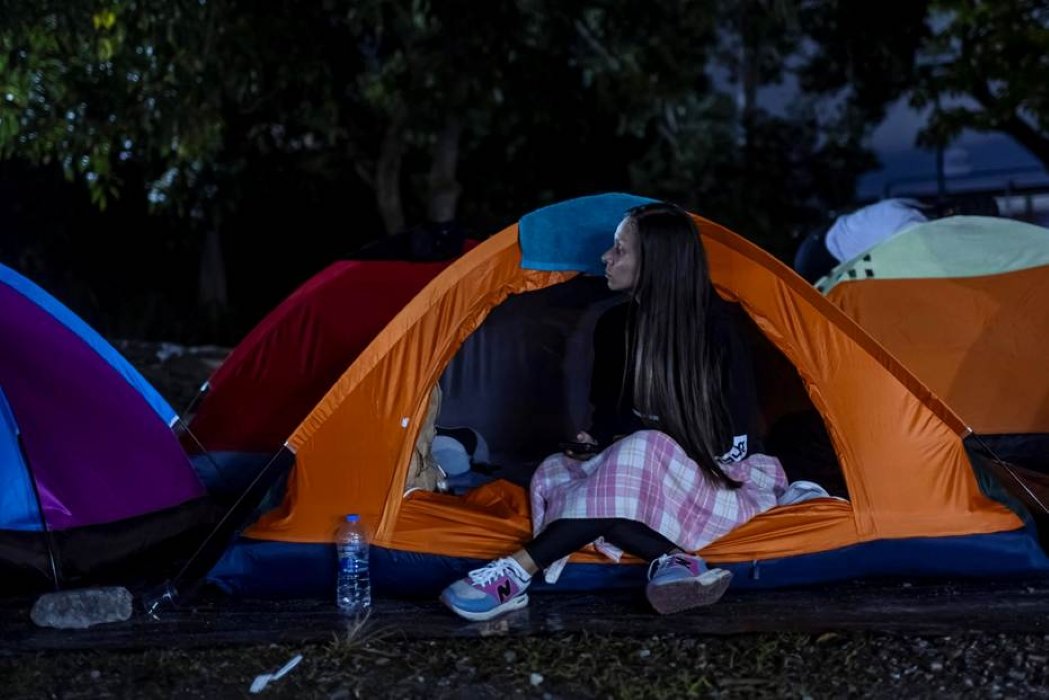
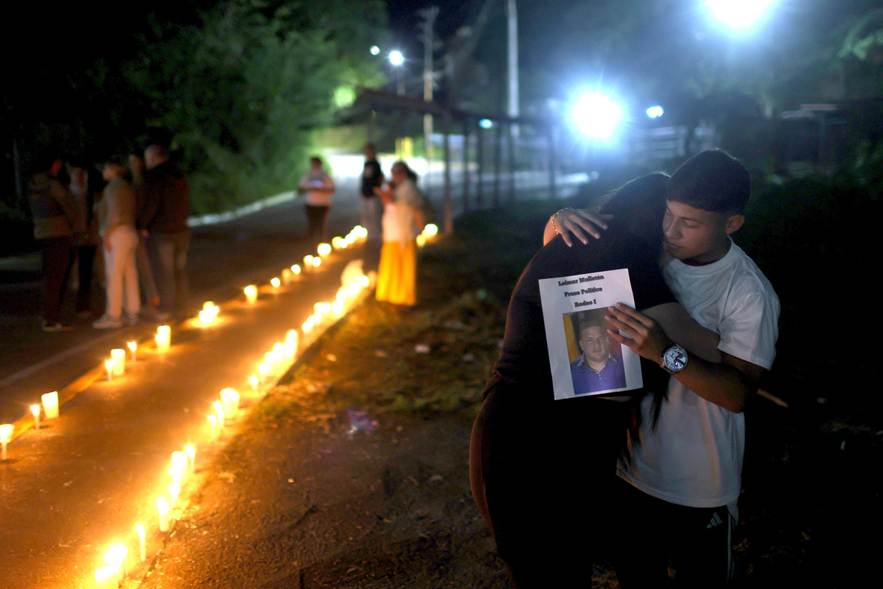
Outside El Rodeo, near Caracas, women sleep in tents and take turns guarding a narrow road, waiting for relatives held as political prisoners. An amnesty could pass next week, but for families here, policy is measured in visits denied and names still missing.
Tents, Turn Lists, and a Road That Shrunk Their World
The road to El Rodeo I is not wide. It is the kind of narrow street that feels temporary even on a typical day, a strip of pavement leading to a place built to end conversations. For the past month, it has become something else, a corridor of waiting where women have built a camp from whatever they could find and whatever others brought.
On one side, about twenty tents sit in a small garden. On the other hand, the families occupy every table at the two shops where they buy food and drinks. The air carries the mixed smell of hot meals and the dampness of fabric that has been slept in too many nights. People talk quietly, then sharply, then quietly again. A routine has formed. Not because anyone wanted one, but because waiting without structure is a kind of collapse.
Most of Venezuela’s political prisoners are men. The struggle for their release is being led primarily by women. Mothers, wives, sisters, daughters. Since January eight, they have kept permanent vigils outside this prison near Caracas, sleeping, praying, protesting, trying to hold the state to its own promises. Their ongoing presence demonstrates resilience, inspiring hope in the audience.
“When we got here, we thought they were coming out right away,” says Massiel Cordones, who traveled from Falcón state. She is the mother of Army lieutenant José Ángel Barreno, detained since two thousand twenty and linked to Operation Gedeón, the failed maritime attack in May of that year. “Here we had to unite like a family. Even though there are different cases in there, here we are in a single cause,” she told EFE.
That, she insists, is the cause: freedom for all political prisoners. And the trouble is that the word all has a second meaning here. It includes the women who have made themselves visible on this road and, in doing so, have accepted the costs that visibility can entail.
At first, Massiel says, they slept on the ground. Donations arrived later. Now they have forty-five mattresses, shared in pairs. They set schedules for sleep, for food distribution, and for night watches. It is camp logic. It is also governance, performed by those who have been denied formal power. The wager here is that order and solidarity can keep a vigil alive long enough for law to move.
People taking part in a vigil outside the El Rodeo I penitentiary center in Zamora, Venezuela. EFE/ Ronald Peña R. FILE
A Process Announced, a Promise That Still Has No List
The political timeline hovering over the tents is clear, at least on paper. The releases announced on January eight are now expected to accelerate with the approval of an amnesty law proposed by acting president Delcy Rodríguez, according to a Friday announcement by Parliament president Jorge Rodríguez. An amnesty could be approved next week.
That possibility is why the camp holds its breath. But it is also why the camp remains skeptical. People here have learned that public declarations do not always translate into doors opening.
Foro Penal, the NGO that leads the defense of political prisoners, says 2025 closed with 863 cases, 106 of them involving women. Since January eight, Foro Penal has verified 380 releases, but 687 people remain detained, 87 of them women. The numbers also carry an uncomfortable detail: women are a minority among those arrested, and a minority among those released.
The government says it has freed 895 people but has not published lists. What this does is force families to live in a fog of partial information. Every release becomes both relief and rumor, because without an official roster, no one can see the whole shape of who is still inside.
So the camp keeps its own record. Hiowanka Ávila, who has been central in the vigil, estimates that around 85 families are currently there, though at times it has reached 120. They write down identities, releases, and the names of those still missing. Sometimes, those who regain freedom share the names of detainees whose whereabouts were unknown to their relatives. “There have been people in forced disappearance whose families have been able to go in to visit for the first time,” she says. “They are small victories.”
Small victories are a careful phrase. It means a first visit after years of silence. It means hearing a name spoken out loud again. Hiowanka points to a woman who has just reconnected with her brother after seven years without information. Nearby, a teenager waits for her cousin, who is making a first visit after months without knowing where her husband was. These moments of connection foster hope and demonstrate progress.
In the camp, those moments are treated like oxygen. Not because they are enough, but because they prove that the prison is not fully opaque.
Relatives of political prisoners taking part in a vigil outside the Rodeo I penitentiary center in Zamora, Venezuela. EFE/ Miguel Gutiérrez FILE
Visits Denied, Bodies Searched, and Care That Becomes Protest
Howanka’s own case shows how quickly the cost of protest can harden. Since the releases were announced, she has not been allowed to see her brother, Henryberth Rivas, detained in two thousand eighteen and accused of an alleged attempt on the head of state. Authorities have barred her from visiting, she says, as retaliation for her protests. This ongoing hardship underscores the personal sacrifices made by families, fostering empathy in the audience.
Hiowanka describes her role without melodrama, and that restraint makes it heavier. She says she dedicates herself fully to the struggle. She recites reports of mistreatment and describes scars she has seen on her brother. “We are imprisoned with them,” she told EFE.
Her words land against a wider allegation documented outside the camp. The United Nations fact-finding mission on Venezuela has reported sexual violence against prisoners and women visitors in prisons like El Rodeo I, including forced nudity and genital inspections. The camp’s women live with that information as they plan visits, trade places with mothers, and decide who can go in and who must remain outside. The trouble is, even the act of visiting can feel like another power contest.
And yet the vigil holds. It holds through schedules, shared mattresses, and meals bought at small shops. It has been through the constant work of keeping one another from falling apart. It is not only a protest. It is care turned outward so it can be seen.
Lorealbert Gutiérrez, nineteen years old, depends on that care. Five of her relatives are detained in El Rodeo I: her mother, her brother, her partner, who is the father of her two children, a cousin, and an aunt. They were linked last year to an alleged plan to attack Caracas with explosives. Lorealbert herself was detained while seven months pregnant, along with her teenage sister. Both were released. For months, they searched for their family until finding them on January nine in this prison.
Now she has to choose whom to visit. Her network is fragmented, stitched together by women doing impossible logistics. Her three-month-old baby stayed with the child’s paternal family. Her two-year-old daughter is in the care of her seventeen-year-old sister, who temporarily left her studies to look after her. The paternal grandmother cares for Lorealbert’s younger siblings.
In this story, men are the majority of those held. Women are the infrastructure that remains outside. Massiel raised her children without a present father. Hiowanka alternates visiting with her mother. Lorealbert faces her situation without her own mother available to her, but surrounded by other women, she says, who are the only ones who can understand.
“It’s like a family,” Lorealbert says of the camp. “We support each other: if one cries, we all cry; if one laughs, we all laugh,” she told EFE.
A camp built from tents and donated mattresses should not have to function as a parallel institution. But that is what has happened on this narrow road to El Rodeo I. Women have built a community because the state has provided only fragments, an announcement without a list, a process without a timetable that families can trust.
Next week, an amnesty might pass. The law may move. The doors may open for some. The wager here is that when those doors open, the women who have been sleeping outside will be counted not as background, but as the people who held the story together long enough for policy to catch up.
In the Southern Hemisphere, Copernicus linked unusual heat to escalating wildfire activity in late January, pointing to major blazes that intensified in Australia, Chile and Patagonia
Last month was the world’s fifth-warmest January on record, the EU’s Copernicus Climate Change Service (C3S) reported, even as sharp cold spells hit large parts of the Northern Hemisphere in the second half of the month. Global mean surface air temperature reached 12.95°C, 0.51°C above the 1991–2020 January average and 1.47°C above the estimated 1850–1900 “pre-industrial” baseline used for climate comparisons.
Copernicus stressed the “mixed signals” are not contradictory: January 2026 was only 0.28°C cooler than the warmest January on record (2025), while a more undulating polar jet stream helped funnel Arctic air into mid-latitudes, driving severe cold across North America, Europe and Siberia for stretches of the month.
Europe stood out on the cold side of the ledger. C3S said the continent experienced its coldest January since 2010, with an average temperature of −2.34°C, 1.63°C below the 1991–2020 norm. Widespread cold conditions were observed across Fennoscandia, the Baltic states and eastern Europe, while monthly temperatures still finished above average across much of the globe, including large parts of the Arctic and western North America.
The bulletin also highlighted extremes in rainfall. January was wetter than normal across much of western, southern and eastern Europe, where heavy precipitation contributed to flooding and related damage in areas including the Iberian Peninsula, Italy, Ireland and the UK. By contrast, a broad swath from central Europe into parts of Scandinavia and Iceland was drier than average.
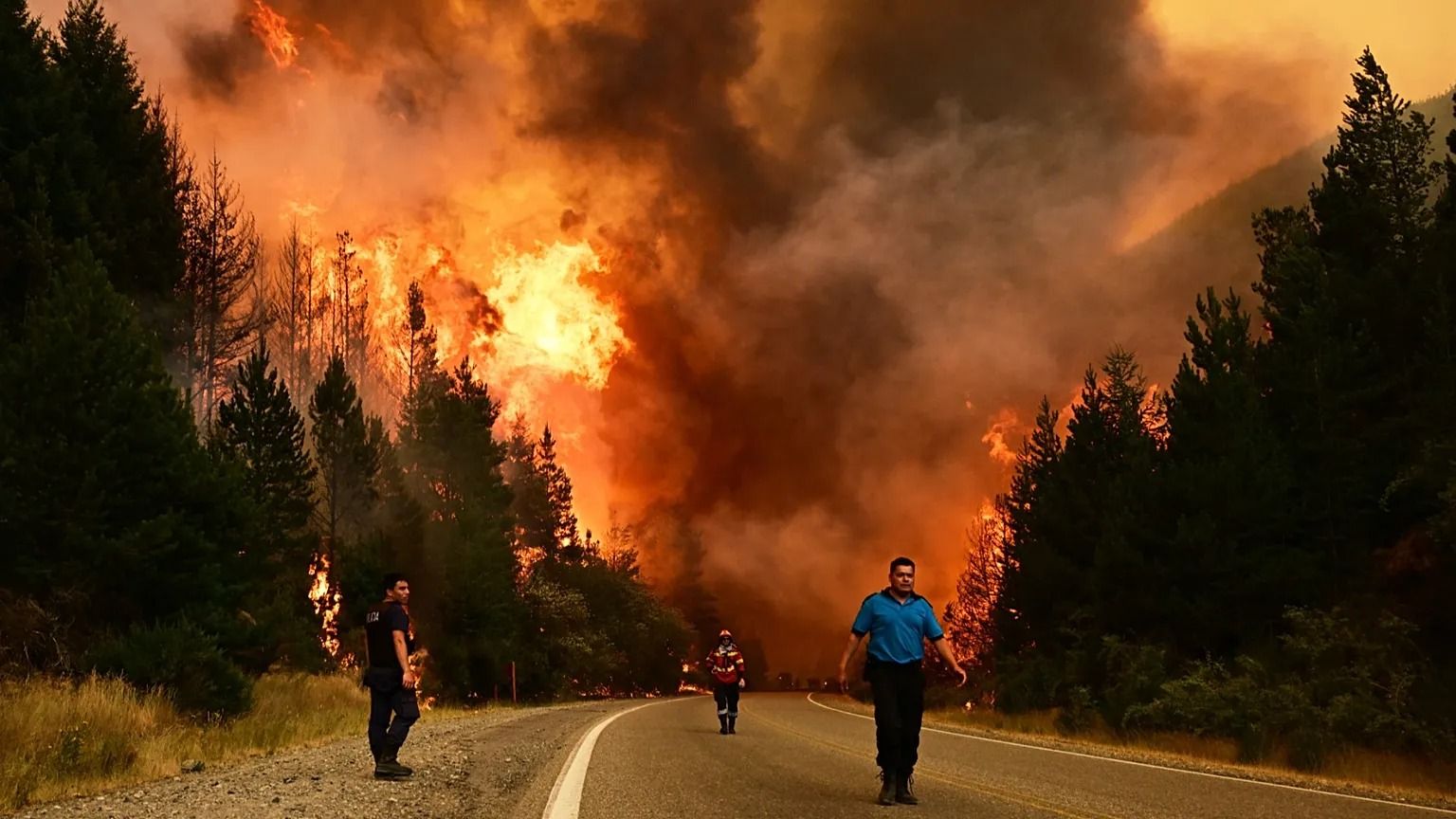
In the Southern Hemisphere, Copernicus linked unusual heat to escalating wildfire activity in late January, pointing to major blazes that intensified in Australia, Chile and Patagonia. The service also reported that exceptionally heavy rains in southern Africa during the final week of the month triggered serious flooding in Mozambique, with “catastrophic” impacts on lives and livelihoods.
Samantha Burgess, C3S’s climate strategy lead, said January offered a stark reminder that the climate system can deliver very cold weather in one region and extreme heat in another simultaneously, arguing that adaptation and resilience will become increasingly crucial as human-driven warming continues to raise the risks and costs of extreme events.
“So far, only one case – within the official delegation – has been confirmed, and follow-up of the exposed group continues,” the ministry added.
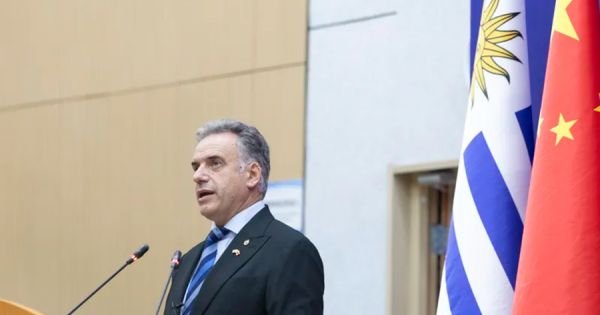
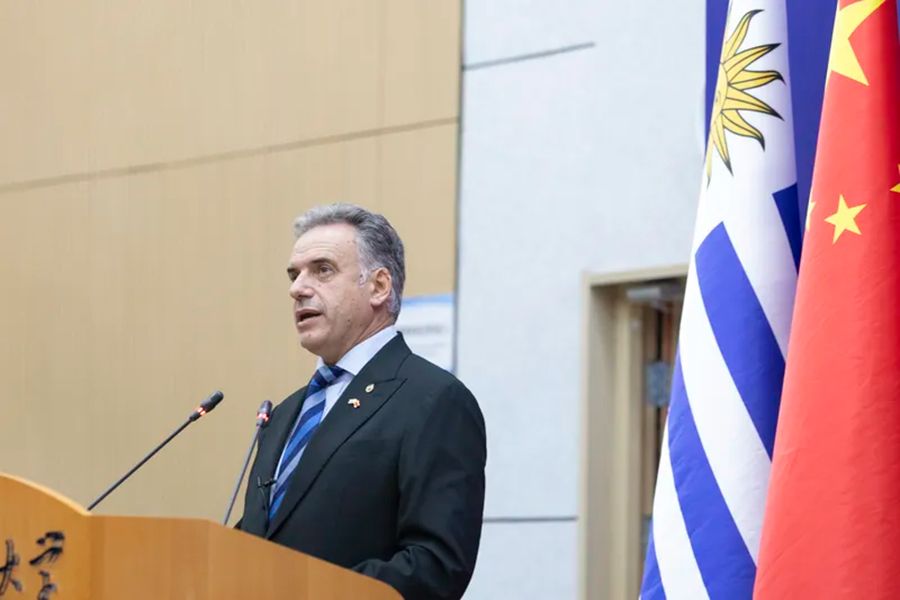
Uruguay’s President Yamandú Orsi tested negative for chickenpox after undergoing screening prompted by a confirmed case within the official delegation that returned from a trip to China, the Ministry of Public Health (MSP) said on Monday.
In a statement, the MSP reported that “the President of the Republic, Yamandú Orsi, does not have chickenpox nor symptoms compatible with the disease,” adding it is working “in a coordinated manner” on an epidemiological investigation to identify and monitor contacts within the official entourage and the group of business representatives who traveled to China. “So far, only one case has been confirmed, and follow-up of the exposed group continues,” the ministry added.
Uruguayan outlets identified the confirmed case as Paysandú Governor Nicolás Olivera, who developed symptoms upon arrival in Montevideo and was placed under home isolation. Local reporting said his condition is not serious and that he will continue duties remotely.
The MSP reiterated general guidance for people with compatible symptoms—such as fever and skin rash—including contacting their health provider and avoiding contact with others until receiving medical instructions.
Uruguay has been seeing an unusual rise in chickenpox cases and that health authorities have adjusted aspects of the country’s vaccination strategy.