Colorado’s planned Hispanic and Latino museum aims to recover Indigenous, Mexican, Chicano, and displaced community histories, turning a local fundraising campaign into a national reckoning over whose memories count in America’s 250th anniversary story.
A Museum Built Against Forgetting
In Denver, the future museum is not only being imagined as a building. It is being imagined as a correction. A place where the stories pushed to the edge of Colorado’s official memory can finally enter through the front door, speak in their own cadence, and stay.
Hispanic leaders in Colorado are raising funds to build a museum dedicated to preserving and sharing the histories of Hispanic, Indigenous, and Mexican communities that helped form the state, just as the United States prepares to mark 250 years of independence. The project, promoted by the Colorado Hispanic & Latino Heritage Fund, will create a museum and educational laboratory on the Auraria campus in Denver, with a scope that runs from early Hispanic settlements in the San Luis Valley to the Chicano movement and the displacement of Latino communities.
Former Denver councilwoman Ramona Martínez, one of the project coordinators, told EFE that the recent fundraising event should not be confused with a public opening. The museum is still being built, she said. Still, organizers have made significant progress toward creating a Colorado institution that will tell the stories of the state’s first inhabitants and settlers.
That distinction matters. This is not a symbolic pop-up, not a festival booth, not another temporary exhibit allowed to appear for heritage month and disappear when the calendar turns. The project was approved in 2023 as a flagship initiative by the state commission America 250 Colorado 150, formed to mark Colorado’s 150 years as a state and the United States’ 250th anniversary. Yet, according to Martínez, the community itself has been told it must shoulder the financial burden if the museum is to become a reality.
“They told us that if we wanted to build it, we had to create our own organization to raise the money,” she told EFE. That sentence carries the entire story. Recognition was granted. Resources were not guaranteed. The burden of memory was returned to the communities whose memory had already been neglected.

The Ground Remembered Before the City Did
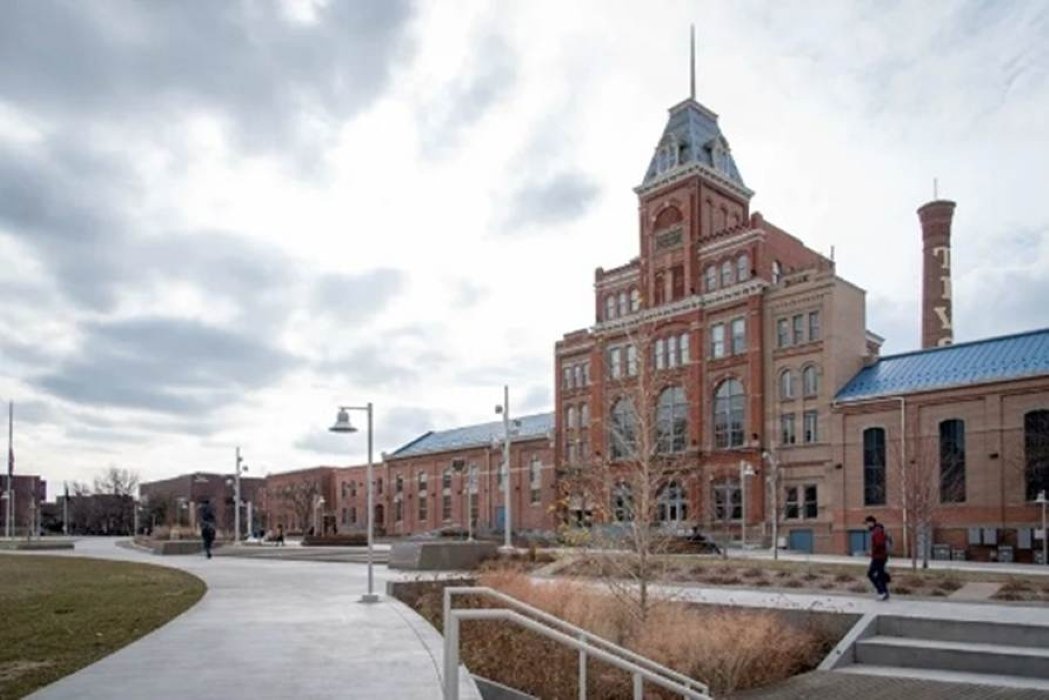
The museum’s planned location sharpens the project. It would sit on about six hectares, recently reserved by the Auraria Higher Education Center near Auraria Parkway and Speer Boulevard, in an area that was once Denver’s largest Hispanic neighborhood, demolished in the 1960s and 1970s to build the current university campus.
That history gives the site a wound beneath the architecture. A museum about displacement would rise on land shaped by displacement. A place built to recover hidden stories would stand where a living community was once removed in the name of urban renewal, education, and development. That is not irony. It is a kind of historical summons.
Martínez told EFE that the museum will be the first comprehensive effort to tell the hidden and forgotten histories of the connections between Indigenous peoples and Spanish settlers, elements she described as fundamental to understanding Colorado. The museum will also include social and cultural movements before and after statehood, as well as contemporary contributions by Hispanic and Latino communities.
Patricia Barela Rivera, another leader of the initiative, told EFE that organizers want a complex set of social, cultural, and historical voices that shaped Colorado and the nation from the 1500s onward. That phrase is important because it refuses the narrow timeline of U.S. history that begins with the thirteen colonies and treats the Southwest as an annexed afterthought. Long before Colorado became a state, before the United States reached westward with maps and troops, Indigenous nations, Spanish-language settlements, Mexican land histories, trade routes, religious institutions, and mixed communities had already formed worlds there.
The museum seeks to show younger generations what many classrooms and museums have not. This is not only about pride. It is about historical literacy. A country that erases Latino and Indigenous presence from its origin story teaches millions of people to see themselves as arrivals, even when their ancestors were there before the border moved.

Latin America Inside the United States
The geopolitical significance extends beyond Colorado, as the project challenges the false boundary between Latin America and the United States. Too often, Latin America is imagined as something south of the border, external to U.S. history, arriving later through migration. Colorado’s Hispanic and Latino museum says otherwise. Latin America is not only outside the United States. It is inside its foundations, its landscapes, its labor histories, its cultural memory, and its contradictions.
That matters now, as immigration politics harden and Latino communities are frequently described through crisis, numbers, labor shortages, border enforcement, or electoral strategy. A museum changes the frame. It says Hispanic and Latino people are not a demographic problem to be managed. They are historical actors. They shaped land, language, farming, labor, resistance, religion, music, education, civil rights, and neighborhood life.
The project also carries economic implications. Martínez said the museum could generate opportunities for Hispanic and Latino communities in Colorado. Cultural institutions can create jobs, tourism, education programs, archives, public events, and partnerships with schools and universities. But beyond those measurable benefits, they create a more durable asset: narrative power.
Narrative power is not soft or decorative. It shapes who gets funded, who gets remembered, who gets included in textbooks, who feels ownership over public space, and who is treated as temporary. In Latin America, nations have long fought over memory because memory determines legitimacy. The same is true in the United States. Museums are not neutral rooms. They decide what becomes heritage and what remains a footnote.
The organizers want the museum to remain under community control, a legacy for future generations, something Martínez said did not happen with similar efforts in the recent past. That insistence is crucial. A museum about excluded histories cannot simply reproduce exclusion through top-down curation. It must answer to the people whose lives it displays.
The planned experience also aims to move beyond traditional museum formats. Martínez said visitors will encounter stories left out of other museums, with interior design and curation meant to be interactive and emotionally meaningful. That approach fits the subject. These are not dead artifacts. They are living inheritances, sometimes painful, sometimes joyful, often contested.
Meanwhile, History Colorado is exhibiting “Expedición 1776,” about the Spanish friars Francisco Atanasio Domínguez and Silvestre Vélez de Escalante, who traveled through and documented parts of what are now Colorado and the western United States. That exhibition explores Spanish exploration, Indigenous relations, and the historical impact of the journey. It is a useful parallel, but the proposed museum aims for something broader: not one expedition, but the layered memory of communities across centuries.
The fundraising goal is about $21 million, Barela Rivera said, with $3 million already raised. The rest will depend on institutions and small community donations. That mix is fitting. Big donors may help raise the walls. Small donors may help keep the soul.
Colorado’s museum project arrives at a national anniversary that risks telling the same old story again, with the same old center. This time, Hispanic and Latino leaders are asking for another map. One where the San Luis Valley, Auraria, Indigenous nations, Mexican roots, Chicano struggle, displacement, and survival are not side chapters.
They are the country, too.
Also Read:
Colombian Caribbean Voice Totó Kept Ancestral Fire Burning Across Borders